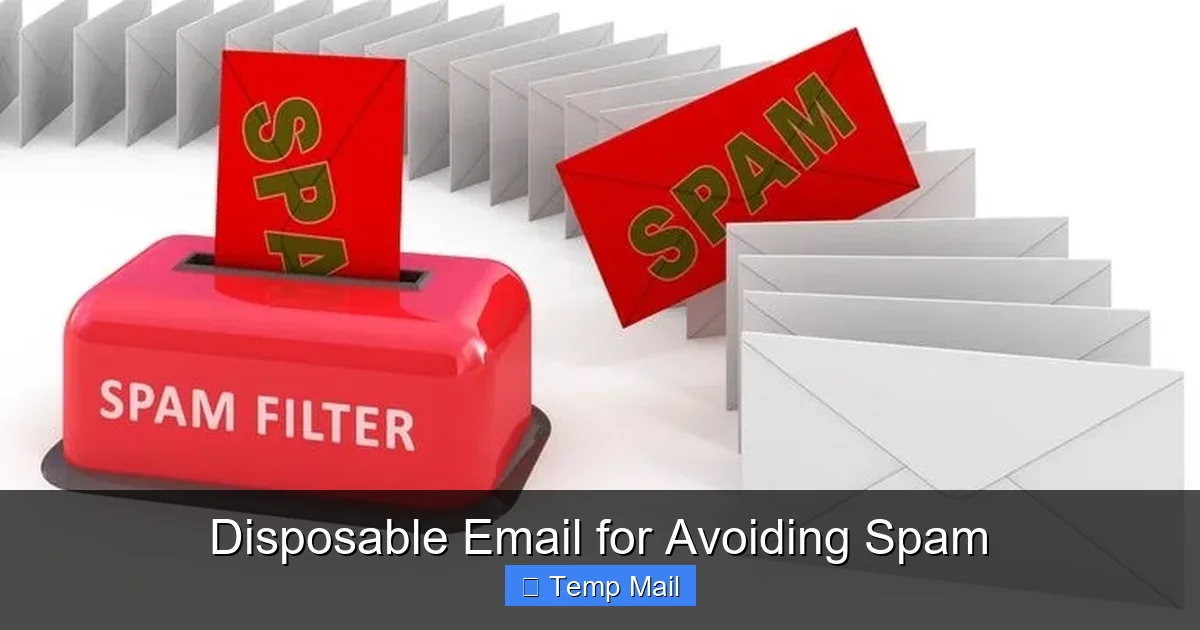
Disposable email—also called temp mail—is a temporary, anonymous email address you use for one-time sign-ups or downloads to protect your primary inbox. It auto-deletes after a short time, stopping spam before it starts. This simple tool boosts your online privacy and keeps your main email clean and secure. Use it anytime you don’t trust a website or need a quick access code.
Ever feel like you’re waging a losing battle against email spam? You sign up for a free webinar, download a helpful e-book, or create an account on a new forum, and suddenly your inbox is flooded with promotional offers you never asked for. It’s frustrating, time-consuming, and a real privacy headache. What if there was a simple, free tool that could act as a shield for your primary email address? Enter the world of disposable email—your first line of defense in the war against digital clutter and unwanted solicitations.
Think of a disposable email address as a digital burner phone. You use it for a specific, short-term purpose and then discard it. It’s not meant for long-term relationships or important communications. Its sole job is to absorb the spam that would otherwise flood your permanent inbox. In this guide, we’ll dive deep into how disposable email services work, their undeniable benefits, the smartest ways to use them, and the important limitations you must know. By the end, you’ll have a clear, actionable strategy to take back control of your email and enjoy a cleaner, safer online experience.
Key Takeaways
- Disposable emails are temporary: They last minutes to hours, then vanish, preventing long-term spam accumulation.
- They shield your primary email: By using a temp address for untrusted sites, you keep your real inbox spam-free.
- Anonymity is a core feature: No personal info is required to create most disposable emails, enhancing privacy.
- Not for critical accounts: Never use them for banking, main social media, or any service requiring account recovery.
- They simplify one-time tasks: Perfect for downloading whitepapers, accessing gated content, or forum sign-ups.
- Reliability varies: Some services may block certain domains or have uptime issues; choose reputable providers.
- They complement, not replace, good hygiene: Combine with spam filters and cautious sharing for best protection.
📑 Table of Contents
- What Exactly is a Disposable Email Address?
- How Do Disposable Email Services Actually Work?
- The Powerful Benefits: Why You Should Use Disposable Email
- Smart Use Cases: When to Break Out the Disposable Email
- Important Risks and Limitations You Must Know
- Best Practices: Using Disposable Email Wisely
- The Future of Disposable Email and Digital Privacy
- Conclusion: Embrace the Clean Inbox
What Exactly is a Disposable Email Address?
At its core, a disposable email (often called “temp mail” or “throwaway email”) is a temporary email inbox that you can create instantly, without registration, and use for a very limited time. These addresses are generated by specialized web services. They function just like a regular email address: you can receive messages, sometimes even reply, but they are designed to be short-lived.
The Key Difference from Your Permanent Email
Your primary email—the one linked to your bank, your job, your family—is a permanent digital identity. It’s tied to your name, your phone number for recovery, and a history you can’t just erase. A disposable email is the opposite. It’s anonymous, untraceable back to you (if used correctly), and has a built-in expiration date. Once the timer runs out—often after 10 minutes, 1 hour, or 1 day—the entire inbox and its contents are permanently deleted from the server. There’s no archive, no recovery.
This fundamental difference makes disposable email a specialized tool, not a replacement. You wouldn’t use a disposable email to apply for a job or receive a password reset for your cloud storage. But for that sketchy-looking site offering a “free” iPhone if you sign up? Perfect. It’s about using the right tool for the right job.
How Do Disposable Email Services Actually Work?
The magic of disposable email lies in its beautiful simplicity. There’s no complex setup. Here’s the typical user journey:
Visual guide about Disposable Email for Avoiding Spam
Image source: optimizever.com
- Visit a Provider Site: You navigate to a service like Temp-Mail.org, 10MinuteMail.com, or Guerrilla Mail.
- Get an Auto-Generated Address: The site instantly provides you with a random email address (e.g., [email protected]) and a unique inbox URL. You don’t need a password.
- Use It: Copy that email address and paste it into the sign-up form or download gate on the third-party website.
- Check the Inbox: If the site sends a confirmation link or a download file, you click the “Inbox” button on the disposable email provider’s page. Messages appear in real-time, just like a normal inbox.
- Auto-Deletion: After the set time limit (displayed prominently on the page), the address and all its messages are purged from the system. That’s it.
Behind the Scenes: The Technical Flow
When you use a disposable email service, you’re interacting with a system that manages a vast pool of temporary domains and inboxes. The provider’s server accepts all incoming mail for those domains. When you visit your unique inbox URL, the server queries a database for any messages destined for your specific random address and displays them in your browser. The “timer” is a simple cron job or background process that runs cleanup scripts, deleting expired inboxes to free up server resources. This is why most services are free—the operational cost is relatively low for the provider.
The Powerful Benefits: Why You Should Use Disposable Email
Using a disposable email isn’t just about avoiding a few extra newsletters. It’s a proactive privacy and security habit with significant advantages.
Visual guide about Disposable Email for Avoiding Spam
Image source: cms.softailed.com
1. Unmatched Spam Prevention
This is the number one reason people adopt disposable email. Every time you use your primary email on a website, you’re trusting that company with your address. Even reputable companies can suffer data breaches or sell/lease email lists to third parties (often buried in privacy policies). A disposable email acts as a sacrificial lamb. Any spam sent to that temporary address disappears when the inbox self-destructs, never reaching your main account. Your permanent inbox stays pristine.
2. Enhanced Privacy and Anonymity
Creating a disposable email requires zero personal information. No name, no phone number, no recovery email. The address is randomly generated. This means there’s no data trail linking that temporary sign-up back to your real identity. For activists, journalists, or anyone wanting to browse and access resources without leaving a breadcrumb trail, this is invaluable. It separates your online activity from your core identity.
3. Protection from Phishing and Malware
Many phishing campaigns and malware distributors use email as a primary vector. They might send a malicious link or attachment to an address you used on a compromised site. If that’s a disposable email, the threat is isolated and short-lived. You might see the phishing attempt in the temporary inbox, but it has zero access to your permanent contacts, financial information, or other accounts. It’s a containment strategy.
4. Bypassing Gated Content Without Commitment
The internet is full of valuable content—research papers, industry reports, software trial downloads—hidden behind an email gate. Often, you just want the file, not a lifelong marketing relationship. A disposable email lets you skip the sign-up wall instantly. Get the PDF, the whitepaper, or the trial software, and walk away. No follow-up emails, no unsubscribe hassles.
5. Simplicity and Speed
There’s no account creation, no password to remember, no verification steps. You click, copy, paste, and you’re done. This frictionless process is ideal for quick, one-off interactions where the perceived value of the content doesn’t justify sharing your primary email.
Smart Use Cases: When to Break Out the Disposable Email
Knowing when to use a disposable email is half the battle. Here are the prime scenarios where it shines.
Visual guide about Disposable Email for Avoiding Spam
Image source: media.wired.com
Downloading Gated Resources
You’re researching for a project and find a fantastic “State of the Industry 2024” report. The website asks for your email to download. Use your disposable email. You get the report; your main inbox avoids a potential newsletter drip campaign.
Signing Up for Free Trials or Freemium Services
Want to test a new project management tool or graphic design app for a week? Use a temp address for the initial sign-up. This prevents the company from building a marketing profile on your primary email and bombarding you after the trial ends. Caveat: if you plan to convert to a paid plan, you’ll need to switch to your real email later.
Accessing Online Forums or Comment Sections
Some forums or news sites require registration to comment or read threads. If it’s not a community you plan to engage with long-term, a disposable email is perfect. It gets you past the gate without commitment.
One-Time Promotions and Coupons
See an ad for a “10% off” coupon that requires email sign-up? Use temp mail. You’ll get the coupon code instantly in the disposable inbox, use it at checkout, and never hear from the retailer again via email.
Testing Website or App Functionality
Developers and QA testers often use disposable email services to test email verification flows, password reset functions, and notification systems without cluttering real test accounts or personal emails.
Creating Accounts on Low-Trust or Unknown Sites
This is the critical use case. If a website looks outdated, has too many pop-ups, is in a niche you’re unfamiliar with, or simply gives you a bad vibe—use a disposable email. Your gut feeling about a site’s trustworthiness is often correct. Protect your primary identity from potentially shady data harvesters.
Important Risks and Limitations You Must Know
Disposable email is a powerful tool, but it’s not a magic shield. Using it incorrectly can cause problems. Understanding its limits is crucial.
1. It’s Not for Important Accounts (Ever)
This is the golden rule. Never, under any circumstances, use a disposable email for:
- Banking, financial services, or cryptocurrency exchanges. You need reliable account recovery.
- Primary social media profiles. Losing access means losing your network and identity.
- Main cloud storage (Google Drive, iCloud, Dropbox). File recovery and account security depend on a stable email.
- Any service where account recovery is critical. If you forget your password, the reset link goes to an inbox that no longer exists. You’re locked out forever.
2. Reliability and Deliverability Issues
Some reputable services and platforms actively block known disposable email domains. They do this to prevent fraud, spam, and abuse. You might try to sign up for a legitimate service like LinkedIn or a government portal and find the temp address rejected. This is a feature, not a bug, from their perspective. Also, some disposable email providers may have spotty uptime or slow email delivery.
3. No Long-Term Storage or Search
If you need to retrieve a specific message weeks later, a disposable email won’t help. The inbox is ephemeral. It’s a “read-it-or-lose-it” system. Don’t use it for anything you might need to reference in the future.
4. Limited Functionality
Many disposable email services are basic. They receive mail, that’s it. Sending emails is often restricted or non-existent to prevent abuse. Attachments may be blocked or have size limits. You can’t set up filters or forward messages.
5. Potential for Abuse
Because they are anonymous, disposable email addresses are sometimes used for malicious purposes: creating spam accounts, evading bans, or signing up for illicit services. This is why, as mentioned, many legitimate sites block them. Using one on a site that explicitly forbids it in their Terms of Service could get your account terminated immediately.
Best Practices: Using Disposable Email Wisely
To get the most out of disposable email without falling into pitfalls, follow these practical guidelines.
Choose a Reputable Provider
Not all temp mail services are created equal. Look for providers that:
- Have a clear, simple interface.
- State their data retention policy (e.g., “inboxes are deleted after 10 minutes”).
- Do not require registration or personal details.
- Use HTTPS for secure communication.
- Have a history of reliability (check reviews).
Popular, long-standing options include Temp-Mail, 10MinuteMail, and Guerrilla Mail. Avoid obscure services with suspicious domains or excessive ads.
Understand the Time Limit
Before you use a disposable email, check the countdown timer. If you’re signing up for a service that will send a confirmation email that might take 5 minutes to arrive, a 10-minute inbox is fine. If you’re downloading a large file that requires an email link that might be sent later, you need a longer-lasting service (some offer 1-day or even 1-week options). Match the service’s lifespan to your task.
Never Use It for Account Recovery
Repeating this because it’s critical: the moment you use a disposable email for an account you care about, you risk permanent lockout. Always link account recovery to your stable, primary email or phone number.
Use a Separate Browser or Incognito Window
For an extra layer of anonymity, use your disposable email service in a private or incognito browser window. This prevents cookies and local storage from linking your temporary activity to your regular browsing profile.
Know When to Switch to a “Fake” Permanent Email
For services you intend to use semi-regularly but don’t trust enough for your main email (e.g., a hobby forum, a secondary shopping site), consider creating a dedicated “alias” or “burner” email with a free provider like Gmail or ProtonMail. This is a step up from a disposable email—it’s a real, persistent address you control, but it’s isolated from your primary identity. Use a fake name and separate password. This gives you reliability without contaminating your main inbox.
The Future of Disposable Email and Digital Privacy
As spam and data harvesting become more sophisticated, the demand for easy privacy tools like disposable email will grow. We may see tighter integration with browsers and password managers, offering one-click temp email generation directly within sign-up forms. However, the cat-and-mouse game will continue. As more sites block known temp domains, providers will create new domains, and the cycle will repeat.
The broader trend is toward user empowerment. Disposable email is part of a larger toolkit that includes VPNs, privacy-focused search engines, and ad blockers. It represents a simple but powerful shift in mindset: from passively giving away your data to actively managing your digital footprint. By consciously deciding where your email address goes, you reclaim a piece of your online sovereignty.
Conclusion: Embrace the Clean Inbox
In the battle against spam and digital clutter, a disposable email is not a silver bullet, but it is an incredibly effective and easy-to-use shield. It’s the digital equivalent of giving out a business card with a phone number that forwards to a voicemail that self-destructs. It allows you to access the resources you need, test the services you’re curious about, and navigate the web without sacrificing your primary email address to the spam gods.
The key is intentionality. Use disposable email strategically for low-trust, one-time interactions. Reserve your permanent email for your real life: friends, family, work, and essential services. By adopting this simple habit, you’ll notice an immediate and dramatic drop in unwanted emails. Your inbox will become a place of useful communication again, not a dumping ground for marketing bots. Start using a disposable email on your next download or sign-up. Experience the relief of a cleaner, more private digital life. It’s a small change that delivers a big impact.
Frequently Asked Questions
Is using a disposable email legal?
Yes, using a disposable email service is completely legal. It’s a legitimate tool for privacy protection. However, using it to commit fraud, evade legal obligations, or violate a website’s terms of service can be illegal.
Can a disposable email be traced back to me?
Generally, no. reputable disposable email services do not require any personal information and do not keep logs linking the temporary address to your IP address. However, if you access the disposable inbox from your home network without additional privacy tools (like a VPN), your ISP knows you visited that site, but the email provider itself typically does not have your identity.
Why was my disposable email rejected by a website?
The website likely has a filter that blocks all email domains from known disposable email providers. They do this to reduce spam registrations and fraud. You’ll need to use a different email address, such as a real one or a dedicated alias you control.
Can I send emails from a disposable address?
Most disposable email services are receive-only to prevent abuse for spamming. Some limited services may allow outgoing mail, but it’s not a standard feature. Assume you can only receive messages at a disposable email address.
What happens if I need a password reset for an account I signed up with a disposable email?
You will not be able to receive the reset link, as the inbox no longer exists. This is why you must never use a disposable email for any account where you need to maintain access. You would be permanently locked out and would have to create a new account with a real email.
Are disposable emails safe from hackers?
They are safe in the sense that a breach of the disposable email provider’s system only compromises those temporary inboxes, which are already short-lived and contain no personal data. However, if you click a phishing link *within* a disposable email, you could still be directed to a malicious site that tries to compromise your device or trick you into giving up other credentials. The safety is in the isolation, not in the content of the emails themselves.
Leave a Reply