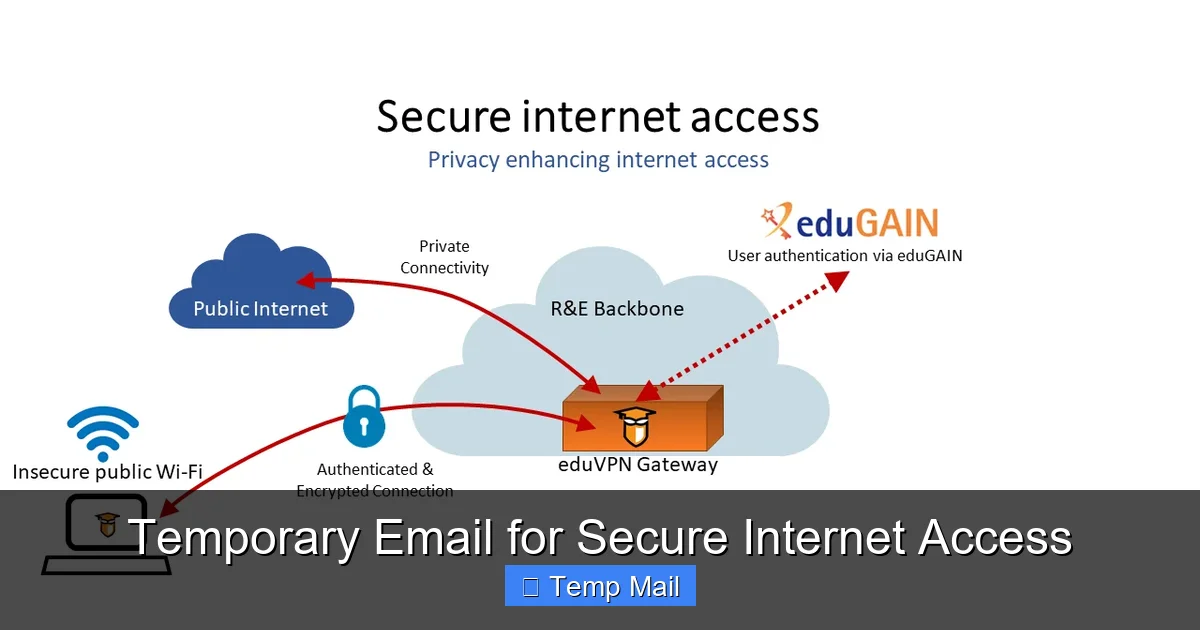
Image for How to Avoid Spam Using Temp Mail



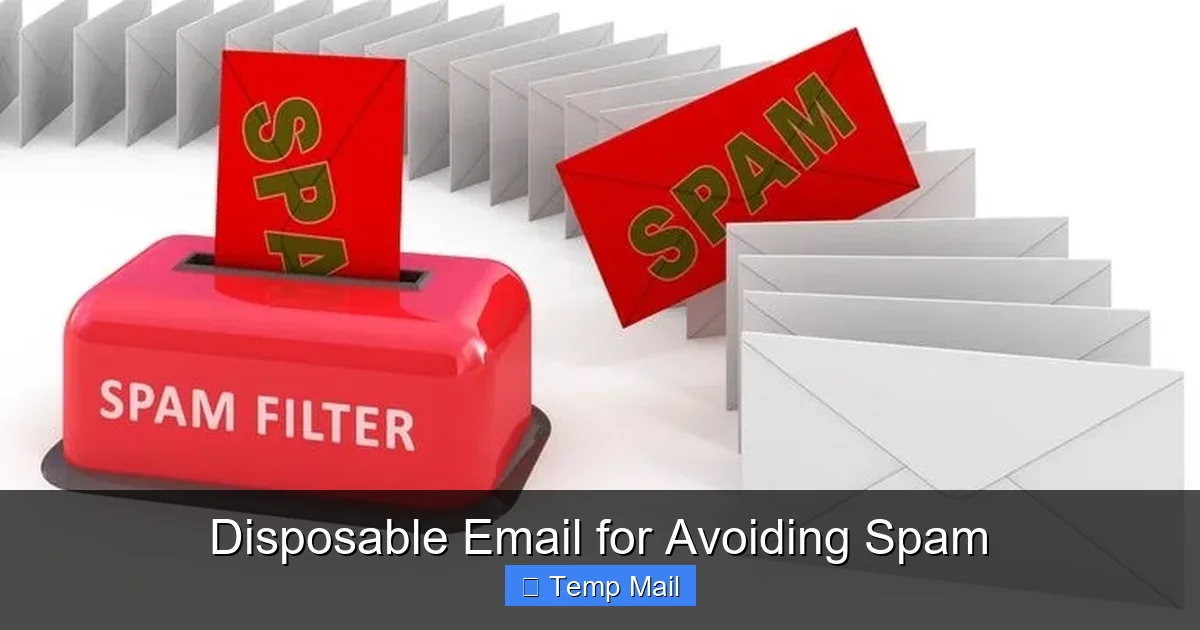
Tired of your primary inbox being flooded with spam? Temp mail offers a simple, powerful shield. These disposable email addresses act as a protective buffer, allowing you to sign up for websites, download resources, or access gated content without ever revealing your real email. By using a temporary address that self-destructs, you effectively cut off the path for spam campaigns and data-harvesting bots. It’s a crucial tool for anyone looking to take control of their digital privacy and keep their main inbox clean and secure.
Think about your primary email address. It’s probably been yours for years. It’s tied to your bank, your social life, your work, and your cloud photos. It’s the key to your digital identity. But that very value makes it a huge target. Every time you type it into a website—whether it’s a sketchy discount site, a free wallpaper download, or a one-time forum you’ll never visit again—you’re handing out a piece of your identity. That address gets logged, sold, traded, and scraped. The result? A primary inbox drowning in promotional nonsense, phishing attempts, and shady offers. The “unsubscribe” link often just confirms your email is active, sometimes leading to more spam. This isn’t just annoying; it’s a privacy drain and a security risk. We’ve been conditioned to believe giving our email is a mandatory toll for accessing the internet. It doesn’t have to be this way. The concept of using a temporary email flips the script entirely.
When you use your main email everywhere, you’re paying with your attention and your data. Marketing firms and data brokers assemble incredibly detailed profiles based on the sites you visit and the emails you use. This profile is used to bombard you with hyper-targeted ads, but it can also be leaked in data breaches. Your email becomes the common thread linking all those disparate accounts. A breach at a low-security forum you used once can give hackers a clue to try that same email on your bank or social media. Using a disposable address for the forum contains that breach to a meaningless, dead-end inbox.
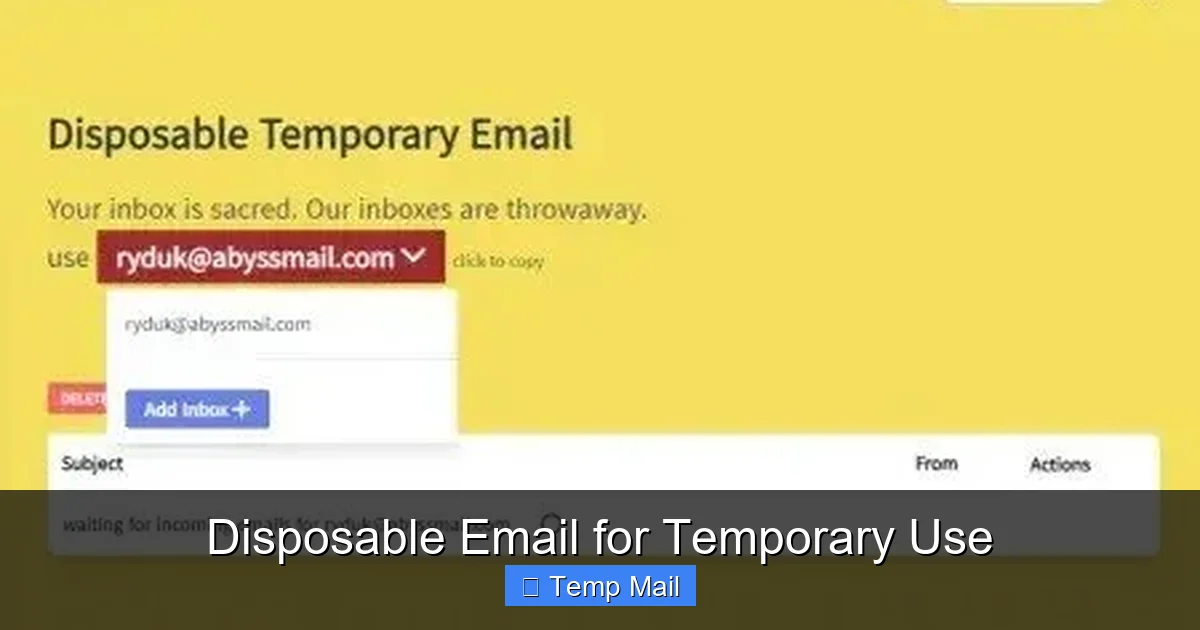
Temp mail, short for temporary mail, is a service that provides you with a random, working email address for a limited time—usually 10 minutes to 48 hours. These aren’t full-featured email accounts like Gmail or Outlook. They are bare-bones, inbox-only drop zones. You visit a website like Temp-Mail.org or 10MinuteMail.com, and it instantly generates an address for you, like [email protected]. You copy that address, use it wherever you need a throwaway email, and then you can check the provider’s site to see if any verification or download links arrived. Once the time is up, the address and all its contents are permanently deleted from the server. There’s no password, no long-term storage, and no connection to you personally. It’s the digital equivalent of a burner phone, but for your inbox.

Visual guide about How to Avoid Spam Using Temp Mail
Image source: imag.malavida.com
These services run their own mail servers. When they generate an address for you, they’re creating a new mailbox on their server associated with that random string. Any email sent to that address is routed to their server and stored in that specific mailbox. You access it via a unique URL tied to your browser session. Crucially, they do not require you to create an account. The entire system is designed for anonymity and impermanence. Good providers use encryption for the web session (HTTPS) and automatically purge mailboxes after the expiration timer hits. This technical setup is what makes avoiding spam so effective—there’s no persistent identity to spam in the first place.
Knowing *how* to use temp mail is just as important as knowing *why*. The golden rule: If you wouldn’t hand your phone number to it, don’t hand your real email. Let’s walk through common situations where a disposable address is your best friend.

Visual guide about How to Avoid Spam Using Temp Mail
Image source: temp-mail.io
You find a fantastic guide on “SEO Secrets” but the website demands your email to download the PDF. This is a classic lead generation tactic. The company will likely add you to a newsletter list, and that list might be shared with partners. Use a temp mail. Download the file, save it to your computer, and abandon the address. You get the resource without the lifelong marketing drip campaign.
Want to try a new project management tool, a photo editor, or a streaming service’s free trial? Use the temp mail for the initial sign-up. You can often still use the service for the trial period. If you love it and decide to commit, you can usually change the email to your primary one later within account settings. This prevents that service from ever having your permanent contact info if you decide not to upgrade.
Many forums and news sites require registration to comment or view threads. These are hotspots for spam bots and data harvesting. Using a temp mail here lets you participate in a discussion without marking your primary email for life on a platform you might forget tomorrow.
That “Win a Free iPhone!” pop-up ad? The sole purpose of that contest is to collect emails. The prize is often just a hook to build a massive marketing list. Enter with a disposable address. If you win (unlikely), the company will have a temp mail to contact you with, which you won’t receive. This is a feature, not a bug—it filters out the truly valuable engagements from the spam traps.
Not all temp mail providers are created equal. While most share the core function, differences in usability, privacy policy, and reliability matter. Here’s your checklist.

Visual guide about How to Avoid Spam Using Temp Mail
Image source: loopify.com
The best services require zero account creation. You land on the page, get an address, and go. Look for an auto-refresh button for the inbox so you don’t have to manually reload to see new mail. Having multiple domain options (e.g., @tempmail.demo, @discard.email) is useful if a particular site blocks emails from a known temp domain—you can just generate a new address from a different domain.
This is critical. Read the provider’s privacy policy. Do they log IP addresses? Do they claim any right to use the emails that pass through? Reputable providers state they do not log, monitor, or sell the content of emails. They may log minimal technical data for abuse prevention, but it should be anonymized and purged quickly. Avoid any service that is vague about data retention.
Many free temp mail sites are supported by ads. A few banner ads are tolerable, but be wary of sites with aggressive pop-ups, misleading download buttons, or ads that look like site content. These can be vectors for malware. A clean, simple interface is a good sign of a legitimate operation.
Services like Temp-Mail.org, 10MinuteMail.com, and Guerrilla Mail have established track records for reliability and clear privacy practices. They are widely used by developers and privacy-conscious individuals. Always use the provider’s official site to avoid phishing copies.
Temp mail is a powerful tool, but it has clear boundaries. Using it incorrectly can cause real problems. Understanding these limitations is key to avoiding spam without creating new headaches.
This is the cardinal rule. Do not use it for:
The rule of thumb: if you’d be upset if you lost access to the account tomorrow, use your real email.
Temp mail is a one-way ticket. There is no “forgot password” flow. If the service you signed up to with a temp address later requires email verification for a critical feature, you are out of luck. You cannot recover that account. That’s why it’s only for low-value, non-essential interactions.
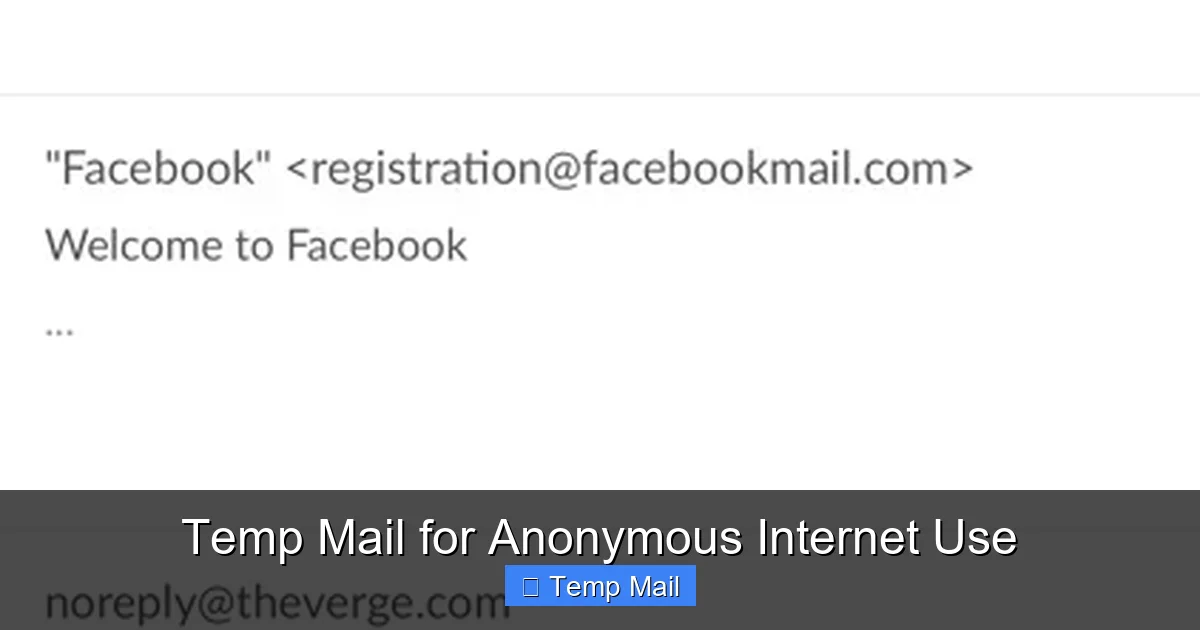
Some major platforms (like Google for a new Gmail account, or Facebook) actively block known temporary email domains. They do this to prevent abuse and fake account creation. If you try to sign up with a temp address and it’s rejected, that’s why. Simply generate a new address from a different domain the provider offers, or accept that for that specific service, you must use your real email (and weigh the spam risk).
Using temp mail is a fantastic habit, but it’s part of a larger philosophy of digital hygiene. Think of your primary email address as your home address. You wouldn’t give it to every stranger on the street. You’d use a P.O. box or a trusted intermediary for most transactions. Temp mail is that P.O. box for the internet.
Take 10 minutes to search your primary inbox for old sign-up confirmations from services you no longer use. See the pattern? Every one of those is a potential spam source. Going forward, make the automatic mental switch: “Is this a site I trust with my real identity, or is this a means to an end?” If it’s the latter, reach for the temp mail.
Temp mail stops spam at the source. Combine it with a robust spam filter (your email provider’s built-in one is usually good, but third-party tools like SpamSieve or Clean Email can add power). Use unique, strong passwords for every important account (a password manager makes this easy). Enable two-factor authentication (2FA) everywhere it’s offered, especially on your primary email itself. If a hacker gets your password, 2FA is the lock that keeps them out.
Even with temp mail, some spam might sneak through. Take a few minutes each week to bulk-delete old promotional emails and unsubscribe from newsletters you no longer read. Most legitimate newsletters must have an unsubscribe link by law; use it. This keeps your primary inbox tidy and makes the few remaining emails more meaningful.
The relentless march of spam isn’t a law of nature; it’s a consequence of our outdated habit of treating our email address like a public commodity. Temp mail represents a simple, elegant shift in that paradigm. It empowers you to withhold your primary identity from the vast, unvetted corners of the web. By adopting the disciplined use of disposable emails for all non-essential interactions, you build an almost impenetrable wall against spam. Your primary inbox transforms from a chaotic dumping ground back into a useful, trusted communication hub for friends, family, and essential services. You reduce your digital footprint, minimize your exposure to data breaches, and take a tangible stand for your online privacy. It’s a small action—copying a different email address—that yields a disproportionately large benefit. Start today. Your future, spam-free self will thank you.
Yes, using temp mail is completely legal and safe for the user. The services operate within data protection laws. The “safety” comes from the fact that you are not providing any personal information to create the address, so there is no personal data at risk if the service is compromised. The primary risk is using it for important accounts where you need to recover access.
It varies by provider, but most temporary email addresses last between 10 minutes and 48 hours. Common lifespans are 10 minutes, 1 hour, or 24 hours. The countdown timer is usually displayed on the provider’s page. After expiration, the address and all emails stored in it are permanently deleted from the server.
Generally, no. Temp mail services are designed almost exclusively for *receiving* emails. They typically disable outgoing mail (SMTP) to prevent abuse for spam and fraud. Their purpose is to be a silent drop-box for verification links or downloads, not a communication tool.
You will not be able to receive that verification email once the temporary address has expired. The account may remain in a “unverified” or limited state, or you may be locked out entirely. This is why it’s crucial to only use temp mail for services where you don’t anticipate needing long-term, verified access.
No, they are different. Anonymous email services (like ProtonMail or Tutanota) provide full-featured, long-term email accounts with strong encryption and no personal sign-up info. Temp mail provides a *temporary*, *inbox-only* address with no login and no persistence. Temp mail is for hiding your address from a single website; anonymous email is for having a permanent, private email identity.
Yes, they often can. Most temp mail providers use a set of known domain names (e.g., @tempmail.demo). Websites can maintain a blacklist of these disposable email domains and block sign-ups from them. This is why many temp mail services offer multiple domain choices—if one is blocked, you can try another.
অনলাইন নিউজপেপার থিম। এই থিমটি দিয়ে আপনারা বাংলা এবং ইংরেজি নিউজপেপার সাইট তৈরি করতে পারবেন । বার্তা ও বাণিজ্যিক কার্যালয়: ৭১, মতিঝিল, ঢাকা-১০০০। সম্পাদক : মো আসাদুজ্জামান আমানউল্লাহ । মোবাইল : ০১৭০০-০০০০০০ । ইমেইল : [email protected] ।
All rights reserved © 2019 themesdealer.Com