Image for Free Temporary Email for Fast Registrations


Free temporary email services provide instant, disposable email addresses designed for quick online sign-ups without using your personal inbox. They effectively shield your primary email from spam, marketing emails, and potential data breaches while maintaining your privacy. These tools are perfect for one-time registrations, accessing gated content, or testing services, offering a simple, commitment-free way to navigate the web securely.
You’re excited to download that new software, grab a discount code, or read an exclusive article. You click the “Sign Up” or “Get Access” button, and then it hits you: the dreaded email registration form. Suddenly, your enthusiasm is tempered by the thought of yet another account, another password to manage, and the inevitable flood of promotional newsletters that will follow. Sound familiar? What if you could bypass all that in under ten seconds? Enter the world of free temporary email—your secret weapon for fast, frustration-free online registrations.
Think of a temporary email service as a digital burner phone, but for your inbox. It gives you a real, functional email address that lives for a short, predetermined time—often just 10 minutes to a few hours. Its sole purpose is to receive the single verification email you need to access a website or service, after which it self-destructs, leaving no trace. This isn’t about hiding malicious activity; it’s about smart, pragmatic digital hygiene. In a landscape where your email address is a prime target for data miners and spammers, using a disposable address for non-essential sign-ups is a simple, powerful act of self-protection. This guide will walk you through everything you need to know about leveraging free temporary email for lightning-fast registrations, from how it works to advanced tips and security considerations.
At its core, a temporary email service is a web-based platform that generates a random, unique email address for you to use instantly. Unlike traditional email providers like Gmail or Outlook, there is no account creation, no password to remember, and no personal information required. The service provides you with a public inbox linked to that randomly generated address (e.g., [email protected]). You use this address to sign up for a website. The website sends a verification email to that address, and you can view it directly on the temp mail service’s website by refreshing your inbox. Once the designated time expires or you manually delete the inbox, the address and all its emails are permanently erased from the server.
These services operate on a simple yet clever technical model. They maintain a large pool of domain names and a corresponding set of mail servers. When you visit the site, the backend algorithm automatically assigns you an available email address from its pool and creates a corresponding inbox in its database. This inbox is tied to your browser session, often via a unique token or simply by the address itself. When an email arrives for that address, the mail server routes it to the associated inbox database entry. Since there’s no persistent user account, the system is designed for high turnover and anonymity. The “temporary” aspect is enforced by automated scripts that purge inboxes and recycle email addresses after their time limit or upon the first access, ensuring server resources are freed up.
While services vary, the best free temporary email platforms share common characteristics. They offer instant generation—no waiting. They provide a clean, minimal interface focused solely on the inbox list and email viewer. Auto-refresh is a standard feature, where the inbox page automatically checks for new messages every few seconds. They also include a copy-to-clipboard button for the email address, and often a manual refresh option. Advanced features might include choosing your own email alias from a list, extending the inbox lifetime, or even a browser extension for even quicker access. The emphasis is always on utility and speed over customization or storage.
Knowing when to use a temporary email is as important as knowing how. The strategy is to segregate your online life: use your permanent, personal email for banking, primary social media, and essential communications with trusted contacts. Use the temporary address for everything else that requires an email but doesn’t warrant a permanent connection to your identity.
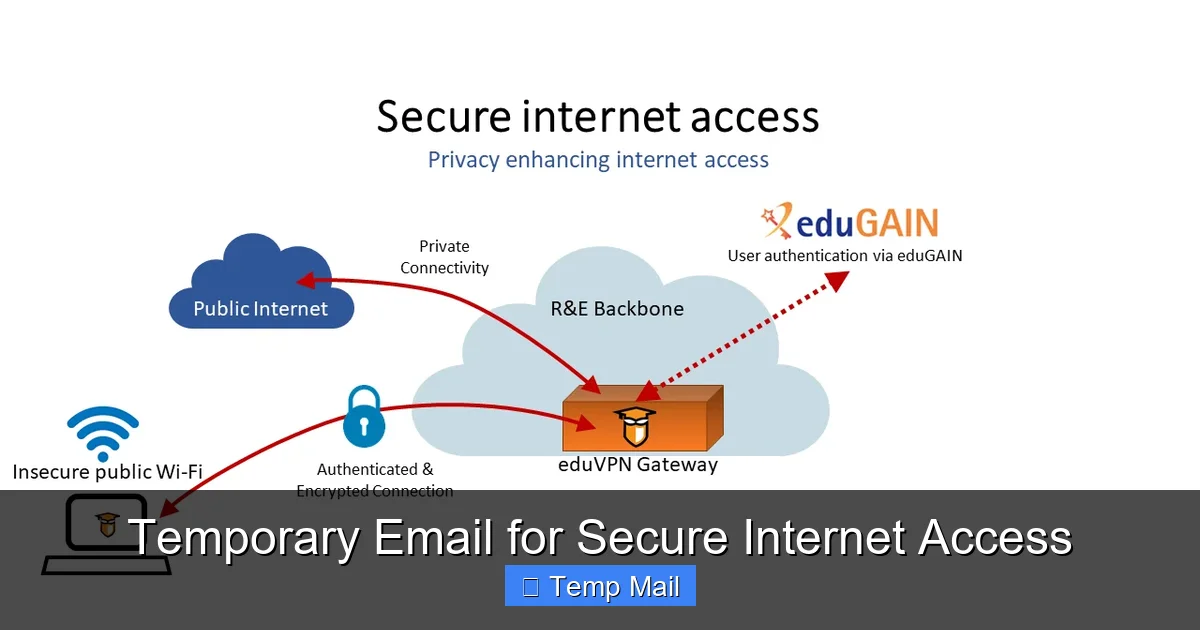
Visual guide about Free Temporary Email for Fast Registrations
Image source: internxt.com
This is the most common and legitimate use case. Countless blogs, e-books, research papers, and articles hide their content behind an email submission form. They promise value (“Download our free whitepaper!”) in exchange for your contact info. If the content is of fleeting interest, using your primary email just adds you to a newsletter list you’ll never engage with. A temporary email lets you get the PDF or article instantly, with zero commitment. The publisher gets their “lead,” you get your content, and your main inbox remains pristine. It’s a clean, ethical transaction.
Many online forums, news sites, or community platforms require an email to create an account before you can post a comment or download a file. Often, you’ll never visit that site again after that single interaction. Creating a permanent account for this is overkill. A temp mail address handles the verification and gets you in the door for that one-time contribution, after which the account (and its associated spam risk) vanishes into the digital ether.
Want to try a SaaS tool, a game beta, or a streaming service free trial without the hassle of a sales call or the risk of forgetting to cancel? Use a temporary email. This isolates the trial communications from your main inbox. You’ll still receive the activation link and initial welcome emails, but the inevitable “Your trial is ending!” and “Upgrade now!” reminders will go to an address that no longer exists. This is a fantastic way to test services risk-free.
When downloading utilities, drivers, or niche software from developer websites (not official app stores), they often require an email for the download link. If the source isn’t a major, trusted company (like Adobe or Microsoft), there’s a higher chance your email will be sold or misused. A disposable address lets you get the file you need while protecting your primary contact information from potential misuse.
Some websites are notoriously aggressive with data collection and email marketing. You might only want to browse a sale on a retail site once. If you use your main email, you’re likely signed up for a lifetime of promotional blasts. The temporary email acts as a spam sponge. It absorbs all the marketing emails from that one interaction, and then the address dies, taking all that future spam with it.
Not all temp mail services are created equal. While the core function is similar, differences in reliability, speed, and features can impact your experience. Here’s what to look for when selecting a tool.
Visual guide about Free Temporary Email for Fast Registrations
Image source: darksms.com
The primary goal is speed. The service should generate an address instantly and have an inbox that refreshes automatically every 5-10 seconds. Delays in receiving the verification email can defeat the purpose. Reliability is key—the inbox must actually receive the email. Some services have poor deliverability and emails bounce or land in spam filters on the sender’s side. Look for services with a reputation for good deliverability. Reading recent user reviews or forums can provide insight here.
Check the available domains. Some services offer a long list of domains (e.g., @mailinator.com, @guerrillamail.com, @10minutemail.com), which can be useful if a particular domain is blocked by a website’s spam filter. The inbox lifetime is the next critical factor. For most registrations, a 10-30 minute window is sufficient. However, if you need to receive an email that might take longer to arrive (e.g., a manual review process), look for services offering 1-hour, 6-hour, or even 24-hour inboxes. Some allow you to extend the time manually.
A clean, uncluttered interface is a must. You should see your temporary email address prominently displayed and a clear inbox list. Buttons for “Copy Address” and “Refresh” should be obvious. Useful extras include:
The most common concern about temporary email is security. “Is it safe? Can someone else see my emails?” Understanding the privacy model is crucial.
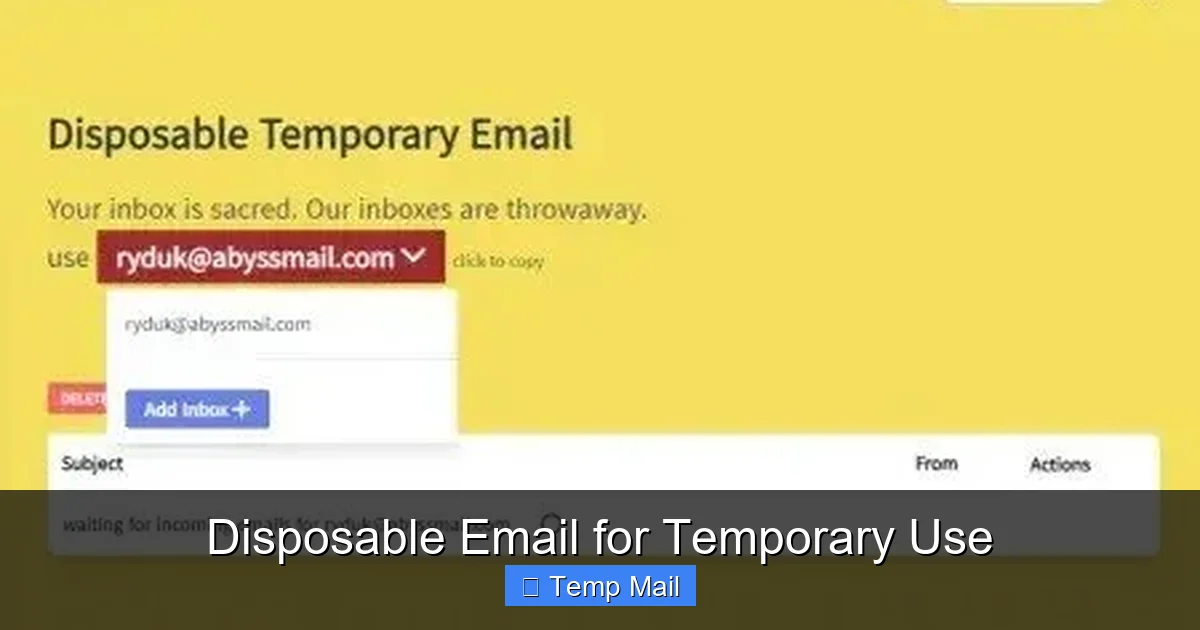
Visual guide about Free Temporary Email for Fast Registrations
Image source: freeappsforme.com
By design, temporary email services do not provide confidentiality. The service provider can technically see any email that passes through their servers. The privacy benefit is not from hiding your emails from the service itself, but from not linking that activity to your real identity. Since you don’t create an account, the service has no password, no recovery email, and no personal data to associate with the inbox session. The temporary address is anonymous. This means:
Therefore, you should never use a temporary email for sensitive communications: banking, official government correspondence, password resets for your main accounts, or confidential business documents. Its purpose is for low-stakes, one-way verification emails from websites.
The main risk is inadvertent exposure. Because the inbox is often public to anyone who knows the address (in some models, just visiting the site with the same address shows the inbox), you should never use it for anything private. Another risk is the service itself being untrustworthy. A rogue provider could log all emails and sell the data. Mitigate this by using well-known, reputable services with clear privacy policies stating they do not log or sell user data. Also, be aware that some websites actively block known temp mail domains to prevent abuse. If this happens, you may need to try a different service from the list of available domains.
Let’s make this concrete. Here’s a practical walkthrough using a generic temporary email service to sign up for a forum that offers a free e-book.
Step 1: Navigate to the Service. Open your browser and go to a site like temp-mail.org or 10minutemail.com. The page loads immediately.
Step 2: Get Your Address. Look at the top of the page. A full, random email address is already displayed and selected (e.g., [email protected]). There’s a big “Copy” button next to it. Click it. Done. You now have your disposable address in the clipboard. No forms, no captcha, no delay.
Step 3: Use It. Go to the forum’s registration page. Paste the copied address into the “Email” field. Fill in any other required details (username, password). Submit the form.
Step 4: Receive the Email. The forum will send a verification email. Switch back to your temporary email tab. You’ll see the new email appear in the inbox list within seconds. Click on it to open it.
Step 5: Verify. Inside the email, find the verification link or code. Click the link (or copy the code back to the forum site). Your account is now verified. You can log in and download the e-book.
Step 6: Done. Close the temporary email tab. You never need to think about that address again. In 10 minutes (or whatever the service’s lifetime is), the inbox and all its contents will be automatically destroyed. You have achieved your goal with zero spam added to your primary inbox.
The demand for privacy and control over one’s digital footprint is growing. As spam and data harvesting become more sophisticated, tools like free temporary email services will evolve. We may see more integration with password managers and browsers, offering “disposable email” as a native option during sign-up flows. There could also be a rise in more advanced, privacy-focused temporary services that use stronger encryption for the brief lifespan of the inbox.
Ultimately, free temporary email is not a replacement for your primary email; it is a specialized tool for a specific job: fast, clean, and private registrations. It embodies a simple but powerful philosophy: your primary email address is a key to your digital identity. Guard it jealously. Use it only for matters of importance and trust. For everything else—the fleeting downloads, the one-off forum posts, the curious trial runs—embrace the liberating simplicity of a disposable address. It saves you time, declutters your mind, and builds a crucial firewall against the noise of the modern web. The next time you see an email gate, remember: you don’t have to pay with your privacy. Just grab a temporary address and walk right through.
Yes, using temporary email services is completely legal. They are legitimate tools designed for privacy and convenience. The legality only comes into question if the disposable address is used for fraudulent activities, which is illegal regardless of the email type used.
They are safe for low-stakes, non-essential accounts where you only need temporary access. However, you should never use them for critical accounts like banking, primary social media, or any service where account recovery is vital, as you will lose access permanently when the email expires.
The lifespan varies by service. Common durations are 10 minutes, 30 minutes, 1 hour, or 24 hours. Some services allow you to manually extend the time. Always check the specific service’s policy before relying on it for an email that might arrive later.
Most free temporary email services are receive-only. They are designed to let you get a verification email, not to send emails from that address. Sending functionality is rare and, if available, is usually very limited to prevent abuse.
Most reputable temporary email services can receive emails with attachments (like PDFs or images). The attachment will appear as a download link within the email viewer on their site. However, there are often strict size limits, typically around 5-10 MB.
The most significant limitation is the lack of persistence. If you need to access an account or service long-term, you will be locked out once the email address expires because you cannot reset the password. Therefore, it is only suitable for temporary, one-time interactions.
অনলাইন নিউজপেপার থিম। এই থিমটি দিয়ে আপনারা বাংলা এবং ইংরেজি নিউজপেপার সাইট তৈরি করতে পারবেন । বার্তা ও বাণিজ্যিক কার্যালয়: ৭১, মতিঝিল, ঢাকা-১০০০। সম্পাদক : মো আসাদুজ্জামান আমানউল্লাহ । মোবাইল : ০১৭০০-০০০০০০ । ইমেইল : [email protected] ।
All rights reserved © 2019 themesdealer.Com