Image for Top Anonymous Email Services Online



Navigating the need for online privacy requires tools that shield your true identity. Anonymous email services provide a crucial layer of separation between your real self and your digital activities, whether for signing up to sketchy sites, whistleblowing, or simply avoiding spam. This guide cuts through the noise to review the best temporary and secure providers, highlighting their core features, strengths, and ideal use cases so you can choose the right tool for your privacy needs.
Let’s be real. Your everyday Gmail, Outlook, or Yahoo address is a goldmine of personal data. It’s tied to your name, phone number, and often your real location. Every website you sign up for with it gets a piece of that puzzle. This creates a comprehensive digital profile advertisers, data brokers, and potentially hostile actors can piece together. When you need a clean slate—to test a new service without committing, to post feedback on a controversial forum, or to communicate a sensitive tip—your primary email is the worst tool for the job. It lacks the fundamental layer of separation that anonymous email services provide.
Think of it like physical mail. Using your real home address for every package and letter means everyone you interact with knows where you live. An anonymous email is a P.O. box in a different city. It receives the mail (messages) but doesn’t disclose your actual residence (your identity). The best anonymous email services go further, ensuring the P.O. box itself doesn’t keep logs of who rented it or what was delivered, and the mail inside is tamper-proof.
When we talk about “anonymous email,” we’re really addressing two intertwined but distinct goals. The first is sender anonymity: preventing the recipient from knowing who you really are. This is where disposable, temporary addresses shine. The second is content privacy: ensuring that even if someone intercepts the message, they cannot read it. This requires strong, end-to-end encryption. The most robust services architect their systems to achieve both, understanding that one without the other leaves a critical vulnerability.
The landscape of anonymous email isn’t monolithic. It’s divided into two primary categories, each serving a different need. Understanding this split is the first step to making the right choice. We’ll explore the leaders in both the disposable/temporary space and the secure/encrypted provider space.

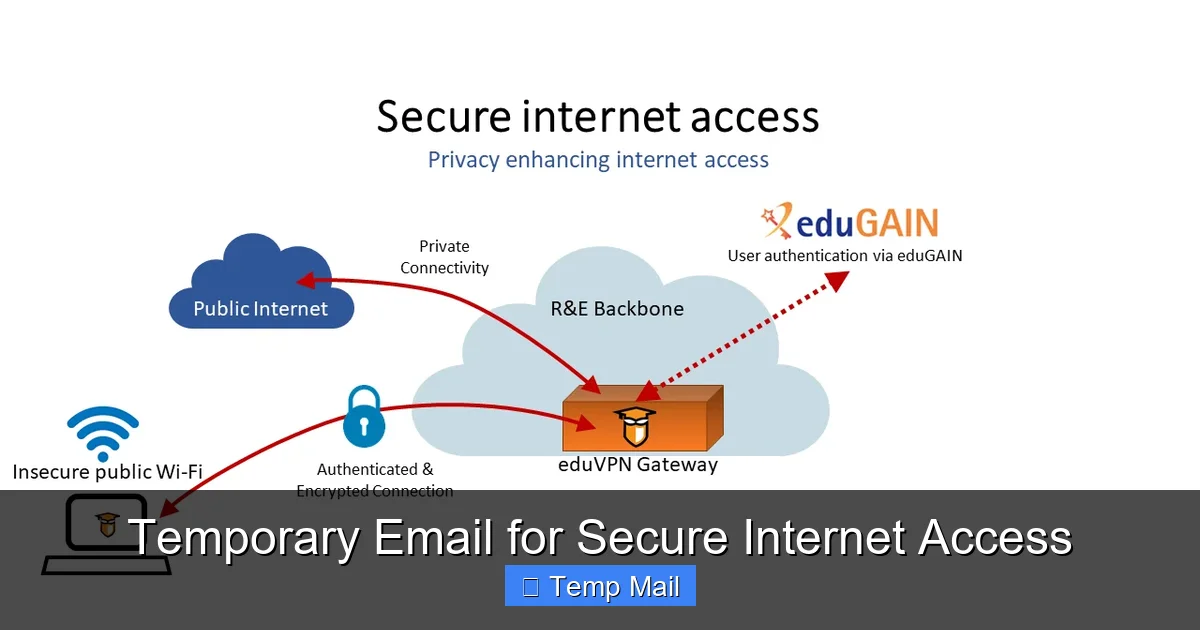
Visual guide about Top Anonymous Email Services Online
Image source: sp-ao.shortpixel.ai
These are the “burner phones” of the email world. They generate a random, working inbox that lasts for a short period—usually 10 minutes to a few hours or days. Their sole purpose is to get past a website’s “enter your email” gate without using your real one. They are perfect for one-time sign-ups, downloading a file without subscribing to a newsletter, or creating a trial account you plan to abandon.
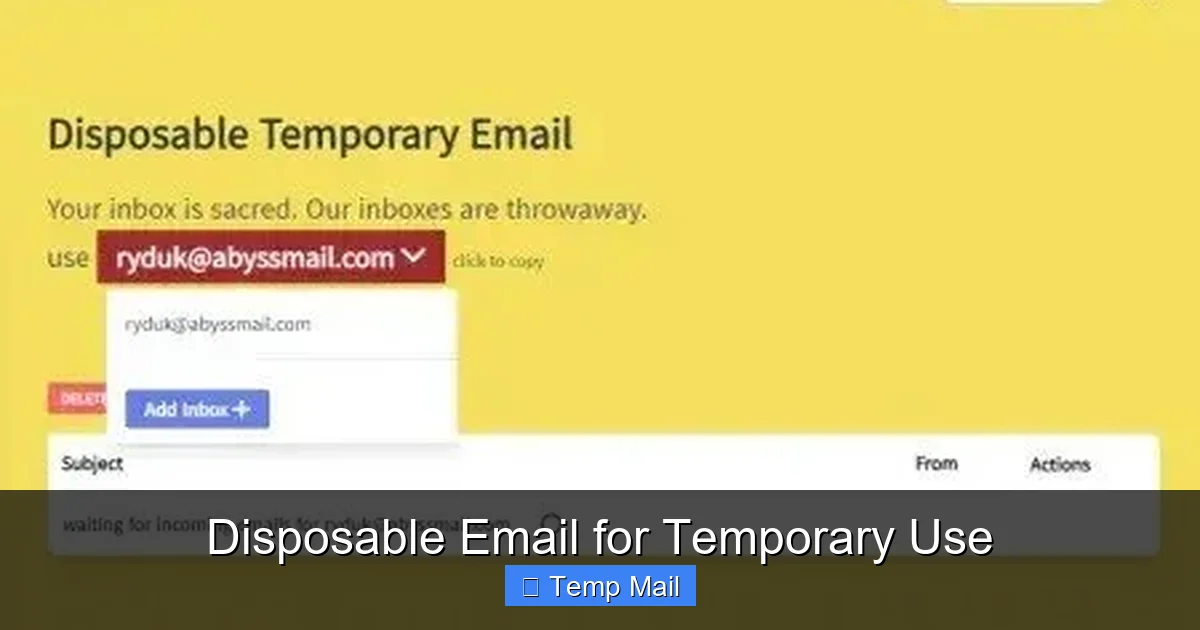
Top Pick: Temp-Mail. It’s the archetype of this category. You visit the site, it instantly generates a random address (e.g., `[email protected]`), and you can start receiving emails in the browser-based inbox. No registration, no password, no trace. The inbox auto-refreshes, and the address expires after a set time. Its simplicity is its strength. Use it for: Anywhere you need a quick verification code and don’t care about replying or long-term access.
Notable Mention: 10MinuteMail. The original pioneer. It’s even more minimalist, with a stark countdown timer. The address and inbox are purely ephemeral. Its reliability for receiving certain automated emails (like from some social media platforms) can vary, but for basic “click the link in your email” tasks, it’s a classic tool.
This is where things get serious. These services are built from the ground up for privacy. They don’t just give you a fake address; they provide a full-featured email account (with storage, folders, and the ability to send/reply) that is protected by strong encryption. Crucially, they require minimal or no personal information for sign-up and are based in privacy-respecting jurisdictions.
Top Pick: ProtonMail. Often called the “gold standard,” ProtonMail is based in Switzerland, which has some of the world’s strongest privacy laws. It offers end-to-end encryption, meaning even ProtonMail cannot read your emails. You can sign up with a random username and no phone number (though some features may require verification later). It has a generous free tier (1 GB) and a polished interface that feels like Gmail. Its zero-access architecture means your emails are encrypted on your device before they even reach ProtonMail’s servers. Use it for: Ongoing private correspondence, activist work, journalistic sources, or as your primary email if you prioritize privacy over all else.
Strong Contender: Tutanota. Based in Germany, Tutanota is another powerhouse. It encrypts not just the body of your emails but also the subject line, contacts, and calendar. Like ProtonMail, it requires no personal data for sign-up. Its free plan offers 1 GB of storage. Tutanota’s encryption is automatic between Tutanota users and can be applied to external recipients via a password-protected message. Its interface is clean and functional, though some find it less intuitive than ProtonMail’s. Use it for: A highly secure, privacy-first alternative with strong European data protection (GDPR) backing.
Specialist Option: Guerilla Mail. This service blurs the line between the categories. It provides a temporary inbox (you can choose your own random address) that lasts for a configurable period (up to 6 days). You can send emails from this address during that time. It’s more feature-rich than Temp-Mail but less permanent and secure than ProtonMail. It’s a great middle ground for a slightly longer-term anonymous project that doesn’t require encryption. Use it for: Medium-length anonymous projects, like posting on a forum for a week or handling a customer support issue without revealing your main email.
With the options laid out, how do you decide? It boils down to asking yourself a few critical questions about your intended use. The wrong tool can create a false sense of security, which is more dangerous than having no tool at all.

Visual guide about Top Anonymous Email Services Online
Image source: techlazy.com
This is the most important security question. Who are you hiding from?
Choosing a service is step one. Using it correctly is where most people fail. A single mistake can unravel your entire anonymity. Here is a step-by-step behavioral checklist.

Visual guide about Top Anonymous Email Services Online
Image source: sp-ao.shortpixel.ai
Your anonymous email must exist in a separate digital environment from your real identity. This means:
When signing up for a secure provider like ProtonMail:
Once your account is active:
Understanding the “why” makes the “how” clearer. Let’s walk through realistic scenarios where these tools are not just helpful but essential.
A website demands an email to read an article, download a PDF, or access a free trial. You have zero intention of engaging with them long-term. Here, a disposable service like Temp-Mail is perfect. You get the download, the code, and then you forget about it. Your primary inbox remains pristine, and you’ve given the company nothing of value to sell or spam.
Practical Tip: Have a disposable tab open alongside the site you’re signing up for. Copy the generated address, paste it in, and switch back to the disposable tab to find the verification email within seconds.
You’re fed up with Google scanning your emails to sell ads. You want a reliable, long-term email for personal use but with ironclad privacy guarantees. You want to email friends and family privately. This is the domain of ProtonMail or Tutanota. You’ll use it as your main account. You might even pay for a plan to support the service and get more storage. The trade-off is that some less tech-savvy contacts might find the encryption process (sending a password-protected email to non-users) slightly cumbersome.
This is the highest-stakes scenario. You need to send sensitive information to a journalist or organization without leaving a trail that could lead back to you. Your life or liberty may be at risk. Here, you must combine tools and discipline.
Believing an anonymous email service makes you invisible is a dangerous fantasy. Understanding its limits is as important as using the tool itself.
Even with perfect end-to-end encryption, the envelope information—the “from” and “to” addresses and the timestamp—often passes through servers in an unencrypted form to route the message. Truly privacy-centric services like ProtonMail minimize this data and store it only briefly. However, if a provider is served with a legal request from its own jurisdiction and has any logs, that metadata can be handed over. This “who contacted whom” pattern can be incredibly revealing, even if the message content is secret.
No company can legally ignore a valid court order from the country it operates in. This is why jurisdiction is paramount. A provider in the Five Eyes alliance (US, UK, Canada, Australia, NZ) has a history of broad surveillance and data-sharing agreements. A provider in Switzerland requires a very high legal threshold and a Swiss court order. But the risk is never zero. If you are a target of a serious investigation, state-level actors have other methods (network surveillance, device compromise) that bypass email provider logs entirely.
The weakest link is almost always the user. You might:
Technology can only do so much. Discipline and paranoia are your primary security tools.
The cat-and-mouse game between privacy seekers and surveillance is endless. The future will likely bring two trends: increased sophistication in anonymity networks and increased pressure from governments.
Projects are exploring fully decentralized email systems built on blockchain or peer-to-peer networks, where no central server exists to be seized or subpoenaed. These are still experimental, complex, and not user-friendly for the average person, but they represent the philosophical extreme of anonymity.
Governments worldwide continue to push for “lawful access” or encryption “backdoors.” While technically weakening encryption for everyone, these policies could also force providers to implement logging or scanning capabilities that fundamentally break their anonymity promises. The legal battles in Europe, the US, and elsewhere will shape what is legally possible for these services in the coming decade. The most resilient services will likely be those with strong legal teams, transparent warrants canaries, and a proven commitment to fighting overreach in court.
No. Using a service that provides a temporary or secure email address is perfectly legal. The legality depends entirely on how you use it. Using it for fraud, harassment, or illegal activities is illegal, regardless of the email tool used.
It depends. If you use a disposable service like Temp-Mail, there is typically no account to trace and no logs kept, making tracing the sender nearly impossible unless you made a mistake (like logging in from your home IP while using it). With a secure provider like ProtonMail, they cannot read your content, but if compelled by a Swiss court order, they might be forced to provide any limited metadata they retain (like IP logs at login time) if it exists. Your behavior (accessing from a public Wi-Fi vs. home) is the biggest factor.
Anonymous email primarily focuses on hiding the sender’s identity (using a fake address). A disposable service does this well but may not encrypt content. Encrypted email focuses on making the message content unreadable to anyone but the recipient, but it may still be tied to your real identity. The best services, like ProtonMail, provide both: a fake/unknown identity and strong encryption.
For the most private sign-up, you should avoid it. Services like ProtonMail and Tutanota allow you to create an account without a phone number, though they may request one later for certain features (like large file sending) or if they detect suspicious activity. Disposable services like Temp-Mail require no sign-up at all. If a service mandates a phone number for basic use, it is collecting more personal data and is less anonymous.
Yes, you can send from an anonymous address (from a disposable or secure provider) to any standard email address. However, the recipient will see the “from” address you used. If you use a secure provider like ProtonMail to send to a Gmail user, the message will not be end-to-end encrypted for the Gmail user unless you use ProtonMail’s “encrypt for external” feature, which sends them a password-protected message via a separate link.
“Safe” is relative. Free services must monetize somehow. Disposable services like Temp-Mail show ads on their interface, which is their business model. For secure providers, the free tier is a loss-leader to attract users, with the hope you upgrade. The trustworthiness comes from their open-source code, independent audits, transparent privacy policies, and jurisdiction. ProtonMail and Tutanota have strong reputations built over years. A random, unknown “free anonymous email” site could be logging everything to sell data or serve malware. Stick to the well-known, reputable providers reviewed here.
অনলাইন নিউজপেপার থিম। এই থিমটি দিয়ে আপনারা বাংলা এবং ইংরেজি নিউজপেপার সাইট তৈরি করতে পারবেন । বার্তা ও বাণিজ্যিক কার্যালয়: ৭১, মতিঝিল, ঢাকা-১০০০। সম্পাদক : মো আসাদুজ্জামান আমানউল্লাহ । মোবাইল : ০১৭০০-০০০০০০ । ইমেইল : [email protected] ।
All rights reserved © 2019 themesdealer.Com