Image for Temp Email for Social Media Signups


Tired of your main email inbox getting flooded with social media promotions and potential data leaks? Using a temporary email for social media signups is a simple, powerful strategy to reclaim your privacy and sanity. This guide explains exactly how disposable email addresses work for platforms like Facebook, Instagram, and Twitter, the best services to use, and the crucial do’s and don’ts to keep your online presence secure without hassle.
You’re scrolling through your favorite social media app, and a pop-up screams, “Sign up for our newsletter!” You sigh, thinking about the inevitable flood of promotional emails that will find their way to your primary inbox. Or maybe you’re just hesitant to give your real email to a new platform, worried about how your data might be sold or leaked. Sound familiar? What if I told you there’s a simple, free, and incredibly effective hack to sidestep this entire problem? Enter the world of temporary email addresses, your new best friend for stress-free social media signups.
This isn’t about being paranoid; it’s about being practical and protective. In an era where our email addresses are often the master key to our digital identities, handing them out casually is like giving your house keys to every stranger you meet. A temp email for social media signups lets you create a digital “burner” address—a disposable, no-frills inbox that exists solely for the purpose of verifying that new TikTok or Pinterest account. Once you’ve confirmed the signup, you can walk away, leaving the spam and potential data risks behind with that disposable address. Let’s dive deep into how this works, why it’s a game-changer, and how you can use it like a pro.
Think of a temporary email service as a public phone booth for the internet. You walk in, you get a number (an email address), you use it for a quick call (a signup verification), and then you leave. The booth and the number are then available for the next person. Technically, these services generate random, unique email addresses that are active for a short, predetermined period—usually 24 to 48 hours, sometimes longer. There’s no password, no complex setup, and no long-term commitment.
When you visit a site like Temp-Mail.org or 10MinuteMail.com, their system instantly allocates an unused inbox from a massive pool of domains they control (e.g., @tmpmail.org, @guerrillamail.com). This inbox is displayed to you immediately. Any email sent to that specific address during its active lifetime lands in that public inbox. You, and only you (since the address is unique and random), can view these emails by simply refreshing the page on the temp mail site. There’s no login required because the “session” is tied to your browser. Once the timer expires, the address and all its emails are purged from the system forever, making it truly disposable.
Not all temp mail services are created equal. For social media signups, you need reliability and simplicity. Key features to look for include:
So, why go through this extra step? The benefits stack up quickly, especially when you consider the nature of social media platforms and their data practices.
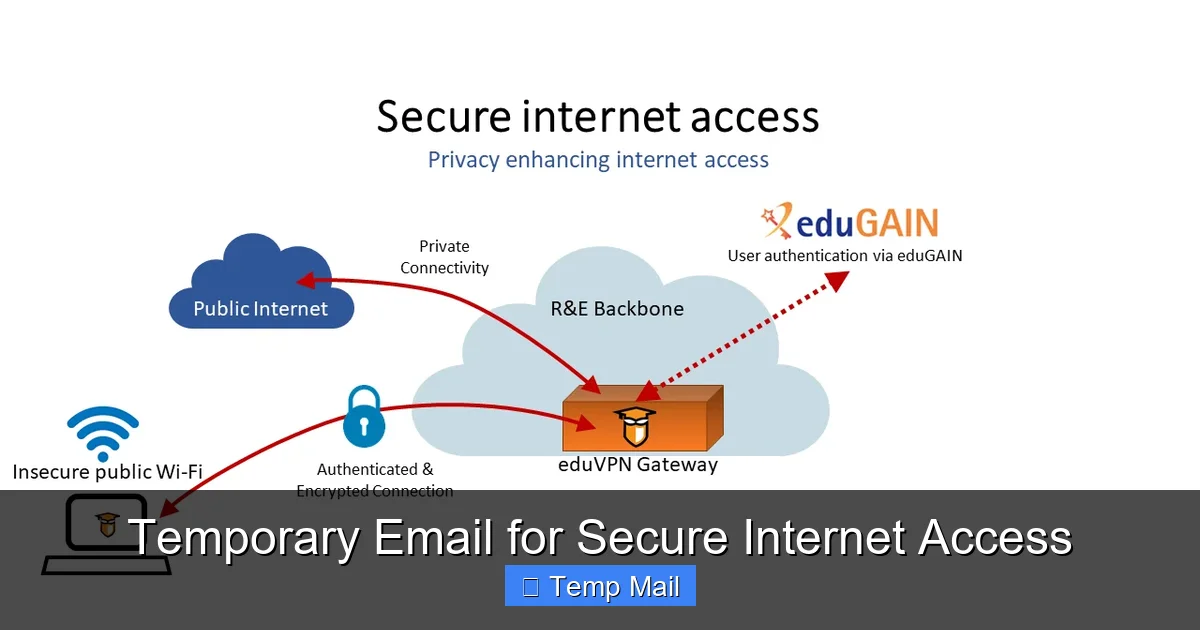
Visual guide about Temp Email for Social Media Signups
Image source: 20294495.fs1.hubspotusercontent-na1.net
Let’s be honest: social media platforms are marketing machines. By signing up with your primary email, you’re immediately added to their promotional list. That “weekly digest” is often a daily deluge. You’ll get notifications about new features you don’t care about, partner offers, and “exclusive” deals. A temp email catches all of this. The promotional emails go to the disposable inbox, which you check once for the verification link and then abandon. Your primary inbox remains pristine, reserved for bills, work, and genuine personal communication.
Major social media platforms are colossal targets for hackers. When (not if) a data breach occurs, email addresses are always part of the stolen data trove. This exposes you to phishing attacks, credential stuffing (where hackers try your email/password combo on other sites), and a flood of spam. If that compromised email is a temporary one that no longer exists, the hacker has a dead end. They have an address that leads nowhere, protecting your real identity and your other, more important accounts.
Every account you create with your real email is another data point that can be linked back to you. Ad networks and data brokers use these associations to build incredibly detailed profiles of your interests, political leanings, and buying habits. Using a different, unlinkable email for each social platform (or at least for non-essential ones) fragments your digital footprint. It makes it much harder for these invisible systems to paint a complete picture of “you,” giving you a sliver of anonymity back.
Ever wanted to check out a new, controversial social platform but felt uneasy about giving it your email? A temp email removes that barrier. You can sign up, explore the app’s features and community, and decide it’s not for you—all without any long-term commitment or worry. You simply close the tab. This is invaluable for journalists, researchers, activists, or just curious individuals who want to browse without leaving a permanent trail.
The process is beautifully simple, but doing it correctly avoids common pitfalls. Here’s your foolproof guide.
Visual guide about Temp Email for Social Media Signups
Image source: no-cache.hubspot.com
Before you even visit the social media site, open a new browser tab and go to your chosen temp mail provider (e.g., Temp-Mail.org). The site will immediately generate an address for you. Copy it to your clipboard. Pro Tip: Keep this tab open. You’ll need to refresh it to check for the verification email.
Navigate to the social platform (Facebook, Instagram, Twitter/X, TikTok, Pinterest, Reddit, etc.). Start the signup process as usual. When prompted for an email address, paste the temp email you just copied. Create your username and password as usual. Proceed to the step where the platform sends a verification email.
Now, switch back to your temp mail tab. Refresh the page. Within seconds to a few minutes (depending on the platform’s email system), you should see an incoming email from the social media site. Click on it to open it. Inside, you’ll find either a verification code to enter on the signup page or, more commonly, a big blue “Verify Email” or “Confirm” button. Click that link/button.
The link will usually open a new tab and automatically confirm your email, completing the signup. You’re now logged in! This is the most critical step: Immediately go to your new social account’s settings. Find the “Email” or “Contact” section. Here, you have two choices:
Once you’ve completed steps 3 and 4, you can close the temp mail tab. The inbox will expire, and any future emails (like “Welcome!” or “Update your preferences”) will bounce. Your social account is now active with a clean, spam-free primary email (if you did Option B) or just isolated (Option A).
Not all services are reliable. Some have too-short timers, others are blocked by major platforms. Here are the top contenders and what makes them suitable.
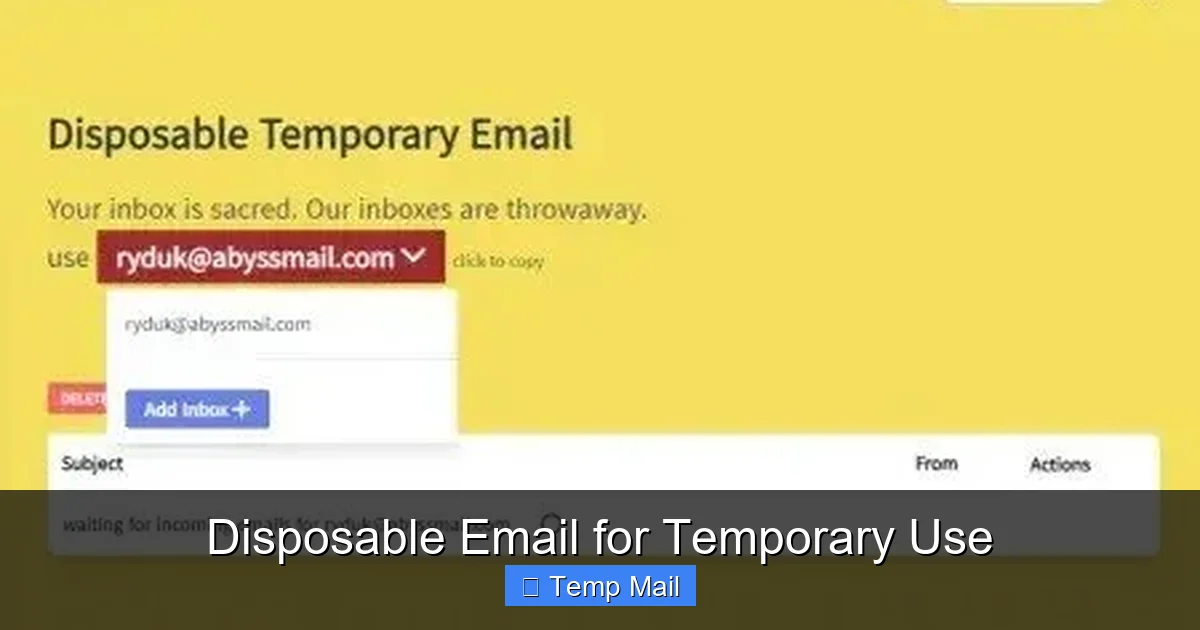
Visual guide about Temp Email for Social Media Signups
Image source: blog.choto.co
One of the most popular and user-friendly options. It offers a clean interface, a 24-hour inbox lifespan (extendable), and multiple domain choices. It’s rarely blocked by major social networks. The lack of a password is both its strength (convenience) and its weakness (anyone with the browser tab open can see your emails, but that’s also true for you).
A veteran in the space. It provides a 60-minute inbox by default, but you can easily extend it in 60-minute increments. It also offers a “Send Email” feature if you need to reply, though that’s rarely needed for social signups. Its domain (@guerrillamail.com) is well-known but still frequently works.
As the name suggests, it’s designed for very short-term use. For social media, where verification emails can take a few minutes to arrive, 10 minutes can be cutting it close. However, it’s extremely simple and sometimes the only option if other domains are blocked. Use it only if you’re signing up and verifying immediately.
Steer clear of temp mail services that require payment for basic functionality or have convoluted, ad-heavy interfaces. Also, avoid services that insist on you creating an account to “save” your inbox—that defeats the purpose of being temporary and anonymous. The beauty is in the simplicity and the lack of strings attached.
Using a temp email is a fantastic tool, but it’s not a magic bullet. Understanding its limitations is essential to avoid disaster.
This is the single biggest risk. If you sign up with a temp email and then forget your password, the “Forgot Password?” link will send a reset email to… the temp address. That inbox is gone. The account is permanently locked. This is why Option B from Step 4 (adding a real recovery email) is so vital for any account you might want to keep long-term. For throwaway accounts you never intend to access again, this isn’t an issue. But for your main Instagram or Facebook? Use your real email for recovery.
Social media giants are wise to temp mail. They constantly update their systems to block domains from popular temp mail providers. If you get an error saying the email domain is invalid, you’ll need to try a different temp service or a different domain from the same service. This is why having a service with multiple domain options is a huge advantage.
If you enable 2FA on a social account and choose “email” as your second factor, those security codes will be sent to the registered email address. If that’s a temp mail that’s expired, you’re locked out. Always use an authenticator app (like Google Authenticator or Authy) for 2FA on accounts created with a temp email.
Using a temp email to create fake accounts for spam, harassment, botting, or to circumvent a ban is a direct violation of every major social platform’s Terms of Service. It’s also unethical and, in many cases, illegal. This tool is for your privacy and convenience, not for impersonation, fraud, or abuse. Use it responsibly.
To get the most out of this strategy without falling into traps, follow these best practices.
For the social media accounts that truly matter—your professional LinkedIn, your monetized YouTube channel, your main Facebook account with real friends—don’t use a temp email. Instead, create a dedicated, real email address just for these important social accounts. Use a provider like Gmail or ProtonMail. This keeps your personal email (for banking, family) completely separate and adds a layer of organization. The temp email strategy is for the rest: the new app you’re trying, the hobby forum, the platform you check once a month.
Some platforms, particularly those involving financial transactions (like Facebook Marketplace with high-value items) or professional services (like LinkedIn), may have policies against disposable emails. While they rarely enforce it strictly for basic signups, it’s good to be aware. Using a temp email for a platform that explicitly forbids it could lead to account suspension without warning.
This should be obvious, but it bears repeating: never use a temp email for banking, cryptocurrency exchanges, government tax portals (IRS, etc.), healthcare portals, or official university systems. These services require a permanent, reliable, and secure point of contact. Your primary, secure email is the only appropriate choice.
If you’re using a temp email for an account you might want to revisit (e.g., a hobby-specific Discord community linked to a Twitter account), take a simple precaution. After signing up, write down the username and the temp email address used in a secure password manager (like Bitwarden or 1Password) or a physical notebook. This way, if you want to log in months later, you have the credentials. You won’t be able to recover the password, but you might still be logged in on your phone or browser.
As data privacy regulations like GDPR and CCPA grow, and as tech giants face more scrutiny, are disposable emails becoming obsolete? The answer is a resounding no. If anything, their relevance is growing. While platforms are getting better at blocking known domains, the cat-and-mouse game continues. New temp mail services and domains pop up constantly. Furthermore, the fundamental problem—the need to verify an account without sacrificing your primary contact point—isn’t going away. Until social media platforms offer a truly privacy-centric, verification-only method (like a one-time code via SMS without storing the number long-term), the temp email remains a vital, user-controlled tool in the privacy toolkit. It democratizes a simple form of data minimization: giving away only what is absolutely necessary for the immediate transaction.
Navigating the social media landscape doesn’t have to mean surrendering your email address to an eternal barrage of promotions and data-harvesting machines. Using a temporary email for social media signups is a low-effort, high-reward strategy that puts you back in control. It’s a digital shield that filters out the noise, fragments your profile for advertisers, and protects you from the fallout of the next inevitable data breach. The key is to use it wisely: for exploration, for low-stakes platforms, and for accounts where you don’t need a long-term, recoverable identity. For your truly important digital assets, a dedicated, secure primary email is still king. By combining these strategies—a fortress-like primary email and a fleet of disposable addresses for everything else—you build a robust, pragmatic defense for your online life. So next time a social media site asks for your email, ask yourself: is this a “real” relationship, or is it just a one-time verification? If it’s the latter, don’t hesitate. Grab a temp address, sign up, verify, and walk away. Your future, less-cluttered inbox will thank you.
Yes, using a disposable email address is completely legal. It’s a legitimate privacy and security tool. However, using it to create fake accounts for fraud, harassment, or to violate a platform’s Terms of Service is illegal and against the rules of virtually all social networks.
You will get locked out if you forget your password and haven’t added a real, permanent email address as a recovery option. To avoid this, immediately add your primary email as a secondary or recovery email in the account settings after signing up with the temp address, then remove the temp email from the primary contact slot if possible.
Initially, yes. After signup, all notifications, promotions, and alerts will be sent to the registered email address. However, once the temporary inbox expires (after 24-48 hours), any new emails sent to that address will bounce and be lost. You will stop receiving notifications at that point.
If you get an error during signup saying the email domain is invalid, that specific temp mail provider is blocked. Simply switch to a different temp mail service (e.g., from Temp-Mail.org to Guerrilla Mail) or use a different domain offered by the same service. The platform’s blocklist is constantly changing.
They are generally safe for their intended, short-term purpose. However, because the inboxes are publicly accessible via the unique URL (no password), anyone who has that URL can see the emails. The service itself is the risk. You should never use a temp email for sensitive information like password resets for important accounts, financial data, or private documents. For simple social media verification codes, the risk is minimal.
Yes, you can use a temp email to sign up for Facebook and Instagram. However, both platforms are very aggressive about blocking known temp mail domains. You may need to try several different temp services or domains before one works. Furthermore, for Facebook, if you ever want to run ads or use certain monetization features, a verified, real email and often a real identity will be required.
অনলাইন নিউজপেপার থিম। এই থিমটি দিয়ে আপনারা বাংলা এবং ইংরেজি নিউজপেপার সাইট তৈরি করতে পারবেন । বার্তা ও বাণিজ্যিক কার্যালয়: ৭১, মতিঝিল, ঢাকা-১০০০। সম্পাদক : মো আসাদুজ্জামান আমানউল্লাহ । মোবাইল : ০১৭০০-০০০০০০ । ইমেইল : [email protected] ।
All rights reserved © 2019 themesdealer.Com