Image for Temp Mail: What It Is and How to Use It Safely



Temp mail provides a temporary, disposable email address for signing up to websites or accessing content without using your primary email. It’s a powerful tool for privacy and spam prevention but comes with significant risks if misused. Using it safely means understanding its limitations, avoiding critical accounts, and choosing reputable providers to prevent data leaks or security issues.
Have you ever wanted to download a file, read an article, or sign up for a service but stopped because it demanded your email address? You knew that handing over your primary email might lead to a lifetime of spam, newsletters you never read, and a cluttered inbox. This is a universal modern frustration. Enter the world of temporary email, or “temp mail,” a simple yet powerful tool designed for exactly this scenario. It’s like using a public, virtual P.O. box for your online interactions—you get the mail you need for that one transaction and then walk away, leaving no trace behind. But while the concept is straightforward, navigating it safely requires a clear understanding of what it is, how it works, and the significant pitfalls to avoid. This guide will walk you through everything you need to know to use temp mail effectively and without compromising your digital security.
At its core, temp mail is a service that provides you with a random, disposable email address and a corresponding inbox, typically generated instantly on a website. Unlike your permanent Gmail, Outlook, or Yahoo address, this temporary address has no link to your identity, your other accounts, or your long-term digital footprint. It exists for a short, predefined period—often just 10 minutes to 48 hours—after which the address and all its emails are permanently deleted by the service provider.
The magic of temp mail lies in its simplicity and automation. When you visit a temp mail website, the system algorithmically creates a unique email address (e.g., [email protected]) and pairs it with a private, direct URL that serves as your inbox. You copy this address, paste it into the website or app you’re signing up for, and then return to the private inbox URL to view any incoming verification or welcome emails. There is no password required for this inbox because the URL itself is the key. Once the timer runs out or you manually delete the address, the entire virtual mailbox is scrubbed from the server, leaving nothing behind.
Understanding the technical flow helps demystify both its utility and its vulnerabilities. The process is intentionally minimalistic to prioritize speed and anonymity over security.

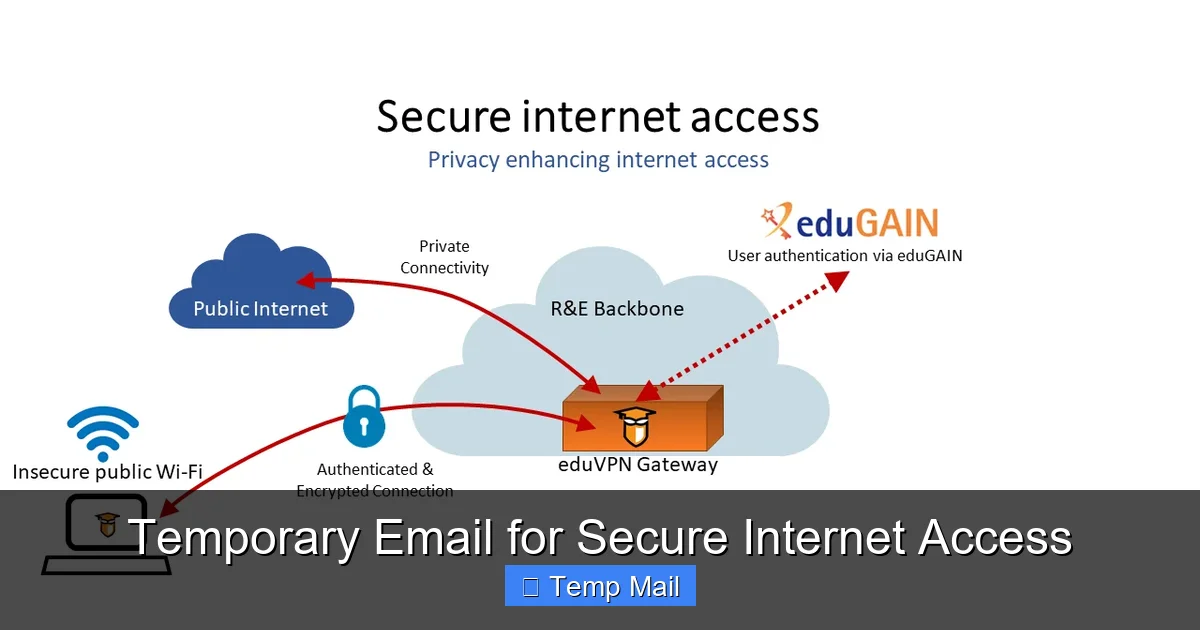
Visual guide about Temp Mail: What It Is and How to Use It Safely
Image source: appmole.com
First, you navigate to a provider’s site like Temp-Mail.org, 10MinuteMail.com, or Guerrilla Mail. The site’s backend immediately reserves a random string of characters as the username and pairs it with the provider’s domain. It then generates a unique, lengthy URL that points directly to a database entry for that specific inbox. This URL is your only means of access. You use the email address for sign-up. When the target service sends an email, it routes through the standard internet mail system (SMTP) to the temp mail provider’s server. The provider’s system recognizes the address, deposits the email into the correct database entry, and makes it visible when you visit your private inbox URL. After the time limit—which can be a fixed 10 minutes, 1 hour, or extendable in some cases—a cron job on the server automatically purges that database entry, erasing the address and all contained emails forever.
Given its ephemeral nature, temp mail shines in specific, non-critical scenarios. Using it wisely is the first step to safety.

Visual guide about Temp Mail: What It Is and How to Use It Safely
Image source: temp-mail.io
This is the numero uno reason people use temp mail. Imagine signing up for a one-time discount at an online store, downloading a whitepaper, or accessing a public Wi-Fi portal. These actions often trigger a flood of marketing emails. By using a temp address, you contain that spam to a disposable inbox that will vanish, keeping your primary email pristine for personal and professional communications.
Many blogs and software sites require an email address to unlock a PDF, template, or free trial. Temp mail allows you to get the content you need immediately without committing to a newsletter subscription you’ll later unsubscribe from.
Developers and QA testers use temp mail to quickly verify email functionality in apps and websites—like password reset flows or notification systems—without creating endless real accounts or polluting test environments with personal data.
Journalists, activists, or individuals researching sensitive topics might use temp mail to create accounts on forums or platforms where anonymity is prudent, ensuring their research activity cannot be traced back to their primary identity via email.
Using temp mail is not without peril. Treating it like a regular email account is a recipe for lost data, security breaches, and frustration.

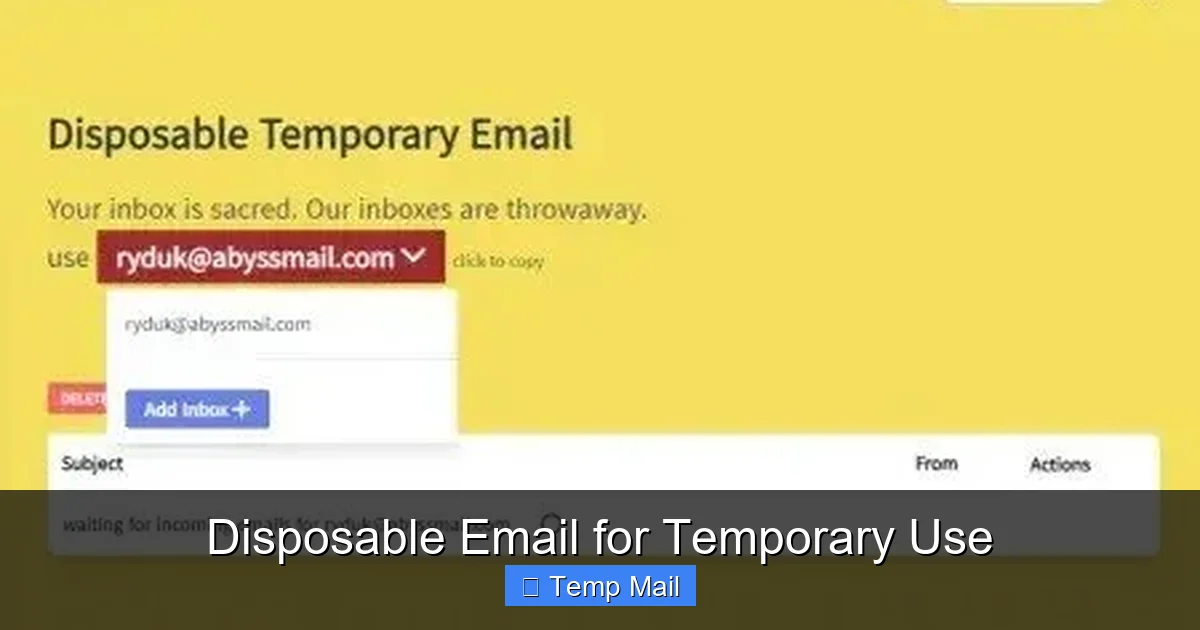
Visual guide about Temp Mail: What It Is and How to Use It Safely
Image source: temp-mail.club
This is the most critical risk. The inbox is not password-protected; anyone who has the URL can read your emails. Furthermore, the connection to the temp mail site may not use HTTPS (though reputable ones do), and the emails themselves are stored in plain text on the provider’s server. Never, under any circumstances, use a temp address for password resets, two-factor authentication codes, or any communication containing personal identifying information (PII), financial data, or private documents.
If you close the browser tab and lose the inbox URL, your emails are gone forever. There is no “forgot password” or account recovery process. This makes it useless for any service you might need to log back into later, like social media, cloud storage, or subscription services.
The temp mail landscape is filled with fly-by-night operations. A provider could shut down without notice, start injecting ads into your viewed emails, or, worst of all, log all received emails and sell the data. Some providers even blacklist common temp mail domains, meaning the website you’re trying to sign up for may reject the address outright.
Using a disposable email to create accounts on platforms that explicitly require a “real” or “permanent” email (like Facebook, LinkedIn, or most banking apps) violates their Terms of Service. This can lead to immediate account suspension or permanent bans without warning.
Armed with the knowledge of risks, you can now employ temp mail as a precise tool rather than a blunt instrument. Safety is about intention and execution.
This cannot be stressed enough. Your rule of thumb should be: if you would cry if you lost access to it, do not use temp mail. This includes: email accounts themselves, social media profiles, banking/financial services, government/health portals, primary cloud storage, and any work or school-related accounts. For these, use a dedicated, secure, primary email with a strong, unique password and two-factor authentication enabled.
Not all temp mail services are created equal. Before using one, do a quick check. Does the site use HTTPS? Is there a clear, concise privacy policy (even if it says “we don’t store data,” that’s a start)? Does it have a reputation for reliability, or are there user complaints about ads or data selling? Stick to well-known, established providers that have been around for years and have transparent operations. Avoid providers that look overly cluttered with ads or have unclear business models.
The entire philosophy of temp mail is single-use. Once you’ve received the verification code or download link you needed, close the tab. Do not bookmark the inbox. Do not try to use it again later. If a website asks for your email again for a different purpose, generate a *new* temp address. Treat each temp address as a single-use token, not a reusable tool.
Since the URL is the only key, sharing it is like sharing your password. If you need to forward an email from your temp inbox to someone, copy the *content* of the email and paste it into a new message from your secure email. Never forward the original email or share the inbox link itself.
Temp mail is a specific tool for a specific job. Sometimes, you need something with a bit more permanence or security, but still want to protect your main address.
Many email providers (like Gmail and Outlook) support “plus addressing” (e.g., [email protected]) or built-in alias features. Emails sent to the alias still land in your main inbox, but you can filter them easily and, if spam becomes a problem, simply delete the alias. This offers better security than temp mail while still allowing you to segregate sign-ups.
Create a separate, free email account (e.g., on ProtonMail for privacy, or a standard provider) that you use *only* for online sign-ups, newsletters, and commercial transactions. This keeps your primary email completely clean and gives you a permanent, password-protected inbox for any service you might need to access again, without mixing it with your personal communications.
Services like ProtonMail, Tutanota, or Mailfence offer end-to-end encryption and strong privacy policies based in jurisdictions with robust data protection laws. While not disposable, they are excellent for users who want to minimize data collection and enhance security for accounts that require more than a one-time sign-up.
Temp mail is an incredibly useful utility in the digital age, acting as a first line of defense against inbox clutter and a simple method for preserving anonymity during low-stakes online interactions. Its power lies in its disposability. However, that same disposability is its greatest weakness. It is not a substitute for a secure, managed email account. The key to using temp mail safely is rigorous discipline: confining its use to non-critical, single-transaction scenarios, never trusting it with anything of value, and always selecting a provider with a track record of reliability. By respecting these boundaries, you can enjoy the privacy benefits of temp mail without falling victim to its inherent risks. Remember, in the world of online security, the right tool for the right job is the only safe tool. Use temp mail wisely, and let it be the burner phone of your email life—useful for the moment, then safely discarded.
Yes, using a temporary email service is legal in most jurisdictions. The legality issues arise from how you use it, such as creating fraudulent accounts, bypassing bans, or engaging in illegal activities, which are illegal regardless of the email type used.
Technically, you can, but you absolutely should not. Temp mail inboxes are not secure, have no password protection, and expire quickly. Using it for password resets will permanently lock you out of the account when the inbox deletes.
They are generally not secure by design. Inboxes are accessible via a simple URL, often without HTTPS on lesser-known sites, and emails are stored unencrypted. Anyone with the URL can read your emails, and providers themselves could potentially log or intercept data. Do not use them for any sensitive information.
Often, yes. Many popular websites and platforms actively maintain and update blacklists of known temp mail domains. If you try to sign up with an address from a blacklisted domain, the site will reject it immediately, telling you to use a “real” email address.
It varies by provider. Common lifespans are 10 minutes, 1 hour, 24 hours, or 48 hours. Some services allow you to extend the time manually. Once the timer expires, the email address and all its contents are permanently deleted from the server.
Immediately change the account’s recovery email to a permanent, secure address you control. If you’ve already been locked out because the temp inbox expired, you will need to go through the platform’s official account recovery process, which may be difficult or impossible without access to the original email.
অনলাইন নিউজপেপার থিম। এই থিমটি দিয়ে আপনারা বাংলা এবং ইংরেজি নিউজপেপার সাইট তৈরি করতে পারবেন । বার্তা ও বাণিজ্যিক কার্যালয়: ৭১, মতিঝিল, ঢাকা-১০০০। সম্পাদক : মো আসাদুজ্জামান আমানউল্লাহ । মোবাইল : ০১৭০০-০০০০০০ । ইমেইল : [email protected] ।
All rights reserved © 2019 themesdealer.Com