Image for Temporary Email Services for Quick Verifications


Tired of your inbox flooding with spam after every online sign-up? Temporary email services are your secret weapon. They give you a real, working email address for 10 minutes to a few hours—just long enough to verify that account or download that file. Then, poof, it vanishes, taking all future spam with it. It’s a simple, free tool for boosting online privacy and keeping your primary email pristine.
You know the drill. You find a great article behind a “subscribe to our newsletter” wall. You want the free ebook from a new software company. You’re trying to access a public Wi-Fi network that demands an email. You sigh, pull out your primary email address, and type it in, bracing for the inevitable onslaught of promotional bloat that will clog your inbox for months. What if there was a better way? A way to get that quick verification code, download that file, or access that content… and then walk away without leaving a digital footprint? Enter the world of temporary email services.
These clever tools provide a real, functional email address for a short, predefined period—usually anywhere from 10 minutes to 48 hours. They are the digital equivalent of a burner phone, designed for a single, low-stakes interaction. In this guide, we’ll unpack everything you need to know about using temporary email for quick verifications. From how they actually work under the hood to the best use cases, the top services to try, and the critical pitfalls to avoid, this is your complete manual for mastering disposable inboxes.
It might sound like magic, but the mechanics are surprisingly straightforward. These services run on automated systems that generate and manage thousands of email domains and inboxes on the fly.
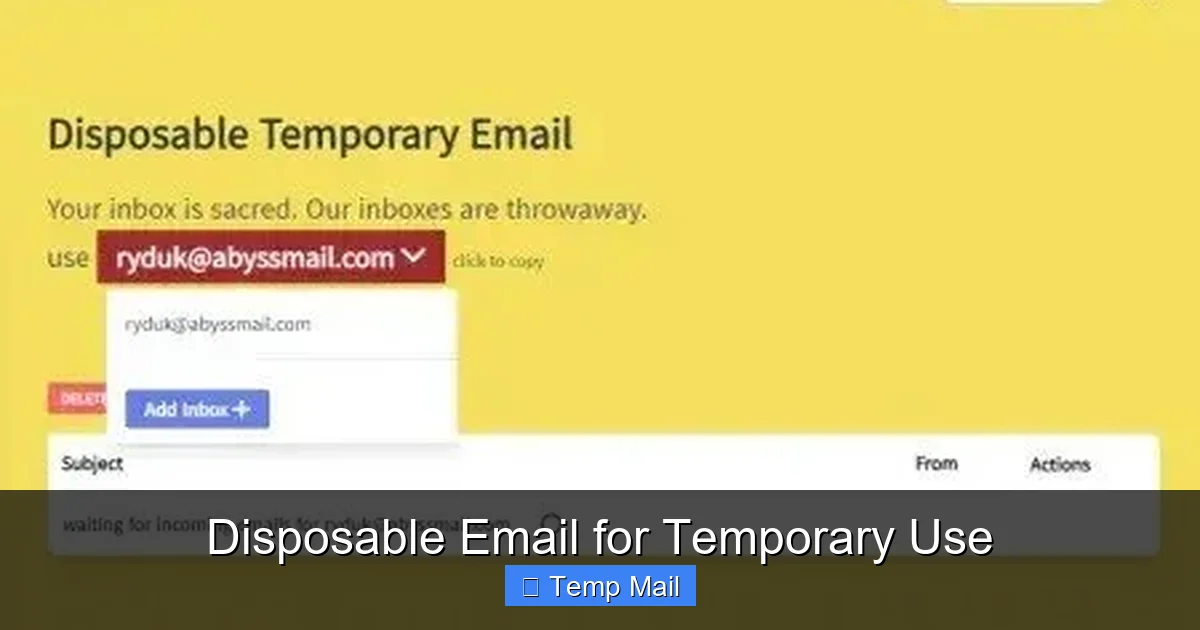
When you visit a site like Temp-Mail.org or 10MinuteMail.com, the service instantly assigns you a random email address. This address is usually a jumble of letters and numbers paired with the service’s own domain (e.g., [email protected]). Behind the scenes, the system creates a dedicated, isolated inbox for that specific address. You don’t need a password; the unique URL or address itself is the key. As emails arrive for that address, they are displayed in the web-based inbox you’re viewing. This inbox is accessible to anyone who has the exact URL, which is why some services generate a long, unique link for you.
The defining feature is the timer. From the moment the address is created, a countdown begins. This can be as short as 10 minutes for ultra-quick tasks or extend to 24-48 hours for more involved processes. Once the timer hits zero, the system permanently deletes the inbox and all its contents. The email address is then retired forever and never reused, ensuring your data is gone for good. Some advanced services even allow you to manually extend the time if needed, giving you a little more flexibility.
Because there’s no account creation, no password, and no personal information required, you leave virtually no trace with the temporary email provider itself. The service doesn’t care who you are; it only cares about managing its pool of disposable inboxes. Your activity is anonymous, tied only to the random address and the IP address of your current session, which is typically forgotten after the session ends.
Understanding *when* to use a temporary email is just as important as knowing *how*. Here are the most common and effective scenarios where these services shine.
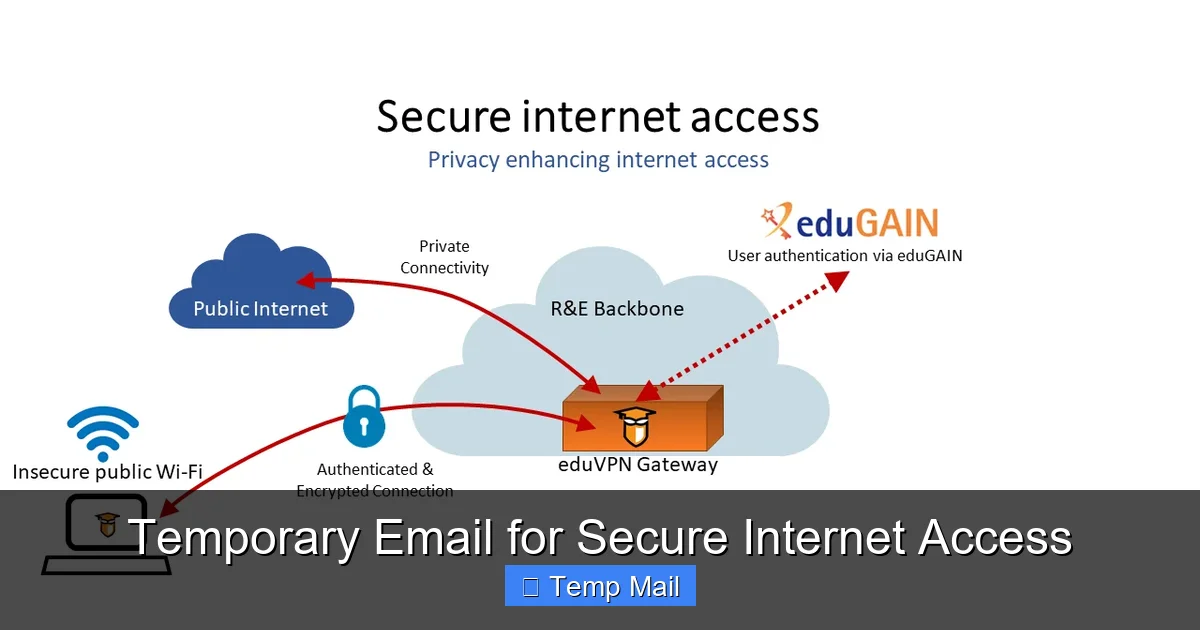
Visual guide about Temporary Email Services for Quick Verifications
Image source: atempmail.com
This is the #1 use case. You want to read a whitepaper, access a research report, or download a template. The website asks for your email in exchange. Using your primary email means you’ll likely be added to their marketing list. A disposable email gets you the download link instantly, and the address dies before any follow-up spam can arrive. Pro Tip: After downloading, quickly check the temporary inbox for the confirmation or download link, then close the tab. Don’t linger.
You want to test a new SaaS tool’s free trial, create an account on a forum you might visit once, or sign up for a discount code from a store you’ll never shop at again. Using a temp mail prevents these services from building a profile on your real email and bombarding you with “We miss you!” reactivation campaigns months later.
You’re entering a contest from an unknown brand, signing a petition, or accessing a public Wi-Fi hotspot that requires email registration. Your gut says, “This feels sketchy.” Trust it. A temporary email is the perfect shield. If the source is legitimate but just spammy, you’re protected. If it’s a phishing attempt, you’ve given them a dead end address that leads nowhere valuable.
For developers, marketers, or website owners, temp emails are invaluable for testing. You can quickly test if your own website’s signup or password reset emails are being delivered, formatted correctly, and contain the right links—all without polluting your real inbox or creating multiple test accounts. Just use a different temp address for each test.
Journalists communicating with sources, activists organizing in sensitive regions, or everyday users wanting to post on a platform without linking the account to their identity can use a temporary email as the first step in creating an anonymous presence. It’s a foundational layer of operational security for low-risk anonymity needs.
Not all temp mail providers are created equal. While the core function is similar, key differences in usability, features, and reliability exist. Here’s what to look for.
Visual guide about Temporary Email Services for Quick Verifications
Image source: atempmail.com
1. Temp-Mail.org: The classic, no-frills option. It’s incredibly fast, requires no clicks beyond landing on the page, and provides a clear countdown timer. It’s perfect for the most basic, urgent verification needs.
2. 10MinuteMail.com: As the name implies, it gives you a solid 10 minutes, which is often enough for most verification emails. The interface is clean and focused, with a big, easy-to-read timer. It’s reliable and straightforward.
3. SimpleLogin (now part of Proton): This is a different, more powerful category. SimpleLogin creates *forwarding aliases* (e.g., [email protected]) that forward to your real inbox. You can send replies from the alias. The key advantage is longevity—aliases last until you delete them, and they work with any email provider. It’s a premium, more sustainable solution for managing online identities long-term, though it has free tier limits.
Temporary email is a powerful tool, but it’s not a magic bullet. Using it incorrectly can lead to real problems. Understanding these limitations is non-negotiable for safe usage.
Visual guide about Temporary Email Services for Quick Verifications
Image source: sendigram.com
Remember, the inbox is accessible via a unique URL. Anyone who has that link can see the emails. Do not use a temporary email for anything remotely sensitive. Never use it for:
Many popular platforms (like Google, Facebook, major streaming services) maintain lists of known disposable email domains and will block sign-ups from those addresses. If you encounter a message like “This email domain is not allowed,” you’ve hit a block. You can try a different service or domain, but for major platforms, you’ll need a real email.
Once the inbox expires, everything is vaporized. There is no archive, no search function, and no way to retrieve an old verification code if you need it days later. You must use the information *while the inbox is active*. This makes them terrible for any service that might email you important updates weeks or months down the line.
Because they are anonymous, temporary emails are frequently used for spam, fraud, and creating fake accounts. This can lead to the entire domain (e.g., all @tmpmail.org addresses) being blacklisted by certain email providers or services. If you try to sign up somewhere and the verification email never arrives, the service’s domain might be on a blacklist. In this case, you must switch to a different provider.
Armed with knowledge, you can use these services like a pro. Follow these best practices to maximize benefit and minimize risk.
Treat every temporary email address as a single-use ticket. Use it for one specific sign-up or download. Do not use the same temporary address for multiple unrelated services. This creates a weak link where one data breach or spam list could connect those separate activities to the same disposable identity.
Always keep your real, primary email address logged in and open in another browser tab or window. When the verification email arrives in the temp inbox, copy the code or link, paste it into the sign-up form on the other site, and immediately close the temp mail tab. Don’t get distracted.
If a website is asking for an email to do something trivial (like view a public blog post), and you don’t even need a verification code, just close the pop-up. Don’t give *any* email. If the process for getting your “free” guide requires you to jump through 5 hoops and sign up for 3 different mailing lists, ask yourself if it’s worth it. Sometimes the best move is to abandon the process entirely.
For services you trust but don’t want to give your main email to (like a new newsletter you genuinely want to read), consider using a forwarding alias service like SimpleLogin or AnonAddy. You get a unique, permanent-ish address that forwards to your real inbox. You can delete the alias anytime if the sender becomes spammy. This is a more sustainable middle ground between a 10-minute inbox and your primary address.
This cannot be stressed enough. If you sign up for a service with a temporary email and then forget your password a month later, you are locked out forever. There is no “forgot password” reset that will work. Only use temp mail for accounts you will never need to log into again after the initial verification.
As privacy concerns grow, the demand for tools that give users control over their digital footprint will only increase. Temporary email services are a simple, effective response to the email address spam economy. We’re likely to see more integration, with browser extensions and password managers building disposable email generation directly into their workflows. However, the cat-and-mouse game with websites that block these domains will continue. The evolution will be towards smarter, more resilient systems that can generate unique, long-lived forwarding aliases on demand, blending the convenience of a temp address with the reliability of a real inbox. For the foreseeable future, though, the classic 10-minute disposable inbox remains a vital, free tool in every privacy-conscious internet user’s toolkit.
So next time you’re faced with that email gate, pause. Ask yourself: “Is this a interaction I want to be associated with my primary identity?” If the answer is no, reach for a temporary email. Get your code, get your file, and walk away. Your future self, with a clean and manageable inbox, will thank you.
Yes, using disposable email addresses is perfectly legal. They are a legitimate privacy tool. The legality issues arise from how someone *uses* the address, such as for fraud, harassment, or illegal activities, which is illegal regardless of the email type.
They are safe in the sense that they contain no personal data linking back to you, and they expire quickly. However, the inboxes themselves are not secure; anyone with the unique URL can read the emails. Never use them for sensitive data like passwords or financial information, as the content could be intercepted if the service is compromised or the URL is shared.
Yes, very easily. They check the domain of your email address against public lists of known disposable email providers. If your email ends in @tmpmail.org or similar, the website’s system will typically block the sign-up attempt immediately.
A temporary email is a standalone, short-lived inbox that receives mail and dies after a time. An email alias is a forwarding address that sends all incoming mail to your real, permanent inbox. Aliases last until you delete them and allow you to manage all your email from one place, offering more longevity and control.
It varies by service. Common durations are 10 minutes, 1 hour, or 24 hours. Some services allow you to extend the time manually. Always check the countdown timer on the service you’re using.
Technically you can receive the 2FA code in a temporary inbox, but it is highly discouraged. Since the inbox expires, you will lose access to your account as soon as you need to log in again on a new device. 2FA emails must go to a permanent, accessible email address you control.
অনলাইন নিউজপেপার থিম। এই থিমটি দিয়ে আপনারা বাংলা এবং ইংরেজি নিউজপেপার সাইট তৈরি করতে পারবেন । বার্তা ও বাণিজ্যিক কার্যালয়: ৭১, মতিঝিল, ঢাকা-১০০০। সম্পাদক : মো আসাদুজ্জামান আমানউল্লাহ । মোবাইল : ০১৭০০-০০০০০০ । ইমেইল : [email protected] ।
All rights reserved © 2019 themesdealer.Com