Image for Top Temp Mail Alternatives You Should Know



Tired of unreliable disposable emails? This guide explores robust temp mail alternatives that offer better privacy, security, and usability. We break down the key categories—from advanced disposable inboxes to email forwarding and alias services—and review top tools like SimpleLogin, AnonAddy, and Guerrilla Mail. Learn critical selection criteria, essential security features, and practical use cases to choose the service that truly fits your needs for signing up, verifying accounts, or shielding your primary email from spam and data breaches.
Let’s be honest. We’ve all been there. You need to sign up for a service, download a file, or access a piece of content, but the website demands an email address. Your primary inbox is sacred—you don’t want it flooded with promotional spam or, worse, caught in a data breach. The instinctive solution is to reach for a temp mail service. You type in a random address from a site like Temp-Mail.org, grab the verification code, and move on. Simple, right?
But then the problems start. The inbox loads slowly. The verification email never arrives. The address disappears after 10 minutes, just as you need to click a final confirmation link. Or, you try to use it for a slightly more involved process, like signing up for a newsletter you might actually want to read, and the service fails you. Basic disposable email generators are notoriously flaky. They’re often public, meaning anyone can see your inbox. They have limited lifespans. And they offer zero control once the address is created.
This is where the world of temp mail alternatives comes into play. It’s a broad and evolving category that goes far beyond the throwaway inboxes of yesteryear. These alternatives are built with better technology, stronger privacy principles, and more user-friendly features. They’re designed not just for a single verification code, but for ongoing privacy management, secure account creation, and true inbox control. Whether you’re a privacy-conscious individual, a developer testing applications, or just someone tired of spam, understanding these alternatives is key to protecting your digital identity. This guide will walk you through everything you need to know, from the different types of services to specific recommendations and how to choose the right one for your needs.
Before we dive into the alternatives, it’s crucial to understand the inherent weaknesses of the classic, no-frills disposable email service. These sites are typically simple web apps. You visit, a random email address is generated (like [email protected]), and a public inbox appears on the same page. Anyone else who visits that same URL at that moment can see the same inbox. This is a massive privacy flaw.
Imagine you use a public disposable address to sign up for a forum. The verification email lands in that public inbox. Before you can even copy the code, someone else (or a bot) on the same site could see it, potentially hijacking your account creation. This is not a theoretical risk; it’s a common frustration reported by users. It makes these services unsuitable for anything requiring a modicum of security.
Most basic services are designed to be extremely short-lived. Addresses and their contents are purged after 10 minutes, an hour, or at most a day. This is fine for a quick “click the link in your email” verification. But what if the service sends a follow-up email with a welcome discount? What if you need to reset a password later? The address is gone, and you’re locked out. This lack of persistence is a deal-breaker for any service you might want to interact with over days or weeks.
Because these domains are public and widely used for spam, many legitimate email systems and firewalls block them outright. You might find yourself unable to sign up for a service because the provider’s system recognizes the temp mail domain as a source of abuse. Furthermore, the servers are often under-provisioned, leading to slow loading times, missed emails, or complete service outages during peak usage.
These flaws aren’t just annoyances; they represent real risks to your productivity and security. They force you to either use your real email (and accept the spam) or risk failed sign-ups and potential account takeover. The alternatives we’ll explore solve these problems by introducing concepts like private inboxes, email forwarding, and persistent aliases.
When moving beyond basic disposables, the market essentially splits into two powerful, distinct categories. Understanding this split is the first step to choosing the right tool. The first category improves upon the disposable model itself. The second category is a fundamentally different approach that mimics having multiple, dedicated email addresses without the hassle.
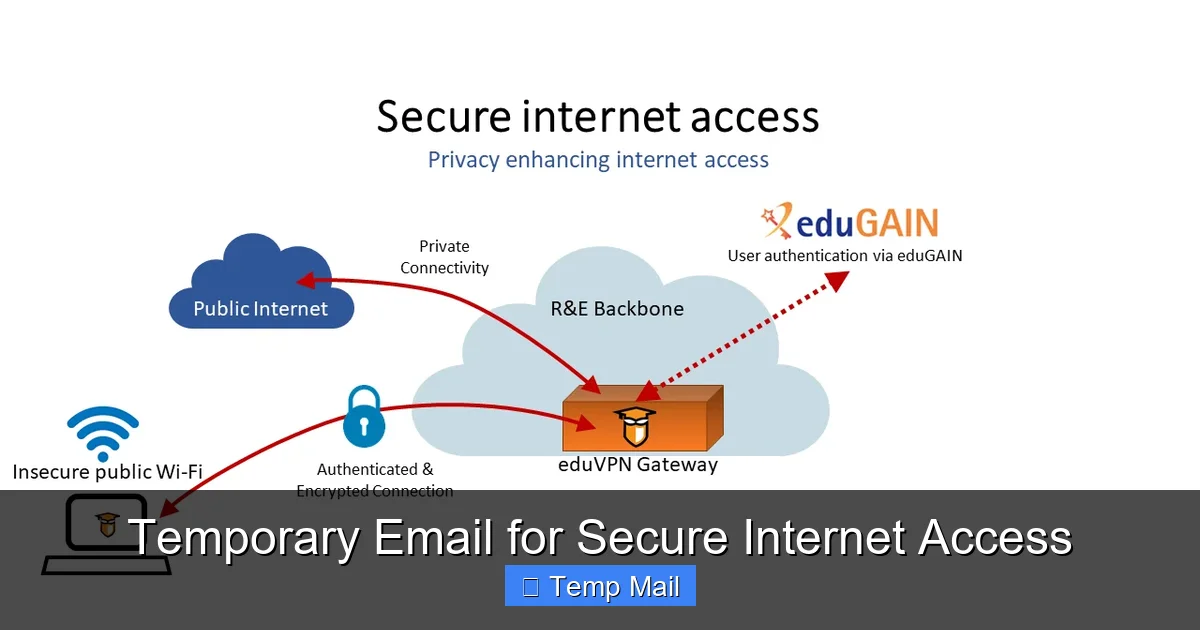
Visual guide about Top Temp Mail Alternatives You Should Know
Image source: receive-sms.com
These services take the core idea of a temporary inbox but execute it with far better technology and user privacy. Instead of a public address, they generate a private, unique inbox for you alone. Only you have the URL or the credentials to access it. This immediately solves the “public inbox” problem.
These services typically offer:
They are ideal for scenarios where you need a slightly longer-lived, private address for a specific, time-bound task—like signing up for a webinar series over a week, creating a trial account for a SaaS tool, or verifying a phone number with an email-based service. You get privacy and a guaranteed inbox without any long-term commitment. Think of them as a reliable, private hotel room for your email for the duration of your stay.
This is the more powerful and flexible category, representing a paradigm shift. Instead of a separate inbox that you check manually, these services create unique, forwardable email aliases that automatically route incoming mail to your primary, permanent email address (like your Gmail or Outlook).
Here’s how it works: You sign up for the service (often with your real email). The service gives you a custom domain (e.g., @alextool.sl.lol). You can then create unlimited “aliases” or “sub-addressing” emails on that domain, like [email protected] or [email protected]. When someone emails that alias, the service instantly forwards it to your real Gmail inbox. You can then reply directly from the alias, maintaining your privacy even in correspondence.
Key features include:
This model is superior for long-term privacy hygiene. It’s perfect for online shopping, newsletter subscriptions, social media sign-ups, or any service you use regularly but don’t want to tie to your core identity. It’s not just a temporary shield; it’s a permanent, intelligent filter for your entire digital life.
Let’s look at the best-in-class for the first category: services that provide reliable, private temporary inboxes that last longer than 10 minutes.
Visual guide about Top Temp Mail Alternatives You Should Know
Image source: imgv3.fotor.com
A significant upgrade from the most basic generators. Temp-Mail.org provides a private inbox tied to a randomly generated address. The inbox lasts for a full 24 hours by default, which is a huge improvement. You can also manually extend the time or even copy the address to use elsewhere. The interface is clean, ad-supported but not overly intrusive, and it supports multiple language options. It also offers a browser extension for quick access. This is an excellent, no-signup-required option for tasks spanning a day, like verifying a new software license or completing a multi-step account setup.
The name is a bit of a misnomer now, as it’s evolved. While you can still get a classic 10-minute address, the service also offers a “Keep My Email” feature that extends the life of your inbox to a much more useful 1 hour, 1 day, or even 1 week (you choose). This flexibility is its greatest strength. The interface is famously simple and fast. It’s a great choice if you want a bit more control over the lifespan without creating an account. Just be mindful: the free version still has a maximum cap, making it best for defined, short projects.
DropMail stands out by offering custom domain selection in its free tier (e.g., @dropmail.me or @inboxkitten.com). This can sometimes improve deliverability if a specific site blocks common temp domains. It provides a private inbox with a default lifespan of about 4 hours, extendable in-chat. Its clean, modern UI and lack of mandatory registration make it a user-friendly choice. It also has a helpful feature where it can automatically detect a verification code in an email and display it prominently, saving you from hunting through the message.
Practical Tip: For any advanced disposable service, always copy the email address and the inbox URL/access code to a secure note before closing the browser. If you accidentally close the tab, you’ll need that information to return.
This is where the real power lies for sustained privacy. These are not “disposable” in the fleeting sense; they are managed, disposable identities.
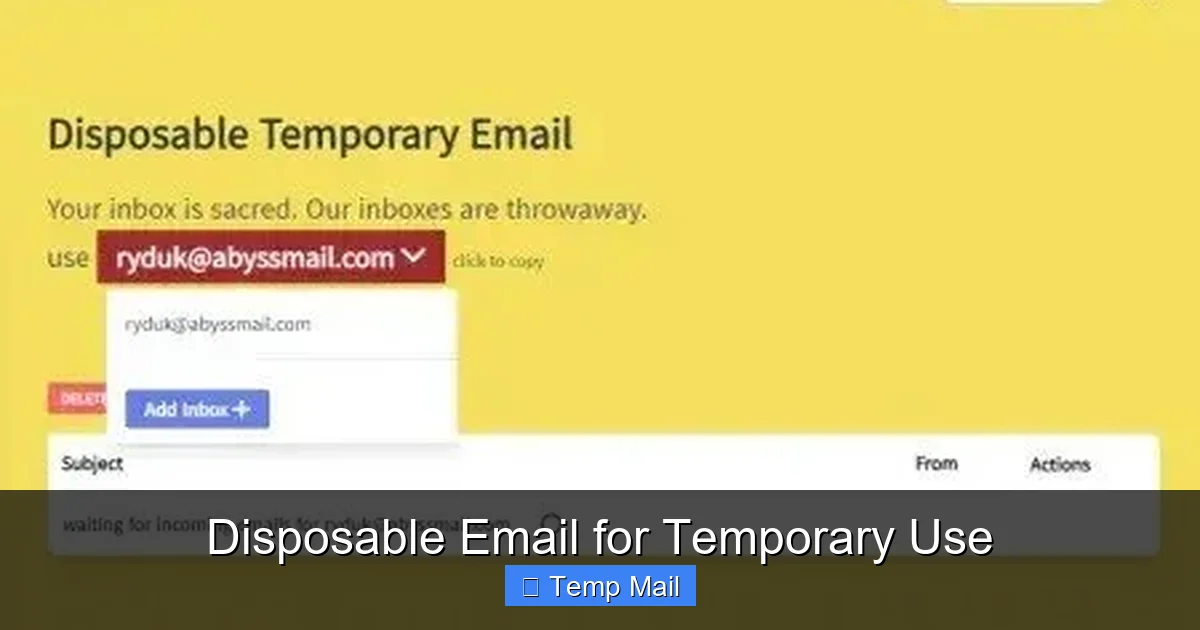
Visual guide about Top Temp Mail Alternatives You Should Know
Image source: images.genius.com
Widely regarded as the gold standard in this category. SimpleLogin is open-source, audited, and based in France (strong privacy laws). It creates unique, random aliases (e.g., [email protected]) that forward to your real inbox. Its killer feature is the ability to reply directly from the alias, so your real email is never exposed in correspondence. You can generate an unlimited number of aliases via a web dashboard, browser extension, or mobile app. You can also create custom aliases with your own chosen name. A single click in your inbox or in the dashboard lets you block an alias forever, instantly stopping all mail. Pricing is very reasonable for the feature set, and there’s a generous free tier (up to 10 aliases/month, 1 custom domain).
SimpleLogin’s closest competitor, also open-source and privacy-focused. AnonAddy offers very similar core functionality: unlimited alias creation, reply-from-alias, and easy blocking. Its interface is equally polished. One key difference is its pricing structure and free tier limits. AnonAddy’s free plan allows 5 aliases per month on its shared domain, but it also offers a “Lite” plan that’s very affordable for higher volume users. Some users prefer AnonAddy’s slightly more granular control over alias rules and its self-hosting option, which gives complete ownership of your data.
If you want the simplest possible start, Firefox Relay (from Mozilla) is a fantastic option. It’s designed for ease of use. After signing up with a Firefox account (or any email), you get a @relay.firefox.com address. You can then create up to 5 free sub-aliases (like [email protected]). It forwards to your real email, and you can reply from the alias. The big limitation is that the free tier does not allow custom domains and has a cap of 5 total aliases. However, for a beginner wanting to shield 1-2 key accounts (like a social media profile or online bank), it’s incredibly straightforward and trustworthy, coming from a non-profit with a strong privacy ethos.
This is a newer, integrated solution from the privacy search engine. It’s built directly into the DuckDuckGo browser and mobile apps. When you encounter an email field on a website, DuckDuckGo can auto-generate a unique @duck.com alias for you. All emails are forwarded to your real inbox (which you set up once), and you can reply from the alias. The key advantage is zero friction—it happens automatically as you browse. The free tier offers unlimited aliases on the @duck.com domain, but like Firefox Relay, it currently lacks custom domain support. It’s perfect for users already in the DuckDuckGo ecosystem who want “set it and forget it” protection for every new sign-up.
Practical Example: Imagine you’re buying a new gadget from a retailer you don’t fully trust. With SimpleLogin, you’d create an alias like [email protected]. All order confirmations, shipping updates, and marketing emails go to your Gmail, but appear to come from “gadget-store.” If the retailer sells your email or you get bored of their promotions, you log into SimpleLogin and delete the alias. The spam stops instantly, and your real email remains untouched. The retailer has no idea your real address was ever used.
With all these options, how do you pick? It boils down to a few key questions about your behavior and risk tolerance.
Be honest. Are you mostly trying to:
Create a checklist. For you, is it essential to:
Most robust services have a capable free tier. Test there first. Ask: Does the free limit (number of aliases, custom domains) cover my expected monthly usage? If you need more than 10-20 aliases a month, a $2-$4/month paid plan is a trivial investment for permanent spam control and privacy. Compare the paid features—does one offer something you specifically need, like more custom domains or wildcard aliases?
Read the privacy policy and “About Us” page. Is the company based in a privacy-friendly jurisdiction (EU, Switzerland)? Is the code open-source and audited? Do they clearly state they do not log your emails or alias mappings? SimpleLogin and AnonAddy excel here. Avoid services that are vague about data retention or are based in countries with intrusive surveillance laws. Your email alias provider is a key part of your security chain; treat them like you would a password manager.
Using a temp mail alternative is a privacy-enhancing technique, but it’s not a magic shield. You must understand the security model.
Any reputable service will use HTTPS (TLS encryption) for its website and for email transmission between servers. This prevents eavesdropping on the connection. You should never use a service that doesn’t have a valid SSL certificate (look for the padlock in your browser). This is non-negotiable.
This is the most important question: What does the service log? The ideal service logs nothing about the content of your forwarded emails and minimizes metadata. They should not store logs that connect your alias to your real email address longer than necessary for operation. SimpleLogin, for instance, states they do not log which alias forwarded to which email. They only need the mapping to function and delete it upon alias deletion. Read their whitepaper or privacy policy for these specifics. A service that keeps extensive logs could, in theory, be compelled to hand over data linking all your aliases to your real identity.
With a simple disposable inbox, there is no connection to your identity. It’s a dead end. With a forwarding service, there is an explicit, technical link: the service knows that [email protected] forwards to [email protected]. This link exists on their servers. This is why choosing a trustworthy, no-logs provider for forwarding services is critical. The risk model shifts from “someone might see my public inbox” to “can I trust this company with the mapping between my aliases and my real email?”
If you use a forwarding/alias service that requires an account (almost all do), you must enable 2FA. Your account dashboard is the control panel for all your privacy. If a hacker gets your password, they can see all your aliases, which sites you use them for, and potentially create new ones. Protect this account with an authenticator app (Google Authenticator, Authy) like you would your email or bank account.
A fundamental rule: Do not use any temp mail or alias for primary email addresses tied to critical accounts. This includes your main bank, primary investment accounts, your core Google/Microsoft/Apple ID (which is often a recovery email), or your password manager recovery email. For these, use your most secure, permanent, and well-guarded primary email address with 2FA. The purpose of these alternatives is to compartmentalize non-critical online activity to protect your core identity. Using them for high-stakes accounts introduces unnecessary risk if the service fails or you lose access.
The landscape is evolving rapidly. We are moving from simple “disposable” to intelligent “ephemeral identity management.”
We’re already seeing this with DuckDuckGo Email Protection. The future is seamless, browser-level integration. Imagine your browser or password manager automatically suggesting and generating a unique alias for every new sign-up field, filling it in, and managing it without you ever leaving the tab. Firefox and DuckDuckGo are leading this, and we can expect more browsers and security suites to build this functionality in natively.
There are efforts, like the “Plus Addressing” standard (which some providers like Fastmail support natively), where you can add +tag to your email (e.g., [email protected]) and it still arrives in your main inbox. While not truly anonymous (the base address is still visible), it’s a simple filtering tool. More promising is the development of standards for alias forwarding that could allow different services to interoperate more smoothly.
For the tech-savvy and extremely privacy-focused, the trend is toward self-hosted solutions. Tools like AnonAddy and SimpleLogin can be installed on your own VPS. This gives you complete ownership and control—no third party has your data. While it requires technical setup, it represents the ultimate in privacy: your alias service is as secure as your own server. We may also see more decentralized, blockchain-based identity and messaging protocols that could eventually subsume the need for email aliases altogether, though that is a longer-term vision.
As our alias counts grow into the hundreds, managing them will become a task. Future tools will likely employ AI to categorize incoming mail from aliases, suggest when an alias should be retired (e.g., “You haven’t used this alias for a newsletter in 6 months. Block it?”), and even auto-generate aliases based on the website’s name and purpose. The goal is to make perfect email compartmentalization effortless at scale.
The takeaway is clear: the humble temp mail is growing up. The alternatives available today are powerful, professional-grade privacy tools. By understanding the difference between a private disposable inbox and a persistent forwarding alias, and by choosing a service that aligns with your specific needs and threat model, you can take massive control over your digital footprint. You can sign up for that sketchy forum, download that white paper, or buy from that new store with confidence, knowing your primary email—and by extension, your identity—remains pristine and under your command.
Yes, using temporary or alias email services is perfectly legal in most jurisdictions. They are legitimate privacy tools. However, using them for fraudulent purposes, to evade legal obligations, or to circumvent bans on services where you agreed to use a real email is against the Terms of Service of most platforms and could be illegal depending on the context.
They are significantly safer for shielding your primary identity from spam and data breaches. A data leak from a site where you used an alias only exposes that alias, which can be instantly blocked, protecting your real inbox. However, no service is 100% foolproof. You must trust the provider’s security and privacy practices. Always use 2FA on your alias service account and never use them for critical accounts like banking or primary identity recovery.
A disposable inbox is a separate, temporary mailbox you check manually. It’s like a public locker that expires. An email forwarding/alias service creates a unique address that automatically sends mail to your permanent inbox (Gmail, Outlook, etc.). You never leave your main app, and you can reply from the alias. Forwarding services offer permanent control and integration, while disposables are for one-off, short-term tasks.
You can, but it’s not recommended for services you intend to use long-term or that are central to your digital identity. For Netflix, if you use an alias and later lose access to the alias service, you could be locked out of your account. For social media, it can complicate account recovery if you ever get locked out. Use them for low-stakes, non-recoverable accounts like forum sign-ups, download portals, or one-time promotions.
Reputable services like SimpleLogin and AnonAddy state they do not store the content of your forwarded emails on their servers longer than necessary for the forwarding process (often just in transient memory). They only store the minimal metadata (the alias-to-real-email mapping) required to make the system work. Always check the specific privacy policy of the service you choose. Avoid services that are vague about storage.
For a disposable inbox, it doesn’t matter—the address and its emails are temporary anyway. For a forwarding/alias service, shutdown is more serious. If the service ceases, emails sent to your aliases will bounce. You will lose the ability to create new aliases. However, any historical emails are already in your primary inbox (since they were forwarded). The main loss is the future privacy shield. To mitigate this, choose well-established, transparent companies, and consider self-hosting (with AnonAddy/SimpleLogin) if you need maximum continuity and control.
অনলাইন নিউজপেপার থিম। এই থিমটি দিয়ে আপনারা বাংলা এবং ইংরেজি নিউজপেপার সাইট তৈরি করতে পারবেন । বার্তা ও বাণিজ্যিক কার্যালয়: ৭১, মতিঝিল, ঢাকা-১০০০। সম্পাদক : মো আসাদুজ্জামান আমানউল্লাহ । মোবাইল : ০১৭০০-০০০০০০ । ইমেইল : [email protected] ।
All rights reserved © 2019 themesdealer.Com