Image for How Temporary Email Improves Online Security


Temporary email services provide disposable addresses that act as a protective buffer between your primary email and the online world. By using a temporary email for sign-ups, downloads, and untrusted sites, you dramatically reduce spam, prevent phishing attacks, and minimize your digital footprint. This simple strategy is a powerful, proactive step in safeguarding your personal information and main inbox from clutter and malicious actors.
[FEATURED_IMAGE_PLACEHOLDER]
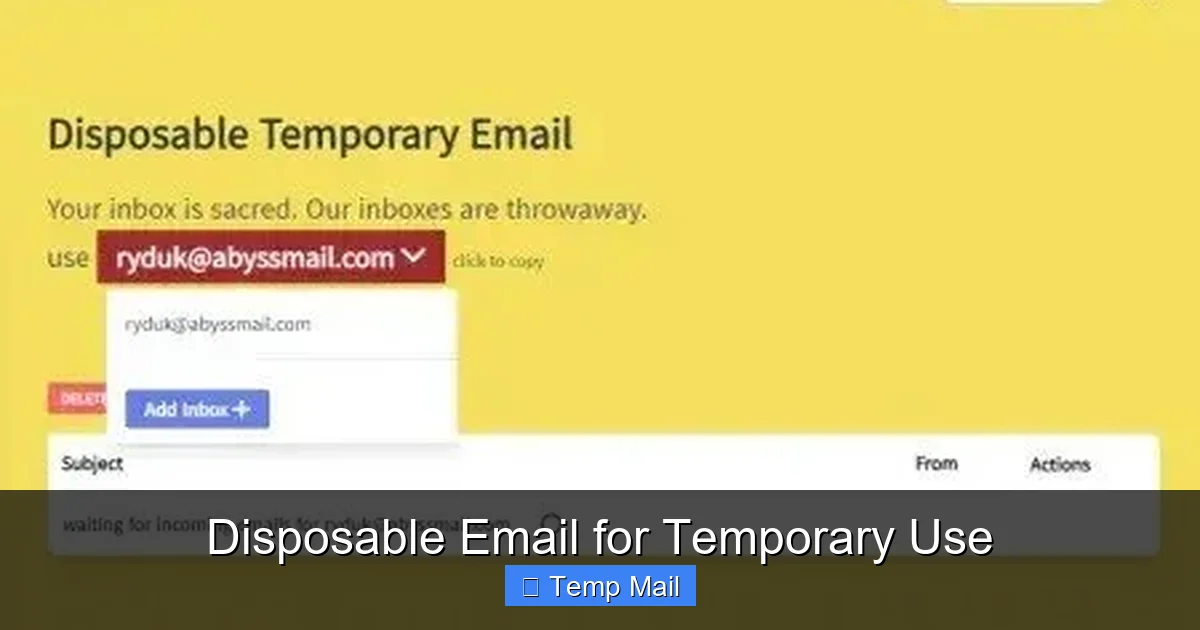
Let’s start with the basics. You’ve probably seen ads for “disposable email” or “temp mail” services. At first glance, it sounds gimmicky—a fake email that vanishes. But it’s much more powerful than that. Think of it as a digital shield, a burner phone for your inbox. A temporary email service generates a random, unique email address that you can use instantly, without creating an account or providing any personal details.
This address lives for a short, predefined period—usually 10 minutes to a few hours—or until you manually delete it. Any emails sent to that address are visible in a simple web-based inbox associated with it. Once the time expires or you close the browser tab, that address and all its history are gone forever. There’s no password, no long-term storage, and no connection back to you. It’s anonymity and impermanence, packaged as an email address.
The genius of temporary email lies in a simple security principle: separation of identity. Your primary email address is a master key. It’s often the username for countless other accounts, the recovery email for password resets, and a hub for two-factor authentication codes. It’s intrinsically linked to your real identity—your name, your other accounts, your digital life. Giving it out freely is like handing out copies of your house key to every shop you visit.
A temporary email is a different key. It opens a small, temporary locker. It gets you in the door for a specific, low-value task, but it cannot open your main vault. This compartmentalization is the foundation of its security benefit. You are not hiding; you are strategically disclosing information on a need-to-know basis.
Now, let’s get to the heart of the matter. Using a temp mail address isn’t just about avoiding spam; it’s a concrete security practice that thwarts several common attack vectors and privacy intrusions.

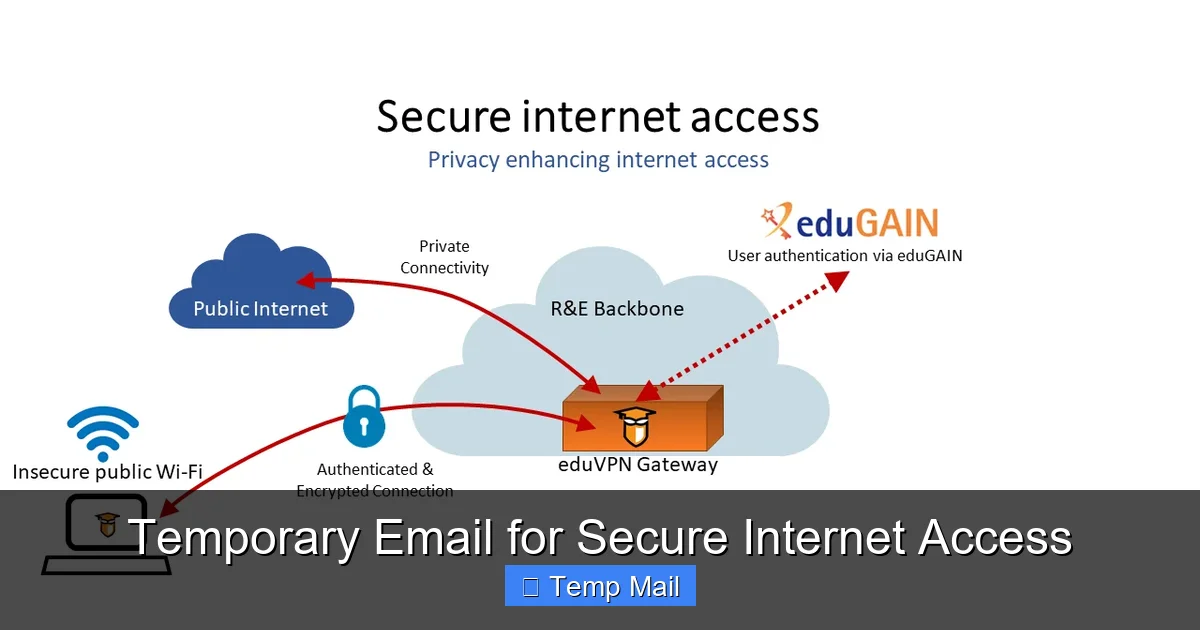
Visual guide about How Temporary Email Improves Online Security
Image source: selzy.com
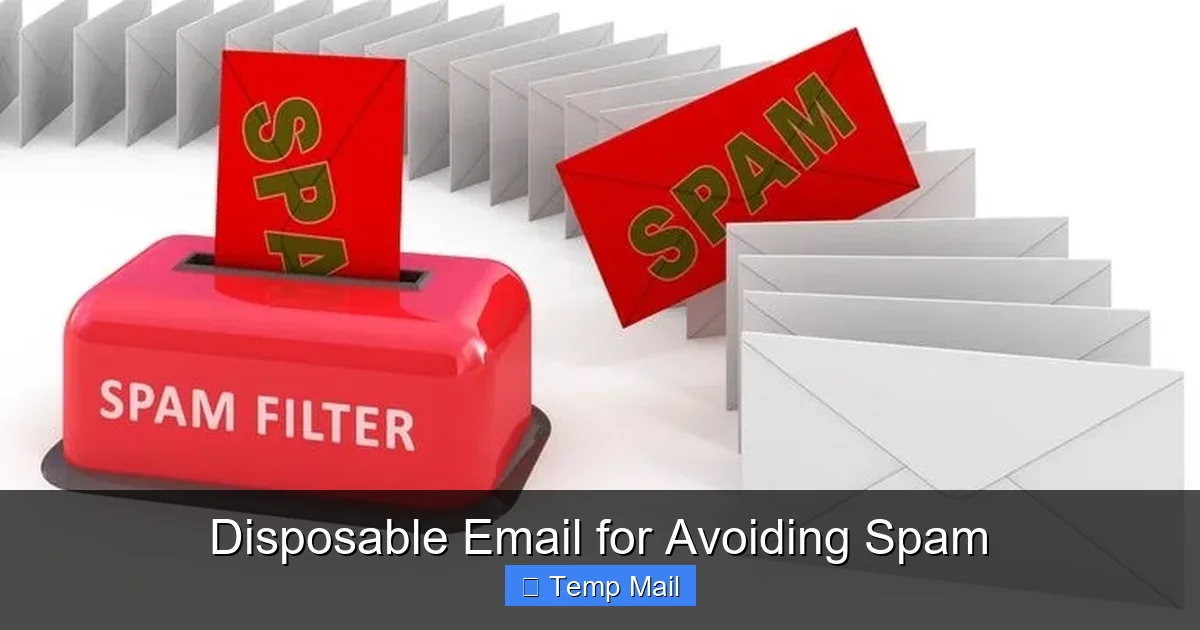
We’ve all been there. You download a free ebook, sign up for a webinar, or comment on a blog. You use your real email, hoping for the content, but dreading the inevitable flood of promotional emails. That “unsubscribe” link often does little, and you’re left manually filtering or deleting. This is more than a nuisance; it’s a clutter-based security risk.
A crowded inbox makes it easier to miss a critical email—like a legitimate security alert from your bank or a password reset request from a service you actually use. Attackers rely on this “signal in the noise” technique. By routing all non-essential sign-ups to a temp address that self-destructs, your primary inbox remains a pristine, high-signal channel. You only see emails from people and services you intentionally and trustingly gave your main address to.
Phishing is the art of deception. Attackers send emails that look like they’re from your bank, your email provider, or your employer, tricking you into clicking a malicious link or entering your credentials on a fake site. The most convincing phishing emails use personal information to build trust.
How does a temp mail help? It removes a critical piece of the puzzle: your trusted email address. If a attacker has your disposable address, they can’t craft a “your Amazon account” phishing email that will land in your primary inbox where you expect it. They can’t use that address for credential-stuffing attacks (where they try known password combinations) because it’s not tied to any of your real accounts. The disposable address is a dead end for them. It breaks the chain of trust that phishing emails exploit.
Data breaches are a matter of “when,” not “if.” Companies large and small suffer security incidents where user databases—including email addresses, usernames, and sometimes passwords—are stolen and sold on the dark web. If your email is in that database, you become a target.
Imagine you used your primary email to sign up for a little-known forum years ago. That forum gets breached. Your email is now in a hacker’s hands, linked to that forum. They now know you have an account there. They can try that username/email combo on more valuable targets like social media, banking, or work accounts. If you had used a temporary email for that forum, the breach is contained. The stolen email address is a meaningless, expired alias. It leads nowhere. Your real identity and your other accounts are insulated from that particular breach’s fallout.
Every time you enter your email on a website, you’re providing a data point. Companies use email addresses as a persistent identifier to track your behavior across their sites, build profiles, and target you with advertising. While this is often the business model for “free” services, it’s a privacy erosion.
A temporary email severs this tracking link at the source. The website gets an email address that is not you. It cannot be cross-referenced with your other online activity. It cannot be used to build a long-term profile of *you*. You interact with the service anonymously, achieving your goal (reading the article, getting the file) without contributing your PII to their data harvesting engine. It’s a small act of digital privacy rebellion.
Knowing the theory is great, but knowing when to apply it is what makes it useful. Here are common, everyday situations where a disposable address is your best friend.

Visual guide about How Temporary Email Improves Online Security
Image source: sss.gov.ph
You want a whitepaper, a template, or a research report. The website asks for your email to send the download link. This is the #1 perfect use case for temp mail. You get the file immediately (often the link appears on the page after submitting), and you never have to worry about a follow-up sales sequence cluttering your inbox. The company gets a valid-looking email (for their metrics) and you get your content with zero commitment.
Registering for a free webinar, a 7-day software trial, or a one-off online workshop? Use temp mail. These services are designed to capture your email for future marketing. The trial might auto-convert to a paid plan with annoying notifications sent to the provided address. With a disposable address, you complete the event or trial, and the communication channel vanishes. No “we miss you” emails three months later.
Many websites require an account to comment or participate in a forum. Do you really want your primary email attached to that heated debate on a news site or a niche hobby forum? Using temp mail allows you to engage in the community without creating a persistent, searchable identity tied to your main email. It keeps your online conversations compartmentalized.
Need to use an online PDF converter, an image resizer, or a simple SEO tool that demands an email before the first use? Temp mail to the rescue. You get access to the tool’s functionality without handing over your contact details to a tool you might only use once a year.
If you’re a developer or tester needing to quickly create dummy accounts on a platform to test a flow, temporary emails are invaluable. You can generate dozens of unique addresses rapidly without managing multiple real inboxes.
Understanding what temp mail *doesn’t* do is just as important as knowing what it does. Misusing it can lead to problems.

Visual guide about How Temporary Email Improves Online Security
Image source: twowheelertraveler.com
This is the golden rule. Never use a temporary email for any account you need to recover, that holds financial value, or is critical to your digital identity. This includes:
If the temporary address expires, you lose all access. There is no “forgot password” because there is no persistent account to recover. You will be locked out forever.
While it provides anonymity, using temp mail to fraudulently sign up for services, evade bans, or conduct illegal activities is still illegal. The service provides a tool; how you use it is your responsibility. Legitimate security and privacy uses are the goal here.
Some high-security platforms (like some banks or corporate SSOs) actively block known disposable email domains. Your temp mail might be rejected. Also, the inbox interface is usually very basic—no folders, poor search, no rich formatting. It’s designed for one-time receipt, not ongoing management.
Not all temp mail services are created equal. When selecting one, consider these factors:
The concept of temporary email is part of a larger shift towards identity compartmentalization and data minimization. As data breaches become more common and surveillance capitalism matures, users are seeking tools to regain control. We’re seeing this in password managers (creating unique passwords for every site), virtual credit cards (for one-time purchases), and now, widespread adoption of privacy-focused email services and temporary addresses.
In the future, we may see tighter integration. Imagine your password manager automatically generating a unique, forwardable alias for every new website sign-up, giving you the convenience of a single inbox with the security of disposable addresses. Standards like “plus addressing” ([email protected]) are a primitive form of this, but they still tie back to your primary account.
Regulatory pressures like GDPR and CCPA also force companies to be more responsible with user data. Temporary email empowers users to give only the minimal data necessary—often just a string of characters—to access a service, aligning with the spirit of these privacy laws. It’s a low-tech, high-impact tool that puts power back in the hands of the individual, forcing a rethinking of what “necessary information” truly means online.
Online security can feel overwhelming. We’re told to use 20-character passwords, enable 2FA everywhere, use a VPN, update software constantly, and avoid clicking links. It’s exhausting. Temporary email is the rare security measure that is incredibly simple, immediately effective, and requires almost no ongoing effort. It’s a one-click action that pays security dividends every single day.
By habitually using a disposable address for any sign-up that isn’t crucial to your life, you build a resilient moat around your primary digital identity. You reduce your attack surface, declutter your mind, and take a tangible stand against the pervasive data collection economy. It’s not a silver bullet—you still need strong passwords and vigilance—but it is a foundational practice. Start today. The next time a website asks for your email to read an article or download a tool, open a new tab, grab a temp address, and protect your real self. Your future, less-spammed, more secure self will thank you.
Yes, using disposable email services is completely legal in most countries and is a legitimate privacy and security tool. The safety comes from using reputable services that don’t log your activity and ensuring you only use them for appropriate, low-stakes activities as outlined above.
No, you cannot. This is the most critical limitation. Since the email address is temporary and you have no access to it after it expires, any password reset or account recovery emails sent to it are permanently lost. This is why you must never use temp mail for any account you need to keep long-term.
It will stop spam to that specific disposable address and prevent your primary address from being added to spam lists by that particular service. However, it won’t stop spam sent to your primary address from other sources. It’s a proactive filter, not a complete spam cure-all.
This depends entirely on the service’s privacy policy. Reputable, no-registration services typically do not store IP logs and automatically delete emails from their servers when the inbox expires. Always check the privacy policy of the specific service you use to understand their data handling practices.
The email will appear in the temporary inbox for as long as that inbox remains active (usually 1-2 hours after the last email is received). After that time, the inbox and all its emails are permanently deleted from the server, and you will never see that message.
You can! Plus addressing (e.g., [email protected]) creates a unique alias that still delivers to your main inbox. It’s great for filtering but does not provide true anonymity or separation, as all emails still land in your primary, searchable inbox and the alias is directly linked to your main account. For true privacy and impermanence, a dedicated temporary service is superior.
অনলাইন নিউজপেপার থিম। এই থিমটি দিয়ে আপনারা বাংলা এবং ইংরেজি নিউজপেপার সাইট তৈরি করতে পারবেন । বার্তা ও বাণিজ্যিক কার্যালয়: ৭১, মতিঝিল, ঢাকা-১০০০। সম্পাদক : মো আসাদুজ্জামান আমানউল্লাহ । মোবাইল : ০১৭০০-০০০০০০ । ইমেইল : [email protected] ।
All rights reserved © 2019 themesdealer.Com