Image for Temp Mail for Avoiding Marketing Emails



Tired of your inbox being flooded with promotional newsletters and unwanted ads? Temp mail services provide a simple, effective shield. By using a disposable email address for online sign-ups, you prevent marketers from ever getting your real contact information. This powerful privacy tool cuts spam at the source, keeping your primary inbox clean and secure while you freely browse and access digital offers.
You know the feeling. You sign up for a seemingly harmless free e-book, a discount code for an online store, or access to a webinar. You carefully enter your email address, hopeful for the promised value. Weeks, even months later, the emails keep coming. Not from that one site, but from a dozen others you never heard of. Your “Promotions” tab is overflowing, your primary inbox is cluttered, and that one essential email from a colleague or friend gets lost in the noise. This isn’t an accident; it’s a business model. Your email address is a valuable commodity.
When you hand over your email to a website, even a reputable one, you’re often agreeing to its privacy policy and terms of service. Buried in the fine print is usually language that allows them to share your data with “partners” or “affiliates.” These partners are frequently data brokers. These companies specialize in collecting personal information—including email addresses—and compiling it into detailed profiles. They then sell these profiles to advertisers and marketers. The result? Your single email sign-up can trigger a cascade of marketing emails from countless unrelated companies. It feels invasive because it is.
We often think of these free services as, well, free. But the currency you’re paying with is your attention and your privacy. Every marketing email vying for a click is a distraction. More insidiously, the aggregation of your email activity across thousands of sites builds a shadow profile of your interests, habits, and even your financial status. This profile is used to target you with ever-more-persuasive ads, creating a cycle of consumption and data extraction. Reclaiming control starts with cutting off the primary pipeline: your email address.
Imagine a public phone booth for the internet. You step inside, use it for a quick call, and walk away, leaving the booth empty for the next person. That’s the core concept behind a temporary or disposable email service. It provides you with a random, functional email address that exists for a short period—typically a few hours to a few days—before being automatically deleted.

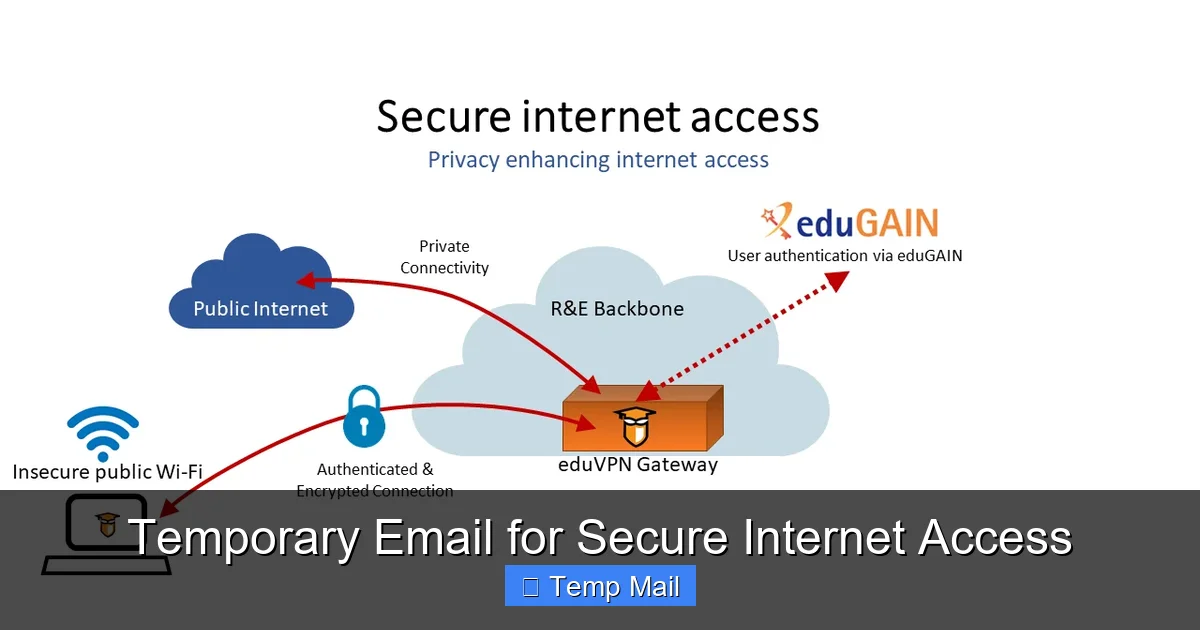
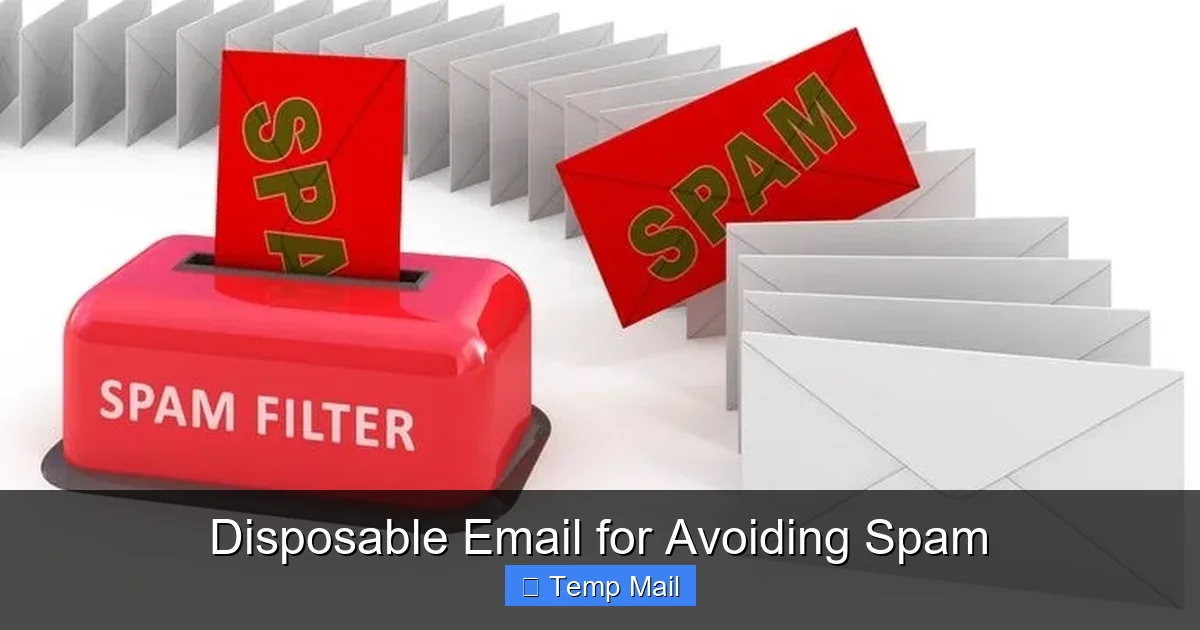
Visual guide about Temp Mail for Avoiding Marketing Emails
Image source: temp-mail.io
You visit a temp mail website like Temp-Mail.org, 10MinuteMail, or Guerrilla Mail. The site instantly generates a unique email address for you, something like [email protected]. An inbox for that address is already open on the page. You copy that address and paste it into any website that asks for an email. If the site sends a verification link or a download file, it appears right there in that temporary inbox. You click the link or download the file, complete your task, and then simply close the browser tab. In 10 minutes, or an hour, or a day (depending on the service), that email address and all its contents vanish into the digital ether.
The beauty is in the lack of linkage. That temporary address is not connected to your name, your IP address (in most cases), or any other personal data. The service provider does not require you to create an account, set a password, or provide any information to use it. You are truly anonymous to the website you’re signing up with. To them, you are just [email protected]. When that address expires, the trail goes cold. They have no way to re-identify you or link that activity back to your real identity.
Now, let’s connect the dots explicitly. Marketing emails rely on one critical piece of data: a valid, monitored email address that belongs to a real person. Temp mail surgically removes that piece from the equation.

Visual guide about Temp Mail for Avoiding Marketing Emails
Image source: oniad.com
The primary way companies build their marketing lists is through voluntary sign-ups (like that free e-book) and, sometimes, through purchased lists from data brokers. When you use a temp mail address for a sign-up, you are giving them a valid address that will receive their initial email. However, that address is a dead end. It will not be checked again after your session. More importantly, because it’s not your real address, it cannot be:
Many websites use email verification as a basic spam and bot filter. They send a “click here to verify” link. Temp mail handles this perfectly. You receive the verification email in the temporary inbox, click the link (which often validates the *temporary* address as real), and gain access to the resource. The website is satisfied. But the verification email and the subsequent “welcome” series are sent to a phantom address that ceases to exist shortly after. The marketer thinks they have a subscriber, but they are emailing a void.
Let’s say you want a 10% off coupon from “FashionForward.com.” You go to a temp mail site, get [email protected], and use it. You get the coupon code in the temp inbox, apply it, and make your purchase. FashionForward.com now has [email protected] in its system. They might send a receipt and a “thanks for your order” email to that address. It will arrive in the temp inbox, you see it, and then it’s gone. A week later, when they send their “New Summer Collection!” newsletter, it bounces because the address no longer exists. Their system eventually marks it as undeliverable and removes it from their active list. Your primary inbox, [email protected], is completely untouched. No “FashionForward” spam. No sale alerts. Nothing.
While avoiding marketing emails is the most immediate and satisfying benefit, using temp mail is a cornerstone of a much broader personal data protection strategy.

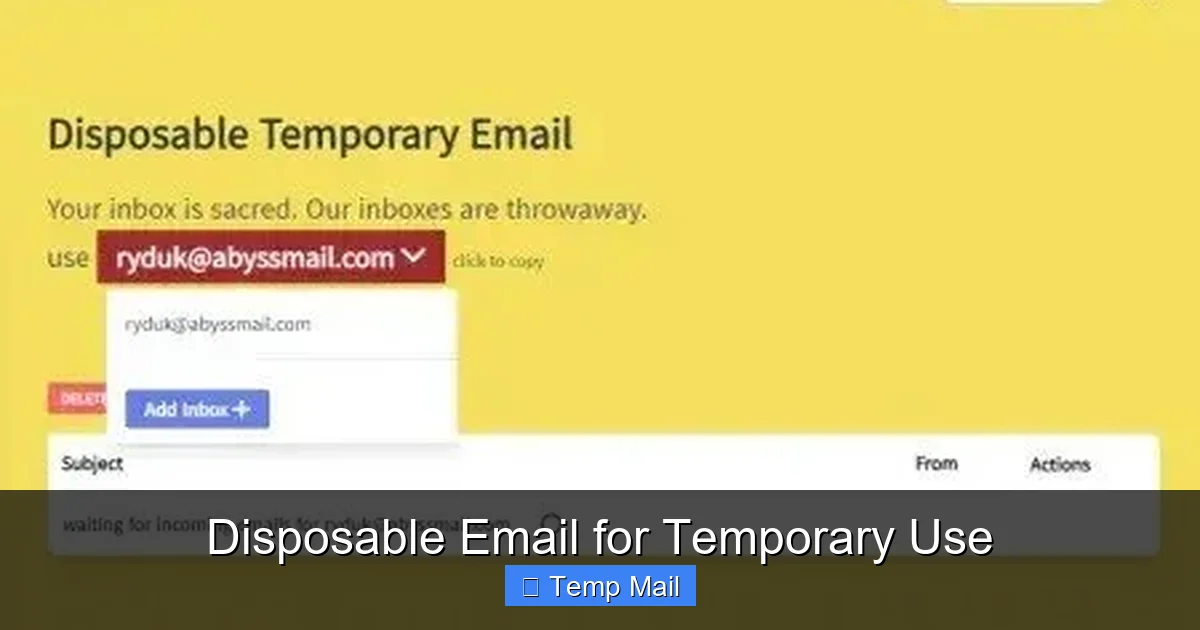
Visual guide about Temp Mail for Avoiding Marketing Emails
Image source: mars-images.imgix.net
Data breaches are a weekly occurrence. When a company you’ve given your real email to gets hacked, that email address is now in the hands of cybercriminals. These lists are used for phishing attacks (highly targeted fake emails trying to steal passwords) and credential stuffing (using known email/password combos to try and break into other accounts). If you used a temp mail for that breached company, the hackers have a disposable address that leads nowhere. Your critical accounts tied to your real email remain safe. The breach, while still serious for the company, has minimal personal impact on you.
Have you ever noticed that after searching for flights or hotels repeatedly, the prices seem to go up? This is often tied to tracking cookies and, in some advanced models, to user profiles. While email isn’t the only identifier, a consistent email address across travel and booking sites helps build a profile of a “frequent traveler” who may be willing to pay more. Using a different, untrackable temp address for each travel site search makes it harder to build that cohesive, valuable profile, potentially helping you see more neutral pricing.
Every account you create, every newsletter you subscribe to, every forum you join—it all adds up to a massive digital footprint. This footprint is analyzed by algorithms, sold to advertisers, and could be subpoenaed in legal matters. By using temp mail for the vast majority of low-stakes, non-essential interactions online, you drastically reduce the number of persistent digital records directly tied to your primary identity. You are, in effect, creating a stream of digital “noise” that obscures the signal of your true, important online presence.
Temp mail is a powerful tool, but it is not a universal solution for all email needs. Understanding its limitations is crucial to using it effectively and avoiding major headaches.
This is the cardinal rule. Any email sent to a temporary address is gone forever once the inbox expires. You cannot retrieve a password reset link sent a week later. You cannot log into a social media account created with a temp email. You will never receive a receipt for a major purchase. Use temp mail only for actions where you need immediate, one-time access: clicking a verification link, downloading a file, getting a single-use code. If the service implies you’ll need to log in later or receive ongoing communications, do not use a temp address.
Because temp mail inboxes are public and unsecured (no password protection), anyone who knows the random address can view the emails in it. This is fine for a generic discount code, but it would be disastrous for a confidential document or a link containing sensitive personal data. Never use temp mail for:
Many major, security-conscious platforms (like Google, Microsoft, Facebook, Twitter, most major banks) actively block known disposable email domains. They do this to prevent spam, fraud, and abuse. If you try to sign up with a temp address on these sites, you will likely get an error message saying the email domain is invalid. This is a feature, not a bug, from their perspective. It tells you that this is a high-stakes account that requires a real, traceable identity—and you should probably be using your primary, secure email for it anyway.
To get the most out of temp mail while staying safe, follow these practical guidelines.
Not all temp mail services are created equal. Look for these features:
For maximum privacy and spam prevention, never reuse a temporary email address. Generate a new, unique one for every single website or service you sign up for. If you use the same temp address for five different sites and one of them gets hacked or sells the list, that single address is now compromised (though it will still expire). Using a unique address each time creates a perfect firewall; a breach at Site A has zero connection to Site B, C, or D.
Sometimes you need a bit more time. You sign up for a service that says, “Check your email for a link valid for 24 hours.” If your temp mail service only offers 1-hour inboxes, you have two options: First, choose a service that offers a longer timeframe (like 48 hours). Second, and more securely, use the temp mail to get past the initial sign-up, then immediately go into your account settings on that new site and change the email to your *real* address if you plan to keep the account long-term. This way, future legitimate communications come to your main inbox.
This cannot be stressed enough. If you forget your password for an account created with a temp email, you are permanently locked out. There is no “forgot password” recovery possible. The account is dead. Therefore, only use temp mail for accounts you intend to use once or twice and then abandon, or for services where you don’t need a persistent login (like a one-time file download).
Temp mail is one tool in a larger privacy toolkit. Depending on your needs, consider these options.
Many email providers (like Gmail and Outlook) support “plus addressing.” If your email is [email protected], you can use [email protected] for sign-ups. All emails still go to your main inbox, but you can filter them easily or see which site leaked your address. It’s less private than temp mail (your real address is still shared) but better for organizing and filtering. Some paid services like SimpleLogin or AnonAddy take this further, creating true, forwardable aliases that can be disabled at any time without changing your main email.
Create a separate, free email account (e.g., on ProtonMail for more privacy) used solely for online sign-ups, newsletters, and forums. This contains the spam to one inbox, protecting your primary personal and work accounts. It’s less anonymous than temp mail (one persistent address) but more reliable for any account you might need to access later. Combine this with strong filters to automatically delete old emails.
Some browsers and extensions are experimenting with generating unique, forwardable email addresses on the fly directly in a sign-up form. This is the cutting edge of the “alias” concept, aiming for the convenience of plus-addressing with the disposability of temp mail. Keep an eye on developments from privacy-focused browsers like Brave.
The best strategy is often layered: use a temp mail for truly throwaway interactions, a dedicated alias account for newsletters you might want to read, and your primary email only for friends, family, and critical services.
The relentless drip of marketing emails is more than a nuisance; it’s a symptom of a data economy that treats your personal contact information as a public utility. You don’t have to accept this. By strategically using temporary email services, you perform a simple yet powerful act of digital self-defense. You cut the main pipeline that feeds the spam machine, protect your primary inbox for what matters, and significantly shrink your exploitable digital footprint. It requires a slight change in habit—pausing to open a new tab for a temp mail before every non-essential sign-up—but the payoff is immense. A clean inbox, enhanced privacy, and the knowledge that you are no longer freely feeding the data brokers. Start today. The next time a website asks for your email for a “free” guide or discount, reach for a disposable address instead. Reclaim your attention and your privacy, one temporary inbox at a time.
Yes, using disposable email services is completely legal. They are simply a tool for receiving email without revealing your permanent address. The legality depends on how you use the address; using it for fraud or illegal activities is, of course, illegal regardless of the email type.
They are generally safe for their intended purpose of receiving one-time verification links. However, because the inboxes are public and unpassworded, you should never use them for sensitive information. The risk is not that the service itself will be hacked to get your data (they store little), but that someone could guess the random inbox address and view the emails inside it.
It varies by provider. Common lifespans are 10 minutes, 1 hour, 1 day, or even 48 hours. The inbox and all its emails are permanently deleted after that time expires. Always check the specific timer on your chosen service’s page.
Technically, you might be able to for some smaller platforms, but it’s a very bad idea. Major platforms like Facebook, Instagram, and Twitter block disposable email domains. Even if you succeed, you will be locked out forever if you ever need to reset your password, as the reset email will go to an expired address.
In almost all cases, account recovery is impossible. The account is permanently lost. This is why the golden rule is: never use a temporary email for any account you intend to keep, log into regularly, or that contains valuable data or purchases.
For the vast majority of users avoiding marketing emails, reputable free services are perfectly adequate. Paid services may offer features like custom domains, longer inbox durations, or API access, which are unnecessary for simple sign-up avoidance. The key is choosing a trustworthy free provider with a clear no-logs policy, not necessarily a paid one.
অনলাইন নিউজপেপার থিম। এই থিমটি দিয়ে আপনারা বাংলা এবং ইংরেজি নিউজপেপার সাইট তৈরি করতে পারবেন । বার্তা ও বাণিজ্যিক কার্যালয়: ৭১, মতিঝিল, ঢাকা-১০০০। সম্পাদক : মো আসাদুজ্জামান আমানউল্লাহ । মোবাইল : ০১৭০০-০০০০০০ । ইমেইল : [email protected] ।
All rights reserved © 2019 themesdealer.Com