Image for Temp Mail for Fast Online Signups



Tired of your inbox flooding with spam after every online signup? A temporary email address is your secret weapon. It lets you create a fast, disposable inbox in seconds to access websites, download resources, or verify accounts without ever using your real email. This shields your primary inbox from junk, marketing emails, and potential data breaches, all while keeping your personal information private. It’s the simplest tool for a cleaner, safer digital life.
Imagine needing a key to open a single door, but you don’t want to use the key to your house. A temporary email, often called “temp mail” or “disposable email,” is exactly that—a single-use key for the digital world. It’s a fully functional email address that exists for a very short period, usually anywhere from 10 minutes to 48 hours, generated instantly by a specialized online service.
Unlike your permanent Gmail, Outlook, or Yahoo address, a temp mail inbox has no password, no long-term storage, and no connection to your identity. You don’t create an account to get it; you simply visit a website like Temp-Mail.org, 10MinuteMail.com, or Guerrilla Mail, and a random address is assigned to you on the spot. The service provides an inbox page that automatically refreshes to show incoming messages for that specific address. Once the time limit expires or you manually delete it, the address and all its emails vanish into the digital ether. It’s designed for one purpose: facilitating a quick interaction that requires an email, without any lasting consequences for your main digital identity.
These services operate on a simple but clever technical model. They manage a large pool of domain names (like @tempmail.com, @guerrillamail.com) and assign unique, random usernames to each visitor. When you visit the site, the server spins up a new inbox linked to your session (often via a unique URL or a cookie). Any email sent to that specific address is routed to the service’s server and displayed in your browser-based inbox.
The “temporary” aspect is enforced by automated scripts. The server tracks the creation time of each inbox. After a predetermined period—say, 60 minutes—the system automatically purges that inbox and the associated email address becomes available for the next user. There’s no persistent database linking addresses to users over the long term. This architecture is what makes it both fast and privacy-focused; there’s simply no user data to store or protect beyond the active session.
The entire value proposition of temp mail for fast online signups boils down to two things: saving time and reducing friction. Let’s be honest—how many times have you abandoned a download or a forum registration because it demanded an email address you didn’t want to give? The mental load of deciding “Do I use my real email and get spammed, or do I make a new account I’ll forget?” is a real barrier.

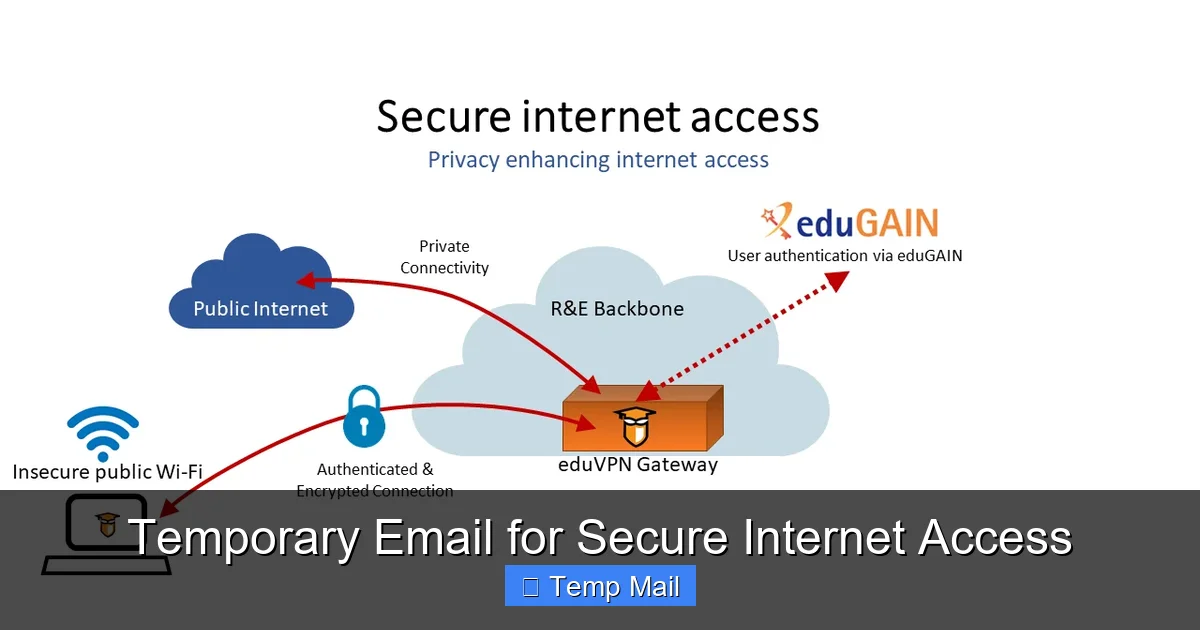
Visual guide about Temp Mail for Fast Online Signups
Image source: image.winudf.com
Temp mail eliminates that decision fatigue entirely. The process is so fast it becomes mindless. You click “Download” on a whitepaper, a pop-up asks for your email. You open a new tab, go to your preferred temp mail site, copy the address, paste it, hit submit, switch back to the temp mail tab, and the verification email is already there. The entire cycle can take less than 30 seconds. This frictionless flow is a game-changer for productivity and user experience. You’re not creating a new account; you’re performing a transaction and moving on.
Let’s walk through a classic scenario. You’re researching for a project and find a valuable industry report on a marketing website. To download the PDF, you must enter your email address. Using your primary email means you’ll likely be added to their weekly newsletter and promotional lists for years.
With Temp Mail:
1. You navigate to the temp mail site. An address like [email protected] is instantly displayed.
2. You copy it, return to the report site, paste it, and click “Download.”
3. Within 5 seconds, you switch back. The inbox shows a new message: “Your Report Download Link.” You open it, click the link, and have your PDF.
4. You close the tabs. In one hour, that inbox and address are gone. No follow-up emails. No cleanup. No trace.
That’s the power of fast online signups done right.
Beyond convenience, temp mail is a fundamental tool for digital privacy. Every time you enter your real email on a website, you’re creating a data point. That address becomes a key that can link your activity across that site, and potentially across other sites if they share data (through advertising networks or data brokers). Your email address is often the primary identifier used to build a profile of your interests, location, and behavior.

Visual guide about Temp Mail for Fast Online Signups
Image source: d33v4339jhl8k0.cloudfront.net
By using a disposable address, you sever that link at the source. The website has an email address that leads to a black hole—it can send messages, but it can never tie that address back to *you*. This protects you from:
It’s a low-tech, highly effective method of practicing “data minimization”—only giving out the absolute minimum information necessary for a specific, limited interaction.
Consider signing up for a free trial of a SaaS tool you’re evaluating. You suspect they’ll aggressively market to you. Using temp mail means you get the trial access, test the product, and when the trial ends, there’s no email address for their sales team to chase. You simply walk away. The same applies to competing for a contest (where you must sign up with an email), accessing a public Wi-Fi portal, or registering on a niche forum to ask a single question. In each case, the temp mail address acts as a privacy buffer, absorbing the communication intended for you and then disappearing.
While incredibly useful, temp mail isn’t a one-size-fits-all replacement for your primary email. Knowing the right situations to use it maximizes the benefit and avoids pitfalls. Here are the prime candidates for a disposable inbox.

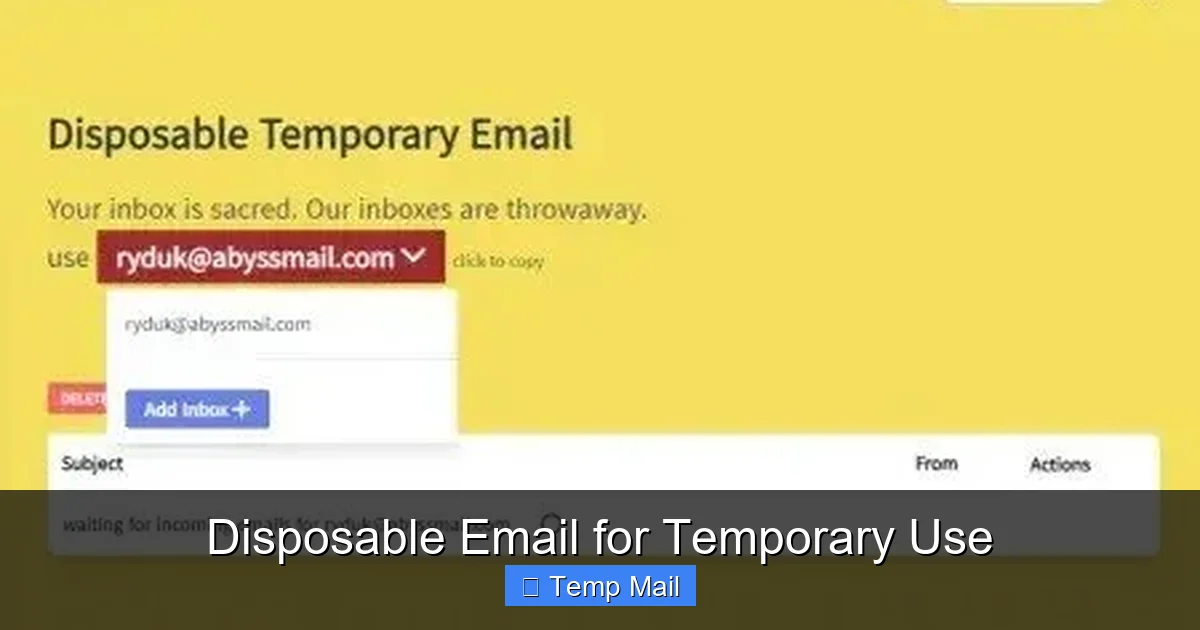
Visual guide about Temp Mail for Fast Online Signups
Image source: d33v4339jhl8k0.cloudfront.net
This is the #1 use case. Any website that locks a PDF, ebook, template, or webinar recording behind an email form is a perfect target. You get the content instantly, and the site gets a valid (but ephemeral) email for their metrics. Both parties “win” without a long-term relationship.
You need to join a discussion to ask a specific question or read a thread. Using your real email often leads to a flood of notification emails and digest newsletters. A temp mail gets you past the registration wall, and you can often set your forum notification preferences to “never” immediately, but the temp inbox ensures you receive the initial verification link without future spam.
Downloading a free version of software or signing up for a freemium app often requires an email. Use temp mail to get the download link or activation code. Be aware: for paid software that requires license key delivery via email, you might lose access if you can’t receive future update notifications. Use temp mail only for the initial trial phase you plan to test within the temp inbox’s lifetime.
Many airports, hotels, and cafes require you to “register” with an email to use their Wi-Fi. A temp mail address satisfies this requirement without tying your personal email to the location’s network, adding a small layer of anonymity to your public browsing.
Sometimes, a simple “Contact Us” form or a customer support chat initiation will erroneously subscribe you to a marketing list. Using a temp mail for initial contact can prevent this common annoyance.
Understanding the boundaries of temp mail is as important as knowing its strengths. Misusing it for the wrong purposes can lead to real problems.
Never, under any circumstances, use a temporary email for an account you intend to keep long-term and that matters. This includes your primary email account itself, banking, PayPal, cryptocurrency exchanges, your main social media profiles (Facebook, Twitter/X, Instagram), or any work/school account. If you lose access to your main account, you’ll need a permanent, accessible email to recover it. A temp mail that expires after one hour will lock you out forever.
Some websites employ advanced anti-fraud and bot-detection systems. They may recognize the domains used by popular temp mail services and either block the signup attempt outright or delay sending the verification email (sometimes for hours). In these cases, the temp mail inbox will simply never receive the email, and you’ll be stuck in a verification loop. For critical signups where reliability is key, your permanent email is still necessary.
The inbox you view on a temp mail site is typically not encrypted in the same way as Gmail or ProtonMail. While the service itself has little incentive to snoop (since emails are deleted quickly), the communication between your browser and their server could be intercepted on a public network. Therefore, never use temp mail for sensitive information—password resets for important accounts, confidential documents, or private communications. Its sole purpose is to receive a single, low-stakes verification link or download.
Most temp mail services are receive-only. You can’t use them to send emails to others. They are an inbox, not a full email client. Some advanced services offer limited sending, but it’s rare and not their core function.
To get the most out of temp mail without hiccups, follow these simple guidelines.
Always Check the Time Limit: Before you start the signup process, glance at the countdown timer on the temp mail site. If it says “10 minutes remaining,” and you know the verification email might take 2-3 minutes to arrive, you’re fine. If it says “1 minute,” refresh the page to get a new address with a fresh timer.
Use a Dedicated Tab and Keep It Open: Open the temp mail site in its own browser tab and leave it open until you have successfully received the necessary email and completed the action on the other site. Don’t close it prematurely.
Copy Precisely: After generating the address, copy it carefully. A single missing character will cause the email to bounce. Paste it into the signup form and double-check it before submitting.
Refresh Manually if Needed: While most inboxes auto-refresh, sometimes they don’t. If the expected email doesn’t arrive within 60 seconds, hit the “Refresh” button on the temp mail page manually.
Have a Backup Service: If one temp mail site’s domain is blocked by the website you’re trying to sign up for, quickly switch to another provider (e.g., from Temp-Mail to 10MinuteMail). Having two bookmarked is a smart move.
Never Use for Critical Services: Reinforce this rule. The convenience is not worth the catastrophic risk of being locked out of your bank or main social account.
Yes, using a temporary email service is completely legal. It is a legitimate tool for privacy and managing online interactions. The legality only comes into question if the address is used for fraudulent activities, which applies to any communication tool.
They are relatively safe for their intended, low-risk purpose. Since emails are not stored long-term and no personal data is tied to the account, the “hack value” is minimal. However, the connection to the temp mail site may not be as robustly encrypted as major providers, so avoid using them for sensitive information.
It varies by service. Common durations are 10 minutes, 1 hour, or 24-48 hours. The countdown timer is always displayed on the inbox page. Once the time expires, the address and all emails are permanently deleted and cannot be recovered.
Almost never. Temp mail services are designed almost exclusively for receiving emails, specifically verification links or download codes. They do not support composing and sending new emails to other recipients.
Websites block known temp mail domains to prevent spam, bot registrations, and abuse. Since these addresses are anonymous and short-lived, they are attractive to people creating fake accounts. A site serious about maintaining a genuine user base will often filter them out.
First, wait 60-90 seconds and manually refresh the temp mail inbox. If it still doesn’t arrive, the website may have blocked the temp mail domain. In that case, you must either use your permanent email or try a different temp mail service that uses a domain the target site doesn’t recognize.
অনলাইন নিউজপেপার থিম। এই থিমটি দিয়ে আপনারা বাংলা এবং ইংরেজি নিউজপেপার সাইট তৈরি করতে পারবেন । বার্তা ও বাণিজ্যিক কার্যালয়: ৭১, মতিঝিল, ঢাকা-১০০০। সম্পাদক : মো আসাদুজ্জামান আমানউল্লাহ । মোবাইল : ০১৭০০-০০০০০০ । ইমেইল : [email protected] ।
All rights reserved © 2019 themesdealer.Com