Image for Temporary Email Services That Last Longer



Tired of disposable emails that vanish before you can verify an account? Temporary email services that last longer offer a crucial middle ground, providing inboxes that survive for hours, days, or even weeks. They shield your primary email from spam and data harvesting while giving you enough time to complete registrations, access trials, and verify accounts without the frantic race against the clock. This guide explores how these extended-duration services work, who offers them, and exactly when you should use one for maximum privacy and convenience.
You know the drill. You find a great article behind a paywall, a useful software trial, or a niche forum you want to join. You click “Sign Up,” enter a made-up name, and then… the site demands your email address. You sigh, pull up your go-to temporary email service, generate a random address, paste it in, and hit submit. Then the countdown begins. Ten minutes. Maybe fifteen. You refresh the inbox every 30 seconds, praying for that verification email. It arrives just in the nick of time, or worse—it doesn’t, and you’ve lost access to the resource you wanted. The entire purpose of using a temporary email—avoiding spam and protecting your primary inbox—is undermined by the very tool designed to help you. What if you had more time?
Enter the next evolution in disposable email: temporary email services that last longer. These platforms understand that real-world online interactions don’t always fit into a 10-minute window. They offer inboxes that persist for 24 hours, 48 hours, a week, or even longer. This simple shift from “disposable” to “extended temporary” transforms the utility of these tools from a frustrating gamble into a reliable privacy shield. This article is your complete guide to this essential category of online privacy tools. We’ll break down how they work, review leading providers, detail perfect use cases, and provide actionable best practices to use them safely and effectively.
To understand the value of longer-lasting options, we must first diagnose the failure of the standard model. The classic disposable email service is designed for one thing: extreme brevity. You visit a site like 10MinuteMail (or one of its many clones), it generates an address like [email protected], and a digital clock starts ticking. Usually, the inbox and address self-destruct after 10 minutes, though some offer a one-time 100-minute extension.
The short lifespan is a security feature. If you forget to log out of a public computer, the email is gone. If the address is leaked in a data breach, it’s useless within minutes. This is excellent for the most transient of interactions. However, it creates a critical usability barrier. Many legitimate online services have workflows that simply cannot accommodate a 10-minute window:
The result? You either have to use your real email (defeating the purpose) or abandon the sign-up altogether. This friction points directly to the need for a more flexible solution.
It’s crucial to distinguish extended temporary email from a free, anonymous permanent email provider. The core philosophy of these services remains temporary. The inbox will expire. The address will be recycled. There is no password recovery, no long-term storage, and no guarantee of service beyond the stated duration. “Longer” means a practical window that aligns with common online verification timelines—typically 24 hours to 7 days—not an indefinite promise. This finite lifespan is what keeps these services free and protects users from the long-term data accumulation risks of standard email providers.
Temporary email services that last longer are platforms that generate random, anonymous email addresses with a predefined, extended lifespan (e.g., 24 hours, 48 hours, 1 week). They function identically to their short-lived cousins: you visit the website, get an address, and a public inbox is created that you can access without a password (in most cases). The key differentiator is the clock. Instead of minutes, it counts down days.

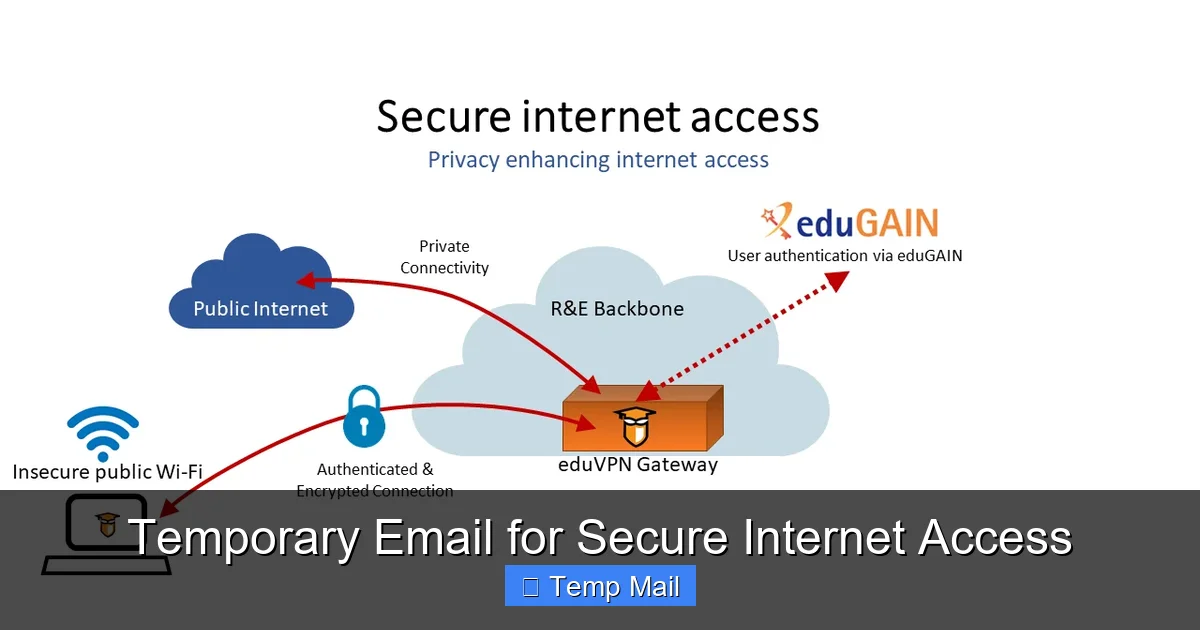
Visual guide about Temporary Email Services That Last Longer
Image source: bodyartguru.com
The “temporary email” landscape can be mapped on a timeline:
We are primarily concerned with that middle tier. It provides the breathing room needed for real-world usage while maintaining a strong privacy commitment through eventual expiration.
Behind the simple interface is a clever technical setup. When you generate an address on a service like Temp-Mail.org or 10MinuteMail’s extended options, the system:
Because there is no authentication (no password), anyone who guesses or discovers the full email address could, in theory, view the inbox. This is why the addresses are long, random strings. It’s a trade-off: convenience for a limited, calculated privacy risk.
Not all services advertise their extended durations prominently. Many default to 10 minutes but offer a “keep alive” button or a paid upgrade. Here are standout providers that either natively offer longer windows or make it easy to extend without paying.

Visual guide about Temporary Email Services That Last Longer
Image source: allabouttattoo.com
One of the most popular and reliable. By default, your inbox lasts until you close the browser tab (effectively a session-based lifetime). However, you can manually click the “Keep the address” button to extend it for 24 hours. You can do this repeatedly, effectively keeping the same address alive for days as long as you interact with the site periodically. It supports attachments, has multiple domain choices, and offers a browser extension. The auto-deletion after browser closure is its main quirk, but the manual extension is straightforward.
The original. While its default is 10 minutes, it famously offers a 100-minute (1 hour 40 min) extension with a single click. For many users, this is sufficient. It’s incredibly simple, no-frills, and highly trustworthy due to its long history. If your verification typically arrives within a couple of hours, this extended one-time boost might be all you need.
A veteran with a different approach. Your inbox lasts as long as you keep the browser window or tab open. Close it, and the address is gone. However, it offers a unique “Password Protection” feature. You can set a password for your inbox, allowing you to close the tab and return later by entering both the address and your password. This effectively lets you preserve an inbox for days, as long as you remember the password. It also supports file attachments up to 150MB, which is rare for temp mail.
Focuses on simplicity and a slightly longer default. Inboxes here last for 24 hours from creation, no extensions needed. It’s clean, ad-light, and very fast. It doesn’t support attachments, making it ideal for pure text verification emails. If you need a guaranteed 24-hour window without clicking buttons, Maildrop is a top contender.
Offers a clear choice at creation: 10 minutes, 1 hour, or 1 day. This upfront control is excellent. The 1-day option is robust, with a large inbox capacity and support for attachments. The interface is modern and user-friendly. It also provides a “Reply” feature, allowing you to send a limited number of replies from the temporary address—a useful feature for brief, back-and-forth communication like a customer support ticket.
Beyond duration, factor in:
Knowing when to use these services is as important as knowing how. Using them for the wrong purpose can lead to lost access or security issues. Here are the prime scenarios where an extended-duration temporary email shines.

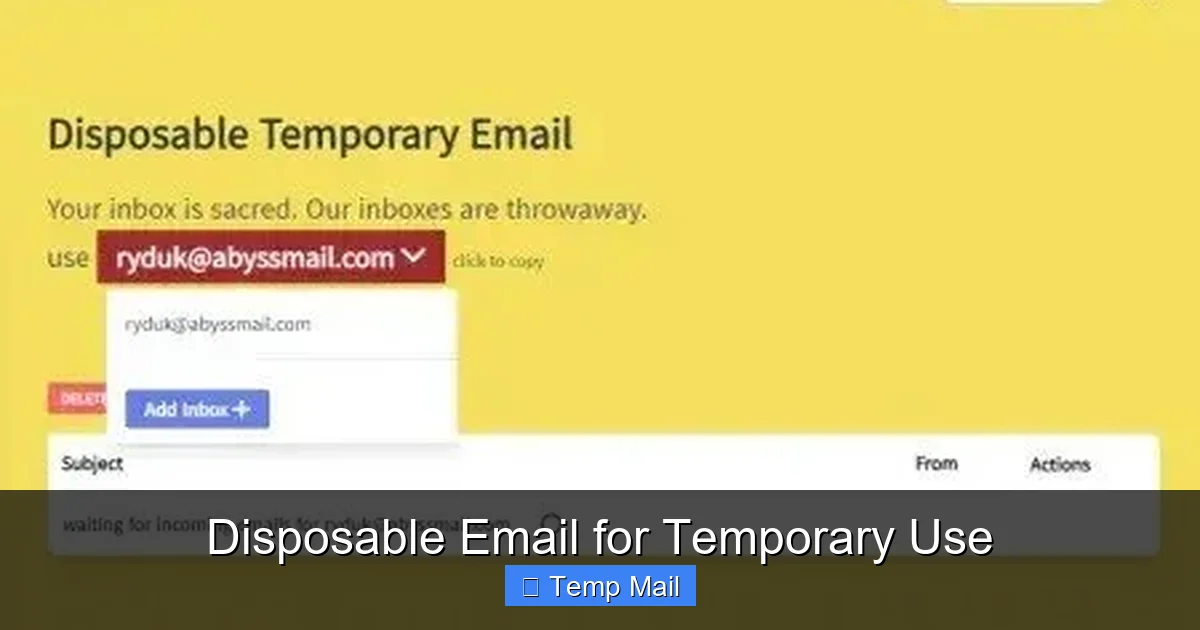
Visual guide about Temporary Email Services That Last Longer
Image source: inspirationfeed.com
This is the #1 use case. You want to try “Pro” features of a SaaS tool, design software, or video editor for 14 or 30 days. These trials almost always require an email and send a download link or license key via email. The verification email might arrive instantly, or it might be queued. With a 24-48 hour inbox, you can sign up in the evening and check your temporary inbox the next morning with no stress. Example: You sign up for a 7-day trial of a premium project management tool at 5 PM. The confirmation email with your activation link arrives at 9 AM the next day. Your 24-hour Temp-Mail inbox is still active, and you activate your trial.
Forums, Discord servers, and gaming communities often require email verification to prevent spam bots. The verification process might be instant, or a human moderator might need to approve your account, which could take several hours or a day. A 24-hour or longer inbox covers this entire approval window. It also protects you from the inevitable spam these communities sometimes generate (newsletter blasts, partner offers) that would otherwise clog your primary inbox.
Many blogs and educational sites gate valuable content—ebooks, whitepapers, template packs—behind an email sign-up. You want the resource, but you don’t want to join their marketing newsletter forever. Use an extended temporary email. You’ll receive the download link within minutes or hours, grab the file, and never think about it again. The inbox will expire, cutting off any future marketing emails from that source.
Developers and QA testers need to create hundreds of test accounts. Using real emails is impossible. Standard 10-minute emails are too short for complex testing workflows that involve multiple email steps (e.g., “welcome” email, “password reset” email, “notification” email). An inbox lasting 24-48 hours allows a tester to create an account, perform a suite of tests that trigger various emails, and review all those emails in one session without regeneration.
When selling a high-value item on Craigslist, Facebook Marketplace, or a niche forum, you might prefer to use a separate email for all buyer communications. An extended temporary email (3-7 days) can cover the typical sales negotiation period. Once the item is sold, the communication channel (and its spam potential) disappears with the inbox. This is also useful for one-time purchases from a less-trusted e-commerce site you’ve never used before.
Using these tools effectively requires adopting a safe mindset. They are powerful privacy tools, but misuse can lead to frustration or minor security pitfalls.
This is the golden rule. Do not use a temporary email for:
Why? If you forget your password on a site using a temporary email, you are permanently locked out. There is no “forgot password” link that will reach you. The account is dead. Use temporary emails only for disposable interactions, not for identity.
Don’t default to the longest time available if you don’t need it. For an instant download, a 10-minute email might suffice. For a trial that sends a link immediately, 1 hour is fine. Reserve 24-hour or longer inboxes for processes you suspect will have a delay. This minimizes the window in which the address exists and could potentially be misused if intercepted.
Reputable providers state clearly that they do not log IP addresses or store emails after deletion. However, you should still glance at their policy. Avoid any service that explicitly says they “may share data with partners” or logs user activity. The best services are transparent about their ephemeral nature and lack of data harvesting.
Don’t just generate the address and walk away. Bookmark the inbox URL or keep the tab open. Check it periodically (every 30-60 minutes) during the first few hours after signing up somewhere. Some sites send verification emails within seconds; others take hours. Knowing when it arrives lets you act quickly.
What if the email never arrives? It could be blocked by the recipient’s server (some domains are blacklisted), or it landed in a spam folder you can’t access (temp mail inboxes often have limited spam filtering). Before you commit to a sign-up using a temp address, see if the site offers an alternative, like “resend verification email” or a “sign up with Google/Apple” option. If the temp mail fails, you might need to use your real email to complete the process.
For maximum compartmentalization, use a different browser (e.g., Firefox instead of Chrome) or a dedicated browser profile for your temporary email activities. This prevents session cookies from your main browsing from mixing with your temp mail session, adding a small but useful layer of separation.
The demand for tools like temporary email services that last longer is a symptom of a larger trend: growing user awareness of data privacy and the toxic economics of the “free” email model, where users are the product. What’s next?
We are already seeing browser extensions from providers like Temp-Mail. The future lies in deeper integration. Imagine your browser or password manager (like Bitwarden or 1Password) offering a built-in “Generate Temporary Email” button directly on a sign-up form. This frictionless integration would make privacy the default, easy choice for millions.
Expect to see more features like the “password protection” from Guerrilla Mail become standard. Secure, client-side encryption of the inbox during its lifetime, even without a password, could be introduced. Better domain rotation to avoid blacklists and more robust attachment handling are also likely evolutions.
A more radical concept is the “self-destructing” email address that is functionally permanent but with a built-in, user-defined expiration date. You create an address that automatically deletes itself and all its emails after 30, 60, or 90 days. This combines the peace of mind of a long-lasting address with the ultimate cleanup guarantee. Services like SimpleLogin (now part of Proton) and AnonAddy offer email aliasing with auto-deletion rules, representing this future direction.
The ultimate future is a shift in user behavior. Instead of thinking “I need to hide my email from this one site,” we’ll think “I will use a dedicated, limited-lifetime address for this *category* of interaction.” Using a different temporary or alias email for newsletters, for online shopping, for social media logins, and for forums becomes standard practice. Temporary email services that last longer are the perfect tool for this granular, controlled approach to digital identity management. They empower us to take back control of our primary inbox and, by extension, our attention and data.
The online world is built on an email address. It’s your key, your username, and your contact point. But it doesn’t have to be your one true identity. The frustration of the 10-minute disposable email has long been a barrier to widespread adoption of privacy-conscious habits. Temporary email services that last longer tear down that barrier. They provide a practical, usable, and effective shield for your primary email address, giving you the time you need to complete legitimate online tasks without the spam, data mining, and potential for breach that comes with handing out your permanent email.
By understanding the difference between disposable and extended temporary, choosing a provider that fits your typical wait time, and applying the best practices outlined here, you can seamlessly integrate these tools into your digital life. Use them for trials, forums, downloads, and testing. Keep your real email for your bank, your family, and your core identity. This is not about being paranoid; it’s about being prudent. It’s about recognizing that your email address is a valuable piece of personal data and treating it with the care it deserves. Start using a longer-lasting temporary email today for your next sign-up, and experience the simple relief of an inbox that doesn’t vanish before you need it.
Yes, these services are completely legal. They are simply automated email forwarding and deletion systems. However, using them to fraudulently sign up for services, evade bans, or commit illegal activities is, of course, illegal. Their legitimate purpose is privacy protection and spam avoidance.
Often, yes. Many websites maintain lists of known disposable email domains (like @temp-mail.org, @guerrillamail.com) and will block sign-ups from those domains. This is why services offering multiple domain choices or less common domains can be more effective. There is no foolproof way to hide the domain from the receiving server.
The provider’s system automatically and permanently deletes the mailbox and all emails contained within it. The email address is then recycled and may be assigned to a future user. Any emails sent to that address after deletion will bounce or be discarded. You lose all access forever.
Almost certainly not. Since you do not own or have long-term access to the temporary email inbox, you cannot receive password reset links. This is why the cardinal rule is to never use these emails for any account you cannot afford to lose permanently.
The safety concern with public Wi-Fi is about intercepting your internet traffic, not about the email service itself. Always use HTTPS (the padlock icon in your browser) when accessing any website, including your temporary mail inbox. For an extra layer of security on public networks, use a reputable VPN, which encrypts all your traffic.
Generally, no. Social media accounts are intended to represent your real identity and are often used for account recovery for other services (e.g., “Log in with Facebook”). They also have complex, long-term Terms of Service. Using a temporary email will likely lead to a locked account the moment you need to recover it. Use your primary, secure email for social media.
অনলাইন নিউজপেপার থিম। এই থিমটি দিয়ে আপনারা বাংলা এবং ইংরেজি নিউজপেপার সাইট তৈরি করতে পারবেন । বার্তা ও বাণিজ্যিক কার্যালয়: ৭১, মতিঝিল, ঢাকা-১০০০। সম্পাদক : মো আসাদুজ্জামান আমানউল্লাহ । মোবাইল : ০১৭০০-০০০০০০ । ইমেইল : [email protected] ।
All rights reserved © 2019 themesdealer.Com