Image for Temp Mail for Spam-free Inbox



Unlock a spam-free inbox with temporary email addresses. Temp mail services provide you with a disposable, short-lived email account perfect for signing up to websites, downloading content, or verifying accounts without ever using your real, personal email. This simple tool acts as a powerful shield, preventing spam, marketing emails, and potential data breaches from ever reaching your primary inbox. It’s the easiest, most effective way to maintain online privacy and keep your main email clean and secure.
Let’s talk about your email inbox. That sacred, often chaotic, digital space. For many of us, it’s a mix of important work messages, family updates, and a tidal wave of the unwanted: newsletters we never signed up for, “exclusive offers” from companies we bought one thing from once, and the ever-present fear of phishing attempts. What if I told you there’s a simple, free tool that can act as a force field against this spam? Enter temp mail, or temporary email.
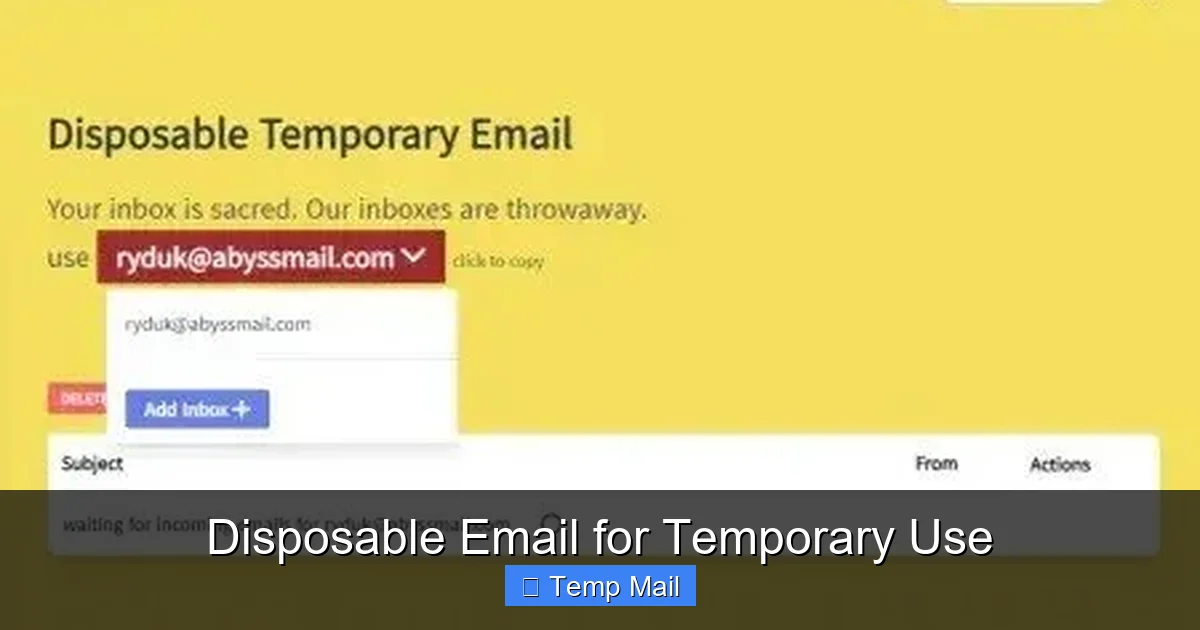
Think of temp mail as a digital burner phone, but for email. It’s a service that instantly generates a random email address, like [email protected], that you can use for a very specific, short-term purpose. This address lives in a public or semi-public inbox on the temp mail provider’s website. You don’t set a password. You don’t create an account. You simply copy the address, use it wherever you need, and then check the inbox on the provider’s site for any verification emails or downloads. After a set time—usually 10 minutes to a few hours—or once you close the browser tab, that address and all its emails vanish into the digital ether. Poof. Gone.
The magic lies in its disposability. You are not handing out your real, carefully curated, primary email address ([email protected]) to every website, forum, or download portal. Instead, you sacrifice this temporary, meaningless address. It takes the spam hit so your permanent inbox doesn’t have to. It’s not about being secretive; it’s about being smart and in control of your digital footprint.
The process is brilliantly simple, designed for instant gratification and maximum convenience.
There’s no setup, no password to remember, no account to manage. It’s the ultimate in low-commitment, high-reward internet hygiene.
So why go through this extra step? The benefit is monumental: a spam-free inbox. But let’s break down exactly what that means and how temp mail delivers it.

Visual guide about Temp Mail for Spam-free Inbox
Image source: imag.malavida.com
Every time you use your primary email to sign up for something, you are giving that company permission to email you. That “permission” is often buried in Terms of Service you didn’t read. They might sell your email to “partner” companies. Their database could get hacked. Their “helpful” weekly newsletter becomes your monthly, then weekly, spam burden. Over years, these tiny permissions compound into hundreds, even thousands, of unwanted emails.
Temp mail completely severs this chain. That sketchy-looking forum from 2015? That “free” e-book site that required an email? The online contest you entered once? They all get the temp address. They can email all they want, but their emails are sent to a ghost address that ceases to exist after an hour. They have nowhere to send their spam. Your primary inbox remains pristine, reserved only for people and services you genuinely want to hear from—your boss, your family, your bank, your favorite newsletter that you actually read.
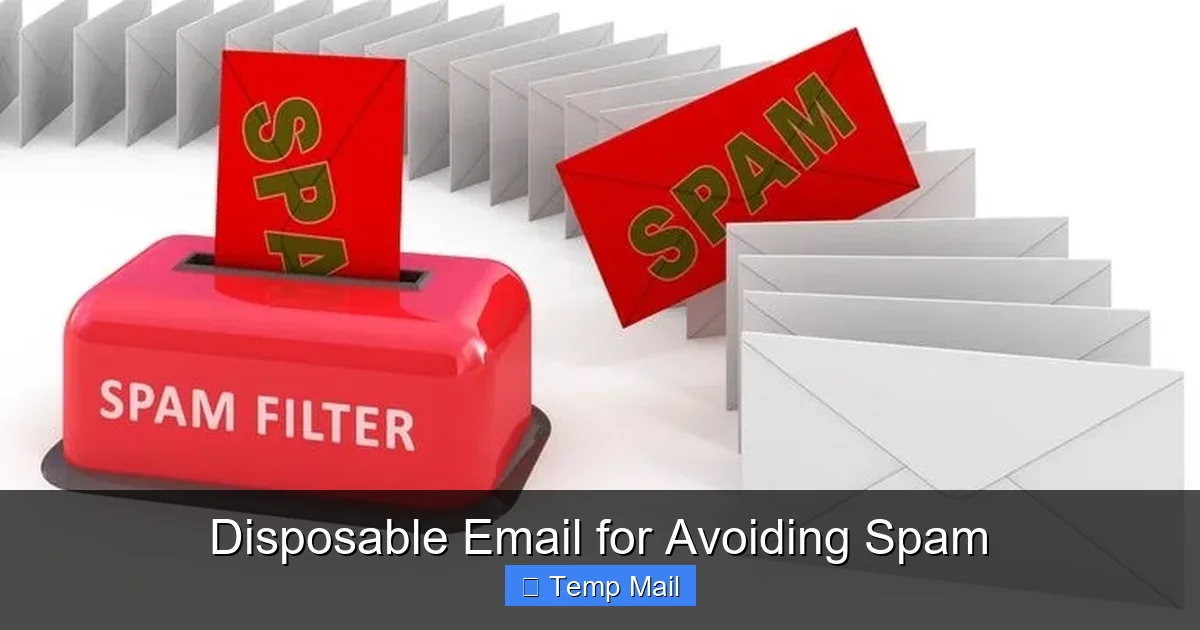
This isn’t just about annoyance; it’s about security. Spam emails are the primary vehicle for phishing attacks and malware. By reducing the volume of unsolicited email you receive, you drastically lower the chance of accidentally clicking a malicious link disguised as a “special offer.” A spam-free inbox is a safer inbox.
While spam prevention is the headline act, temp mail offers crucial backstage benefits.
Knowing *when* to use temp mail is as important as knowing *how*. Here are the ideal scenarios where a disposable email is your best friend.

Visual guide about Temp Mail for Spam-free Inbox
Image source: anonymmail.net
That “free” e-book, whitepaper, or template that requires an email? Use temp mail. You get the download link instantly in the temporary inbox, and the marketing drip campaign that follows goes nowhere. This is probably the #1 use case and a huge time-saver.
Need to create an account just to browse a catalog, use a tool for 10 minutes, or access a single feature? Temp mail is perfect. You get the access you need without committing to a lifetime of promotional emails from the company.
Want to post a comment on a news article or join a discussion on a hobby forum? Many forums are spam magnets. Using a temp address protects you from the inevitable spam that follows forum sign-ups and keeps your identity separate from your main email.
Be cautious here, but if you’re downloading a utility from a less-known site that demands an email for the download link, a temp address is a safe buffer. It prevents that site from adding you to its spam list.
Developers and QA testers use temp mail services to test email functionality, sign-up flows, and notification systems without polluting real inboxes or needing to manage multiple test accounts.
Temp mail is powerful, but it’s not a universal replacement for your primary email. Using it in the wrong situations can cause real problems.
This is non-negotiable. Do not use a temp mail for:
The rule of thumb: if forgetting the password would be a catastrophe, don’t use a temp email.
Using a temp mail for a job application, university correspondence, or professional networking looks unprofessional and will likely get your application discarded. It signals a lack of seriousness.
Some platforms, especially those dealing with high-value transactions or sensitive data, actively block known disposable email domains. If a site rejects your temp address, you’ll need to use a real one. That’s a signal that the service itself may be more security-conscious (or just controlling).
Not all temp mail providers are created equal. While most are free and simple, a few key features separate the good from the great.
For most users, starting with a well-known provider like Temp-Mail.org or 10MinuteMail is a safe bet. They are reliable, have clear interfaces, and are widely recognized.
To get the most out of temp mail while staying safe, follow these simple habits.
As data privacy concerns grow globally, tools like temp mail are moving from a “hacker trick” to a mainstream privacy hygiene practice. Regulations like GDPR and CCPA give users more rights, but the onus is still on the individual to control their data sharing. Temp mail is a proactive, user-controlled method of data minimization—giving away only what is absolutely necessary for a specific interaction.
We may see tighter integration with browsers (built-in temporary email generation) and password managers. The concept might evolve to include temporary phone numbers for SMS verification, creating a full suite of disposable contact points. The core idea—ephemeral, purpose-bound identity—is a powerful counter to the permanent, monolithic digital profiles we currently carry.
Ultimately, adopting temp mail is a small behavioral shift that signals a larger mindset: your primary email is a valuable asset, not a disposable coupon. Guard it accordingly. Use it for your real relationships, your critical accounts, and your trusted subscriptions. For everything else, there’s a temporary, spam-sucking, self-destructing email waiting.
Your email inbox doesn’t have to be a battleground. The constant war against spam, marketing blasts, and unwanted solicitations can be won with a remarkably simple strategy. By making temp mail your default for any non-essential online interaction, you erect an impermeable barrier around your primary email address. You stop the spam at the source, protect your privacy, and reclaim the peace of your digital mailbox.
It takes two seconds. Click a site, copy an address, paste it, and forget it. The next time you see a “Sign up for our newsletter!” pop-up or a “Enter your email to download” form, pause. Ask yourself: “Do I want this company to have my real email forever?” If the answer is no—and it almost always is—reach for a temp mail. That small action is a giant leap toward a genuinely spam-free inbox and a more secure, private online life. Your future self, sipping coffee while browsing a clean, clutter-free inbox, will thank you.
Yes, using temporary email services is completely legal. They are legitimate tools for privacy protection. However, using them to commit fraud, bypass bans, or engage in illegal activities is, of course, illegal regardless of the email type used.
Most temp mail services are designed for receiving emails only. They typically do not have an outgoing (SMTP) mail server, so you cannot send emails from a temporary address. Their sole function is to receive verification and download links for the sites where you used the address.
Security varies by provider. Reputable services do not log your IP address or personal data. However, the inboxes are public on the provider’s site, so anyone with the exact inbox URL could see the emails. This is why you must never use temp mail for sensitive accounts. Always check the provider’s privacy policy.
You will not be able to recover it. Password reset links go to the email address on file. Since a temp address is gone after its lifespan, the reset email is lost, and you will be permanently locked out of that account. This is why the “never for important accounts” rule is critical.
Yes, many popular websites and platforms maintain lists of known disposable email domains and will block them during sign-up. If your temp address is rejected, you’ll need to use a permanent email address. This is often a sign the site has higher security standards.
Absolutely. Temp mail services are websites that work on any device with a web browser—desktop, laptop, tablet, or smartphone. Some providers also offer dedicated mobile apps for even easier access on the go.
অনলাইন নিউজপেপার থিম। এই থিমটি দিয়ে আপনারা বাংলা এবং ইংরেজি নিউজপেপার সাইট তৈরি করতে পারবেন । বার্তা ও বাণিজ্যিক কার্যালয়: ৭১, মতিঝিল, ঢাকা-১০০০। সম্পাদক : মো আসাদুজ্জামান আমানউল্লাহ । মোবাইল : ০১৭০০-০০০০০০ । ইমেইল : [email protected] ।
All rights reserved © 2019 themesdealer.Com