Image for Temporary Email for One-time Use



Temporary email services provide disposable, short-lived email addresses designed for one-time or limited use. They act as a privacy shield, allowing you to sign up for websites, download files, or access content without exposing your primary email to spam, data breaches, or unwanted marketing. These addresses auto-delete after a set period, typically hours or days, ensuring your main inbox stays clean and secure. It’s a simple, free tool for anyone looking to control their digital footprint and combat inbox clutter.
Ever felt that pang of hesitation when a website asks for your email just to download a free PDF? Or the dread of seeing your inbox flood with promotional offers after signing up for a one-time webinar? That’s the modern internet’s classic trade-off: convenience versus privacy. But what if you could have the convenience without the long-term commitment and clutter? Enter the world of the temporary email for one-time use—a simple, powerful tool that’s become essential for savvy digital citizens.
This isn’t some shady, underground hack. It’s a legitimate, widely-used service that creates a short-lived, anonymous inbox just for you. You get the access you need, the website gets the verification it wants, and your real email address remains completely out of the picture. In this deep dive, we’ll unpack exactly how these disposable email services work, why they’re more important than ever for protecting your digital identity, and exactly how to use them wisely without shooting yourself in the foot.
At its core, a temporary email (also called disposable email, throwaway email, or fake email) is a service that generates a random, functional email address for a very short period—usually anywhere from 10 minutes to 48 hours. These inboxes are publicly accessible via a unique URL, require no registration, and are designed to be used once or twice and then discarded.
Unlike your Gmail or Outlook account, which is tied to your identity, passwords, and a persistent server, a temporary inbox is a fleeting digital ghost. Here’s the typical lifecycle:
The concept emerged in the early 2000s alongside the rise of web forums and free online services that immediately led to inbox bombardment. Early versions were often called “spam traps” or “anonymizers.” Today, they’ve evolved into polished, user-friendly utilities. The shift from “fake email” to “temporary email for one-time use” reflects a broader understanding: this isn’t about deception; it’s about intentional, controlled data sharing for specific, low-stakes scenarios.
Knowing *how* it works is one thing. Knowing *when* to use it is where the real value lies. Here are the most common and smart applications for a temporary email.

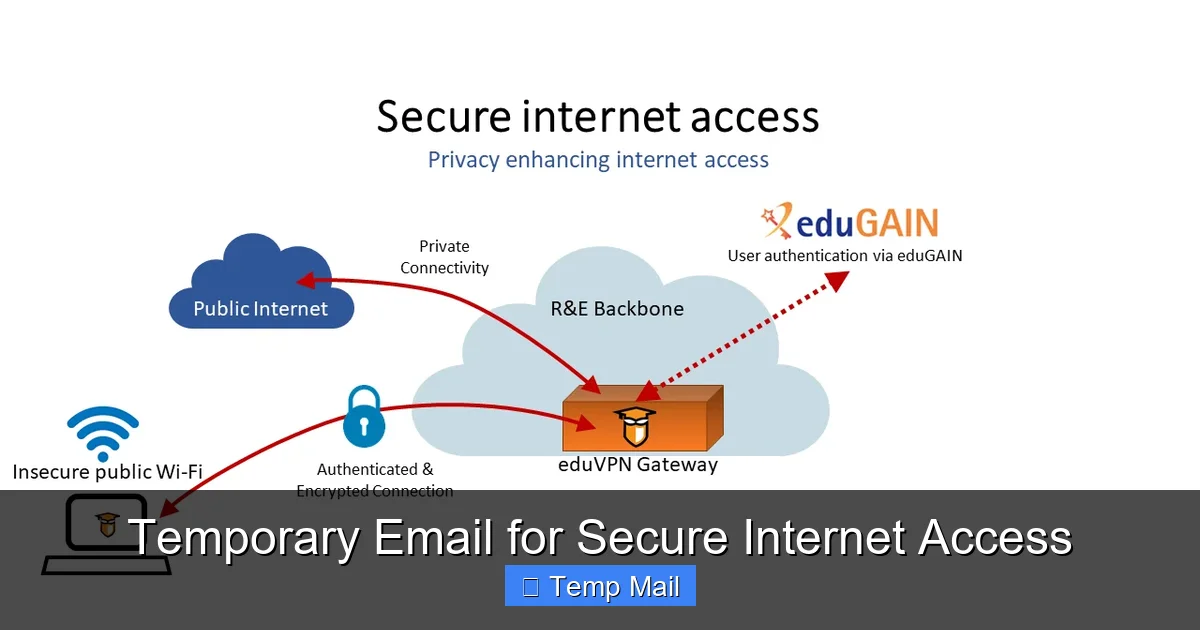
Visual guide about Temporary Email for One-time Use
Image source: anonymmail.net
This is the #1 reason people seek out disposable email. You want that free e-book, template, or industry report. The price? Often, your email address, which gets added to a marketing list that may be sold or shared. Using a temporary address means the promotional flood goes to an inbox that will self-destruct in an hour, leaving your primary address pristine. Pro Tip: Use it for any “freebie in exchange for email” offer where you have no intention of becoming a long-term subscriber.
Need to test a SaaS tool for 14 days? Create a temporary account. Want to try a gaming platform or streaming service without the follow-up drip campaigns? A disposable email is perfect. It satisfies the “must have an email to sign up” requirement without creating a permanent digital footprint for a service you might abandon.
Blogs and publishers often gate premium content behind an email form. Use a temp mail to bypass this and read the article. This is especially useful for quick research or when you suspect the content isn’t worth the email subscription. You get the information you need instantly, with zero obligation.
If you’re a developer testing user flows, you need multiple email addresses to test registration, password reset, and notification systems. Temporary email services allow you to generate dozens of unique addresses on the fly. Even as a regular user, if an app asks for an email during beta testing, a disposable address is the safest bet.
This is a critical privacy use case. Signing up on a new forum, a less-reputable download site, or a social platform with questionable data practices? Using your primary email ties your real identity (and any past breaches) to that new account. A temporary email for one-time use creates a firebreak, ensuring a potential data leak at that new site cannot be traced back to your main digital identity.
Not all disposable email services are created equal. While they all share the core premise of a short-lived inbox, features, reliability, and privacy policies differ significantly. Here’s what to evaluate before you click “generate.”

Visual guide about Temporary Email for One-time Use
Image source: testingdocs.com
Steer clear of services that:
Temp-Mail.org: Very user-friendly, offers multiple domain choices, supports attachments, and has a clear 1-hour default timer. A solid all-around choice.
10MinuteMail: The classic. Strictly 10 minutes, incredibly simple interface. Perfect for the fastest, most ephemeral tasks.
Guerrilla Mail: Offers more control—you can choose your own random address, extend the time by clicking, and it has a slightly longer default lifespan. Good for tasks that might take 30-60 minutes.
DropMail: Provides a unique feature: it creates a real, but random, mailbox on a custom domain that persists until you close the browser tab. Good for slightly longer sessions without a hard timer.
Using a temporary email is a privacy move, but it’s not a magic shield. Understanding its security profile is non-negotiable for safe usage.

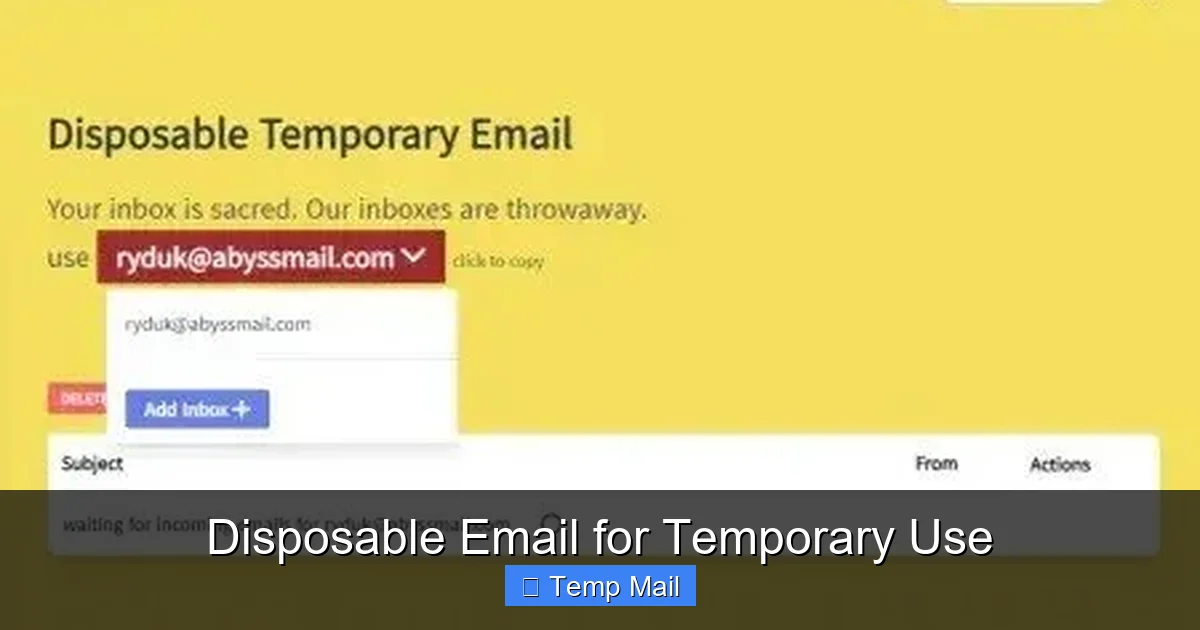
Visual guide about Temporary Email for One-time Use
Image source: i.ytimg.com
Under regulations like GDPR, you have a “right to be forgotten.” A good temporary email service inherently complies by automatically deleting all data after the expiration period. However, check their policy: do they state they delete all server logs immediately? The best services explicitly state they do not store any personal data or email content beyond the active session.
This tool has clear boundaries. Misusing it can cause real headaches. Here’s where you should never deploy a disposable address.
This is the cardinal rule. Do not use a temporary email for:
Losing access to these accounts because the recovery email vanished is a disaster. Use your most secure, permanent email for these.
Many major platforms (Google, Microsoft, Apple, most major banks) actively block known disposable email domains. If you try to sign up with @tmpmail.org, you’ll likely get an error: “Invalid email address.” This is a security measure on their part. Don’t try to circumvent it; just use your real email.
Imagine you use a temp mail to sign up for a forum. A week later, you want to log in but forget your password. You click “Forgot Password.” The reset link goes to an inbox that expired and vanished 6 days ago. You are permanently locked out. For any service you might want to access again, use a real email.
Some smaller or ad-heavy temporary email services have spotty deliverability. The verification email from a reputable company might get flagged as spam or simply never arrive. If you’re trying to access something urgent and the email doesn’t come, you may have wasted time. For critical verifications (like a two-factor code for a temporary account), this unreliability can be a deal-breaker.
Mastering the temporary email for one-time use is about integrating it seamlessly and safely into your digital routine.
Ask yourself this quick sequence:
After you paste the temp address and submit the form, immediately switch to the provider’s tab and keep it open. Some verification emails arrive in seconds. If you navigate away, you might miss it, and the inbox might time out or you might lose the unique URL. Keep it open until you’ve received and used the code or link.
For extra cleanliness, open a new incognito/private window for your temp mail session. This prevents any cookies or sessions from your main browsing from mixing with the disposable activity. It’s a small step for enhanced compartmentalization.
The whole point is one-time use. If you need to verify another account later, generate a new temporary email. Reusing a single disposable address across multiple sites slowly starts to create a linkable profile for that *specific* disposable address, which can eventually be used to target it with spam (though it will die soon anyway).
Here’s a pro move: If you *must* create an account for a service you’ll use for a few months (like a short-term project tool), use a temporary email and generate a unique, strong password via your password manager. Store the login credentials in your manager. When the account is no longer needed, you can delete the entry. The email will expire, but you still have the credentials stored if you need to reference old data before it’s deleted from the service.
Yes, absolutely. Using a disposable email address is a legal and legitimate privacy tool. It is not illegal to use an alias or a temporary contact method. The legality only comes into question if the email address is used for fraudulent or illegal activities, which is true of any communication tool.
They are secure from the perspective of isolating your primary identity, but not truly anonymous. The provider can see your IP address when you access the inbox. For true anonymity, you would need to use a reputable VPN alongside the temp mail service. The emails themselves are typically not encrypted between you and the provider, so don’t send sensitive personal data (like SSNs or credit card numbers) via a disposable address.
It varies by provider, but common lifespans are 10 minutes, 30 minutes, 1 hour, or 24 hours. Some services allow you to extend the time manually. The key is to use the address and retrieve any needed emails before the countdown timer reaches zero, at which point the inbox and its contents are permanently deleted.
No. By design, recovery is impossible. Once the timer expires, the email address is recycled and given to another user. There is no password, security question, or backup link. This is why you must never use a temporary email for any account where you need long-term access or password recovery.
Yes, many do. Major platforms like Google, Apple, and most financial institutions maintain lists of known disposable email domains and will block sign-up attempts using them. This is a security measure to reduce fraud and spam. If a site rejects your temp mail, you’ll need to use a legitimate, permanent email address.
Free services are ad-supported and offer basic functionality (short lifespan, basic inbox). Paid services (which are rare for simple temp mail) might offer longer retention times (days or weeks), custom domain options, enhanced privacy guarantees (no logs), priority delivery, and an ad-free interface. For most one-time use cases, a reputable free service is more than adequate.
অনলাইন নিউজপেপার থিম। এই থিমটি দিয়ে আপনারা বাংলা এবং ইংরেজি নিউজপেপার সাইট তৈরি করতে পারবেন । বার্তা ও বাণিজ্যিক কার্যালয়: ৭১, মতিঝিল, ঢাকা-১০০০। সম্পাদক : মো আসাদুজ্জামান আমানউল্লাহ । মোবাইল : ০১৭০০-০০০০০০ । ইমেইল : [email protected] ।
All rights reserved © 2019 themesdealer.Com