Image for Disposable Email for Email Verification



Disposable email for email verification is a powerful tool to safeguard your primary inbox from spam, data breaches, and unwanted marketing. These temporary addresses let you sign up for websites, download files, or access gated content without revealing your real email. While incredibly useful for privacy, they come with limitations for long-term account security. Use them wisely for one-time tasks and always rely on a secure, personal email for important accounts.
Imagine you’re clicking on a promising article titled “10 Must-Have Software Tools for 2024.” You scroll down, eager to learn more, but a pop-up blocks your view. “Subscribe to our newsletter to read the full article!” it demands. Your stomach sinks. You know that once you hand over your email, you’re signing up for a relentless stream of promotional emails that may never stop. This is the exact moment where a disposable email for email verification becomes your best friend.
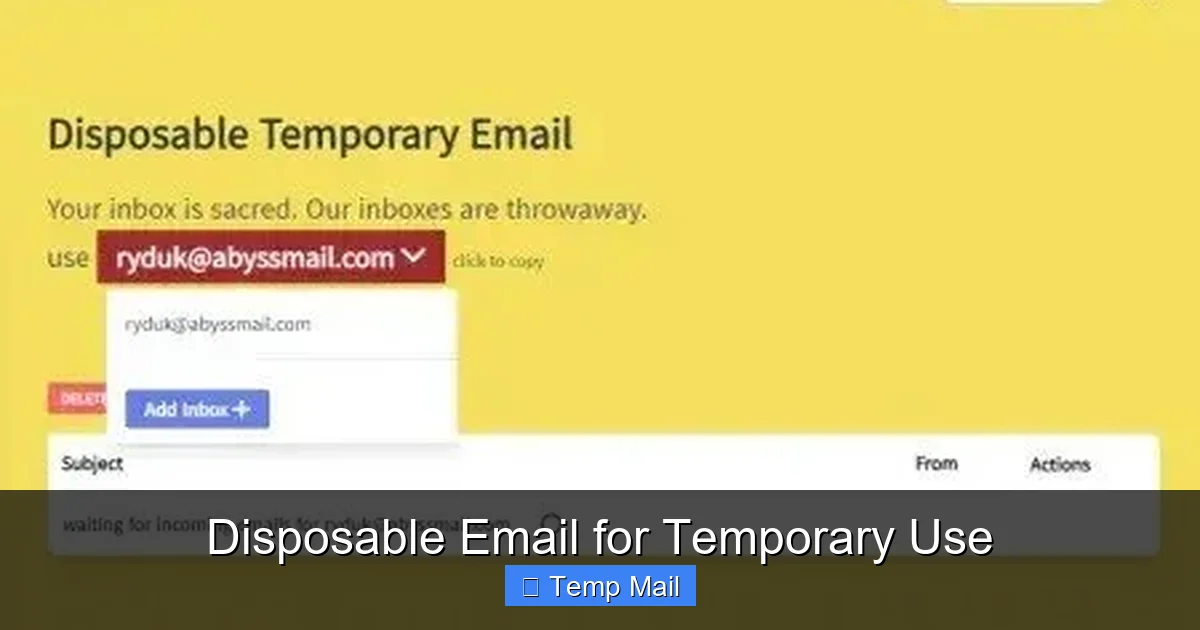
At its core, a disposable email (also called temp mail, throwaway email, or fake email) is a temporary email address that exists for a very short time—often just 10 minutes to a few hours. Its sole purpose is to receive a single verification email, like a confirmation link or a one-time password (OTP), and then self-destruct. You don’t need to create an account, set a password, or remember anything. You visit a website like Temp-Mail.org or 10MinuteMail.com, it generates a random inbox for you, and you copy-paste that address into the service you’re trying to access. Once the verification email arrives in the temp inbox, you click the link, complete your task, and forget about it. The address and all its contents vanish into thin air.
The phrase “email verification” is crucial here. Websites use this process to confirm that a) the email address you provided is real and b) you, the human, have access to it. They send a unique link or code to that address. Only by clicking that link or entering that code on their site do they consider you “verified” and grant you access. Disposable email services are built specifically to facilitate this one-step check without any long-term commitment or exposure.
The technology behind disposable email is surprisingly straightforward. There’s no complex AI or secret encryption here; it’s a clever use of basic email infrastructure. Let’s walk through the typical lifecycle of a disposable email for email verification.
When you visit a disposable email provider’s website, their server instantly generates a completely random email address for you. This address usually follows a pattern like [email protected] or [email protected]. The “randomstring” part is a long, unique identifier. The domain (the part after the @) is owned and controlled by the disposable email service. Your new inbox is created on their mail server at that very moment, and it’s assigned to your browser session via a unique session ID or cookie. You don’t log in; you just hold onto that randomly generated address.
You take that disposable address and paste it into the sign-up form of the website you want to access (a forum, a PDF download, a free trial). That website’s server then sends a standard SMTP email to your temporary address. The disposable email service’s mail server receives it, recognizes it belongs to the random inbox it just created for you, and deposits it there. Their website then polls their server every few seconds to see if any new mail has arrived for your session’s inbox. When it does, it displays the email subject and body right in your browser window.
This is the most important part. The service has a built-in timer. Once the inbox is generated, a countdown begins—often 10, 30, or 60 minutes. If you don’t refresh the page or interact with the inbox within that time, the server automatically deletes the email address and all its contents. The address becomes invalid forever. Even if you are actively using it, most services will still delete the inbox and its emails after a set period (like 1-24 hours) from the moment of creation. There is no recovery. No password reset. It’s gone.
Using a disposable email for email verification isn’t just a trick for privacy enthusiasts; it’s a practical hygiene habit for anyone spending time online. The benefits stack up quickly.
This is the most obvious and valuable benefit. Every time you use your real email to sign up for a free ebook, a webinar, or a discount code from a sketchy-looking site, you’re giving that company permission to email you. Often, they sell your email to other marketers. Your primary inbox, the one you use for banking, work, and family, becomes a war zone of promotional clutter. Disposable email creates a perfect firewall. The promotional emails go to the temp address, which self-destructs. Your real inbox remains sacred, containing only emails you genuinely want and expect.
Data breaches are a daily occurrence. When a company you signed up with (using your real email) gets hacked, your email address is now in the hands of spammers and cybercriminals. You’ll start seeing a surge of phishing attempts and scam emails. By using a disposable email, you ensure that the breached database contains only a temporary, meaningless address. Your real, permanent identity—your primary email—is not in that compromised file. You effectively “opt-out” of the fallout from other people’s security failures.
How many times have you wanted to read a detailed industry report, download a useful template, or watch an exclusive video, only to be stopped by an email gate? You know the content might be valuable, but you don’t want to join yet another newsletter list. A disposable email is the perfect key. You get immediate access to the content, and the company gets a “valid” email that meets their (often superficial) verification goal. It’s a win-win where you avoid long-term spam and they get a metric that says “a user downloaded the asset.”
For software developers, QA testers, or marketers setting up campaigns, disposable emails are indispensable. Need to test if a sign-up flow sends the correct verification email? Create 10 temp mailboxes and automate the test. Need to see what a competitor’s onboarding sequence looks like? Sign up with a disposable address. It allows for rapid, anonymous testing without polluting personal or company inboxes.
Disposable email is a tool, and like any tool, it has specific uses and inherent limitations. Using it incorrectly can backfire. Understanding these risks is non-negotiable for safe and effective use.
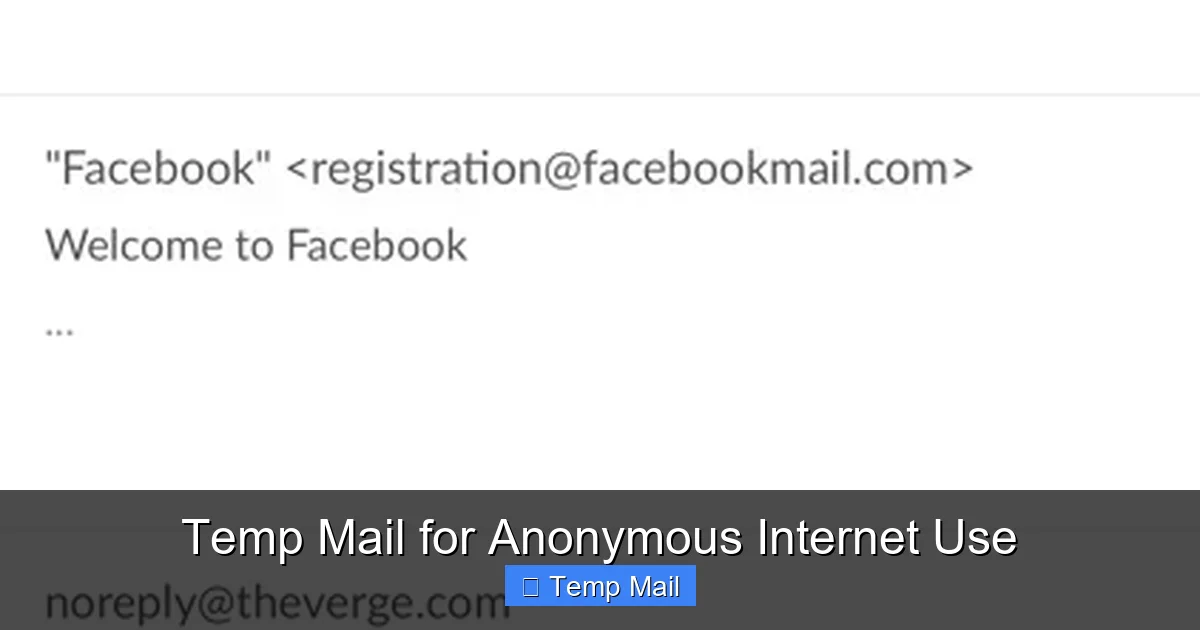
This is the biggest practical hurdle. Companies like Google (Gmail), Apple (iCloud), Facebook, Twitter, LinkedIn, and most major SaaS providers (Salesforce, HubSpot, etc.) maintain and constantly update blacklists of disposable email domains. If you try to sign up for a Gmail account or a Facebook profile using a temp mail address, the system will instantly reject it with an error like “Please enter a valid email address.” They do this to prevent spam, fake account creation, and abuse. You cannot use disposable email for any service where your identity and long-term access are tied to that email address.
Let’s say you use a disposable email to sign up for a free online tool that you *do* want to use long-term. A week later, you forget your password. You click “Forgot Password.” Where does the reset link go? To the disposable inbox. Which you can no longer access because it expired and was deleted. Your account is now permanently locked. You have zero recourse. This is why the rule is absolute: never use a disposable email for any service where you might need to log in again, recover an account, or receive important transactional information (receipts, legal documents, etc.).
You must trust the disposable email service provider. While they typically don’t log your IP address or require personal info, they can see every single email that passes through their system. That “verification” email containing a link to your social media account, your bank’s OTP, or a password reset for a shopping site is fully visible to them. Reputable services delete emails immediately upon expiration, but a malicious or compromised provider could harvest that data. You are trading privacy from the *intended recipient* for potential exposure to the *disposable email provider*. Use well-known, established services.
If you use a disposable email to sign up for a legitimate service, the service provider knows you used a temp mail address. This immediately flags your activity as suspicious to them. They may limit your account’s features, require additional verification, or ban you outright if their terms of service prohibit temp emails. You are not anonymous; you are marking yourself as a potentially low-trust user from the start.
Given the benefits and risks, here is a practical playbook for using disposable email for email verification correctly.
Treat every disposable email address as a single-use ticket. You create it with one specific, immediate task in mind: “I need to get this download link,” or “I must verify this account to read this article.” Once that verification link is clicked and the task is complete, you close the tab and forget the address. Do not try to reuse it later. Do not use it for a service you intend to use again. This mindset prevents the catastrophic “I need to reset my password” problem.
Some verification emails can take 30-60 seconds to arrive. Keep the disposable email provider’s tab open and refresh it periodically. Don’t close it immediately after pasting the address. Wait until you see the incoming email and have clicked the verification link. Only then can you safely close the tab, knowing the primary task is done.
There are hundreds of disposable email websites. Stick to the well-known ones that have been around for years (e.g., Temp-Mail, 10MinuteMail, Guerrilla Mail). Why? They have an established business model (usually ads) and a reputation to protect. They are less likely to be malicious honeypots. Avoid obscure, newly created domains that offer “disposable email.” They could be designed solely to capture the verification emails you receive.
This cannot be stressed enough. Do not use a disposable email for:
The risk of permanent lockout is far greater than the benefit of avoiding one spam email.
Disposable email is a reactive tool. The industry is developing more sophisticated ways to handle the “email gate” problem without resorting to throwaway addresses.
Instead of a disposable address that expires, create a second, permanent email address with a free provider (like Gmail or Outlook) specifically for online sign-ups and newsletters. Call it [email protected]. Use this address for everything except your core personal and professional communications. Then, use your email client’s rules/filters to automatically archive or delete emails from that address after 30 days. This gives you a reusable, persistent address that you control, but still isolates promotional clutter. It’s a more sustainable, long-term strategy.
Services like SimpleLogin or AnonAddy (and Firefox’s upcoming “Email Mask” feature) offer a brilliant middle ground. They create unique, forwardable email aliases (e.g., [email protected]) that all forward to your real inbox. You can disable an alias at any time with one click, instantly stopping all email from that source. Unlike a disposable email, the alias is persistent as long as you want it to be, but you retain full control to kill it without changing your real address. This is becoming the gold standard for privacy-conscious users.
Sometimes, the best practice is to simply close the pop-up. If you don’t truly need the content, or if the value proposition isn’t clear, walk away. Not every gate is worth passing. Your attention and data are valuable. Be selective about where you trade your email address, even a disposable one.
Disposable email for email verification is not a magic bullet for total online privacy, but it is an exceptionally effective and simple tool for a specific job: protecting your primary identity from the spam and data risks of the modern web. It excels at handling low-stakes, one-time interactions where you need a key to unlock content but have zero interest in a ongoing relationship with the sender. The core philosophy is compartmentalization. You isolate the noise of the internet to a temporary, sacrificial address, keeping your permanent digital home clean and secure.
However, its power is matched by its fragility. The moment you need to log in again, recover an account, or trust that an email will be there tomorrow, a disposable address fails. For anything meaningful—your social life, your finances, your work—you must use a secure, permanent, and well-guarded personal email address. Think of disposable email as the digital equivalent of using a public restroom. It’s perfect for a quick, necessary function, but you would never try to live in it. Use it wisely for its intended purpose, be aware of the platforms that block it, and consider moving to more advanced solutions like email aliases for a better long-term strategy. In the end, managing your email footprint is a key part of digital self-defense, and disposable mail is a sharp, single-use weapon in that arsenal.
No, using a disposable email service is completely legal. You are using a legitimate service to receive emails. However, using it to fraudulently create accounts, bypass bans, or commit illegal acts is illegal. The tool itself is neutral; it’s how you use it that matters.
Websites check the domain part of your email (the @website.com) against constantly updated public and private blacklists of known disposable email providers. Major platforms maintain their own lists and also use third-party security services that flag these domains in real-time during sign-up.
No. Both Google and Meta (Facebook, Instagram) aggressively block all emails from known disposable domains. You will be unable to create an account or verify your identity with a temporary address on these platforms. They require a permanent, traceable email for accountability and security.
It’s generally safe from malware, as the email is displayed as plain text in your browser. However, you should never click on suspicious links or download attachments from a disposable inbox, just as you wouldn’t in a regular email. The bigger risk is that the disposable service provider can read the content of your verification emails.
You will be permanently locked out of that account. Password reset links are sent to the registered email address. Since the disposable address has expired and been deleted, you will never receive the reset email. The only solution is to contact the website’s support, and they will almost certainly be unable to help you without access to that email.
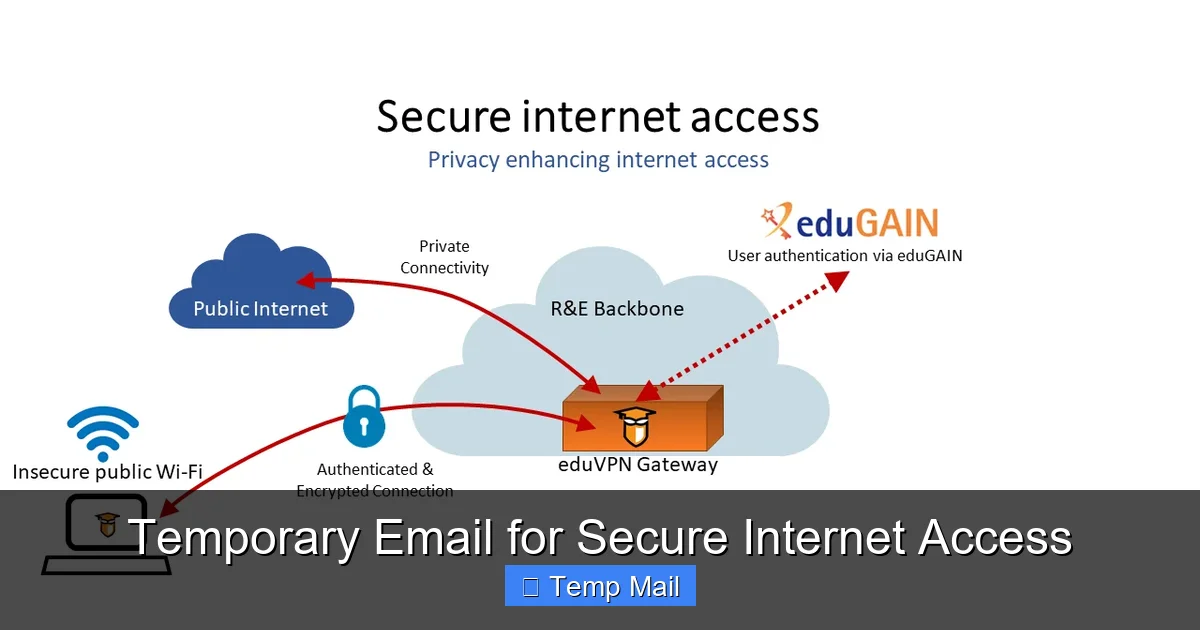
No service can guarantee true anonymity. Most do not require sign-up, which helps, but your IP address and browser data are still visible to the service provider when you visit their site. For a higher level of privacy, you would need to use a reputable VPN in combination with a well-known disposable service, but absolute anonymity is nearly impossible to achieve with standard web tools.
অনলাইন নিউজপেপার থিম। এই থিমটি দিয়ে আপনারা বাংলা এবং ইংরেজি নিউজপেপার সাইট তৈরি করতে পারবেন । বার্তা ও বাণিজ্যিক কার্যালয়: ৭১, মতিঝিল, ঢাকা-১০০০। সম্পাদক : মো আসাদুজ্জামান আমানউল্লাহ । মোবাইল : ০১৭০০-০০০০০০ । ইমেইল : [email protected] ।
All rights reserved © 2019 themesdealer.Com