Image for Best Temp Mail Generators Online



Tired of spam clogging your main inbox? Temporary email generators are your secret weapon. These free, disposable inboxes let you sign up for websites, download files, or verify accounts without revealing your real email. We’ve tested the top services to bring you a definitive guide on the best temp mail generators, highlighting their speed, privacy features, and ease of use. Learn how to protect your primary email from clutter and potential security risks with these simple, effective tools.
Let’s start with the basics. A temp mail generator is a free online service that creates a temporary, disposable email address for you to use in place of your permanent, personal email. Think of it like a burner phone for your inbox. These addresses are active for a short, predefined period—usually anywhere from 10 minutes to 24 hours—and then self-destruct, taking all received messages with them.
The core idea is simple: separation. You keep your real email address pristine and private, using the temp mail for any online interaction where you suspect your contact info might be sold to marketers, leaked in a data breach, or simply used to bombard you with promotional newsletters you never asked for. It’s a frontline defense for your digital hygiene.
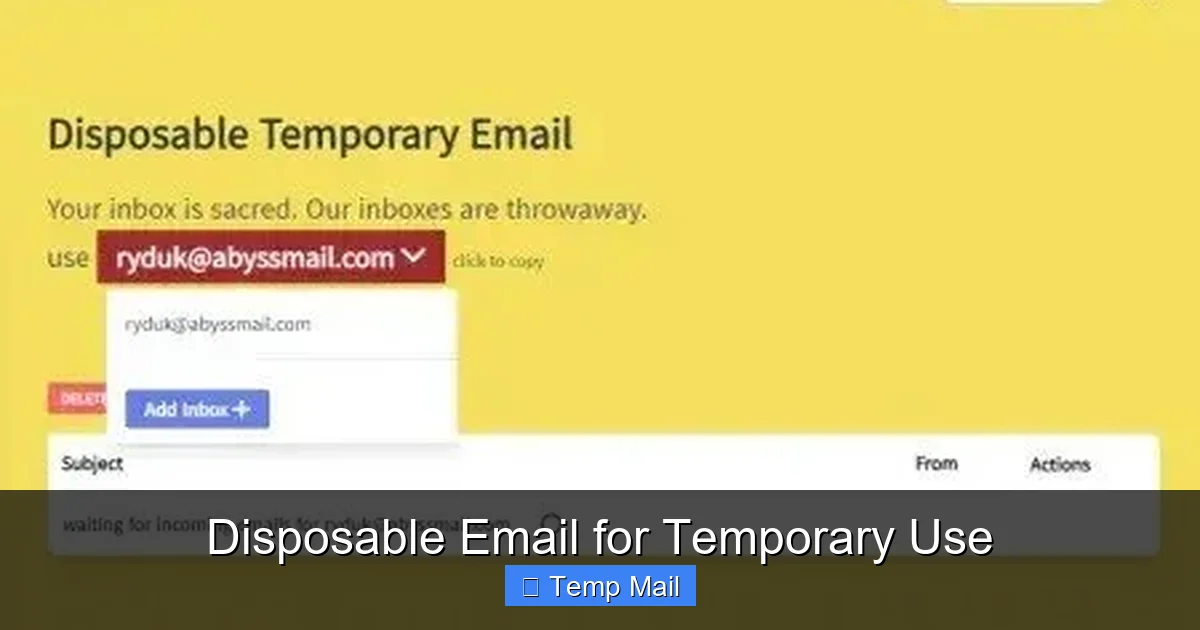
When you visit a temp mail website, the system automatically generates a random email address for you, often something like [email protected]. This address is tied to a private, temporary inbox hosted on the service’s servers. You don’t need to create an account or set a password. You simply copy that address, paste it into the website or service you’re signing up for, and then switch back to the temp mail tab to check for a verification email.
The entire process is designed for anonymity and speed. There’s no personal information tied to the inbox. Once the timer runs out, the address and all its contents are permanently deleted from the server, leaving no digital footprint behind.
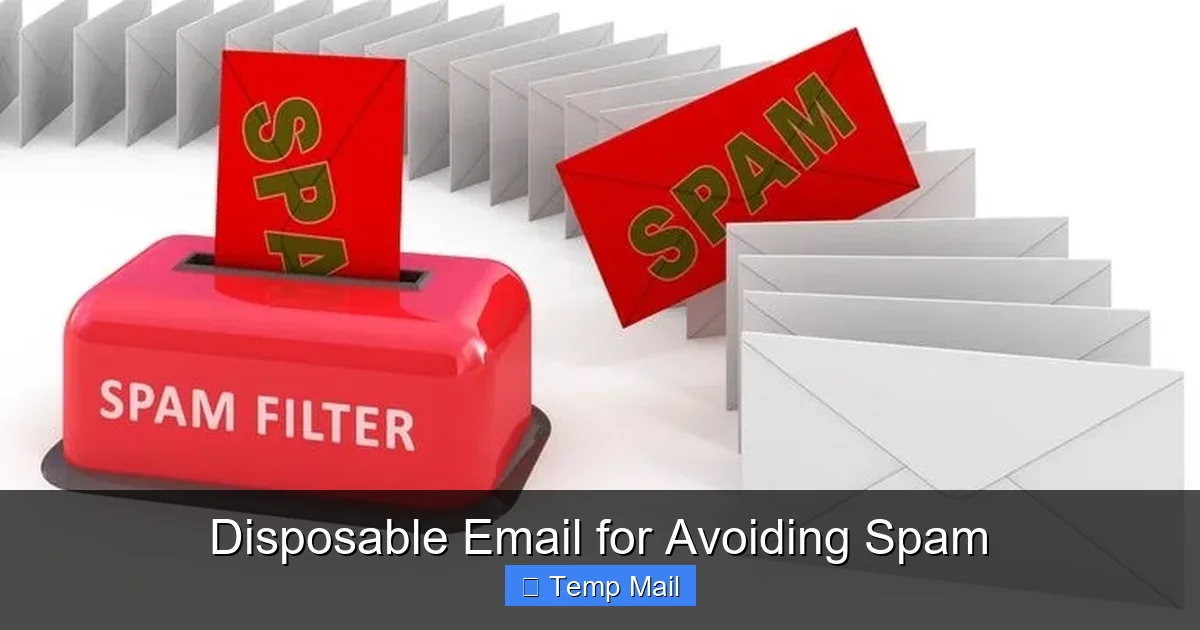
You might be thinking, “I have a spam filter. Do I really need this?” The answer is a resounding yes, and here’s why. Relying solely on your email provider’s spam filter is a reactive strategy. Temp mail is proactive. It stops the spam from ever having a chance to reach your primary inbox in the first place.
How many times have you downloaded a free PDF, signed up for a webinar, or created an account on a sketchy-looking forum, only to be bombarded with daily emails for months afterward? That’s because you used your real email. A temp mail address absorbs that marketing onslaught. When the inbox expires, so does the permission for that site to email you. Your main inbox stays clean and relevant.
Every time you use your primary email to sign up for a service, you’re creating a data point that can be linked back to you. Data brokers and advertisers compile these profiles to target you. Temp mail breaks this chain. It creates a wall between your online activities and your true identity, making it significantly harder to build a comprehensive profile of your digital behavior.
News of data breaches is alarmingly common. When a company you signed up with gets hacked, the stolen user database often contains email addresses. If you used a temp mail for that site, the compromised email is already dead. The hackers get a useless, expired address. Your real email—and all the accounts linked to it—remain safe and sound.
Many websites, especially those offering free software, e-books, or trial subscriptions, gate the content behind an “email wall.” They require an email address to send a download link or access code. Using your main email for this feels like trading a small piece of privacy for a temporary benefit. Temp mail lets you get that download instantly without the long-term commitment or spam risk.
Not all temp mail services are created equal. Some are faster, some offer more features, and some prioritize user privacy more rigorously. After extensive testing for speed, reliability, interface usability, and privacy policies, here are the standout champions in the temp mail arena.
Why it’s great: Temp-Mail (temp-mail.org) is arguably the most popular and reliable service in the space. It boasts a clean, ad-light interface, incredibly fast inbox loading, and a generous default expiration time of 24 hours (which you can extend). The randomly generated addresses are easy to copy with one click. It also offers a browser extension for Chrome and Firefox, allowing you to generate a temp email with a single click from any webpage.
Best for: Everyday, general-purpose use. Its balance of speed, longevity, and simplicity makes it the go-to for most users.
Practical Tip: Use the “Refresh” button frequently if you’re waiting for a verification email. The inbox auto-updates, but a manual refresh can sometimes trigger delivery faster.
Why it’s great: As the name implies, 10MinuteMail (10minutemail.com) delivers a no-frills, ultra-fast experience. The countdown timer is prominently displayed, creating a sense of urgency that’s perfect for quick sign-ups. The interface is famously simple—just your email address and the inbox. It’s been around for ages and is incredibly dependable for its core, 10-minute mission.
Best for: Extremely quick, one-off tasks where you need an email for less than 15 minutes. Ideal for bypassing a simple email gate on a blog or news site.
Practical Tip: The timer is strict. If you need more time, copy the email address and use it on another service that offers a longer duration, like Temp-Mail, to avoid losing access.
Why it’s great: Guerrilla Mail (guerrillamail.com) offers more control than most. You can choose your own temporary email address from a list of domains (e.g., @guerrillamail.com, @sharklasers.com). It also provides a basic password protection feature for your temporary inbox, a “reply” function (useful for some one-way communications), and a slightly longer default 60-minute timer. Its interface is a bit more dated but highly functional.
Best for: Users who want a semblance of customization and the ability to briefly reply from the temp address.
Practical Tip: Use the “Scramble Address” button to generate a new random address if you feel the one you have has been compromised or is receiving too much spam.
Why it’s great: mail.tm (mail.tm) is a more modern service with a strong emphasis on privacy and security. It uses a clean, modern UI and offers inbox durations up to 24 hours. A key differentiator is its commitment to not logging IP addresses and using secure connections. It also supports attachments, which many other temp mail services block or handle poorly.
Best for: Receiving emails with attachments (like PDFs or images) and for users who are particularly privacy-conscious and want a service with a transparent, modern privacy policy.
Practical Tip: If you’re expecting an attachment, mail.tm is one of your safest bets. Always scan any downloaded file with antivirus software, regardless of the source.
Why it’s great: Tempail (tempail.com) is another excellent, straightforward option. It generates an email instantly and provides a very fast-loading inbox. The design is minimalist and effective. It offers a standard 60-minute expiration and also has a mobile-friendly site that works flawlessly on smartphones.
Best for: Mobile users or anyone who wants a no-thinking-required, fast alternative to the big names.
Practical Tip: Bookmark the site on your phone’s home screen. It functions almost like a native app for generating and checking temp mail on the go.
Using these tools is intentionally simple, but following a clear process ensures you don’t miss that crucial verification email. Here’s your foolproof workflow.
Open your chosen temp mail service website (e.g., temp-mail.org). The page will load and, within seconds, display a fully formed temporary email address in a large font. There’s nothing to sign up for. The address is yours to use immediately.
Click the “Copy” button next to the email address. This copies it to your clipboard. Avoid typing it manually, as a single typo will mean you never receive the email. Now, navigate to the website or service where you need to provide an email.
Paste the temp mail address into the sign-up or verification field. Complete any other required steps (like creating a username/password). Submit the form. The website will typically say “check your inbox for a verification email.”
Switch back to your temp mail browser tab. You should see the new email appear in the inbox list within 10-60 seconds. If it doesn’t appear, hit the manual “Refresh” button. Click on the email to open it and look for the verification link or code.
Click the link or enter the code in the original website’s window. You’ve now successfully used your temp mail! For the duration of the inbox’s life, you can continue to check it for any follow-up emails from that service.
Once you’re done, simply close the tab. The inbox will automatically delete itself after the time limit (e.g., 24 hours). There is no “delete account” button because there is no account to delete. The ephemeral nature is the entire point.
Pro Example: You want to download a free Photoshop brush set from a design blog. You go to the blog, enter your temp mail in the “Enter email for download link” box, submit, switch to your temp mail tab, find the email, click the link, and the download starts. The temp mail inbox expires 24 hours later. The blog has no way to ever email you again. Your primary Gmail account received zero spam.
Temp mail is a powerful tool, but it’s not a magic bullet for every situation. Understanding its limitations is key to using it safely and effectively.
This is the golden rule. Never use a temporary email for:
Using temp mail for these purposes is a recipe for lost access, security nightmares, and irreversible problems.
While services like mail.tm support attachments, many others do not. Even when they do, there can be size limits or file-type restrictions. More importantly, files from unknown sources are inherently risky. Always scan downloaded attachments with robust antivirus/anti-malware software before opening, regardless of whether they came to a temp or permanent inbox.
Many websites and platforms are wise to disposable email domains. They maintain lists of known temp mail providers (like the domains from Temp-Mail or Guerrilla Mail) and will outright block you from signing up if you try to use one. You’ll get an error message like “Please use a valid email address.” This is a common hurdle. If this happens, you may need to try a different temp mail service or, for a critical sign-up, consider using a dedicated secondary email address from a provider like Gmail or Outlook.
Temp mail is a one-way street. You receive emails. You generally cannot send emails from these addresses (some like Guerrilla Mail have limited reply functions, but it’s not standard). There are no folders, labels, search functions, or contact lists. It’s a simple, temporary holding cell for incoming messages.
Using temp mail to create fraudulent accounts, harass others, bypass bans on forums or platforms, or engage in illegal activities is unethical and often illegal. The anonymity provided is for legitimate privacy protection, not for evading responsibility. Remember, while the email address is anonymous to the recipient, the temp mail service itself may keep logs (check their privacy policy!). Law enforcement can often obtain server logs with a warrant.
The temp mail industry is evolving. As data privacy concerns grow globally, so does the demand for tools that offer digital anonymity in controlled scenarios. Here’s where we’re headed.
Don’t be surprised to see major VPN providers (like ProtonVPN, which is from the same team as ProtonMail) or privacy-focused browser developers (like Brave) start offering integrated, built-in temporary email generators. The goal is a one-click, all-in-one privacy solution within a single ecosystem.
Current temp mail is passive—it just receives everything. Future iterations might use lightweight AI to perform real-time analysis on incoming emails. It could automatically flag or quarantine potential phishing attempts or malware links before you even click, adding a crucial layer of security to the disposable inbox model.
While 10 minutes to 24 hours is standard, we may see more services offer user-selectable expiration times (e.g., “keep this inbox for 3 days”) or the ability to “extend” an inbox for a small fee or by solving a CAPTCHA. This adds flexibility for projects that need a temporary email for a weekend, not just an hour.
As temp mail becomes more mainstream, services will likely invest more in technologies to prevent their domains from being used for large-scale spam or credential stuffing attacks, while still preserving the anonymous, no-registration core user experience. This might involve more sophisticated rate-limiting or behavioral analysis.
A reliable temp mail generator is one of the simplest, most effective tools in your digital privacy toolkit. It’s the digital equivalent of a “No Soliciting” sign for your email inbox. By consistently using a disposable address for any online interaction that feels promotional, sketchy, or non-essential, you perform a massive act of self-care for your primary email account.
You’ll experience less clutter, reduced phishing risk, and a stronger barrier between your personal identity and the sprawling data economy. Start with a top-tier service like Temp-Mail or mail.tm today. Get in the habit of opening a temp mail tab first whenever a website asks for an email. It’s a tiny habit that yields enormous returns in peace of mind and inbox cleanliness. Remember the core rule: use it for the low-stakes, receive the verification, and let it vanish. Your future, spam-free self will thank you.
Yes, using a temporary email service is perfectly legal for legitimate privacy purposes. It becomes illegal if used to commit fraud, evade legal obligations, or harass others. The service itself operates in a legal gray area in some jurisdictions due to potential for abuse, but end-user use for privacy is widely accepted.
Safety varies by provider. Reputable services like Temp-Mail and mail.tm use HTTPS encryption and have clear no-logs policies, offering good privacy for receiving non-sensitive emails. However, you should never assume 100% anonymity. Never use them for passwords, financial info, or highly confidential communications, as the inbox provider technically has access to all received content.
It depends entirely on the service. Common durations are 10 minutes (10MinuteMail), 60 minutes (Guerrilla Mail, Tempail), and 24 hours (Temp-Mail, mail.tm). Some allow you to extend the time manually. Always check the countdown timer on your chosen service.
Mostly, no. The primary function of temp mail is to receive emails. A few services, like Guerrilla Mail, offer a limited “reply” function to respond to the sender of a received message, but you generally cannot compose new emails to arbitrary addresses. They are designed as disposable inboxes, not full email clients.
Many popular websites actively block domains from known temp mail providers. If you encounter a “invalid email” error, the site has likely blacklisted that service. You can try a different temp mail provider (they use different domains), but for sites that are strict, you may need to use a dedicated secondary permanent email address (like a free Gmail account) instead.
Temp mail creates a completely separate, standalone inbox with its own random address that expires. A disposable alias (like from SimpleLogin or Firefox Relay) forwards emails from a custom alias address to your primary, permanent inbox. With an alias, you maintain control and can manage the emails in your main client. Temp mail is more anonymous and temporary; an alias is a forwarding filter for your main email.
অনলাইন নিউজপেপার থিম। এই থিমটি দিয়ে আপনারা বাংলা এবং ইংরেজি নিউজপেপার সাইট তৈরি করতে পারবেন । বার্তা ও বাণিজ্যিক কার্যালয়: ৭১, মতিঝিল, ঢাকা-১০০০। সম্পাদক : মো আসাদুজ্জামান আমানউল্লাহ । মোবাইল : ০১৭০০-০০০০০০ । ইমেইল : [email protected] ।
All rights reserved © 2019 themesdealer.Com