Image for Temp Mail for Protecting Personal Data



Your email address is a goldmine for data harvesters and spammers. Temp mail acts as a disposable shield, giving you a temporary, anonymous inbox to use for sign-ups, downloads, and any activity where you wouldn’t want your primary email exposed. It’s a simple, powerful tool for drastically reducing spam, preventing data breaches from linking back to you, and reclaiming control over your digital footprint.
Think about your primary email address. It’s likely the key to your social media, your bank, your Amazon account, and countless other services. It’s a direct line to your digital identity. Now, think about the last time you wanted to download a free PDF, read an article behind a “subscribe” wall, or create an account on a sketchy forum to post one comment. Did you use that precious, personal email? If you did, you’ve just handed over a piece of your identity to a service that may sell it, lose it, or spam you with it forever.
This is where temp mail—short for temporary mail—enters the picture. It’s a service that provides you with a random, disposable email address for a short period. You don’t create an account. You don’t set a password. You simply visit a website, are given an address like “[email protected]”, and that inbox is yours for the next 10 minutes, hour, or day. Once the time is up or the inbox is cleared, it vanishes into the digital ether. No trace, no linkage back to you. It’s like using a public payphone for a quick call instead of giving out your home number.
The best analogy is a disposable paper cup. You wouldn’t use your favorite, personalized mug to take a sip of a questionable beverage at a street fair. You’d grab a cheap, flimsy cup, use it once, and toss it. Your primary email is your favorite mug. Temp mail is the street fair cup. It serves the single, immediate purpose of receiving a verification link or a download file, and then it’s gone, with no risk of contaminating your main “cup” with spam or data leaks.
The mechanics are beautifully simple, which is part of its genius. There’s no complex setup. Here’s the step-by-step process of how a typical temp mail service functions:

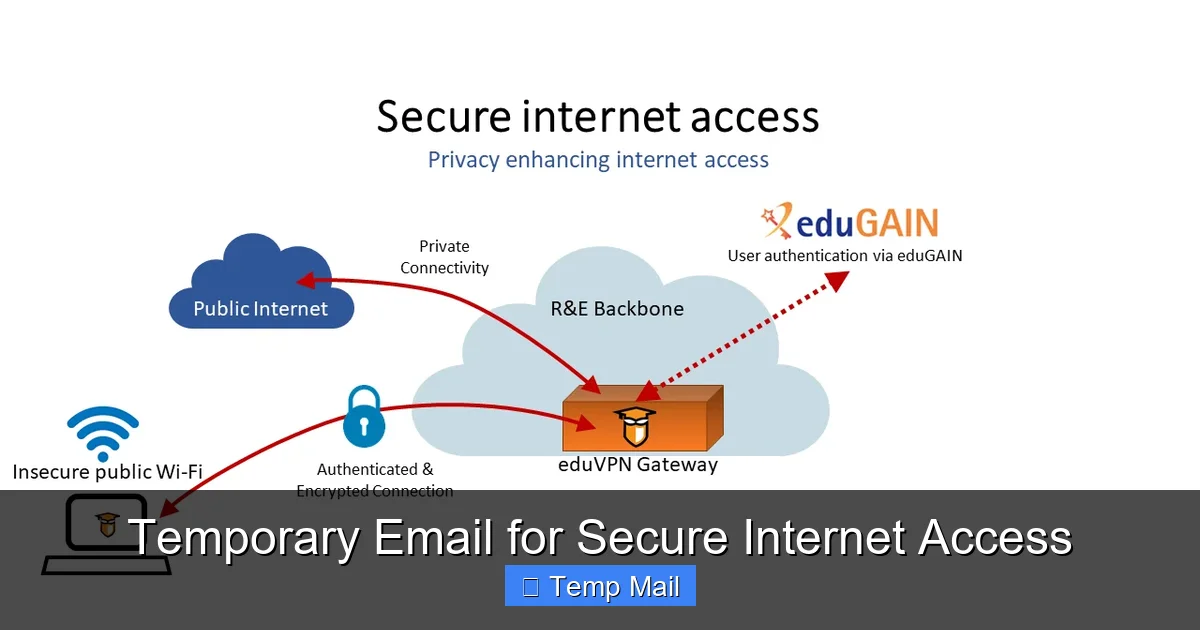
Visual guide about Temp Mail for Protecting Personal Data
Image source: messagingarchitects.com
Technically, these services run standard mail servers (like Postfix or Exim) but with aggressive, automated cleanup scripts. They accept mail for any address at their domain, store it temporarily in a database, and serve it via a web interface. They do not require SMTP authentication for sending (most don’t allow sending at all, only receiving), which is why you can’t typically use them to send emails from your own client like Outlook. Their entire business model is often supported by ads on their site, not by selling your data, which is a critical distinction from many “free” email providers.
Using a temp mail address isn’t about being paranoid; it’s about being pragmatic. Your primary email is a high-value asset. Here’s what you gain by sacrificing it for low-stakes activities.

Visual guide about Temp Mail for Protecting Personal Data
Image source: arisant.com
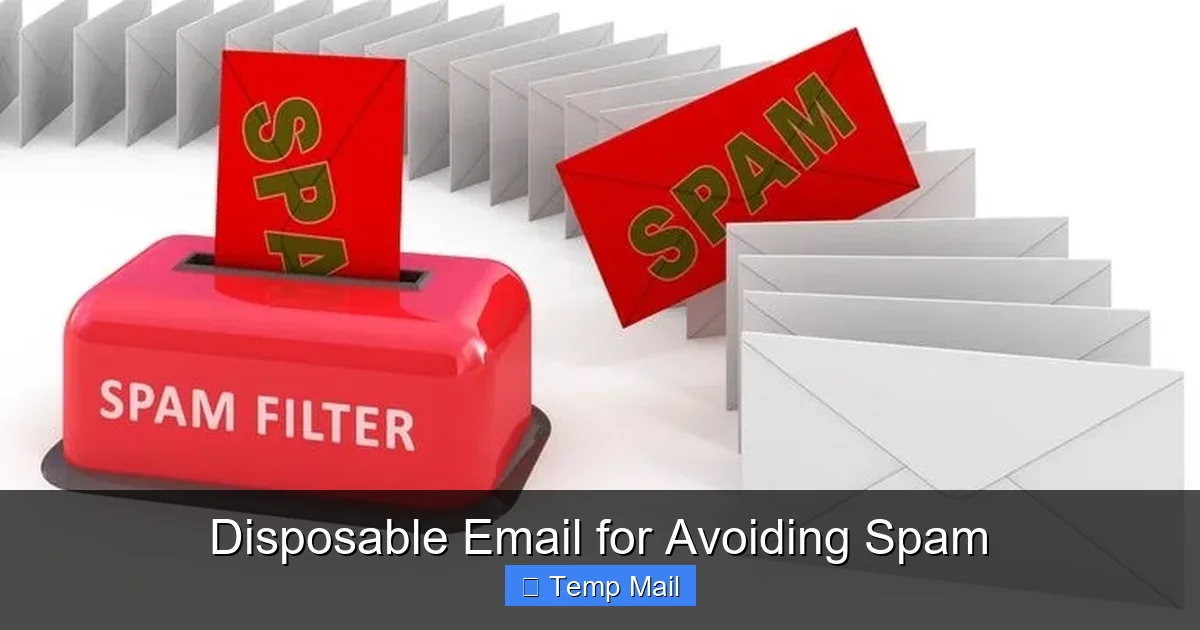
This is the most immediate and satisfying benefit. How many times have you signed up for a “free webinar” or a “e-book download” only to be added to a daily promotional newsletter you never read? That’s your primary email being monetized without your ongoing consent. By using a temp address, you create a firebreak. All that promotional noise, those “special offers,” and the inevitable “we’ve updated our privacy policy” emails are delivered to an inbox that self-destructs. Your real inbox remains a sanctuary for emails from family, colleagues, and services you truly value.
When you enter your real email on a website, you are often implicitly agreeing to that site’s data collection policy. That email becomes a primary key in their database, linking your activity on their site to your identity. This data can be sold to data brokers, used for user profiling, or leaked in a breach. With a temp mail address, you are providing a pseudonym. Even if that site is compromised, hackers only get a list of random, now-defunct email addresses. There is no direct, persistent link to your true identity. You are a ghost in their machine.
Data breaches are not a matter of *if*, but *when*. Major companies from LinkedIn to Adobe have suffered massive breaches exposing millions of email addresses and passwords. If your email is in that breach, you are at higher risk for targeted phishing attacks (“credential stuffing” where hackers try your email/password combo on other sites). By containing your exposure—using a temp mail for low-trust sites—you ensure that a breach at “DiscountGadgetSite.com” only compromises the temp address you used there. Your email for your bank, your cloud storage, and your main social accounts remains in a separate, uncompromised silo.
Knowing the theory is good, but seeing the practical applications is what makes temp mail a daily habit. Here are the most common, high-impact use cases.

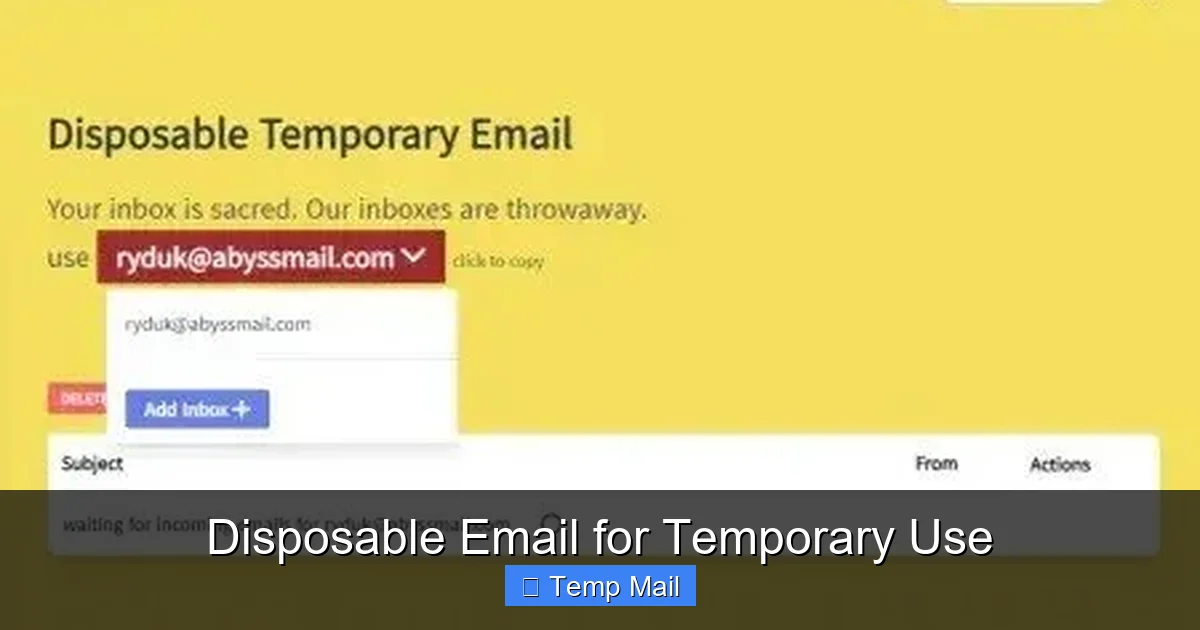
Visual guide about Temp Mail for Protecting Personal Data
Image source: idx.us
You’re researching for a project and find a valuable industry report. To download it, the site demands your work email. You know this will trigger a sales call cycle. Solution: Use a temp mail. Get the PDF, close the tab, and the inbox (and the sales pipeline to it) disappears forever. You got the resource without polluting your professional inbox.
You want to post a single, helpful comment on a technical forum to assist someone, but the forum requires registration. Creating a permanent account for one comment is overkill and will lead tonotification spam. Solution: Register with a temp mail, post your comment, and forget about it. No password to remember, no account to delete later.
You want to test a SaaS tool for a weekend. The sign-up page is aggressive, promising the world but clearly designed to capture your email for relentless marketing. Solution: Use a temp address for the trial activation. Use the tool thoroughly. When the trial ends, the marketing emails have nowhere to go. You never get the “come back!” drip campaign because your address is gone.
That new online store offers 20% off if you sign up for their newsletter. You want the discount code for this one purchase. Solution: Use a temp mail to get the code. Make your purchase. The subsequent “flash sale!” and “abandoned cart” emails are delivered to a void.
Not all temp mail services are created equal. While the core function is the same, features and reliability vary. Here’s what to look for when selecting your go-to tool.
Services like Temp-Mail.org, 10MinuteMail.com, Guerrilla Mail, and Maildrop have established reputations for reliability and speed. They are ad-supported and focus on the core disposable function. Avoid obscure services with suspicious designs or that ask for any personal info to “create” an inbox.
Temp mail is a powerful privacy tool, but it’s not a magic bullet. Understanding its limitations is crucial for using it safely and effectively.
You generally cannot send emails from a temp address. This is by design. If you need to communicate, you must use your real email. Don’t try to use it to sign up for a service where you’ll need to receive password reset emails later—you won’t be able to access that inbox.
Never, ever use a disposable email for your primary email account (Gmail, Outlook, etc.), your bank, your main social media profiles (Facebook, Twitter), your cloud storage (Dropbox, iCloud), or any account where account recovery is vital. If you lose access to the temp inbox, you lose access to the account forever. These are your digital “permanent mug” accounts; protect them with a strong, unique password and a dedicated, secure email.
Some websites actively block known domains from temp mail services to prevent fraud and spam. If your temp address is rejected, you’ll need to use a different service or, for that particular site, your real email (and accept the consequences).
The content of emails in your temp inbox is typically not encrypted at rest on the service’s server. It’s also sent over the standard internet. Do not use temp mail to send or receive sensitive personal information, confidential documents, or passwords. Its job is privacy from data harvesting, not security against hackers intercepting traffic.
To integrate temp mail seamlessly and safely into your digital routine, follow these best practices.
In an online ecosystem designed to collect, profile, and monetize every click and keystroke, your email address is one of the most valuable pieces of personal data you own. Treating it with care is not paranoia; it’s essential digital hygiene. Temp mail is not the tool for every job, but for the vast universe of one-off interactions, gated content, and suspicious sign-ups, it is nothing short of a revelation.
By consciously separating your critical, permanent identity from your mundane, disposable online interactions, you build a robust moat around your primary inbox and your real-world identity. You stop the spam at the source, you break the data chain that feeds the advertising industry, and you insulate yourself from the fallout of inevitable data breaches. It’s a simple habit—open a tab, get a random address, use it, close the tab—that pays massive dividends in reduced clutter, enhanced privacy, and profound peace of mind. Start using a disposable inbox today for your next low-stakes online task. Your future self, with a clean inbox and a minimized digital footprint, will thank you.
Yes, using disposable email services is completely legal. They are legitimate services designed for privacy. However, using them to commit fraud, evade bans, or send spam is illegal, as it would be with any tool.
It varies by service. Most common lifetimes are 10 minutes, 1 hour, 1 day, or 1 week. Some services delete the inbox as soon as you close your browser session. Always check the specific timer displayed on your chosen service’s page.
Generally, no. Reputable temp mail services are designed for receiving only (to prevent spam abuse). Their primary function is to let you receive a single verification link or file. Do not rely on a temp address for any communication where you need to send a reply.
The inbox and all emails within it are permanently and automatically deleted from the service’s servers. The email address is then recycled and given to a new user. There is no way to recover it.
It provides a high degree of pseudonymity. The service itself does not require your name or personal details to create an address. However, your internet activity (including visiting the temp mail site) can still be seen by your ISP and potentially the service’s hosting provider. For maximum anonymity, use it within a private browsing window and consider a VPN.
Absolutely not. This is the cardinal rule. Never use a disposable email for any account where you need reliable account recovery, long-term access, or where security is critical. You will be locked out permanently when the inbox expires. Reserve temp mail exclusively for low-value, one-time interactions.
অনলাইন নিউজপেপার থিম। এই থিমটি দিয়ে আপনারা বাংলা এবং ইংরেজি নিউজপেপার সাইট তৈরি করতে পারবেন । বার্তা ও বাণিজ্যিক কার্যালয়: ৭১, মতিঝিল, ঢাকা-১০০০। সম্পাদক : মো আসাদুজ্জামান আমানউল্লাহ । মোবাইল : ০১৭০০-০০০০০০ । ইমেইল : [email protected] ।
All rights reserved © 2019 themesdealer.Com