Image for Disposable Email for Anonymous Registrations



Disposable email addresses are temporary, anonymous inboxes designed for one-time or short-term use. They act as a protective shield, preventing your primary email from being flooded with spam, sold to marketers, or compromised in a data breach. While incredibly useful for signing up to untrusted websites, downloading gated content, or verifying accounts without commitment, they come with limitations like no long-term access and potential blocking by some services. Using them wisely—for low-stakes registrations only—is key to maintaining your digital privacy without sacrificing security.
Imagine you need to access a free ebook but the website demands your email address. You hesitate, knowing that one click could start a relentless stream of promotional newsletters. This is where a disposable email—also called temporary, fake, or throwaway email—comes into play. It’s a fully functional, anonymous email address that exists for a very short period, typically anywhere from 10 minutes to 48 hours, before self-destructing. You don’t create an account or set a password; you simply visit a temp mail website, are given a random inbox address, and can start receiving emails instantly.
The core idea is compartmentalization. Your primary email address is a digital identity hub—linked to your bank, social media, work, and personal contacts. It’s valuable and, if exposed, a target. A disposable email acts as a decoy, a burner phone for your online interactions. You use it for a specific, low-stakes purpose and then discard it, leaving no trace connected to your real identity. This service has evolved from a niche tool for tech-savvy users to a mainstream privacy solution for everyday internet browsing.
Unlike Gmail, Outlook, or ProtonMail, disposable email services are designed with anonymity and ephemerality as the primary features. There’s no login. No persistent storage. No recovery options. The inbox you see on the provider’s webpage is the only way to access messages, and once the timer runs out or you close the browser tab, that address and its contents are gone forever. This starkly contrasts with your permanent inbox, which is backed up, searchable, and tied to your identity for years.
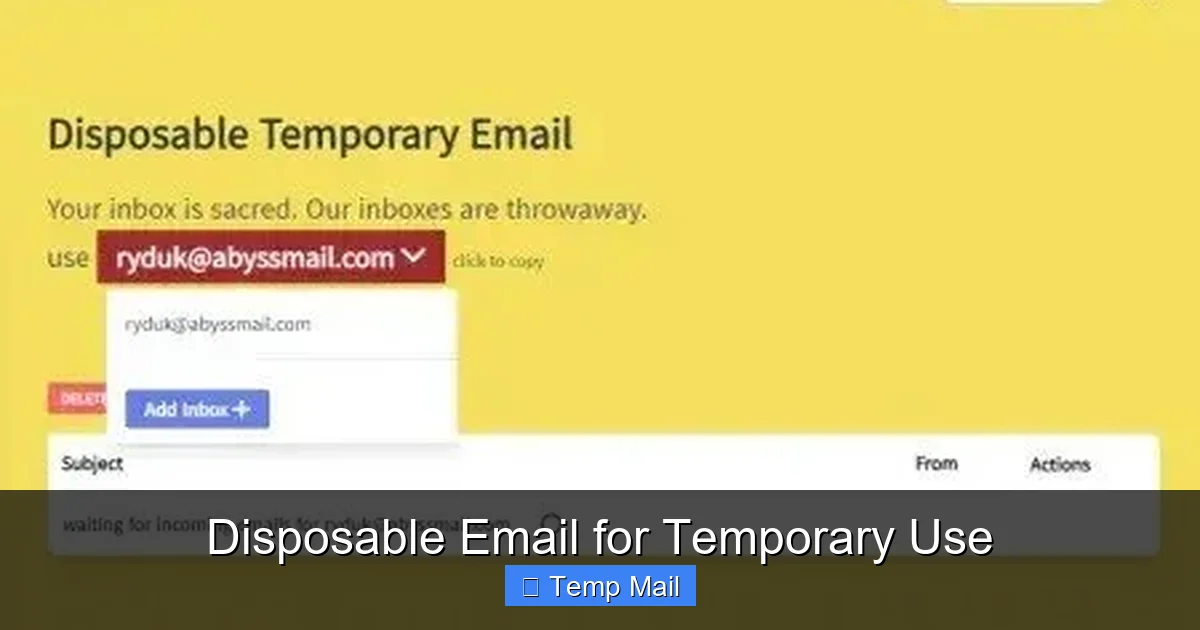
The mechanics are beautifully simple, which is part of their appeal. Let’s walk through a typical user journey. First, you navigate to a temp mail website like Temp-Mail.org, Guerrilla Mail, or 10MinuteMail. The site instantly generates a random email address for you, often something like [email protected], and displays a public inbox for that address right on the page. No registration, no CAPTCHA, no personal details required.

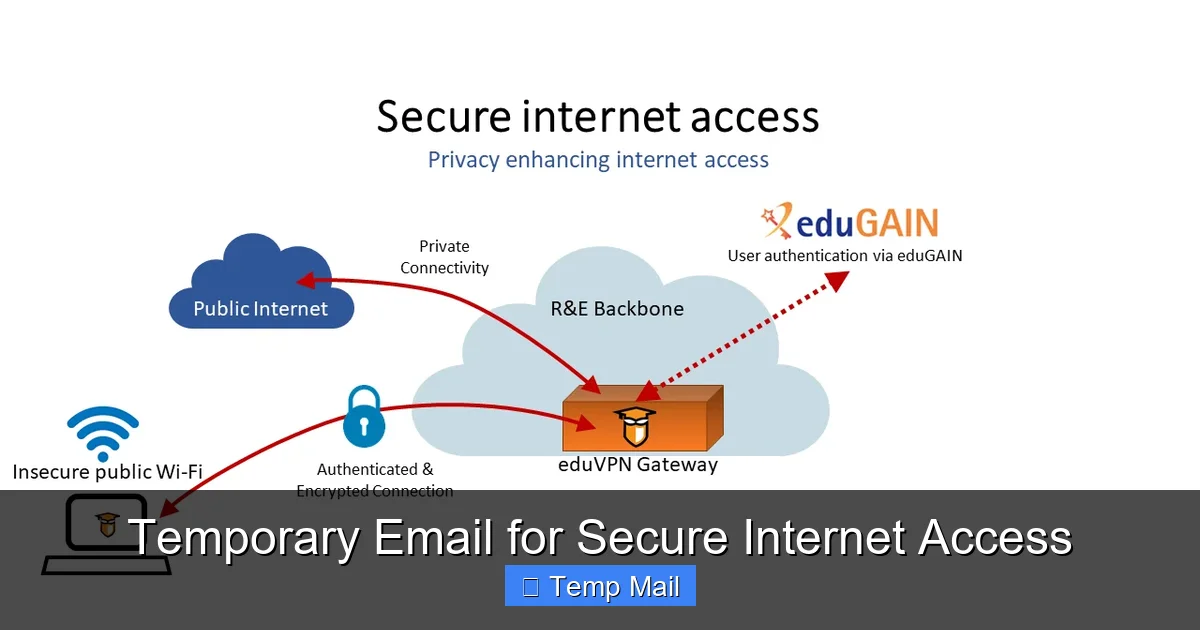
Visual guide about Disposable Email for Anonymous Registrations
Image source: actsmartit.com
Next, you copy that address and paste it into the website or service you’re trying to access—say, a forum you want to read without joining, or a software download page. When that service sends a confirmation email or a download link, it routes to the temp mail provider’s servers. The provider displays that email in your public inbox window. You click the link or copy the code, complete your task, and then simply walk away. After a predetermined time (often 10 minutes, 1 hour, or 1 day), the provider automatically deletes the address and all its emails from their systems.
These services operate on a shared, public inbox model. The randomly generated address isn’t tied to a unique user account on the backend. Instead, the system uses the address string itself as the key to a temporary database entry. When an email arrives for [email protected], the server looks for an active session or inbox associated with that exact string and displays it. This means multiple people could theoretically get the same address if sessions are cleared, but most modern services generate sufficiently random strings to avoid collisions during a single session. The lack of authentication (no password) is what enables true anonymity but also means anyone with the exact URL to your temporary inbox could, in theory, view your messages—a key security consideration we’ll explore later.
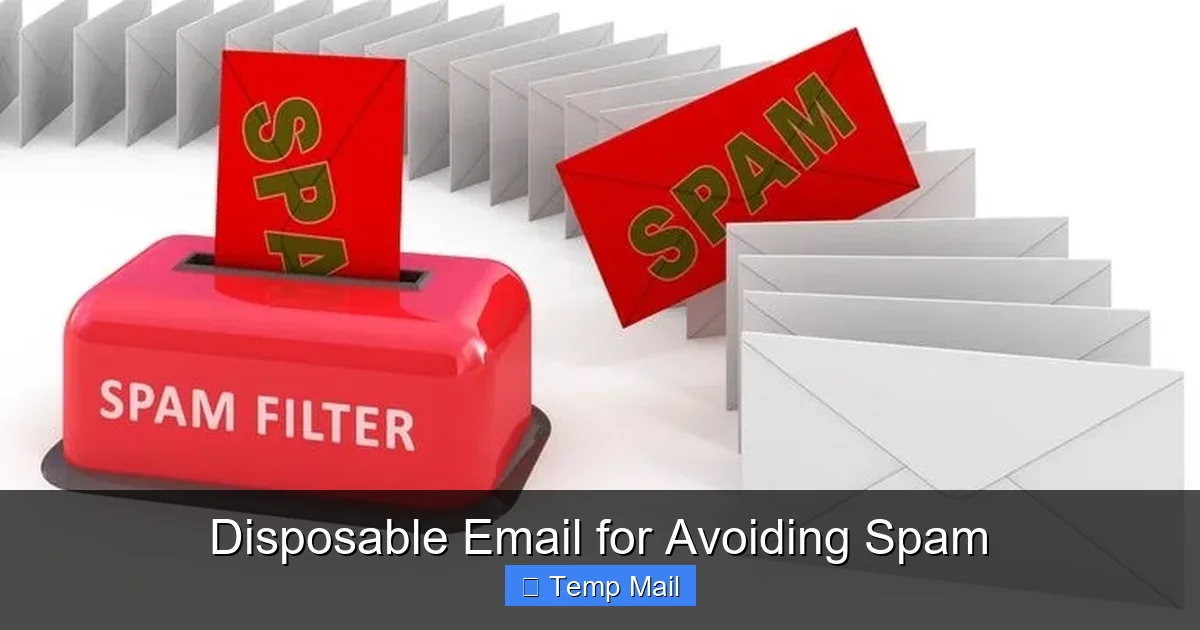
The advantages are clear and directly address common digital frustrations. The primary benefit is spam prevention. By using a burner address for untrusted sign-ups, you create a dead-end for marketing emails. Once the temp address expires, those newsletters have nowhere to go. This keeps your primary inbox pristine and significantly reduces your digital footprint that data brokers can harvest.

Visual guide about Disposable Email for Anonymous Registrations
Image source: nemasket.theweektoday.com
Another major plus is privacy protection. Many websites and apps aggressively track email addresses to build user profiles. A disposable email breaks that chain of association. You can browse, sign up, or download without handing over a piece of your permanent identity. This is especially valuable in regions with strict data privacy laws like the GDPR, where you have the right to minimize data sharing.
For developers and testers, quick account creation is a huge time-saver. Need to test a registration flow or a password reset email? A disposable inbox lets you do it in seconds without creating yet another permanent account you’ll never use again. There’s also a cost-saving aspect. Many premium temp mail services offer free tiers perfectly adequate for casual use, saving you from needing a separate, paid privacy-focused email service for these occasional tasks.
Think of it as your digital “doormat” address. Use it for:
The rule of thumb: if the relationship is transactional and you don’t expect to hear from them again after the initial interaction, a disposable email is perfect.
Despite the benefits, disposable email isn’t a magic bullet. The most significant risk is lack of security. Because there’s no password, anyone who knows or guesses your temporary address could access the inbox if they have the direct URL (which is often public on the provider’s homepage). This makes it unsuitable for receiving any sensitive information—password resets for important accounts, financial statements, or private documents. You must assume the inbox is public.

Visual guide about Disposable Email for Anonymous Registrations
Image source: watchmetech.com
Reliability is another concern. The address can disappear without warning if the provider’s system glitches or if you accidentally close the browser tab and lose the session ID. If you need that confirmation email an hour later, you’re out of luck. Furthermore, many websites have wised up and actively block domains from popular temp mail providers. You might find yourself unable to register on a forum or access a download because the site’s anti-fraud system flagged the email domain as disposable. This is a constant cat-and-mouse game between providers and websites.
Using a disposable email is not illegal in itself. However, it exists in a moral gray zone. Websites use email collection for legitimate reasons: to communicate service updates, recover accounts, and prevent spam bots. By providing a fake address, you are intentionally bypassing their intended user verification and communication channel. While generally acceptable for low-value interactions, it violates the Terms of Service of many platforms. Using one to create multiple accounts for harassment, fraud, or to circumvent a ban is explicitly unethical and often illegal. The tool is neutral; its morality depends on user intent.
From a legal standpoint, most jurisdictions do not criminalize using a temporary email address. The act of providing false information is typically not a crime unless it’s part of a larger scheme like identity theft or fraud under specific laws (e.g., the CFAA in the U.S.). However, it almost always constitutes a breach of contract. When you click “I Agree” to a website’s Terms of Service, you often agree to provide accurate and current contact information. Using a disposable email is a direct violation of that clause. While companies rarely pursue individual users for this, it gives them grounds to suspend or terminate your account without notice.
Ethically, the question is about honesty and reciprocity. If you are using a free service that relies on email for its business model (e.g., a free news site supported by ads), using a temp email to avoid their emails is essentially free-riding on their infrastructure without engaging in the implied exchange (your attention for their content). A good rule is to use disposable emails only with services you have no intention of maintaining a ongoing, trusting relationship with. For any service where you might need support, account recovery, or that you value, use your real email. Anonymity should not be used to deceive, but to protect your primary identity from unnecessary exposure.
This is the million-dollar question. To the website you signed up with, the email is anonymous. They see only the disposable address. However, the disposable email provider itself has logs. Reputable services have privacy policies stating they do not log IP addresses or link sessions to users, but this is a matter of trust. If law enforcement presents a valid subpoena or court order to the temp mail provider for a specific illegal activity (e.g., threats, fraud), the provider may be compelled to hand over whatever server logs they have, which could include an IP address and timestamp. True anonymity is incredibly difficult to achieve online. For casual privacy from marketers, it’s highly effective. For evading law enforcement, it is not a safe tool.
To maximize the benefits and minimize the risks, follow these guidelines. First, never use a disposable email for anything important. This includes banking, primary social media, work accounts, cloud storage, or any service where you might need to reset a password or receive critical notifications. The temporary nature makes it a single-point failure for your access.
Second, choose a reputable provider. Look for services that have been around for years, have clear privacy policies stating no logs, and don’t require you to solve endless CAPTCHAs. Avoid obscure sites that might be harvesting the data they promise to protect. Third, understand the lifespan. Before you rely on an address, check the provider’s policy. Is it 10 minutes? 1 hour? 1 day? Make sure the timer aligns with your task. If you need the email for a confirmation that might take an hour, don’t use a 10-minute service.
Since you can’t bookmark or label these inboxes easily, a simple trick is to open the disposable email page in a dedicated browser window or profile. Keep it separate from your main browsing. If you need to check back, you might have to regenerate a new address on the same provider, which means you lose access to the old one. For users who frequently need temp mail, some password managers now include a built-in alias feature (like Apple’s Hide My Email or Firefox Relay). These are more reliable, integrated, and often longer-lasting than public web-based temp mail, though they may require a primary account.
Finally, respect website rules. If a site blocks disposable emails, don’t try to circumvent it with a different provider. That’s a signal the service has a legitimate need for verifiable contact information (e.g., a paid subscription, a legal document service). In these cases, the ethical choice is to use your real email or look for an alternative service that doesn’t require an email at all.
The demand for disposable email is a symptom of a broken email ecosystem. As spam and data harvesting have become endemic, users are seeking ways to reclaim control. The future likely points toward standardized, integrated email aliasing. We already see this with Apple’s “Hide My Email” and Firefox Relay, which generate unique, forwardable aliases tied to your real account. These are more robust than public temp mail because they allow you to receive and reply (in some cases) and can be managed from one place. They also don’t expire unless you delete them.
Browser-native features and password managers are also starting to offer similar alias generation. This represents a shift from public, anonymous dumpsters to private, managed pseudonyms. Meanwhile, the cat-and-mouse game between temp mail providers and blocklists will continue. Websites will get better at detecting and blocking disposable domains, and providers will create more sophisticated, rotating domains to stay ahead. For the user, the trend is toward more seamless, less visible privacy tools that work in the background without requiring you to visit a separate temp mail website.
Disposable email for anonymous registrations is a powerful, pragmatic tool in the modern internet user’s privacy toolkit. It’s not about hiding malicious activity; it’s about exercising your right to not have your primary identity permanently linked to every trivial website you visit. It’s the digital equivalent of giving a restaurant a fake phone number when you don’t want a callback. The key is intentionality. Use it with a clear understanding of its lifespan and limitations. Reserve it for the low-stakes, high-noise corners of the web where you want access but not a relationship.
As our digital lives expand, the principle of data minimization becomes more critical. A disposable email is a simple, effective way to practice that minimization. By consciously choosing when to reveal your real contact information, you reduce spam, limit tracking, and protect yourself from data breaches. Use it wisely, ethically, and sparingly for its intended purpose. In doing so, you take a small but significant step toward a cleaner, more private, and more controlled online experience.
No, using a disposable email is not illegal in itself. It is a violation of most websites’ Terms of Service, which can get your account banned, but it is not a criminal act. It becomes illegal only if used as part of fraud, harassment, or other criminal activities.
To the website you use it on, it appears completely anonymous. However, the disposable email provider may log your IP address and timestamp. While they claim not to store logs, a legal request could potentially reveal this information. For avoiding marketers, it’s effective; for evading law enforcement, it is not secure.
Websites block them to combat spam, fake accounts, and abuse. They want a reliable way to communicate with users (for password resets, service updates) and to verify that a real person is signing up, not a bot. Blocking temp mail domains is a common anti-fraud measure.
Absolutely not. Since the address expires and you have no way to access it later, you will be permanently locked out of any account that uses it for password resets. Always use a permanent, secure email for any account you care about accessing in the future.
A disposable email is a standalone, public inbox that expires and is not connected to your main account. An email alias (like Apple’s Hide My Email or Firefox Relay) is a unique forwarding address that sends mail to your primary inbox. You control the alias, can disable it, and it doesn’t expire unless you delete it. Aliases are more secure and integrated.
Generally, no. Most disposable email services are receive-only. Their purpose is to let you *receive* a single verification or download link. They do not have SMTP servers for sending outgoing mail. If you need to send anonymous emails, you would need a different, more specialized service.
অনলাইন নিউজপেপার থিম। এই থিমটি দিয়ে আপনারা বাংলা এবং ইংরেজি নিউজপেপার সাইট তৈরি করতে পারবেন । বার্তা ও বাণিজ্যিক কার্যালয়: ৭১, মতিঝিল, ঢাকা-১০০০। সম্পাদক : মো আসাদুজ্জামান আমানউল্লাহ । মোবাইল : ০১৭০০-০০০০০০ । ইমেইল : [email protected] ।
All rights reserved © 2019 themesdealer.Com