Image for Temporary Email for Website Signups



Tired of your main email inbox being flooded with spam after every online signup? A temporary email address is your first line of digital defense. These disposable inboxes let you register for websites, download files, or access content without revealing your personal or professional email. While incredibly useful for privacy and clutter reduction, they aren’t a one-size-fits-all solution for every online interaction. Use them wisely for low-stakes signups, but avoid them for critical accounts like banking or primary social media, where long-term access and recovery are essential.
Ever felt that sinking feeling when you sign up for a seemingly harmless website—a new recipe blog, a free webinar, a discount code for a store you might shop at once—and suddenly your primary inbox is under siege? That daily deluge of promotional newsletters, “special offers,” and the occasional phishing attempt isn’t just annoying; it’s a direct result of handing over your most valuable digital asset: your email address. Your email is the master key to your online identity. It’s the username for countless accounts, the gateway for password resets, and the primary vector for targeted advertising. What if you could have a digital bodyguard for this key? Enter the world of temporary email services, a simple yet powerful tool designed explicitly for the modern problem of website signups.
This isn’t about being paranoid; it’s about being practical. In this comprehensive guide, we’ll dive deep into the mechanics, benefits, and crucial caveats of using temporary email for website signups. We’ll move beyond the basic “what is it” to explore the nuanced “when and how should you use it.” From understanding how these services work under the hood to navigating the real-world scenarios where they shine (and where they fail spectacularly), this article equips you with the knowledge to take control of your online privacy and inbox sanity. Think of it as your definitive playbook for smarter, safer web browsing.
At its core, a temporary email service is a platform that generates a random, unique email address for you to use, which exists for a very short, predetermined period—often just 10 minutes, an hour, or up to 24 hours. This address receives emails just like any other, but all messages and the address itself are automatically and permanently deleted when the timer expires. There is no password, no lengthy signup process on the temp mail site itself (often you just visit and get an address), and no persistent storage. It’s the digital equivalent of a burner phone: functional for a specific, immediate purpose and then designed to vanish without a trace.
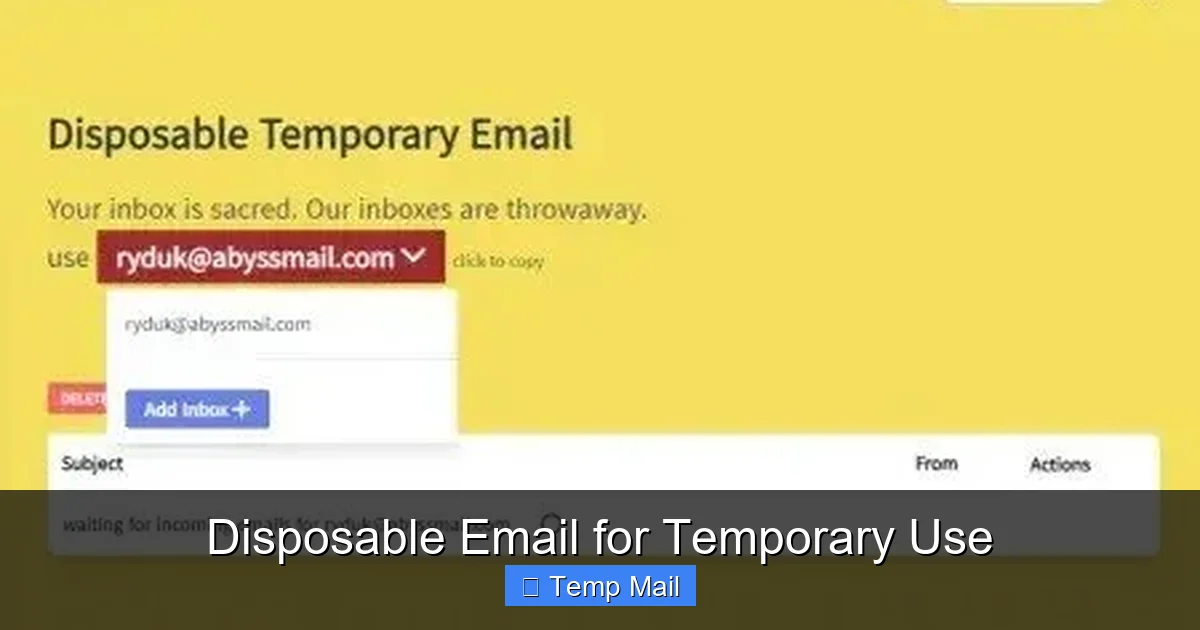
These services operate on a simple but elegant technical model. When you visit a site like Temp-Mail.org or 10MinuteMail.com, the server instantly generates a random string of characters (e.g., [email protected]) and assigns it to your browser session. This address is added to a pool of active, temporary inboxes on their server. When a website sends an email to that address, the temp mail service routes it to the corresponding session inbox, which you can view in your browser. The “temporary” aspect is managed by an automated system that tracks the creation time of each inbox. Once the set time limit elapses, the server purges that inbox and its email address from the active pool, making it irretrievable. No personal data is typically required to generate or use the address, which is the foundation of its anonymity.
While interfaces vary, most temporary email services share a common set of features tailored for speed and anonymity:
The single greatest advantage of using a temporary email for website signups is the impenetrable barrier it creates between your permanent email and the Wild West of the internet. Your primary inbox—whether it’s Gmail, Outlook, or your professional domain email—is a treasure trove of personal information. It’s linked to your identity, your contacts, your calendar, and often, your financial accounts. Every time you use it to sign up for a new service, you are trusting that service with this key. You’re also adding your address to their marketing database, which may be sold, shared, or, in a worst-case scenario, leaked in a data breach.

Visual guide about Temporary Email for Website Signups
Image source: seoclerk.com
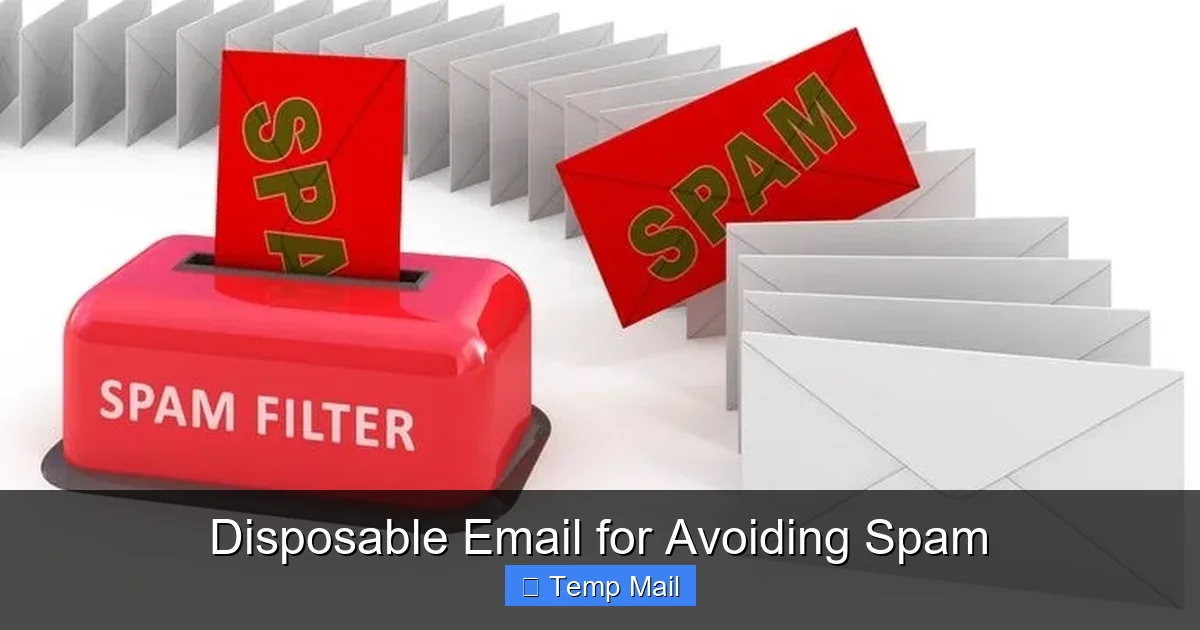
Spam is not just a nuisance; it’s a security hazard. Phishing emails—those fraudulent messages pretending to be your bank, Netflix, or Amazon—are the most common attack vector for malware and credential theft. By using a disposable address for any site that isn’t a core, trusted part of your digital life, you quarantine that risk. If that website’s database is hacked or they sell your email to a spammy advertiser, the spam goes to the temporary inbox, which vanishes in an hour. Your real inbox remains pristine. This practice, often called “email aliasing” in a broader sense (though temp mail is the most extreme form), is a fundamental hygiene practice for the 21st-century internet user.
Every piece of data you leave online contributes to your “digital footprint.” Your email address is a central pillar of that footprint. When you sign up for a forum about a sensitive health topic, a political newsletter, or a local community group, using your real email directly ties that activity to your identity. A temporary email severs that direct link. It allows you to explore, research, or access information without building a permanent, searchable record that associates your name with that specific interest or website. For journalists, activists, researchers, or anyone valuing a layer of anonymity for low-risk browsing, this is invaluable.
Knowing the theory is one thing; knowing the practical application is another. Temporary email isn’t a tool for everything, but for specific, common scenarios, it is perfect. Here are the prime use cases where pulling out the disposable email is not just smart, it’s essential.
This is the #1 use case. You want to read that “10 Must-Know Tips” PDF, download that free stock photo pack, or watch that exclusive webinar replay. The website asks for your email in exchange. The content is valuable, but you have no intention of becoming a long-term subscriber or customer. Using your real email here trades a small piece of privacy for immediate access, often resulting in a lifetime of follow-up marketing emails. A temporary email gets you the download instantly, and the spam goes to an inbox that dies in 60 minutes. Problem solved.
Do you need an account on a new DIY forum to ask one question? Or on a gaming site to comment on a news article? Or on a deal-sharing community to snag a limited-time offer? These are “noise” accounts—useful for a single interaction but with no need for long-term maintenance. Signing up with your real email ensures you’ll get digest emails, notifications, and promotional bloat you never asked for. A temporary email lets you participate, get the needed confirmation link, and then disappear. The forum account itself may persist, but it’s linked to a dead email, making it useless for future password resets (which is fine, since you won’t need it).
If you’re a developer, marketer, or website owner, temporary emails are a godsend for QA testing. You can quickly test if a “Contact Us” form, a newsletter signup, or a user registration flow actually sends and captures emails correctly—without cluttering your real test accounts or, worse, your personal inbox. You can generate a new address for each test run, ensuring clean, isolated results.
When exploring a brand-new social platform, a startup app, or a website with an unclear privacy policy, caution is warranted. Why hand over your primary email to an entity you know nothing about? Using a temporary address lets you test the waters, see what kind of emails they send (immediately a red flag if it’s spam), and assess their trustworthiness before ever considering a real connection. If they send promotional email within an hour of signup to a temp address, you know exactly how they value your data.
While the benefits are clear, temporary email is a tool with very sharp edges. Blindly using it for every signup is a recipe for disaster. Understanding its limitations is non-negotiable for safe usage.

Visual guide about Temporary Email for Website Signups
Image source: eiosys.com
This is the most catastrophic limitation. If you use a temporary email to sign up for an account that you *do* want to keep—say, a new project management tool, a cloud storage service, or even a secondary social media account—you have effectively locked yourself out of that account forever. Why? Because the “Forgot Password?” function will send a reset link to an email address that no longer exists. The account is a digital ghost. There is no support team that can help you, as they will verify ownership by sending an email to the address on file. You will lose all data, settings, and history associated with that account. The rule is absolute: never use a temporary email for any account where future access matters.
Disposable email domains are public knowledge. To combat spam, fraud, and fake account creation, most serious websites maintain and regularly update blocklists of known temporary email providers. When you try to sign up with @tempmail.com or @10minutemail.org, the website’s backend script will check the domain against this list and reject it outright, often with a vague error message like “Please enter a valid email address.” This is especially common on:
If your goal is to actually use the service, a temp email will fail at the first hurdle.
You are placing immense trust in the temporary email provider. While reputable ones don’t require personal data, you must consider:
Given the all-or-nothing nature of temporary email, several hybrid and alternative strategies offer a better balance of privacy, convenience, and permanence for different needs.

Visual guide about Temporary Email for Website Signups
Image source: eiosys.com
Services like SimpleLogin, AnonAddy, or Firefox Relay are the sophisticated evolution of the disposable email concept. Instead of creating a fully separate inbox, they create unique, forwardable *aliases* that point to your real inbox. For example, you sign up for a newsletter with [email protected]. All emails sent to that alias are automatically forwarded to your real [email protected]. You can disable the alias at any time, instantly stopping all email from that sender. The key difference? You maintain full control, can receive emails in your primary inbox, and can always reply from the alias if needed. It’s permanent, manageable, and far more versatile than a 10-minute burner.
The old-school, reliable method. Simply create a new email account with a provider like Gmail or ProtonMail specifically for online signups. Use this address for everything non-essential. This gives you a persistent inbox you can check occasionally, allows for password recovery for those “noise” accounts, and completely isolates promotional emails from your main life. The downside is you have to manage another inbox, and over years, it can still accumulate spam. However, it’s infinitely more reliable than a temp mail for any account you might want to log into again.
Some privacy-focused browsers and extensions are experimenting with on-the-fly alias generation directly in your browser. When you encounter an email field, the extension can suggest or generate a unique alias for that site. This is essentially the same as a dedicated aliasing service but integrated more seamlessly into the browsing workflow.
If you’ve decided a temporary email is the right tool for a specific signup, following these best practices will maximize your privacy and minimize headaches.
Not all temp mail services are created equal. Stick with well-known, established providers that have a clear interface and a reputation for reliability. Popular and generally trusted options include Temp-Mail.org, 10MinuteMail.com, Guerrilla Mail, and Maildrop.cc. Avoid obscure sites with lots of pop-up ads or that require downloading suspicious browser extensions. A good provider will have a simple, clean website, clear information about their data retention policy (which should be “none”), and HTTPS encryption.
This cannot be stressed enough. The list is short but critical: online banking, stock trading, primary cloud storage (Google Drive, iCloud), main social media profiles, government services (taxes, licenses), medical portals, or any service where you store valuable data or documents. If losing access would cause financial loss, legal trouble, or major inconvenience, do not use a temporary email. Period.
The moment you generate that address, the clock is ticking. If you need to receive a confirmation email to activate an account, do not walk away. Have the temp mail tab open and refreshing as you complete the signup process. If the confirmation email doesn’t arrive within a few minutes, check the spam/junk folder of the temp inbox (some services have this), and if it’s still not there, assume the website blocked the domain and try a different provider or use your real email.
It’s easy to mistype or mis-copy a long, random string of characters. Use the provider’s “Copy” button whenever possible. Double-check the address in the signup form before submitting. A single typo will send the confirmation email to a nonexistent or someone else’s random address, and you’ll be locked out of the account immediately.
You can receive emails, but you cannot reliably send them *from* the temporary address. Most services disable outbound email to prevent spam. Therefore, if a website requires you to reply to a confirmation email or has a two-way communication flow from the start, a temporary address will fail. It is purely for receiving one-time confirmations or access links.
Always be prepared for the temp email to be rejected by the website. If that happens, you have two choices: either use your real email (and accept the potential spam) or abandon the signup if the content/service isn’t critical enough to warrant it. Don’t get frustrated trying every temp mail provider under the sun; if the site is serious, it likely blocks them all.
Temporary email for website signups is not a magic bullet for all your online privacy woes, but it is an exceptionally effective and simple tool for a very specific and common job: protecting your primary identity from the collateral spam of everyday web browsing. It acts as a shock absorber, taking the hits so your main inbox doesn’t have to. The peace of mind and cleaner inbox it provides for those one-off downloads, forum registrations, and content accesses is immediate and tangible.
However, its power is matched by its peril. The permanence of loss is its defining feature. The key to mastery is discernment. Develop a mental checklist: “Is this a service I’ll need to log into again? Can I recover my account without this email? Is this a high-value or high-trust platform?” If the answer to any of those is “yes,” reach for a dedicated alias service or a separate, managed email account instead. If the answer is a clear “no,” then a temporary email is your perfect, disposable shield. Use it wisely, respect its limitations, and reclaim control over your digital doorstep. Your future inbox—and your sanity—will thank you.
Yes, using a temporary email service is completely legal. The service itself operates within the law. However, using it to commit fraud, bypass bans, or engage in illegal activities is, of course, illegal. For legitimate purposes like avoiding spam, it’s a standard privacy practice.
Yes, very easily. Websites maintain public lists of domains from known temporary email providers. During signup, their system checks the email domain against these blocklists. If it matches, the signup is typically rejected. This is why you often see “Please enter a valid email address” when trying to use one on major platforms.
If the confirmation email arrives after your temporary inbox has expired, it is permanently lost. The email address no longer exists on the provider’s server. You will not be able to activate or access the account you signed up for, and you’ll have to try again with a different email address.
Absolutely not. Major social networks require a valid, accessible email for account recovery, security alerts, and friend notifications. Using a temporary email will lock you out permanently if you ever forget your password or need to verify your identity. It will also likely be blocked during initial signup.
A temporary email creates a completely separate, short-lived inbox that vanishes. An alias (from SimpleLogin/AnonAddy) creates a unique forwarding address that sends all mail to your permanent inbox. You keep your main inbox, can reply from the alias, and can disable the alias anytime to stop spam. Aliases are for long-term management; temp mail is for one-off, immediate use.
Reputable, long-standing providers like Temp-Mail.org and 10MinuteMail.com are generally considered safe for their intended purpose. “Safe” means they don’t steal your data or embed malware. However, no temporary email can be considered “safe” for sensitive communications because of their inherent lack of privacy (anyone with the address can see the inbox) and lack of recovery. For true safety with privacy, use a dedicated aliasing service instead.
অনলাইন নিউজপেপার থিম। এই থিমটি দিয়ে আপনারা বাংলা এবং ইংরেজি নিউজপেপার সাইট তৈরি করতে পারবেন । বার্তা ও বাণিজ্যিক কার্যালয়: ৭১, মতিঝিল, ঢাকা-১০০০। সম্পাদক : মো আসাদুজ্জামান আমানউল্লাহ । মোবাইল : ০১৭০০-০০০০০০ । ইমেইল : [email protected] ।
All rights reserved © 2019 themesdealer.Com