Image for Temp Mail for Safe Online Experiments


Temporary email services are your secret weapon for safe online experimentation. They provide a disposable inbox that shields your primary email from spam, data harvesting, and potential security risks when testing new platforms or services. By using a temp mail address, you can explore the web freely, sign up for trials, and verify accounts without compromising your personal digital footprint or cluttering your main inbox with unwanted correspondence.
Ever felt that pang of hesitation before clicking “Sign Up” on a shiny new website? You’re excited to try the features, but you don’t want to hand over your primary email address. You know what often follows: a torrent of spam, newsletters you never asked for, and your inbox turning into a digital junkyard. What if you had a secret, throwaway email address just for those moments? Enter the world of temporary email—a simple, powerful tool for safe online experiments. Think of it as the digital equivalent of a burner phone. It’s not for your important conversations, but for those quick, questionable, or just-curious interactions where you want to stay anonymous and protected.
This isn’t about being paranoid; it’s about being practical and proactive. The internet is built on data, and your email address is a golden key to your digital identity. Every time you share it, you’re potentially opening a door to data brokers, spam networks, and security vulnerabilities. Temporary email services provide a sturdy, lockable door for those experiments. In this guide, we’ll dive deep into how temp mail works, why it’s essential for modern digital hygiene, and exactly how you can use it to explore the web with confidence and peace of mind.
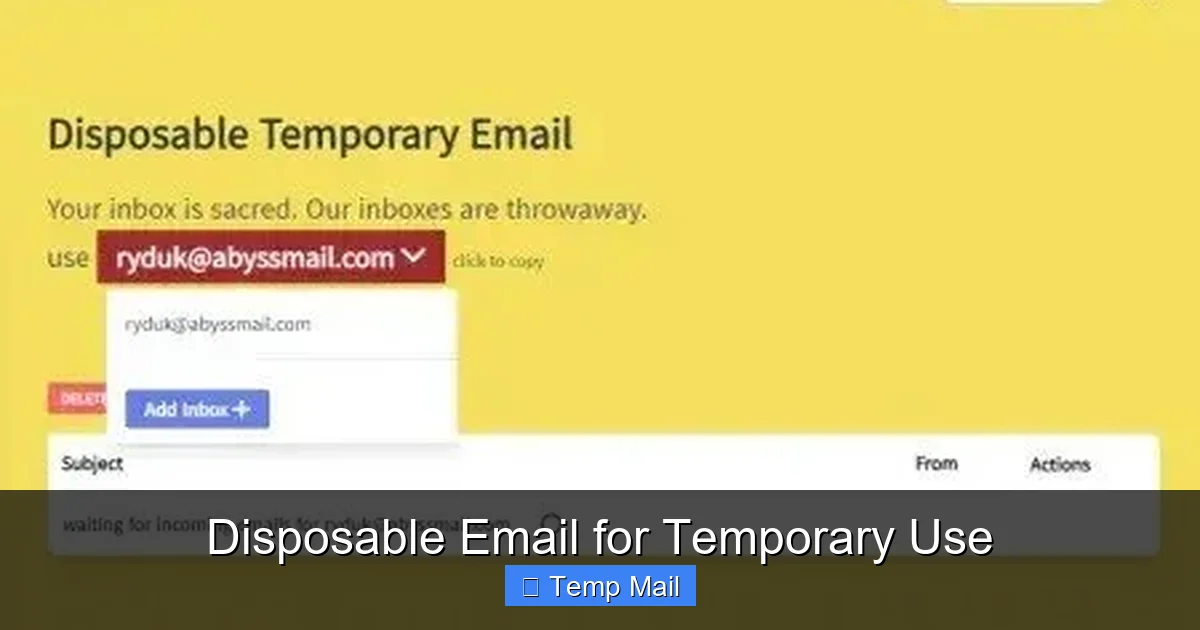
At its core, a temporary email service provides you with a random, functioning email address that exists for a very short time—usually a few hours to a few days. You don’t create an account to get it. You simply visit the service’s website, and it generates an address like [email protected] for you immediately. That inbox is accessible right there in your browser. You can receive emails sent to that address and read them. Once the time limit expires, the address and all its emails are permanently deleted from the server, never to be seen again. There’s no password, no recovery, and no connection to you.
The difference isn’t just in lifespan; it’s in purpose and architecture. Your Gmail, Outlook, or Yahoo account is a persistent identity. It’s tied to your name, your recovery phone, your contacts, and your history. It’s designed for long-term communication and storage. Temp mail is a public utility, like a payphone. Anyone can use the same number (address) if it’s not currently in use by someone else, and once you hang up (the timer expires), it’s gone. There are no folders, no labels, no search across years of history. It’s a single-use inbox for a single-purpose task.
Most free temp mail services work by creating a real mailbox on their server and simply forwarding any incoming mail to a publicly accessible web interface. They don’t require SMTP/POP3 client setup because the interface *is* the client. Some more advanced or privacy-focused services might use encryption or different architectures, but the user experience is the same: instant access, zero setup. The key is that the service provider has no incentive or mechanism to link that temporary address back to your real IP address or identity after you close the browser tab, especially if you use privacy modes or VPNs.
Using your personal email for every online trial is like using your house key to open every random door you see on the street. Sooner or later, you’ll lose control. Let’s examine the concrete risks.
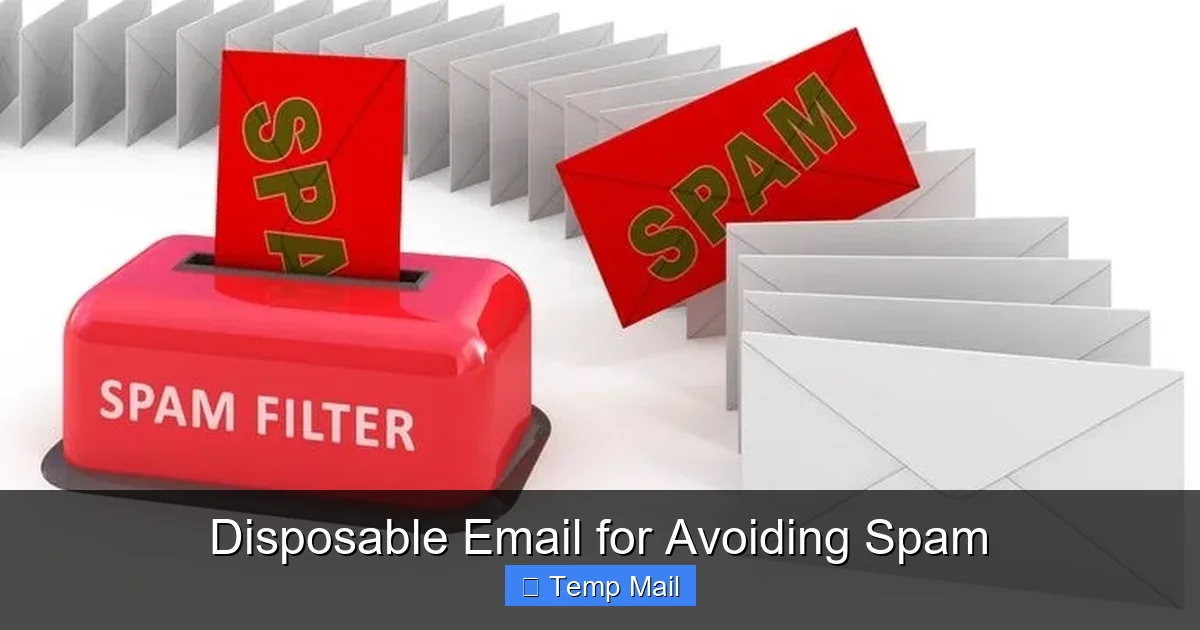
This is the most obvious and immediate consequence. That “free trial” you signed up for? Their “terms and conditions” (which nobody reads) almost certainly include a clause allowing them to share your email with “partner companies.” Suddenly, your inbox is flooded with offers for weight loss pills, crypto schemes, and miracle skincare. Even reputable companies have aggressive marketing departments. A temp mail address catches all that spam, keeping your primary inbox pristine for emails from family, your boss, and actual important services.
Hackers target databases. Smaller websites, forums, and new apps are particularly vulnerable because they may have weaker security. If they get hacked, the stolen user data almost always includes email addresses. These lists are then sold on the dark web or used for “credential stuffing” attacks—where hackers try the same username/password combination on other, more valuable sites (like your bank or social media). If your temp mail address is in a breached database, it’s meaningless to a hacker because it’s not linked to anything else in your life.
How many times have you signed up for something, only to find the “unsubscribe” link is broken, buried, or leads to more login prompts? Some less-scrupulous services make it deliberately difficult to leave their mailing list. With a temp mail, you simply let the address expire. The subscription emails bounce or go to a dead inbox. You are automatically unsubscribed because the address no longer exists. It’s the ultimate “easy out.”
Your email address is a primary identifier used by data brokers and ad networks to build a profile of your interests, location, and online behavior. Every site you visit that asks for your email adds another data point to that profile. By using a different, disposable address for each type of experiment (e.g., one for gaming sites, one for tech news trials), you compartmentalize your digital identity, making it much harder for any single entity to create a comprehensive, accurate profile of you.
Phishing emails are tailored to look like they’re from a service you use. If a hacker knows you have an account on “ExampleService.com” (because you used your real email there), they can craft a highly convincing fake password-reset or security alert email. A temp mail address severs this link. You’ll get the phishing attempt, but it will be obvious it’s nonsense because you have no actual relationship with the sender. It’s a layer of contextual security.
Knowing *why* to use temp mail is step one. Knowing *how* and *when* is where the real power lies. Let’s walk through common experimental situations.
You hear about a new, invite-only forum or a hot new social app. Before you commit your real identity and network, use temp mail to create an account. Explore the features, read the community guidelines, and gauge the culture. If it’s a toxic cesspool or a data-hungry platform, you can abandon the temp address and walk away with zero fallout. No one can email you, and your real identity is never associated with that account.
That “10 Free Marketing Templates” PDF looks great, but the form demands your email. This is a classic lead magnet tactic. Use your temp mail. You’ll get the download link instantly. The follow-up “nurture sequence” of 5 marketing emails will all go to the disposable inbox. You get the resource you wanted, and your primary email stays on your “do not email” list.
Need to log into a public library computer or a hotel business center to print a boarding pass? Some services require email-based verification for guest access. Use temp mail. The verification email comes through, you get your 30-minute session, and the address dies. No risk of session cookies or saved credentials being linked back to your identity later.
Want to try a premium photo editor or project management tool for 14 days? Don’t use your work or personal email. The trial expiration emails, upgrade offers, and “we miss you” win-back campaigns will all target your temp address. You can focus on evaluating the software’s core functionality without a persistent salesperson in your inbox.
Gaming platforms and MMOs often require email for account creation and send frequent patch notes, promotional offers, and partner deals. Use a dedicated temp mail for each game you beta test. This keeps gaming spam separate from everything else and makes it easy to abandon a game account if you stop playing, as the associated email becomes inert.
Temp mail is a powerful tool, but it’s not a magic cloak of invisibility. Understanding its limits is crucial for using it safely and effectively.
Never, ever use a temporary email for anything you need to recover or access long-term. This includes: your bank, primary cloud storage (Google Drive, iCloud), main social media accounts, utility bills, or government services. If you forget your password, you’re locked out forever because the reset email goes to an address that no longer exists. Temp mail is for disposable interactions only.
Many major platforms (like Google, Facebook, Twitter, Netflix) actively maintain and update lists of known temporary email domains. They will block sign-up attempts from these domains. This is a cat-and-mouse game; new temp mail services pop up, and platforms add them to their blocklists. If your preferred temp mail domain is blocked, simply try another one from a different provider. For the most part, smaller websites, forums, and content-gating services do not have these blocklists.
Almost all free temporary email services are receive-only. You cannot *send* emails from a temp mail address. It’s designed as a one-way pipe for you to receive verification codes and content. This is by design, to prevent abuse for spam. If you need to send an email anonymously, you would need a different, more advanced tool like an encrypted email service with a pseudonym.
Your temporary inbox is typically accessible only while you keep the browser tab open. If you close it, you may lose your session and the ability to see new emails unless you bookmark the specific, unique URL for your inbox (which many services provide). The lifetime is fixed—often 10 minutes to 1 hour for truly “temp” services, or up to 24-48 hours for “disposable” ones. You must act quickly on verification emails.
To get the most out of your disposable email adventures, follow these pro-tips.
This is non-negotiable. Open a new incognito/private window to generate and use your temp mail. This prevents the temp mail service from potentially setting cookies that could link your session to your regular browsing activity or other logged-in accounts. It’s a simple step that severs a potential tracking vector.
When you get your temp mail address and inbox URL, bookmark it immediately in your browser’s bookmarks bar, but only within that incognito window. Label it clearly, like “Temp Mail – Project X.” This way, if you need to check for a verification code 20 minutes later, you can reopen the incognito window and click the bookmark to return to your exact inbox.
Don’t just stick to one temp mail site. Rotate between a few reputable ones (like Temp-Mail.org, 10MinuteMail.com, or Guerrilla Mail). This further compartmentalizes your activity. If one provider gets blocked or has issues, you have alternatives. It also makes any potential profiling even more fragmented and useless.
This is the cardinal rule. The moment you set a temp mail as the recovery email for an account you care about, you’ve created a ticking time bomb. When (not if) you get locked out, you will have no way back in. The recovery email is the master key—it must be an address you control permanently and securely.
While temp mail itself doesn’t require personal info, your IP address is still visible to the temp mail service and the website you’re signing up for. Using a reputable VPN (Virtual Private Network) masks your real IP address, making your entire session—from generating the temp mail to using it on a third-party site—appear to originate from a different location, adding a significant layer of geographic anonymity.
The temp mail landscape is evolving. As data privacy regulations like GDPR and CCPA tighten, and as users become more savvy, the demand for easy anonymity tools grows.
We’re already seeing browsers like Brave and Firefox integrating more robust anti-tracking features. The next step is native or seamlessly integrated disposable email generation directly within the browser or as a one-click extension. Imagine right-clicking a “sign-up” field and having an option to “Generate Disposable Email” that auto-fills the field and opens a managed inbox pane.
For businesses and developers building apps that require user testing, dedicated temp mail APIs are becoming a thing. These allow a platform to programmatically generate and manage disposable email addresses for its own testers or users, integrating the safety net directly into the development and QA workflow.
Some newer entrants are offering end-to-end encrypted temporary inboxes, where even the service provider cannot read the emails. The messages can be set to self-destruct after being read once, or the entire inbox can be wiped with a single click. This moves from simple disposability to true, cryptographic ephemerality.
As temp mail services become more sophisticated and numerous, the blocklists maintained by major platforms will also grow more dynamic, potentially using machine learning to detect patterns of disposable email use in real-time. This will push the temp mail industry toward more stealthy, rotating domain strategies and perhaps even decentralized models based on blockchain or peer-to-peer networks to avoid central blocklisting.
Your email address is one of your most valuable digital assets. Treating it with care—by using it only for trusted, long-term relationships—is a cornerstone of modern digital hygiene. Temporary email services are not tools for deceit; they are tools for digital self-defense. They empower you to explore, learn, and experiment online without the constant, low-grade anxiety of being tracked, profiled, and spammed. They reclaim your attention and your inbox from the relentless noise of the attention economy.
Start small. Next time you see a gated article you want to read, or a free tool you want to try, open an incognito window, grab a temp mail, and experiment. Feel the freedom of clicking “Sign Up” without a second thought. That’s the power of the disposable digital self. It’s a small habit that builds a formidable wall around your primary identity, allowing you to engage with the vast, wild, and wonderful internet on your own terms. Stay curious, stay safe, and don’t be afraid to use a digital alias for your next great online experiment.
Yes, using temp mail is completely legal in virtually all jurisdictions. It is a safe practice for privacy protection when used correctly—meaning for sign-ups and verifications, not for illegal activities like fraud or harassment. The safety comes from the fact that you are not providing your real personal information to untrusted parties.
They can, and many do. Major platforms like Google and Facebook maintain public lists of known temp mail domains and will block sign-up attempts from them. Smaller or newer websites often do not. If your sign-up is rejected, it likely means the domain is on a blocklist, and you should try a different temp mail provider.
Security varies by provider. Reputable services do not log your IP address or link the inbox to you, and the inbox is only accessible via the unique, random URL. However, because the inbox is often unencrypted on the server side, anyone with that URL could read the emails. The primary security risk is if you fail to keep the URL private or if the service itself is compromised. Never use temp mail for highly sensitive information like passwords or financial data.
It depends entirely on the service. Some are truly “temporary,” lasting only 10-30 minutes (like 10MinuteMail). Others are “disposable,” offering inboxes that last 24-48 hours. Always check the service’s stated policy. The countdown is usually displayed on the inbox page.
Popular and generally reliable options include Temp-Mail.org, Guerrilla Mail, 10MinuteMail, and Maildrop. Look for services that do not require registration, provide a clear inbox expiration timer, and have a simple, ad-light interface. Avoid any service that asks for personal details to “create” an address.
Absolutely. All major temp mail services are web-based and fully functional on mobile browsers. You can generate an address and check the inbox just as easily on your phone’s Chrome or Safari browser. For convenience, you can even add the inbox page to your home screen as a web app shortcut after generating an address.
অনলাইন নিউজপেপার থিম। এই থিমটি দিয়ে আপনারা বাংলা এবং ইংরেজি নিউজপেপার সাইট তৈরি করতে পারবেন । বার্তা ও বাণিজ্যিক কার্যালয়: ৭১, মতিঝিল, ঢাকা-১০০০। সম্পাদক : মো আসাদুজ্জামান আমানউল্লাহ । মোবাইল : ০১৭০০-০০০০০০ । ইমেইল : [email protected] ।
All rights reserved © 2019 themesdealer.Com