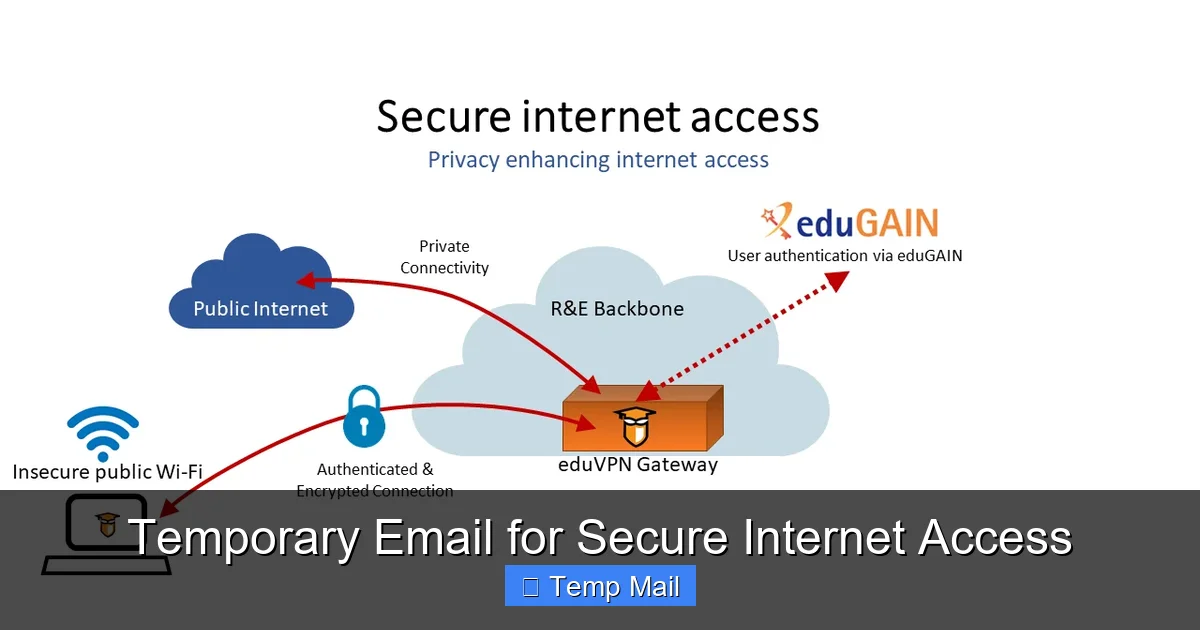
Image for Temporary Email for Private Registrations


In today’s digital world, your primary email address is a magnet for spam, tracking, and potential data breaches. Using a temporary email for private registrations—like signing up for a forum, downloading a whitepaper, or accessing a one-time promo—creates a vital privacy buffer. It’s a simple, free tool that keeps your main inbox clean and your personal information out of marketers’ hands, offering immediate, disposable addresses that self-destruct after use.
Have you ever hesitated to sign up for a free online course, a gaming beta, or a simple newsletter because you didn’t want to clutter your primary email inbox? Or maybe you’ve downloaded a software trial only to be bombarded with marketing emails for months afterward. If so, you’ve already felt the need for a tool that sits between your real identity and the vast, often intrusive, world of the internet. That tool is a temporary email, and using it for private registrations is one of the smartest, easiest ways to reclaim control over your digital privacy starting today.
The concept is beautifully simple. Instead of handing over your [email protected], you generate a random, one-time-use address from a temporary email service. You use that disposable address to complete the registration, receive the confirmation link or download file, and then… you forget about it. The inbox self-destructs, taking all the associated spam and data trails with it. It’s like using a burner phone for a single, confidential call, but for your email. In this guide, we’ll dive deep into why, how, and where to use temporary email for private registrations, turning you from a cautious observer into a confident practitioner of online privacy.
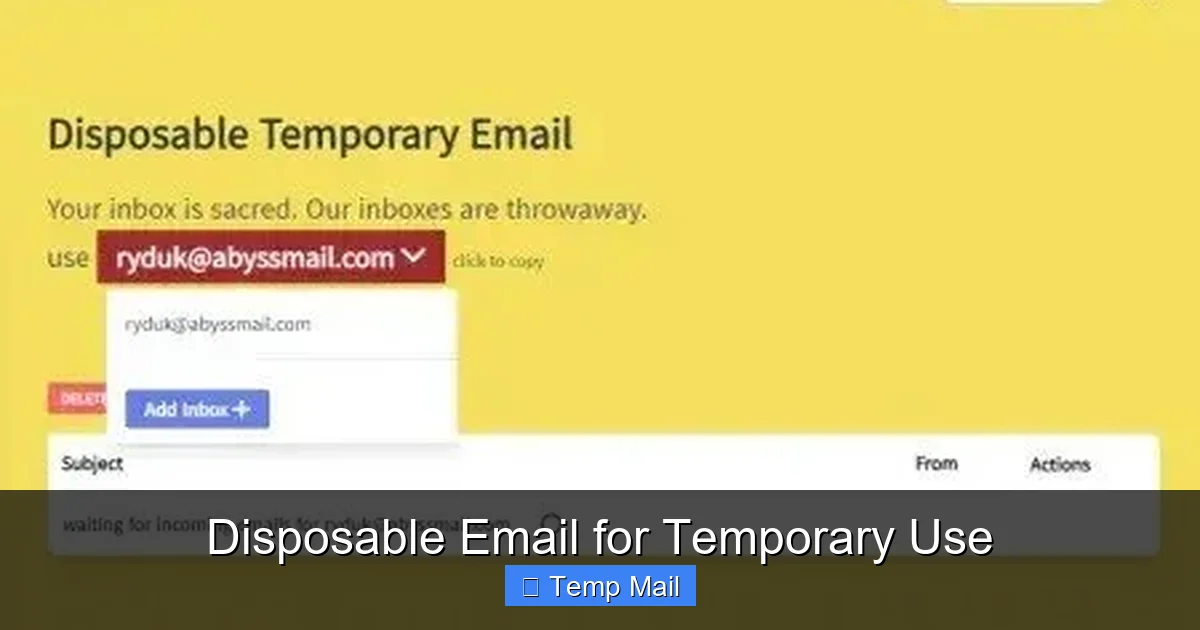
Before we go further, let’s demystify the technology. A temporary email service, also called disposable email, throwaway email, or temp mail, is a platform that provides users with a random, functional email address for a limited period. These services don’t require you to create an account, set a password, or provide any personal information to get started. You simply visit their website, and an inbox is generated for you on the spot, complete with an address you can copy and use immediately.
These services maintain a pool of domains and generate random usernames. When an email is sent to that address, it’s stored on their servers and displayed in a public inbox associated with that specific session. The key characteristics are:
Now, let’s get to the heart of the matter. The benefits aren’t just about avoiding a few extra emails; they’re about fundamental privacy and security hygiene.
Visual guide about Temporary Email for Private Registrations
Image source: dvlaregistrations.dvla.gov.uk
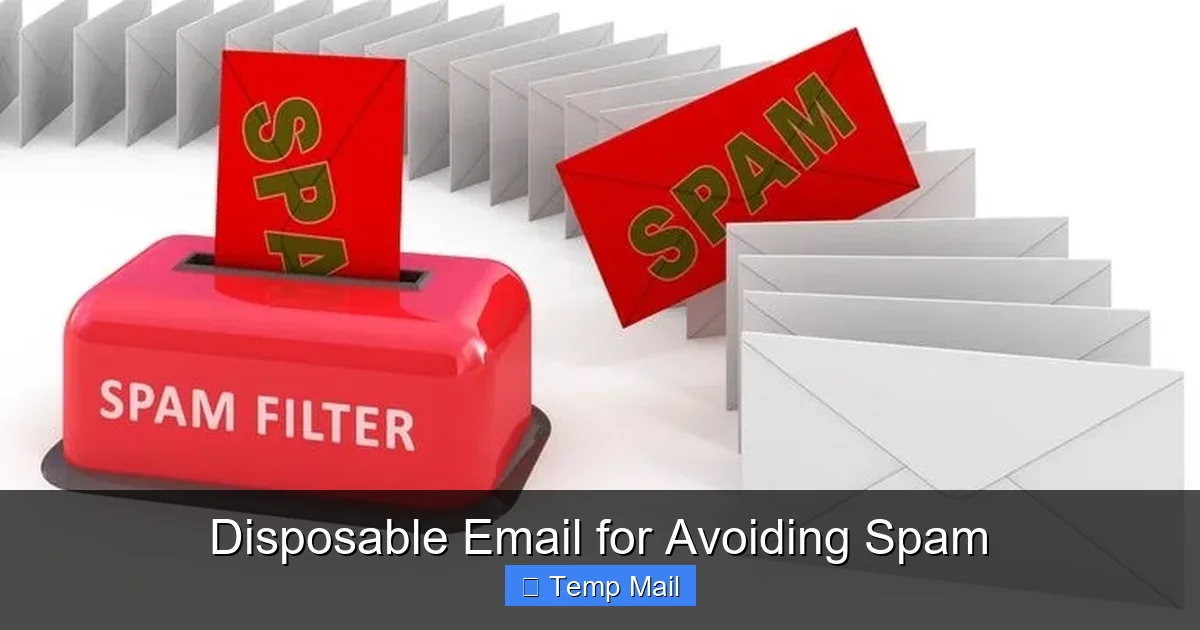
This is the most obvious and immediate benefit. How many times have you signed up for something “free” only to find your primary inbox flooded with “special offers,” “limited-time deals,” and “news you can use” for the next year? Companies often sell or share email lists. By using a temporary address, you create a dead-end for that marketing pipeline. The spam goes to an inbox that disappears, leaving your main account pristine. This keeps your important personal and professional communications from getting lost in the noise.
Data breaches are a weekly occurrence. When a company you registered with suffers a breach, your email address is one of the first pieces of data hackers harvest. That address then becomes a target for phishing campaigns, credential stuffing attacks (where hackers try your email/password combo on other sites), and spam. If you used a temporary email for that registration, the breached data is essentially useless to hackers targeting your real identity. They have a disposable address that leads nowhere, breaking the chain of attack before it starts.
Every online action tied to your primary email contributes to your permanent digital profile. Ad networks, data brokers, and even curious websites can build a surprisingly accurate picture of your interests, location, and habits by tracking your email across different services. Using a new, random temporary address for each non-essential registration fragments that profile. It makes it exponentially harder for any single entity to connect all your disparate online activities back to you, the real person.
Some websites are aggressively gatekeeping content. Want to read a single article? They might demand an email. Want to see a price list? Sign up. A temporary email lets you gracefully sidestep these minor irritations without sacrificing privacy. You get the content or resource you need, and the website gets a valid (for 10 minutes) email format that satisfies their (often poorly implemented) requirement. It’s a win for user autonomy.
For developers, testers, or anyone needing to verify how a service handles email sign-up flows, temporary emails are indispensable. You can quickly test password reset emails, welcome sequences, or notification systems without polluting a real inbox or managing multiple test accounts. It streamlines QA and development processes.
Knowing the theory is great, but seeing it applied makes it stick. Here are common, everyday situations where a temporary email is the perfect tool.

Visual guide about Temporary Email for Private Registrations
Image source: dvlaregistrations.dvla.gov.uk
You find a fantastic e-book, research paper, or template that requires your email to download. You have zero interest in the company’s newsletter. Use a temp mail. Get the download link in the disposable inbox, grab the file, and move on. No subscription, no follow-up.
Registering for a free webinar, a software beta test, a 7-day trial of a SaaS tool, or a contest? These are classic “private registration” use cases. You need the access for the event or trial period, but the company’s default communication is often relentless. A temporary address gives you the access code or trial login without the long-term marketing commitment.
Many airports, cafes, or hotels require an email address to access their Wi-Fi network. This is a prime target for spam. Use a temp mail, get the password, connect, and forget it. No risk of your main email being added to a public hotspot’s marketing list.
Want to create a quick account on a new social platform, forum, or app just to poke around and see what it’s like? No need to use your real credentials. A temporary email lets you satisfy the sign-up requirement and explore anonymously. If you decide you love the platform, you can always create a proper account later.
Some websites block access or force a specific regional version based on your email domain’s perceived location. Using a temp mail from a different provider can sometimes help you access a more generic or desired version of a site for research purposes.
Temporary email is a powerful tool, but it’s not a magic shield for all online activities. Understanding its limitations is crucial for using it safely and effectively.

Visual guide about Temporary Email for Private Registrations
Image source: i.pinimg.com
Many major platforms—especially social media giants like Facebook, Twitter, LinkedIn, and Google services—maintain updated lists of known temporary email domains and will outright block sign-ups from them. They do this to reduce fraud and spam on their platforms. If your goal is to create a permanent, meaningful account on these sites, a temp mail won’t work. This is by design.
This is the most critical limitation. If you use a temporary email to sign up for a service where you might later need to reset your password or receive important security notifications, you will be locked out. Once the inbox expires, the email is gone forever. Never use temp mail for:
While you’re hiding from the website you’re signing up for, you are placing trust in the temporary email provider. Reputable services do not log IP addresses or scan email content. However, less scrupulous providers could potentially log activity. For highly sensitive private registrations, this is a consideration. Stick to well-known, transparent providers that state their privacy policies clearly.
Remember, the inbox is often public. Anyone with the exact same random address can view the emails. Never, ever use a temporary email to receive:
Using these services is dead simple, but a few best practices can maximize your experience.
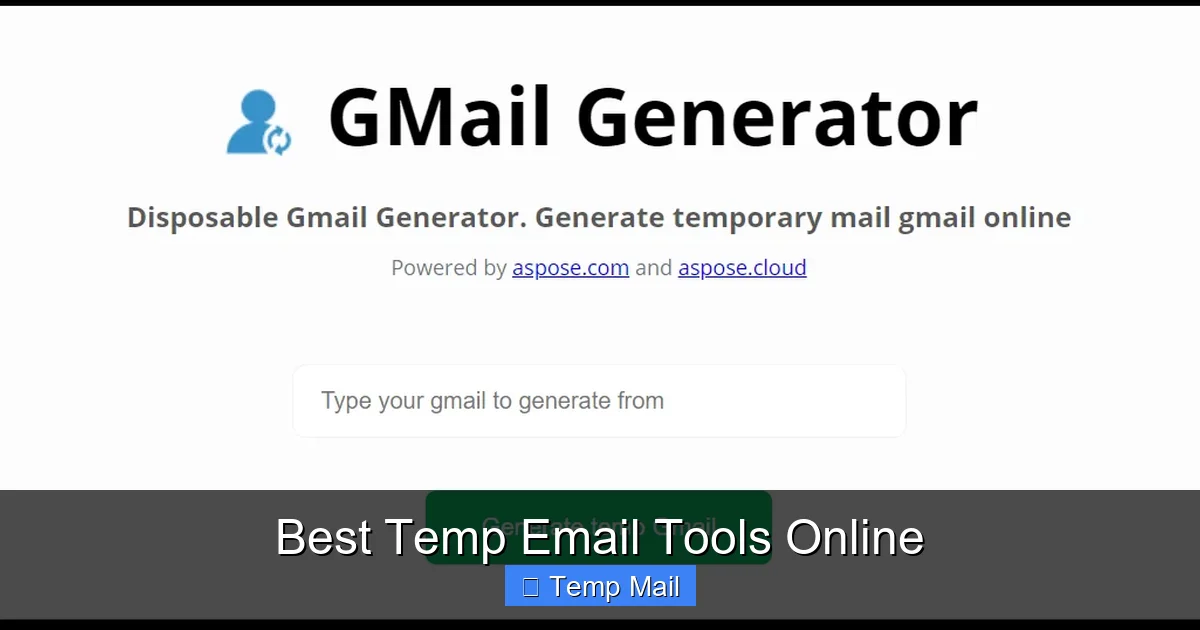
Do a quick search for “temporary email” or “disposable email.” Popular, long-standing options include Temp-Mail, 10MinuteMail, Guerrilla Mail, and Mailinator. Look for services that:
Visit the provider’s website. You will likely see a random email address already generated for you. You can often click a button to generate a new random one if you prefer a different username. Copy this address to your clipboard.
Paste the temporary address into the website’s sign-up or download form, just as you would your normal email. Complete any other required fields. Submit the form.
Stay on the temporary email provider’s tab. Refresh the inbox (many have an auto-refresh feature). Within seconds or minutes, the confirmation email from the website should appear. Click the link or copy any code directly within the temporary inbox to complete your registration or access your download.
Once you’ve gotten what you needed, close the tab. There is no need to “delete” anything. The service will automatically purge the inbox and address after its predetermined time (e.g., 10 minutes, 1 hour). You will never see that address or those emails again.
The rise of temporary email services is a direct user response to the broken email ecosystem, where user privacy is often the product. Looking ahead, we see two parallel paths.
As more people adopt privacy tools, websites and platforms will likely enhance their ability to detect and block disposable email domains. We may see more sophisticated checks, like requiring a mobile number for verification (which introduces its own privacy issues) or using behavioral analysis to flag temp mail users. This could make using a temp mail slightly more cumbersome for some sites.
The future is likely not just standalone temp mail sites, but integrated features. We already see this with:
These integrated solutions address the main drawback of traditional temp mail (lost access to important emails) while maintaining the core benefit of privacy. However, the classic, no-strings-attached temporary email will remain a vital, lightweight tool for quick, anonymous interactions where no future relationship is needed.
In an online world that constantly asks for your email address as a key to its kingdom, a temporary email for private registrations is your personal bouncer. It politely says “no” to the relentless data collection economy on your behalf. It’s not a solution for everything—your bank, your main social life, and your critical accounts must remain anchored to your real, secure, primary email. But for the vast universe of one-off interactions, free downloads, and casual sign-ups, it is a perfect, zero-cost, zero-effort solution.
Start incorporating this habit today. The next time a website asks for your email just to show you a price or give you a PDF, pause. Open a new tab for your preferred temp mail service, generate an address, and use it. Experience the immediate satisfaction of a cleaner primary inbox and a slightly smaller digital footprint. It’s a small action that, when multiplied across thousands of users and millions of registrations, sends a powerful message: our inboxes are not public commodities. They are private spaces, and we have the tools to defend them.
Yes, using a temporary email service is completely legal in most jurisdictions. It is a legitimate tool for privacy protection. The legality only becomes an issue if the email address is used for fraudulent activities, harassment, or to bypass terms of service for malicious purposes, which applies to any communication tool.
For the specific registration purpose, they are very safe because the address is ephemeral and not linked to your identity. However, the security of the provider itself varies. The inboxes are often public by design, so you should never use them for sensitive data. The main safety benefit is that a breach at the website you signed up for won’t compromise your primary email or identity.
Yes, often they can. Reputable temporary email services use domains that are publicly known and listed on blocklists. Many websites check against these lists and will reject the sign-up attempt, displaying an error like “Please use a valid email address.” This is why temp mail is best for smaller or less security-conscious sites, not major platforms.
It depends entirely on the provider. Lifespans range from as short as 10 minutes to up to 7 days. Common durations are 1 hour or 1 day. Always check the provider’s homepage for the countdown timer for your specific inbox. Never assume it will last longer than what is explicitly stated.
You cannot. This is the fundamental trade-off. If there’s any chance you will need to receive a password reset, receipt, or critical notification from the service in the future, you must use your primary, permanent email address. Temporary email is strictly for interactions where you need immediate, one-time access and no future contact.
Generally, no. Businesses should use official, monitored, and permanent email domains for all official registrations, software licenses, and service agreements. Temporary emails would violate most vendors’ terms of service, void warranties, and make account recovery impossible. They are a tool for personal, non-critical use only.
অনলাইন নিউজপেপার থিম। এই থিমটি দিয়ে আপনারা বাংলা এবং ইংরেজি নিউজপেপার সাইট তৈরি করতে পারবেন । বার্তা ও বাণিজ্যিক কার্যালয়: ৭১, মতিঝিল, ঢাকা-১০০০। সম্পাদক : মো আসাদুজ্জামান আমানউল্লাহ । মোবাইল : ০১৭০০-০০০০০০ । ইমেইল : [email protected] ।
All rights reserved © 2019 themesdealer.Com