Image for Best Temp Email Websites You Can Trust



Temporary email websites provide disposable inboxes to shield your primary email from spam, data breaches, and unwanted marketing. These services require no registration, generate random addresses instantly, and auto-delete after use. Our guide reviews the most trustworthy platforms, explaining their features, security practices, and ideal use cases to help you choose the best service for online privacy.
Ever felt that pang of regret after entering your personal email on a sketchy website? You know the one. You just wanted to download a free template or read an article, but now your inbox is a warzone of promotional sludge. What if you could have a magical, throwaway email address that vanishes into the digital ether after you’re done? Enter the world of temporary email websites. These nifty tools are your first line of defense in the battle for inbox sanity and online privacy. But not all are created equal. Some are trustworthy guardians of your anonymity, while others are… well, let’s just say they might be selling your data before you even hit send. This is your complete, no-nonsense guide to the best temp email websites you can trust. We’ll cut through the noise, explain exactly how they work, and give you the practical knowledge to use them safely and effectively.
Let’s start with the basics. A temporary email service is a web-based platform that provides you with a random, disposable email address and a corresponding inbox—all without asking for a single piece of your personal information. Think of it as a public phone booth for the internet era. You step inside (visit the site), get a random number (email address), make your call (use it for a sign-up), and then walk away forever. The booth is wiped clean for the next person.
When you land on a reputable temp mail site, the system automatically generates an email address for you, something like [email protected]. That address is linked to a private, unique inbox stored on the service’s servers. You can view this inbox directly on their website. Any email sent to that address appears there in real-time. There’s no password, no recovery email, and no account to manage. The entire system is designed for anonymity and transience. The lifespan of that inbox varies by provider. Some last just 10 minutes, others 1 hour, and a few generous ones keep it alive for 24 hours or until you manually delete it. After that time, the address and all its contents are permanently purged from the server, making it impossible for anyone to ever access that inbox again.
Using your primary, personal email for everything online is like using your Social Security number as a library card. It’s reckless and invites trouble. Here’s why a trusted temporary email is a non-negotiable tool in your digital kit.

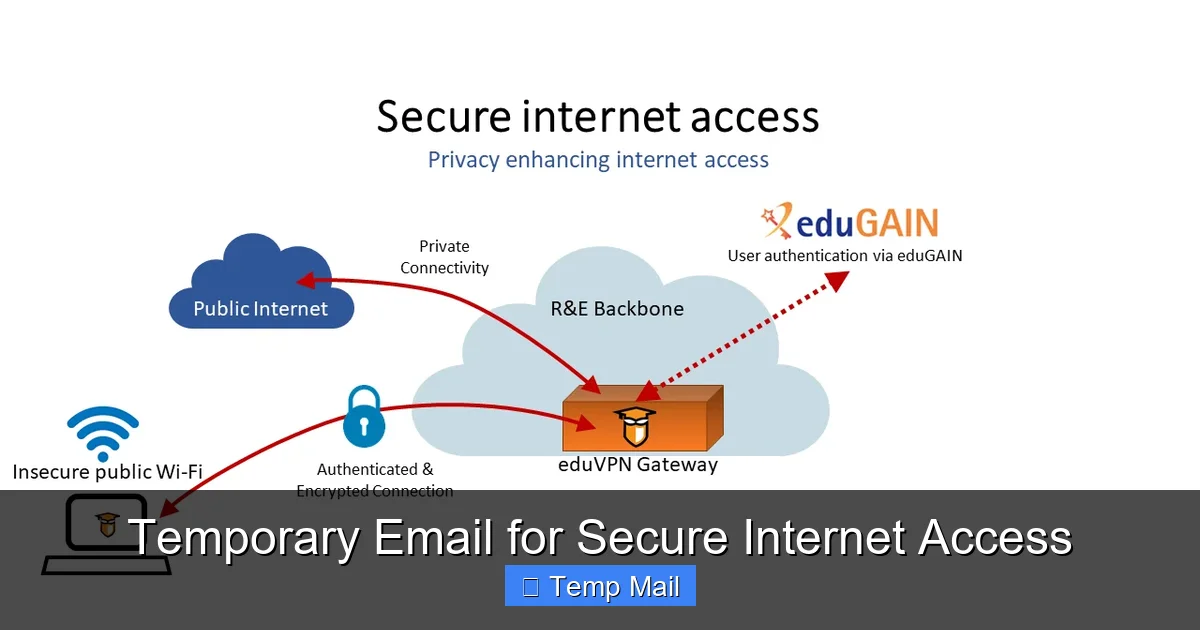
Visual guide about Best Temp Email Websites You Can Trust
Image source: 2carpros.com
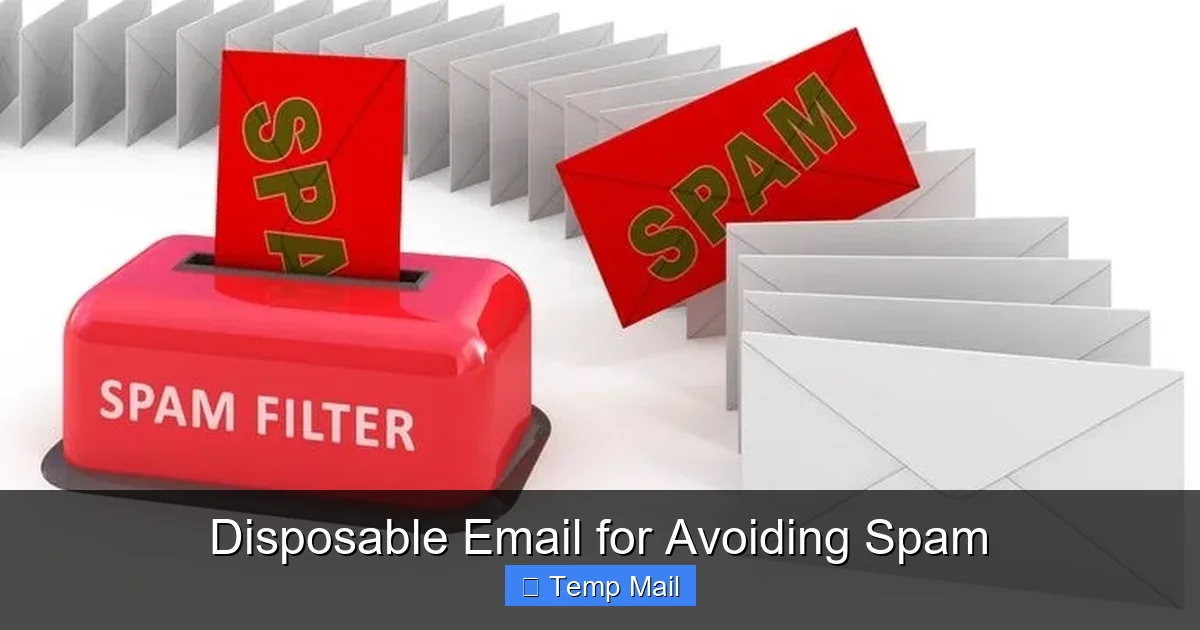
This is the most obvious and immediate benefit. Every time you sign up for a newsletter, download a free ebook, or create an account on a new forum, you’re giving your email to a new entity. Many of these entities have questionable data practices or get hacked. Your email gets sold on data broker lists, leading to a relentless stream of promotional emails. A temp email acts as a spam sponge. Let it absorb that junk. When the inbox self-destructs, so does the connection to that spam source.
Data breaches are a weekly occurrence. When a company you signed up with gets hacked, the stolen database often contains user emails. If you used a disposable address, the hackers only get a dead-end alias. Your real identity, your primary email, and the password you (hopefully) use for important sites remain safe. It breaks the chain of data aggregation that profiles you across the web.
How many times have you wanted to read a whitepaper or see a research study, only to be stopped by a form demanding your email? A temporary email lets you gracefully bypass these gates without compromising your privacy. You get the content you need, and the content provider gets an email that will bounce in a few hours. It’s a fair, low-commitment exchange.
For developers, QA testers, or just curious tech enthusiasts, signing up for beta versions or new apps often requires an email. Using a disposable address lets you test the waters without cluttering your main inbox with update notifications or, worse, having your personal email tied to a buggy or abandoned project.
Not all temp email websites are safe. Some are laden with malicious ads, have poor uptime, or may even log your IP address. After extensive testing and review of privacy policies, server locations, and community reputation, here are the services that consistently earn trust.

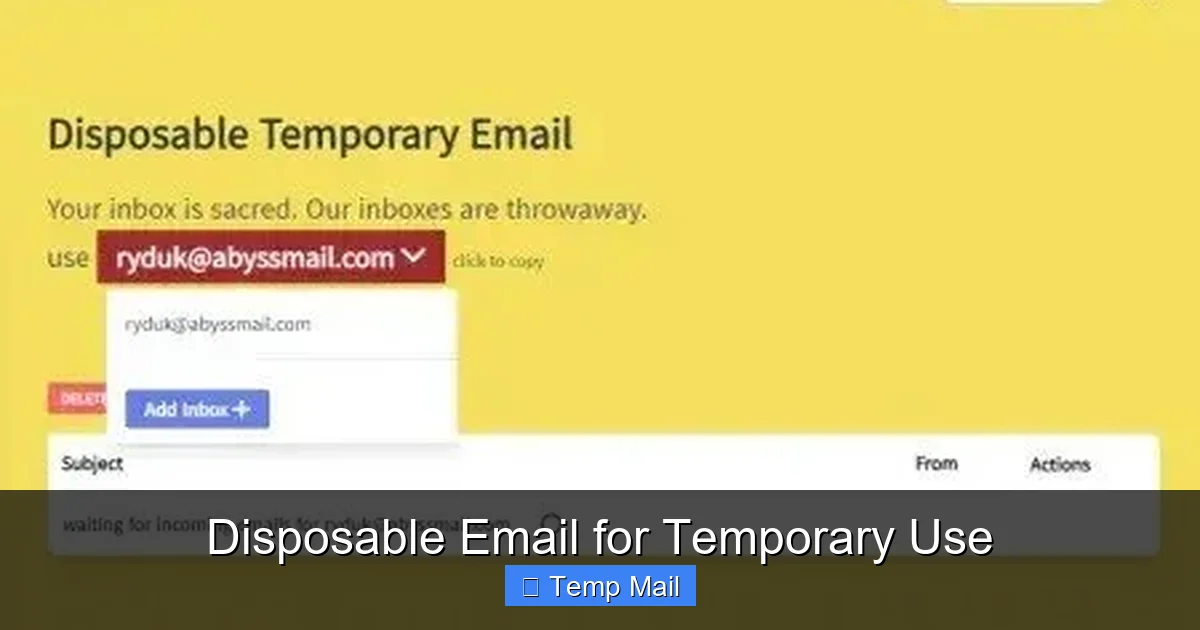
Visual guide about Best Temp Email Websites You Can Trust
Image source: cdn.educba.com
Often considered the gold standard in the temp mail space, Temp-Mail.org is a veteran with a stellar reputation for reliability and privacy.
The original and one of the simplest. As the name suggests, it’s designed for ultra-short-term use.
A feature-rich and highly popular option that has evolved beyond just a basic disposable email.
This service takes a different, very public approach. Its inboxes are truly public by default.
A modern, fast, and user-friendly option with a focus on a clean interface and good uptime.
For the technically inclined or those with a custom domain, there’s a powerful alternative: a catch-all email forwarding service. You configure your domain (e.g., yourname.com) to forward ALL emails sent to any address at that domain (e.g., [email protected]) to your real inbox. You then use unique, random addresses like [email protected] or [email protected] for each sign-up. You can filter or block these easily in your main email client. This gives you complete control, permanence (you own the alias), and the ability to trace data leaks. Services like SimpleLogin or AnonAddy specialize in this and are arguably the most trustworthy method, though they require a bit more setup and often a small fee for full features.
Just because a temporary email website looks nice doesn’t mean it’s safe. “Trust” in this context has very specific, limited meanings. Understanding these boundaries is crucial for your safety.

Visual guide about Best Temp Email Websites You Can Trust
Image source: colorlib.com
This is the most important distinction. A good temp mail service provides anonymity. It hides your real email address from the recipient. However, it almost never provides end-to-end encryption (like ProtonMail or Signal). The email content is stored in plain text on the service’s servers. Anyone with access to those servers—the service provider, a hacker, or a government with a warrant—could potentially read the emails. Therefore, never send sensitive information like passwords, financial data, Social Security numbers, or private documents through a disposable address. Its purpose is to shield your identity, not to secure confidential communications.
A truly trustworthy service will have a privacy policy stating it does not log your IP address or other connection metadata linked to your temporary inbox session. If they do log it, that creates a potential link back to you (your home IP address) if law enforcement requests it. The top services listed above are generally clear about not logging this data. Always check the Privacy Policy page before relying on a new service.
Many free temp email sites are supported by ads. The danger lies in the *type* of ads. Shady providers may use aggressive pop-unders, redirects, or even host ads that deliver malware or attempt phishing. This is why sticking to the well-known, reputable services is critical. They use standard, reputable ad networks (like Google AdSense) which, while annoying, are generally safe. If a site is bombard you with “Your computer is infected!” pop-ups, leave immediately.
Knowing *how* to use a tool is as important as knowing *which* tool to use. Here’s your practical guide to deploying a disposable email effectively.
Scenario: You want a free PDF checklist, a discount code, or to access a “locked” article. You see the email form. Action: Open a new tab, go to your trusted temp mail site, copy the generated address, paste it into the form, and submit. Keep the temp mail tab open. Check it for the confirmation/download link. Once you have what you need, close the tab. The inbox will vanish. Done.
Scenario: You want to join a controversial forum or comment on a heated news article without your real email being harvested by trolls or data-miners. Action: Use a temp email to create the account. You’ll get a verification link. Use the reply feature (if available on your service) or a second temp address to receive it. Once you’ve posted, you can abandon the account. The email trail dies with the inbox.
Scenario: You’re testing a new SaaS tool that has a free trial but requires an email. You already used your main email for a previous trial. Action: Use a temporary email to sign up for a fresh trial. This lets you evaluate the software genuinely. Remember to cancel the trial if you don’t want to pay, as the billing reminder will go to the dead inbox.
Never use a temp email for: your bank, credit card accounts, primary cloud storage (Google, Apple, Microsoft), social media main accounts, any account where password recovery is vital, or official government/medical portals. You will be locked out forever when the inbox dies. Also, avoid using them for long-term subscriptions where you might need billing receipts or service updates months later.
To become a power user of disposable email services, follow these simple but vital rules.
The demand for temporary email websites is growing as privacy awareness increases. We’re seeing more integration with password managers and browser security suites. The trend is towards cleaner interfaces, longer default lifespans (like 24 hours), and more features like reply functionality and domain choice. However, the fundamental tension remains: convenience vs. absolute security. These services will never be for your most critical digital assets.
So, what’s the final verdict? The best temp email website you can trust is not a single site, but a small, vetted toolkit. Keep Temp-Mail.org and 10MinuteMail.com as your go-to, reliable workhorses. Use Guerrilla Mail when you need a bit more control, and consider a catch-all service like SimpleLogin if you want a permanent, master disposable system. The key is consistency—stick to the known players, understand their limitations, and use them strategically. In the cacophony of the modern web, a good disposable email isn’t just a convenience; it’s a essential shield for your primary identity and your peace of mind. Use it wisely.
Reputable temporary email websites are safe for their intended purpose of protecting your identity from spam. However, they are not secure for sensitive communications, as most do not offer end-to-end encryption. Never use them for passwords, financial info, or official documents.
Yes, using a temporary email is completely legal. It’s a standard privacy tool, similar to using a pseudonym. The legality depends on how you use it. Using it to sign up for a service is fine, but using it for fraud, harassment, or to evade legal obligations is illegal.
Yes, absolutely. Many websites maintain lists of known disposable email domains and will block sign-ups from those addresses. This is why using a well-known, common service might get flagged. Some sites simply reject any address from a domain they don’t recognize as a major provider (Gmail, Outlook, etc.).
It varies by provider. Common lifespans are 10 minutes (10MinuteMail), 1 hour (Guerrilla Mail, Tempail), or 24 hours (Temp-Mail.org, Maildrop.cc). The inbox and all its contents are permanently deleted after this time expires.
Most basic temporary email services only allow you to *receive* emails. A few, like Guerrilla Mail and Tempail.com, offer a limited “send” or “reply” function, allowing you to respond to messages received in your temp inbox. You generally cannot initiate new emails to arbitrary addresses.
For beginners, Temp-Mail.org is an excellent choice. It has a clean, intuitive interface, a generous 24-hour inbox lifespan, and a strong reputation for privacy. 10MinuteMail.com is the ultimate in simplicity for ultra-quick, one-time uses. Both are trustworthy and require no learning curve.
অনলাইন নিউজপেপার থিম। এই থিমটি দিয়ে আপনারা বাংলা এবং ইংরেজি নিউজপেপার সাইট তৈরি করতে পারবেন । বার্তা ও বাণিজ্যিক কার্যালয়: ৭১, মতিঝিল, ঢাকা-১০০০। সম্পাদক : মো আসাদুজ্জামান আমানউল্লাহ । মোবাইল : ০১৭০০-০০০০০০ । ইমেইল : [email protected] ।
All rights reserved © 2019 themesdealer.Com