Image for Disposable Email for Privacy Protection



Disposable email addresses are temporary, throwaway inboxes designed to protect your primary email from spam, data brokers, and potential breaches. They’re perfect for one-time sign-ups, downloading content, or accessing websites where you don’t trust the sender with your real contact information. By using a temp mail service, you create a barrier between your personal identity and the vast, often predatory, digital landscape. It’s a simple, powerful tool for regaining control over your digital footprint and keeping your main inbox clean and secure.
Imagine you’re at a crowded street fair. A friendly promoter hands you a flyer and asks for your email address to enter a raffle for a free t-shirt. You’d like the shirt, but you don’t know this person or their company. Handing over your personal, primary email address feels like giving a stranger your house key. What if they sell that list? What if their website gets hacked? This is the everyday dilemma of the modern internet.
Enter the disposable email, also known as temp mail or throwaway email. Think of it as a prepaid, anonymous burner phone for your digital communications. It’s a fully functional email address that exists for a very short time—often just 10 minutes, an hour, or a day—and then self-destructs. You use it for interactions where you suspect the value you’re getting (a PDF, a discount code, forum access) is less than the potential long-term cost of adding your permanent email to another marketing list or data broker’s spreadsheet.
The term “burner” comes from the world of prepaid mobile phones, used for a specific, temporary purpose and then discarded. A disposable email works the same way. You generate an address, use it for a single transaction or verification, check the inbox for the needed confirmation link or file, and then simply walk away. The address and all its messages vanish into the digital ether. There’s no ongoing commitment, no password to remember, and no cleanup required on your end. It’s the digital equivalent of writing a note on a piece of scratch paper, using it, and then throwing it away without a second thought.
The mechanics behind a disposable email service are beautifully simple, which is part of their appeal. There’s no complex software to install. Here’s the step-by-step process of how these services operate from your perspective:

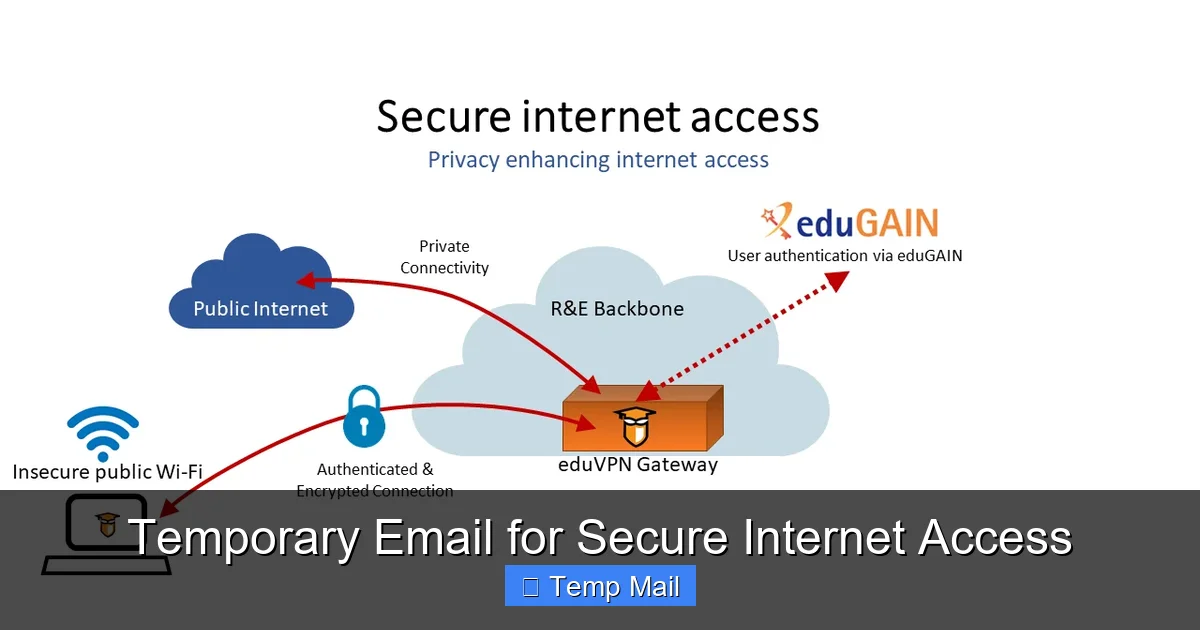
Visual guide about Disposable Email for Privacy Protection
Image source: mashtips.com
From a technical standpoint, these services maintain large pools of domain names and set up mail servers configured to accept mail for any address at those domains without requiring prior account creation. When you visit, the service simply assigns you one of the millions of possible addresses at one of its domains. The “inbox” you see is a temporary, unique view filtered only for messages sent to *your specific generated address*. Once the session ends or the timer expires, that mapping is destroyed, and that email address becomes available for reassignment to a completely different user moments later. This efficient recycling is what makes the service free and sustainable for the provider.
Knowing *when* to use a disposable email is the key to leveraging its power effectively. It’s not for everything, but for specific scenarios, it’s a game-changer for privacy and inbox hygiene.

Visual guide about Disposable Email for Privacy Protection
Image source: optery.com
This is the #1 use case. You want an e-book, a research report, a template, or a software trial. The website demands your email in exchange. Using your primary email here often leads to a permanent spot on that company’s promotional email list, with messages that may be irrelevant or sent daily. A disposable email gets you the file instantly, and the “relationship” ends there. You get the value without the long-term marketing commitment.
You want to post a comment on a news article, contribute to a niche hobby forum, or ask a question on a Q&A site. These platforms almost always require an email for account creation, but you may never visit again after your comment is posted. A disposable email prevents your primary address from being associated with that specific username or post, which can be scraped by bots and lead to targeted spam.
As a developer, tester, or just a curious user, you might need to quickly sign up for a new SaaS tool, app, or online service to test its functionality. Using a disposable email allows you to create a test account without polluting your real identity or risking your primary email in a potentially insecure or buggy new platform.
Sometimes, a website just feels “off.” Maybe the design is shoddy, the URL is slightly misspelled, or the offer seems too good to be true. If you have a hunch the site might sell your email or get breached, using a disposable address is a safe bet. You can still complete the required verification to see the content or claim the offer, but you’ve insulated your main account from any fallout.
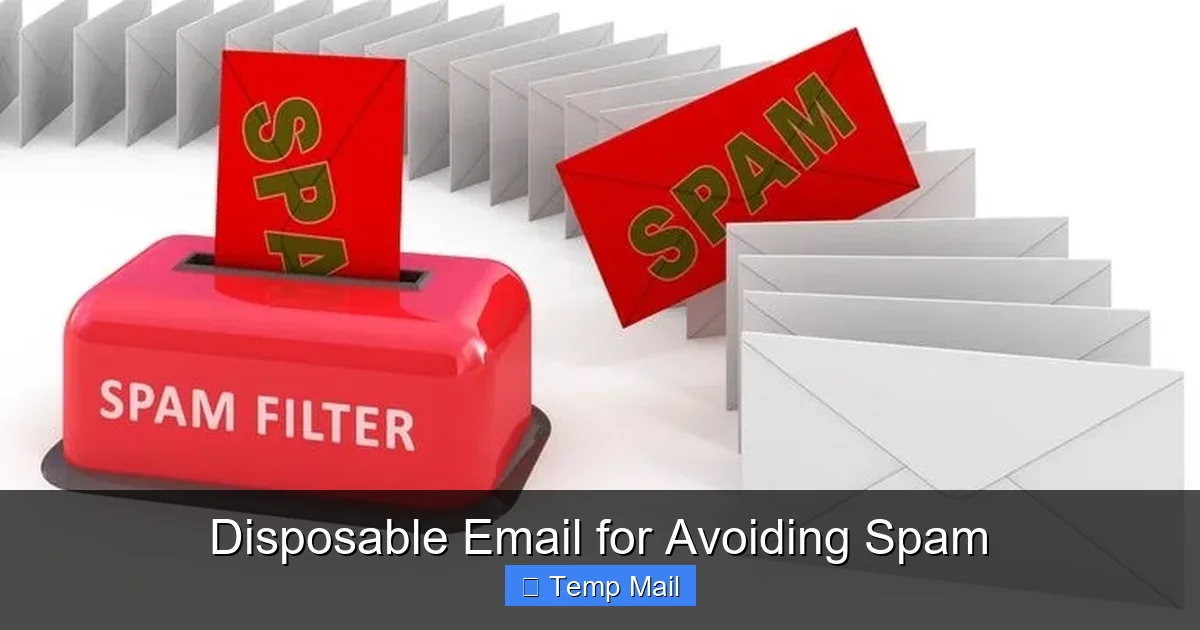
That “Win a Free iPhone!” pop-up? The loyalty program for a store you’ll never shop at? These are classic spam engines. By using a disposable email, you can still enter the contest or get the coupon code, but you’ve given them an address that will cease to exist before their first promotional blast even goes out.
Disposable email is a powerful tool, but it’s not a magic shield. Understanding its limitations is crucial for using it safely and effectively.

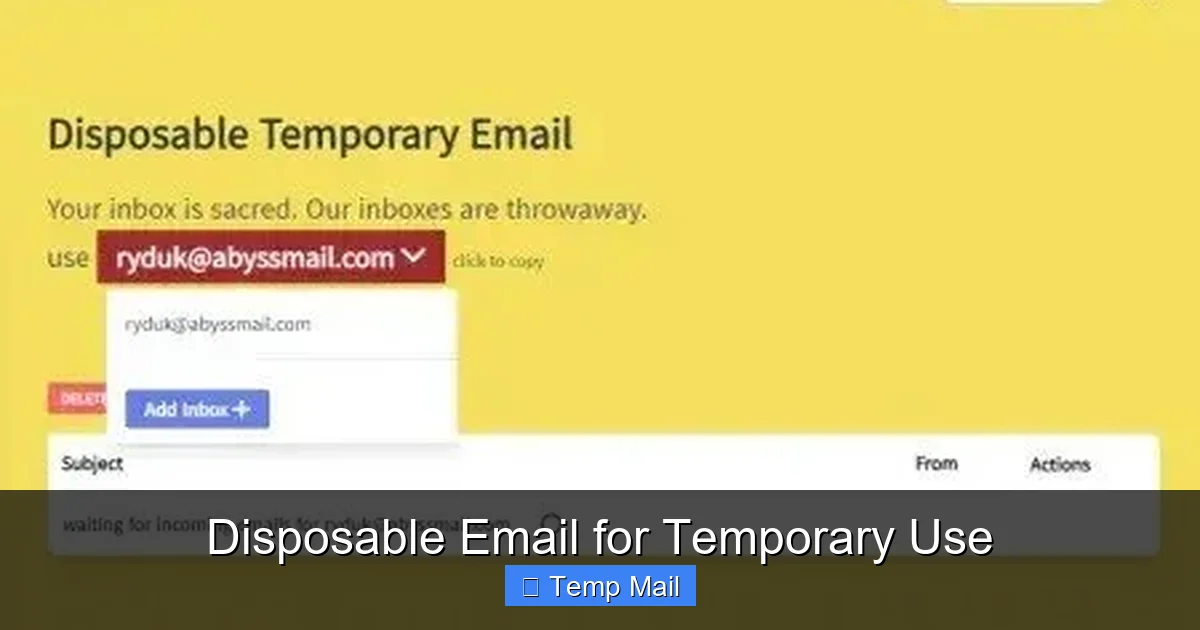
Visual guide about Disposable Email for Privacy Protection
Image source: icpmedical.com
This is the golden rule. Never, ever use a disposable email for:
For these, you need a permanent, secure, and accessible email address that you control and check regularly.
Many popular websites and platforms actively maintain blocklists of known disposable email domains. If you try to sign up with an address from a blocked domain, the site will reject it outright. This is a cat-and-mouse game; new disposable domains pop up, and they get blocked. You might need to try a few different services or domains to find one that isn’t blacklisted by a particular site you’re trying to access.
Since the inbox is public on the provider’s page (though unique to your session), there’s no concept of folders, labels, or long-term organization. If you need to reference an email from a disposable address a week later, you’re out of luck. It’s designed for immediate, single-use consumption only.
While the service hides your primary email from the recipient, the disposable email provider itself can see all the emails passing through its system. Reputable services have privacy policies stating they do not log or sell message content, but you are inherently trusting that provider. For highly sensitive activities, even a disposable email might not be sufficient.
Not all temp mail services are created equal. When selecting one, consider these factors based on your specific need:
How long does the inbox last? 10MinuteMail is famous for its ultra-short 10-minute lifespan, perfect for a quick verification. Others might offer 1 hour, 6 hours, or a full 24 hours. If you need to wait for a confirmation email that sometimes takes a few minutes, a 10-minute window might be too stressful. Choose a service with a timer that matches your expected workflow.
Some services allow you to choose from several different domain names (e.g., @temp-mail.org, @guerrillamail.com, @mailinator.com). Others might even let you generate a custom alias (e.g., [email protected]), which can be easier to remember or type. A wider domain selection also helps if one domain is blocked by the site you’re trying to access.
Can the service handle email attachments? If you’re using it to download a PDF, an image, or a ZIP file from a gated content offer, you absolutely need attachment support. Not all basic disposable services offer this, so check before you rely on it.
Is the website clean, fast, and free of aggressive ads? Some free services bombard you with pop-ups and misleading download buttons, which can be a security risk themselves. Look for a service with a straightforward, minimalist interface that gets the job done without friction.
If you’re a developer needing to automate test sign-ups, look for services that offer an API (Application Programming Interface) or a clean, scriptable web interface. This allows you to programmatically generate addresses and fetch messages without manual browser interaction.
Popular, generally reliable options include: Temp-Mail, 10MinuteMail, Guerrilla Mail, Mailinator (public inboxes, less private), and DropMail. Always check their current terms and privacy policy before use.
To master the use of disposable email, follow these practical guidelines. They’ll help you avoid common pitfalls and maximize the privacy benefit.
We’ve said it before, but it bears repeating. The disposable email is a tool for low-stakes, temporary interactions. Your primary email is for your identity, your finances, and your core digital life. Keep these two worlds completely separate. A good mental rule: if you’d be upset if you lost access to the account, don’t use a disposable email for it.
Before you start a sign-up process, glance at the countdown timer on your disposable email service. Make sure you have enough time to receive the verification email, click the link, and complete the process before the inbox self-destructs. If the timer is running low, some services allow you to extend it with a click.
Don’t reuse the same disposable address for multiple unrelated services. If you use [email protected] for both a sketchy software download site *and* a questionable newsletter, both entities now effectively have the same “key” to track that address. Using a fresh, random address for each interaction maximizes isolation and makes cross-site tracking via your email address much harder.
Once you’ve retrieved what you needed (the download link, the verification code), close the browser tab or window holding the disposable inbox. This is a good habit that reinforces the “use and discard” mentality and prevents you from accidentally checking an old, expired inbox later.
Some advanced services (like certain password managers or account aggregators) ask for your email password to “connect” your inbox. Never, under any circumstances, provide your disposable email password to a third-party service. The whole point is that you don’t have a password—the inbox is publicly accessible via the unique URL/ID. If a service insists on a password for a disposable address, it’s likely a phishing attempt or a misunderstanding of how these services work.
For an extra layer of privacy, use your disposable email in conjunction with a privacy-focused browser (like Brave) or a private/incognito window. This prevents cookies and local storage from linking your disposable email activity to your regular browsing profile, further separating your digital identities.
As data harvesting becomes more sophisticated, simple tools like disposable email remain a foundational piece of the privacy toolkit. While it doesn’t solve all tracking problems (cookies, browser fingerprinting, and logged-out web activity still persist), it directly attacks one of the most persistent and personal identifiers: your email address.
The industry is responding. More mainstream companies are offering “alias” email features (like Apple’s “Hide My Email” or Firefox Relay) which are essentially managed, more durable disposable addresses that forward to your main inbox and can be disabled on demand. These are a great hybrid option for slightly more trusted services where you want a barrier but might need the email longer-term.
The fundamental principle remains: you should give away your real email address as rarely as possible. The disposable email empowers the average user to do this without technical complexity. It’s a democratizing tool for digital privacy. As regulations like GDPR and CCPA give users more rights, tools that enable minimal data sharing from the outset will only grow in importance. The disposable email is here to stay because it solves a simple, universal problem: how to say “no” to data collection without saying “no” to the content you want.
In an online world designed to collect, profile, and monetize your personal information, your email address is a golden ticket. It’s the master key that links your activity across countless sites, a persistent identifier that fuels the advertising economy. The disposable email address is your ability to say “no, thank you” to that system on a case-by-case basis. It’s not a perfect solution, and it’s not for every situation. But for the hundreds of minor interactions we have online each year—downloading a guide, entering a contest, checking a forum—it is a profoundly effective and dead-simple instrument of privacy protection.
By adopting the habit of asking “Do I need to give my real email for this?” and then using a disposable service when the answer is “no,” you take a powerful, immediate step. You clean your primary inbox of spam, reduce your attack surface for data breaches, and make it just a little harder for unseen data brokers to build a complete profile of you. In the grand scheme of digital privacy, that’s a significant win. Start using disposable email today. Your future, less-spammed self will thank you.
Yes, using disposable email services is completely legal in virtually all jurisdictions. It is a safe practice for protecting your primary inbox from spam, provided you use reputable services and never employ it for critical accounts like banking or official government services where identity verification is mandatory.
Often, yes. Many websites check incoming email addresses against public blocklists of known disposable email domains. If your address is on such a list, the site may reject it during sign-up. However, many disposable services use constantly changing or less-common domains to avoid this, so it’s not always detectable.
It varies by service. Lifespans range from as little as 10 minutes (like 10MinuteMail) to 1 hour, 6 hours, or a full 24 hours. Some services delete the inbox as soon as you close the browser tab. The countdown timer is always displayed on the service’s page, so you know exactly how much time you have.
Most disposable email services are designed primarily for *receiving* messages (like verification codes). Sending capabilities are often limited, non-existent, or heavily restricted to prevent abuse for spam. They are intended as a one-way channel for you to receive necessary information from a service.
Once the timer expires or you manually close the session, the email address and all its received messages are permanently deleted from the service’s servers. That specific address is then recycled and may be assigned to a completely different user in the future. There is no way to recover it or its contents.
Absolutely not. Never use a disposable email for any account where you need password recovery, long-term access, or where the account represents your primary identity. Social media, Google, Apple, Microsoft, and banking accounts must always be tied to a permanent, secure, and accessible email address that you control indefinitely.
অনলাইন নিউজপেপার থিম। এই থিমটি দিয়ে আপনারা বাংলা এবং ইংরেজি নিউজপেপার সাইট তৈরি করতে পারবেন । বার্তা ও বাণিজ্যিক কার্যালয়: ৭১, মতিঝিল, ঢাকা-১০০০। সম্পাদক : মো আসাদুজ্জামান আমানউল্লাহ । মোবাইল : ০১৭০০-০০০০০০ । ইমেইল : [email protected] ।
All rights reserved © 2019 themesdealer.Com