Image for Free Disposable Email for One-time Signups



Tired of your main email getting buried in spam after a single signup? A free disposable email is your secret weapon. These temporary inboxes let you register for websites, download resources, or access gated content instantly—without ever revealing your real email address. They’re completely anonymous, require no personal details to create, and self-destruct after use, keeping your primary inbox clean and your privacy intact. It’s the simplest, most effective way to navigate the modern web without the marketing fallout.
You’re about to download a great new eBook. You click “Get the Free Guide,” and a form pops up. “First Name,” “Last Name,” and then the big one: “Email Address.” Your heart sinks a little. You know that once you type in your trusted Gmail or Outlook address, it’s going on a list. That “occasional newsletter” will become a daily barrage. Your inbox, once peaceful, will become a battlefield of promotions, sale alerts, and “we miss you” emails you never asked for. Sound familiar? What if I told you there’s a simple, clever, and completely free tool to sidestep this entire problem? Enter the world of the free disposable email.
Think of a disposable email address as a digital throwaway mask. It’s a real, functioning email inbox you can use for a single, specific purpose—like signing up for that contest, accessing a gated article, or creating a trial account—and then discard forever. It’s the privacy-conscious surfer’s best-kept secret for navigating a web ecosystem that often feels designed to harvest and monetize your contact information. This isn’t some shady hack; it’s a legitimate, widely-used service that puts you back in control of your digital footprint. In this guide, we’ll dive deep into exactly how these temporary mailboxes work, why they’re essential for modern browsing, and how to use them smartly and safely.
The magic of a disposable email service is its beautiful simplicity. There’s no complex setup, no account creation, and certainly no password to forget. The entire process is designed for maximum speed and minimum friction.
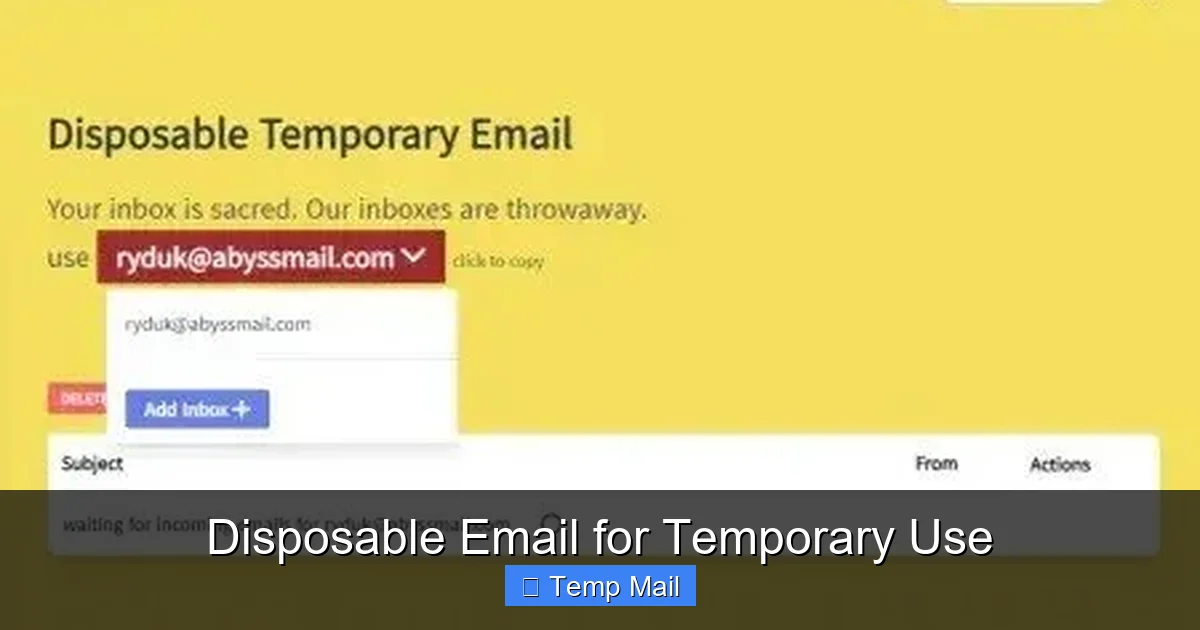
You visit a provider’s website, like Temp-Mail.org, 10MinuteMail.com, or Guerrilla Mail. Immediately, the page generates a completely random email address for you. It will look something like [email protected] or [email protected]. That’s it. That random string of characters is now your active, working email inbox. Beside it, you’ll see a countdown timer—this is your inbox’s lifespan. It could be 10 minutes, an hour, or a full day, depending on the service.
You then copy that address, paste it into the website you’re signing up for, and submit the form. The website sends a verification email or a download link to that disposable address. You switch back to the disposable email provider’s tab, refresh the inbox page, and the email will appear right there. You click the link or download the file, complete your task, and then… you simply close the tab. There is no “delete account” button because there is no account. The address and all its contents are purged from the server when the timer hits zero, leaving no trace. No password recovery, no login history, no data trail linked back to you.
These services operate using catch-all mail servers. When they generate that random address, their server is configured to accept *any* email sent to any address at their domain. Your specific random address is just a label they use to sort incoming mail into a unique, temporary inbox for you. They don’t require a username/password pair because they use the unique inbox URL (often containing a long, random token) as your sole key. Once the session expires or you close the browser, that URL becomes useless, and the data is wiped. It’s a stateless, temporary system built for one purpose: ephemeral communication.
Knowing *when* to use a disposable email is just as important as knowing *how*. Using it for the wrong thing can cause real headaches. Here are the prime scenarios where a temporary inbox shines.

Visual guide about Free Disposable Email for One-time Signups
Image source: images.squarespace-cdn.com
This is the undisputed champion use case. You find a valuable resource—a marketing template, an industry report, a software checklist—and the website demands your email to send it. This is a classic lead generation tactic. They want your email for their mailing list. Using your primary address here is a surefire way to get added to a promotional drip campaign. A disposable email lets you get the download link instantly, save the file, and walk away with zero commitment. The temporary inbox receives the “Here’s your download!” email, you grab the link, and you’re done. The business gets their “lead,” and you get your content spam-free.
Want to test a new SaaS tool, a graphic design app, or a project management platform for 14 or 30 days? Often, the trial sign-up requires an email. If you forget to cancel, or if you decide the tool isn’t for you, that company now has your email. They will email you about “upgrading to Pro,” “we miss you,” and “special offer just for you!” forever. Using a disposable email for the trial gives you the full access period. You can test all features, import your data, and make an informed decision. When the trial ends, the email address dies. No guilt, no follow-up spam, no “how do I unsubscribe?” hassle.
Many coffee shops, airports, or hotel Wi-Fi networks require you to register on a captive portal with an email address to get the password. Is that email going to be used for anything other than network access? Probably not, but it might end up on a marketing list for the venue’s partner brands. Similarly, to post a single comment on a forum or news site that requires registration, a disposable email is perfect. It satisfies the site’s requirement without linking your online persona to that specific forum account, which might have a controversial post history later.
“Enter your email to get a 20% off coupon!” These pop-ups are everywhere. The business is trading a discount for your contact information. Often, the coupon code is displayed immediately on the screen *after* you submit the form. In this case, the email is purely for their future marketing. Use the disposable, grab the code from the confirmation page or email, apply it at checkout, and forget about it. You get the deal, they get a useless email address that will bounce in 30 minutes.
If you’re a developer, a QA tester, or even just a curious user setting up a new app, you might need to test email workflows—password resets, notification triggers, welcome emails. Creating dozens of real email accounts is a pain. Disposable emails let you generate a new, clean inbox for each test case instantly. You can test the flow, verify the content, and move on without cluttering your real inbox or managing test accounts.
The use cases are clear, but the underlying benefits are what make disposable email a fundamental tool for a clean, private digital life.

Visual guide about Free Disposable Email for One-time Signups
Image source: pantika.com
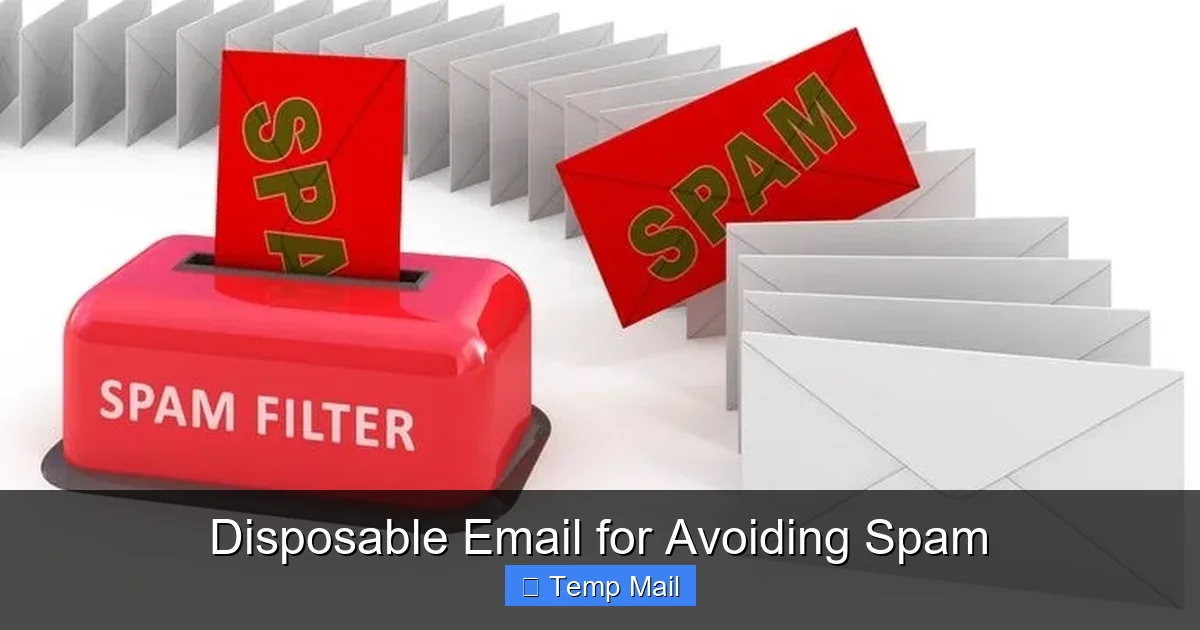
This is the number one benefit, and it’s huge. Your primary email address is your digital home base. It’s linked to your bank, your social media, your Amazon account, your family. Letting it get flooded with promotional emails from a site you visited once is like letting strangers leave flyers on your front porch every day—forever. A disposable email acts as a spam sponge. It absorbs all that unwanted marketing noise from low-stakes interactions. Your primary inbox remains a sanctuary for emails from people you know and services you truly value. The peace of mind from a clean inbox cannot be overstated.
Every email address you give out is a data point. It can be used to build a profile of your interests, your browsing habits, and your location. Data brokers buy and sell these email lists. By using a temporary address for non-essential signups, you practice “data minimization”—you only give out your real information when it’s absolutely necessary (like for your job or critical services). You are actively reducing your digital footprint and making it harder for corporations to create a comprehensive, monetizable profile of “you.” It’s a small but powerful act of digital self-defense.
There is no long-term relationship with a disposable email. You don’t have to worry about remembering a password for it. You don’t have to log in to “manage” it. There’s no “account settings” page. The risk is zero. If a website you use a disposable address for suffers a data breach, your real identity and primary communication channels are not compromised. The leaked data is just a defunct, random email address that leads to an empty inbox. It’s a perfect buffer between your real self and the often-risky, data-hungry corners of the internet.
It takes less than 5 seconds. Click a button, copy the address, paste it, and you’re done. Compare that to the process of opening your email client, creating a new folder for “promotional signups,” filing emails later, or unsubscribing from dozens of lists (which often takes multiple clicks and confirmations). Disposable email is the ultimate “set it and forget it” tool for one-off tasks. It removes all the mental overhead of email management for trivial interactions.
Disposable email is a powerful tool, but it’s not a universal replacement for your primary email. Using it incorrectly can lead to real problems, including being locked out of important accounts.

Visual guide about Free Disposable Email for One-time Signups
Image source: pantika.com
This is the most common and painful mistake. If you use a disposable email to sign up for a service where you *will* need account recovery—like social media, online banking, a cloud storage account, or your main project management tool—you are asking for trouble. When you inevitably forget your password, the “reset link” will be sent to an inbox that no longer exists. You will be permanently locked out. The golden rule: Any service where account recovery is critical must use your permanent, secure, and accessible email address.
Many major platforms—especially social networks like Facebook or Twitter, or professional networks like LinkedIn—actively maintain and update lists of known disposable email domains. Their registration systems will check the domain you enter against these lists and reject it outright. You’ll get an error message like “Please enter a valid email address.” This is a security and anti-spam measure. While frustrating, it’s a signal that the platform is serious about user authenticity. You’ll need your real email for these sites. Smaller blogs, forums, and download sites are far less likely to have these blocks.
The emails and the address itself are temporary. You cannot go back a week later and search for that confirmation email you received. If you need to reference a receipt, a terms of service agreement, or a login detail sent via email later, it will be gone. Disposable email is for consuming information in the moment (click this link, download this file), not for storing it. Always save important attachments or details to your computer or a secure cloud storage immediately upon receipt.
Because they are anonymous, disposable emails are sometimes used for malicious purposes: creating spam accounts, posting abusive comments, or signing up for services to abuse free tiers. This means the IP address of the disposable email service can sometimes get a poor reputation. Rarely, a website you’re trying to sign up for might have security filters that temporarily block all traffic from that service’s IP range, causing a signup failure even if the domain isn’t blocked. It’s an occasional, minor inconvenience that comes with the territory.
Not all temporary mail providers are created equal. While they all share the core function, differences in usability, privacy, and reliability exist.
First, the service should not require you to create an account. The whole point is instant, no-strings-attached access. Second, look for a clear, visible inbox timer so you know exactly how long you have. A responsive inbox that auto-refreshes or has a manual refresh button is essential. Third, consider the domain options. Some services offer multiple domain choices (e.g., @tempmail.com, @tmpmail.org), which can be useful if one domain is blocked on a particular site. Finally, check for a simple, ad-light interface. Some free services are supported by ads, but they shouldn’t be so intrusive that they block your view of the inbox or the incoming email links.
Temp-Mail.org is one of the most popular and reliable. It offers a clean interface, multiple domain choices, a 24-hour timer (extendable), and a browser extension for even quicker access. 10MinuteMail.com is the classic, ultra-simple option. Its name tells you exactly what you get: a 10-minute inbox. It’s brutally simple and effective for very quick tasks. Guerrilla Mail provides a bit more control, allowing you to choose your own inbox address (within their domain) and even set a custom timer. It also offers a “scramble” feature to change your address mid-session. For most users, starting with Temp-Mail or 10MinuteMail will cover 95% of needs.
Steer clear of any disposable email service that asks for your phone number, asks you to solve a CAPTCHA for every new email, or is buried under misleading download buttons and pop-up ads. These are often low-quality, supported by malware or deceptive advertising. Also, avoid services that promise “permanent” disposable emails or have vague privacy policies. The ethos of disposable email is temporary and private; any service that deviates from that is suspect.
Using a disposable email is easy, but using it *well* requires a few mental habits to avoid pitfalls.
Train yourself to associate disposable emails with “impersonal, transactional, or promotional” interactions. Your real email is for “personal, financial, professional, and account recovery” interactions. When a form asks for an email, pause for a second: “What is the nature of this relationship? Will I need to recover access to this account later? Is this a person or entity I trust with my permanent contact?” If the answer leans toward “no” or “probably not,” reach for the disposable address. This mental checklist becomes second nature and protects you from costly mistakes.
Do not assume you can come back to the disposable inbox later. As soon as you receive an email with a file you need—a PDF contract, a software license key, an invoice—download that file to your computer and save it in an organized folder. Better yet, save the link or code in a password manager or a notes app. Treat the disposable inbox as a fleeting mailbox, not a storage unit. The moment the timer expires, that data is gone forever.
Here’s a pro tip: when you sign up for a service with a disposable email, use your password manager (like Bitwarden, 1Password, or Dashlane) to store the login credentials. In the “username” or “notes” field of that entry, paste the disposable email address you used. This creates a permanent record linking the service to the temporary address. Months later, if you try to log in and can’t remember which email you used, your password manager has the answer. It prevents the “Was it my real email or the temp one?” confusion.
If you use a disposable email to sign up for a service and, after a few uses, you realize you genuinely love it and will use it long-term, take the time to update your account settings with your permanent, secure email address. This is especially important for services you might pay for or that contain important personal data. Transition from “temporary test” to “permanent account” status by swapping in your real contact info. This ensures you can recover the account and receive legitimate service notifications.
Yes, using disposable email services is completely legal and safe for the user. They operate within standard email protocols. The safety concern is primarily about the service’s own privacy policy—choose one that doesn’t log your IP or activity. The risk is not to you, but to the websites you use them on, as they can’t build a persistent profile on you.
It varies by provider, but common lifespans are 10 minutes, 1 hour, or 24 hours. Some services allow you to extend the time manually. The inbox and all its messages are permanently deleted the moment the timer expires.
Yes, most disposable email services allow you to receive attachments like PDFs, images, and documents. However, file size limits often apply (typically 10-25MB). You should always download attachments immediately, as they will be lost when the inbox expires.
No. Major platforms like Facebook, Google, Twitter, and LinkedIn actively block known disposable email domains during registration. They require a permanent, verifiable email address to establish account authenticity and for security purposes like password recovery.
You will be unable to reset the password. The reset link will be sent to the disposable inbox, which no longer exists. This is why the cardinal rule is: never use a disposable email for any account where you might need to recover access in the future.
Generally, no. The email address itself is randomly generated and contains no personal information. However, your internet activity is rarely completely anonymous. Your ISP and the websites you visit can see your IP address. If a law enforcement agency with a warrant demanded logs from the disposable email provider, they might see the IP address that accessed the inbox at a specific time, but this is an extreme and rare scenario for typical usage.
অনলাইন নিউজপেপার থিম। এই থিমটি দিয়ে আপনারা বাংলা এবং ইংরেজি নিউজপেপার সাইট তৈরি করতে পারবেন । বার্তা ও বাণিজ্যিক কার্যালয়: ৭১, মতিঝিল, ঢাকা-১০০০। সম্পাদক : মো আসাদুজ্জামান আমানউল্লাহ । মোবাইল : ০১৭০০-০০০০০০ । ইমেইল : [email protected] ।
All rights reserved © 2019 themesdealer.Com