Image for How Temp Mail Protects Your Inbox



Temp mail acts as a protective shield for your real email address. By using a temporary, disposable inbox for online sign-ups and downloads, you prevent spam, phishing attempts, and potential data breaches from ever reaching your primary, personal email. This simple strategy drastically reduces clutter, minimizes security risks, and gives you control over your digital footprint, ensuring your important communications remain safe and your inbox stays clean.
Your email address is more than just a digital mailbox; it’s a master key. It unlocks your social media, banking, cloud storage, and countless other accounts. It’s the primary identifier tied to your online identity. Because of this immense value, your main email address is a constant target for a relentless digital onslaught. Every time you use it to sign up for a free e-book, download a software trial, or enter an online contest, you are handing over that master key to a new entity. Many of these entities have questionable data practices, porous security, or simply inundate you with marketing emails you never wanted.
This leads to the dreaded “inbox bloat.” What was once a streamlined communication tool becomes a chaotic landfill of promotional newsletters, “special offers,” and, worse, malicious phishing emails disguised as legitimate correspondence. The psychological toll is real; sifting through this noise to find important emails from family, your boss, or your bank creates anxiety and wasted time. More critically, each data breach that exposes your primary email is a domino that can tip over into identity theft, as hackers use that email as the starting point to reset passwords or target you with sophisticated scams. Protecting this key is not paranoia; it’s essential digital hygiene. And the simplest, most effective tool for this job is a temporary email service.
At its core, temp mail (short for temporary mail) is a service that provides you with a disposable, throwaway email address for short-term use. Think of it like a burner phone, but for your inbox. These addresses are generated instantly by a website or app and are active for a set period—usually a few hours to a few days—or until you manually delete them. They have their own dedicated inbox you can check right on the provider’s site.

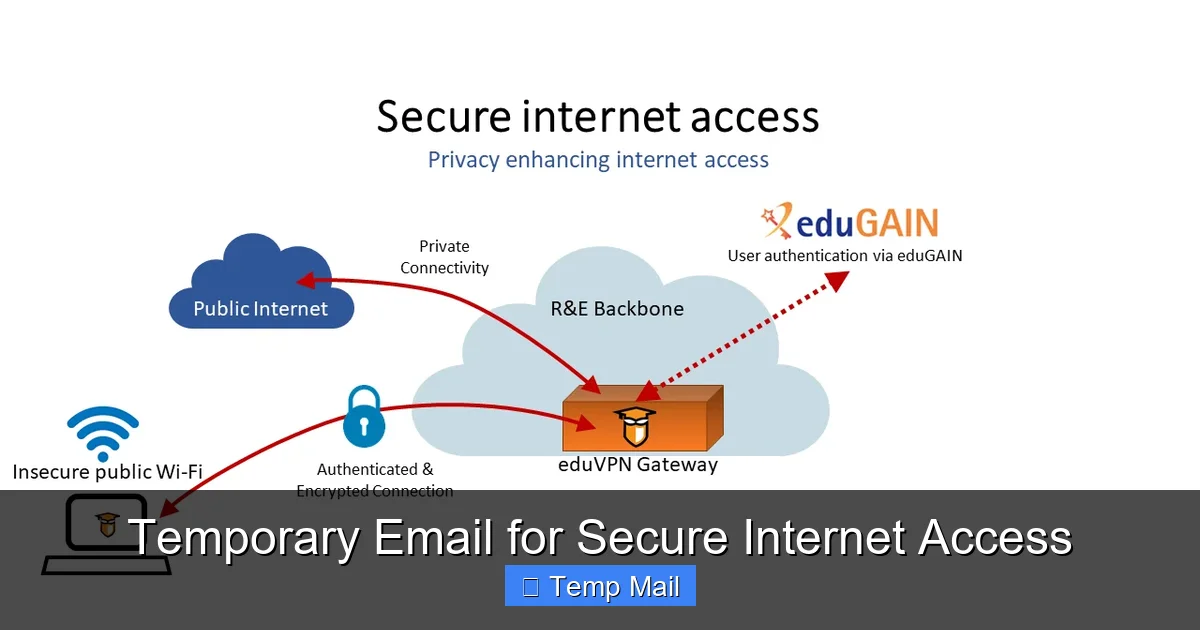
Visual guide about How Temp Mail Protects Your Inbox
Image source: temp-inbox.me
The process is beautifully simple, designed for frictionless protection:
There is no long-term commitment, no recovery process, and no connection back to your true identity. It’s the ultimate “use and forget” tool for the modern web.
Using a temporary email address isn’t about being secretive; it’s about being smart and proactive. The benefits form a multi-layered shield around your primary inbox and personal data.

Visual guide about How Temp Mail Protects Your Inbox
Image source: temp-inbox.me
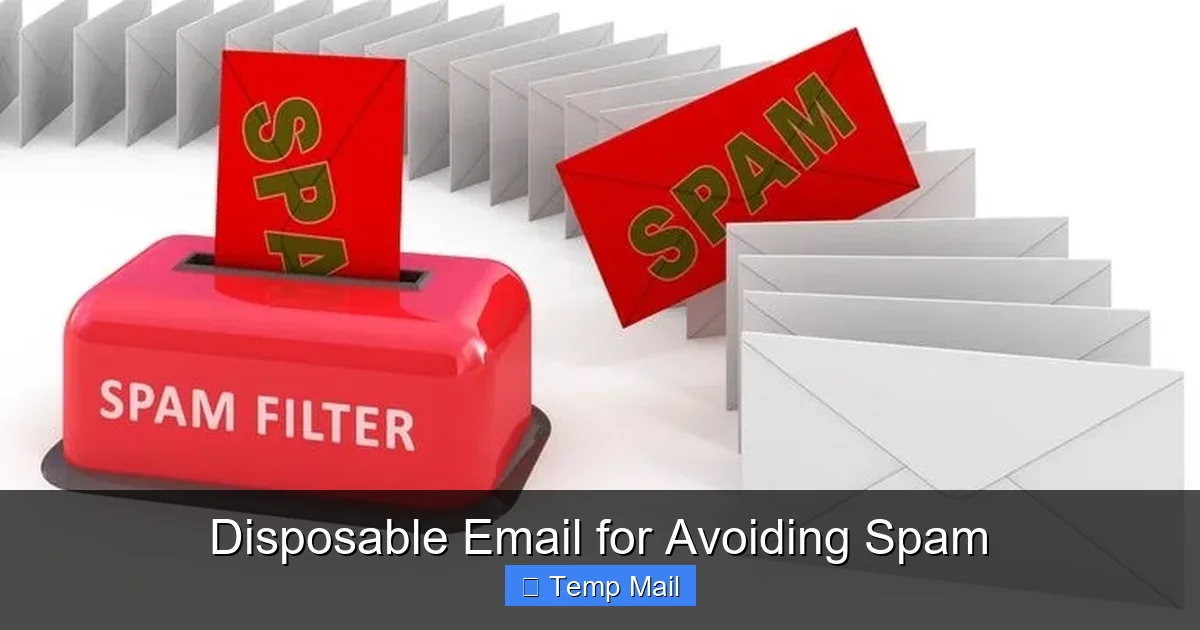
The most immediate and gratifying benefit is the complete eradication of unwanted promotional emails. When you use your temp mail for that “one-time discount” sign-up, the ensuing flood of “20% off your next purchase!” emails is sent to an inbox that will self-destruct. They never touch your primary inbox. You don’t have to meticulously unsubscribe (which often doesn’t work anyway) because the entire source is vaporized. This keeps your important inbox pristine and relevant.
Phishing emails rely on you seeing them in a trusted-looking inbox. By using temp mail for low-stakes accounts, you create a psychological firewall. You know that any email arriving in your primary inbox should be treated with heightened scrutiny because it came from a source you explicitly trusted with your main address. Conversely, you ignore anything in the temp inbox, which is already a known “dumping ground.” This drastically reduces the chance of accidentally clicking a malicious link that could compromise your passwords or financial information.
Data breaches are a matter of “when,” not “if.” When a company you signed up with gets hacked, the stolen database often contains user email addresses. If you used your primary email, that address is now in the hands of cybercriminals, likely sold on the dark web. They’ll use it for spam, targeted phishing, and credential stuffing attacks (trying that email with common passwords on other sites). If you used a temporary email, the hackers get nothing of value. That disposable address is a dead end. Your real identity, your other accounts, and your primary inbox remain insulated from that particular breach. It’s damage control before the breach even happens.
Every company you give your email to builds a profile. They track your engagement, your purchases, and your behavior. Over years, this creates a detailed digital shadow tied directly to you. Temp mail allows you to interact with websites anonymously, preventing them from adding your activities to a permanent, searchable profile linked to your name. It’s a small but significant act of reclaiming privacy, ensuring your browsing habits for a free trial or a contest don’t become a commodity sold to advertisers.
Knowing the theory is great, but seeing the practical applications is what makes the concept stick. Here are common, everyday situations where temp mail is the smartest choice.

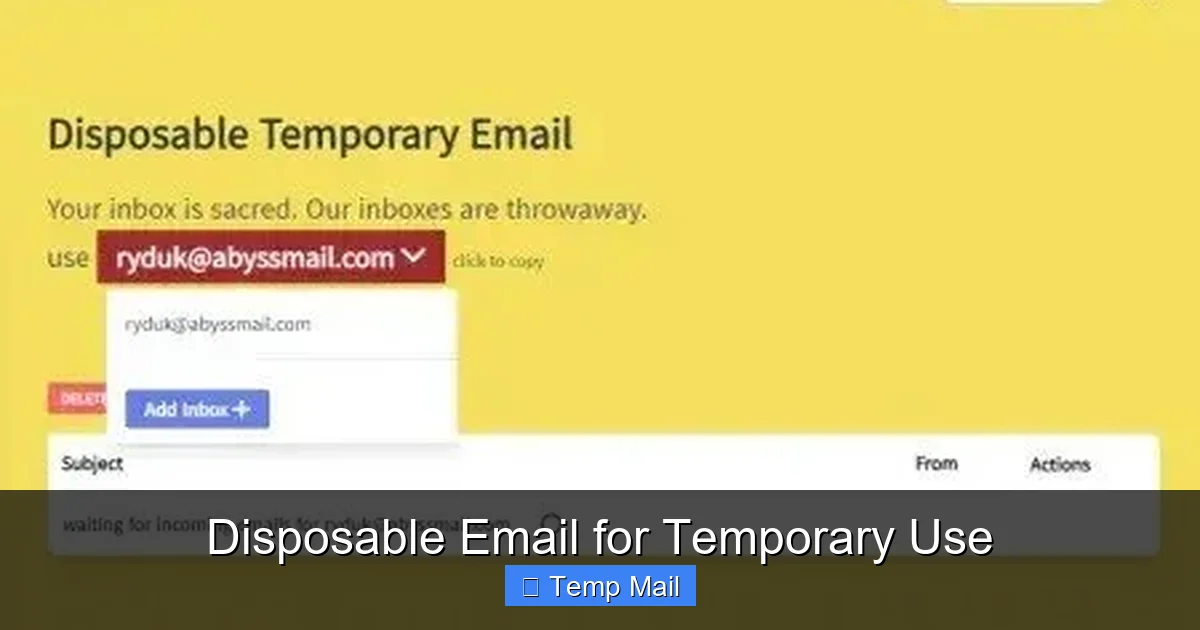
Visual guide about How Temp Mail Protects Your Inbox
Image source: is1-ssl.mzstatic.com
You find a fantastic free ebook, stock photo pack, or software plugin. The site demands an email address to send the download link. This is a classic temp mail moment. You get the file you want, and the site gets an email that will vanish in 24 hours. No follow-up spam about “premium upgrades” cluttering your real inbox.
This includes online petitions, forum sign-ups for a quick question, event registrations you might not attend, or any website you are just “kicking the tires” on. If you don’t plan to have an ongoing relationship with the service, there is zero reason to use your primary email. Use the temp address, get the confirmation if needed, and forget about it.
Many airports, cafes, and hotels require you to register an email to access their Wi-Fi. This is a massive red flag for spam and data sharing. Use a temporary email here. You get online, and the provider’s marketing department gets an address that expires before you even leave the premises.
Are you a developer, marketer, or just a curious user testing how a website handles email verification? Temp mail is your best friend. You can test the sign-up flow, receive the verification code, and complete your test without polluting your real inbox or risking your personal data.
Some travel and e-commerce sites track email addresses to potentially show higher prices to returning users. By using a fresh temp mail for initial searches, you can sometimes avoid this practice. More broadly, it stops a new website from immediately adding you to its retargeting advertising lists, which are often built from your email.
Not all temp mail providers are created equal. While many are fantastic, you need to be aware of a few key factors to choose a reliable and safe service.
For most users, sticking with well-known, established temp mail providers that have been around for years and have a reputation for reliability is the safest bet. A quick search for “best temp mail 2024” will yield several consistent, trustworthy options.
There are some persistent misconceptions about disposable email that prevent people from using this valuable tool. Let’s set the record straight.
Using a temporary email is perfectly legal. You are not forging an address or impersonating anyone; you are simply using a publicly available service to receive email. However, *some individual websites* may include clauses in their Terms of Service that prohibit the use of disposable emails for account creation (especially for financial services, social media, or platforms requiring strong identity verification). For a casual download or forum sign-up, it’s almost never an issue. Use your judgment: for anything involving money, real identity, or long-term commitment, use your primary email. For everything else, temp mail is fair game.
This is a fascinating twist. In one sense, the inbox itself might not have the military-grade encryption of a paid ProtonMail or the two-factor authentication of Gmail. But the *overall security posture* is stronger for your primary identity. The risk isn’t that someone will hack into your temp mail inbox to read a newsletter; the risk is that the *website you gave the email to* gets compromised. With a temp address, that breach is isolated. With your primary email, that breach is a direct hit on your central online identity. The security benefit comes from isolation and containment, not from the temp mail provider’s internal security (though reputable ones are still secure).
No. This is the cardinal rule. Never use a temp mail for any account you need to recover, access long-term, or that contains sensitive personal or financial information. This includes your primary email recovery, bank accounts, main social media profiles, cloud storage, or subscription services you pay for. The inbox will disappear, and you will be permanently locked out. Temp mail is for *consumption*, not for *custodianship*.
To truly benefit from temp mail, it needs to become a reflex. The goal is to make asking “Should I use my real email here?” a subconscious part of your online behavior.
Start by keeping a temp mail tab open in your browser as you go about your daily internet use. When you encounter a form asking for an email, pause. Ask yourself: “Will I need to log back into this site in a month? Is this a service I trust with my identity? Does this feel like a one-time interaction?” If the answer is no, reach for your disposable address. Copy, paste, submit, and forget.
You can also use it for testing the waters with new apps or services. Before committing your primary email and personal data, see how the service operates, what emails they send, and how they handle your information using a temp address. It’s a risk-free trial period for your privacy.
Remember, the goal isn’t to become anonymous everywhere. It’s to be *selectively anonymous*. You use your primary, secure email for your trusted, important digital life—your work, your close contacts, your critical accounts. You use temp mail as a filter and a shield for everything else. This two-tiered strategy is the hallmark of a savvy, security-conscious internet user. It’s a small habit that pays massive dividends in reduced stress, a cleaner inbox, and a fortified digital identity.
Your primary email inbox should be a sanctuary for important communication, not a battleground against spam and a repository for data breach after-effects. The relentless pressure to exchange our most valuable digital identifier for every freebie and quick access has left our inboxes and our privacy in tatters. Temp mail emerges not as a complicated technical solution, but as a elegantly simple, powerful tool for digital self-defense. It works by creating a disposable layer between you and the noisy, risky corners of the web.
By consciously choosing to use a temporary email address for all non-essential, one-time, or low-trust interactions, you perform a quiet act of digital triage. You quarantine the spam, you contain the breach risks, and you sever the unwanted data trails. The result is an inbox that serves you again—clear, manageable, and secure. You spend less time deleting and more time engaging with what matters. You face a reduced threat landscape from phishing and identity theft.
The barrier to entry is zero. There’s no cost, no complex setup, and no learning curve. It is the most accessible and immediate step anyone can take toward better online hygiene. Start today. Open a temp mail tab, generate an address, and use it the next time a website asks for your email for something trivial. Experience the quiet satisfaction of knowing that the spam generated from that interaction will vanish into the ether, leaving your real inbox—and your real life—undisturbed. Protect your master key. Use a temp mail.
Yes, using a temporary email service is completely legal. You are utilizing a publicly available communication tool. However, some specific websites’ terms of service may prohibit disposable emails for account creation, particularly for services involving finance or verified identity. Always use temp mail for its intended purpose: casual, non-critical interactions.
While any online service has some risk, reputable temp mail providers do not require personal information and automatically delete inboxes, limiting the value of any potential hack. The greater security risk is using your *primary* email on a site that gets breached. Temp mail’s main security function is *containment*; if a site using your temp address is hacked, your primary identity remains insulated.
The primary limitation is impermanence. You cannot use it for any account you need to access long-term or recover later. Inboxes expire, and emails are permanently deleted. Also, some advanced websites or services actively block known temp mail domains to prevent abuse. In these cases, you may need to use your primary email or find a less common temp provider.
A separate permanent “spam” email still requires maintenance (logging in, occasionally deleting, managing passwords) and is a permanent record that can still be breached, linking back to you. Temp mail requires zero maintenance, has no password, and self-destructs. It provides true anonymity and zero long-term liability, whereas a secondary permanent account is just a second address tied to your identity.
You won’t be able to. This is why the cardinal rule is to never use temp mail for any important, long-term, or recoverable account (e.g., social media, banking, main cloud storage). If you forgot a password for a low-stakes forum account you made with a temp email, you will simply have to create a new account with a new disposable address.
The best practice is to adopt it as a default for any non-essential interaction: downloads, one-time sign-ups, public Wi-Fi access, and testing services. Only use your primary, secure email for trusted entities like your workplace, bank, main cloud services, and personal contacts. Never use it for anything you might need to log into again after a week. This habit creates a powerful, automatic filter for your digital life.
অনলাইন নিউজপেপার থিম। এই থিমটি দিয়ে আপনারা বাংলা এবং ইংরেজি নিউজপেপার সাইট তৈরি করতে পারবেন । বার্তা ও বাণিজ্যিক কার্যালয়: ৭১, মতিঝিল, ঢাকা-১০০০। সম্পাদক : মো আসাদুজ্জামান আমানউল্লাহ । মোবাইল : ০১৭০০-০০০০০০ । ইমেইল : [email protected] ।
All rights reserved © 2019 themesdealer.Com