Image for How to Create Unlimited Temp Emails



Creating unlimited temp emails is simpler than you think, primarily using specialized platforms, domain strategies, and automation scripts. This approach lets you bypass registration limits, protect your primary inbox, and test services without restrictions. However, it’s crucial to understand the ethical use and security implications to avoid misuse or detection.
Ever hit a wall trying to sign up for a new app, forum, or streaming service because it says “you’ve reached the email limit”? Or maybe you’re just tired of your primary inbox getting flooded with promotional junk after a single download. The solution? Unlimited temp emails. But what does “unlimited” really mean, and how can you actually get them without falling for scams or sketchy websites? Let’s cut through the noise. This isn’t about finding one magical website that hands out infinite emails. It’s about understanding the ecosystem and using the right tools and strategies to generate as many temporary, disposable email addresses as you need, on demand. Think of it less as a single service and more as a personal system for email generation. In this complete guide, we’ll walk through exactly how to build that system, from the simplest no-code methods to advanced automation, all while staying safe and within ethical boundaries.
Before we dive into creation methods, we need a clear picture of what we’re working with. A temporary email, or disposable email, is a service that provides you with a random email address for a short period—usually minutes or hours. Its primary purpose is anonymity and inbox hygiene. You use it to receive a single verification link or download and then abandon it. The address self-destructs, taking all associated spam with it.
Most free temp mail websites work on a simple principle: they have a pool of domains (like @tempmail.demo or @10minutemail.net). When you visit their site, they instantly generate a random inbox address for you. You don’t need a password. You simply watch the inbox page refresh until your expected email arrives. Once you close the tab or the timer runs out, that address is gone forever. This model is inherently limited because each service only has a finite number of domains and inboxes it can manage at once. “Unlimited” from one provider is usually a gimmick tied to a paid plan with a high but still capped number.
The need for scale is real. Developers testing user registration flows need thousands of unique emails. Digital marketers might need accounts for various campaign tools. Privacy-conscious users might want a new temp email for every single new website they interact with. Students signing up for one-off educational resources, gamers creating alt accounts—the use cases are endless. The limitation of one or two addresses per visitor per day on free sites becomes a frustrating bottleneck. This is where we shift from being a passive user of a service to an active builder of a generation system.
The most accessible entry point doesn’t require any technical setup. You simply use multiple, different public temp mail services. “Unlimited” becomes a function of your ability to cycle through providers.

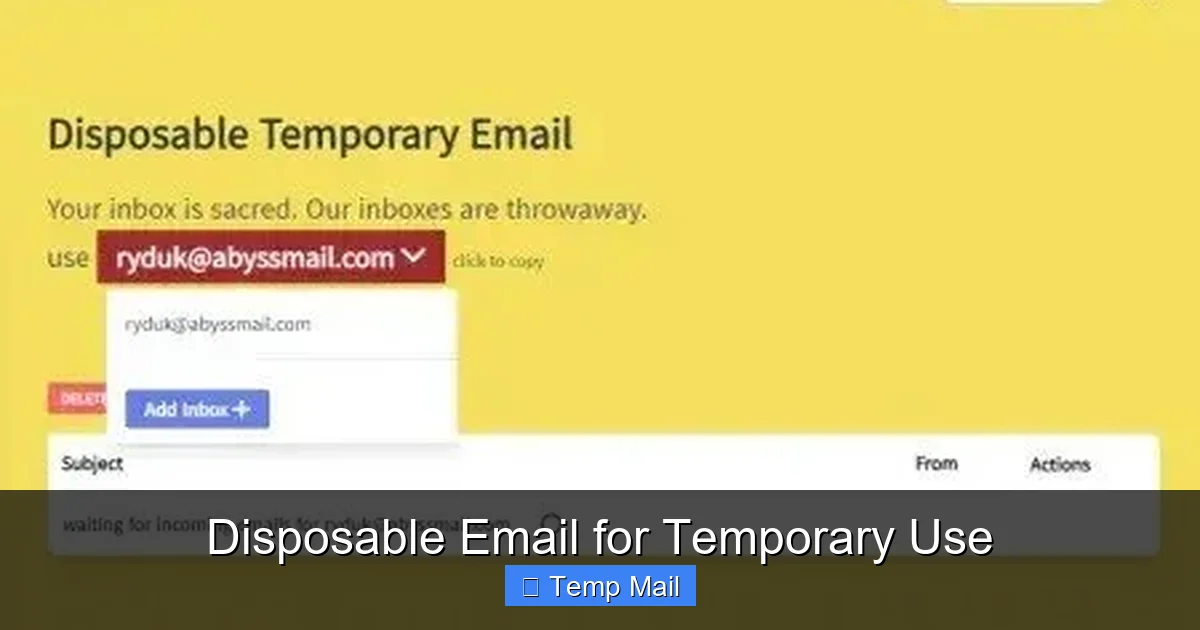
Visual guide about How to Create Unlimited Temp Emails
Image source: image.winudf.com
There are dozens of reputable temp mail services out there: Temp-Mail.org, 10MinuteMail.com, Guerrilla Mail, Mailinator (public inboxes), and many more. Each has its own domain set and generation limits. By maintaining a list of 20-30 active services, you can create a new inbox on a different one each time you need an email. Use a simple spreadsheet to track which service you used for which account. This manual method can yield hundreds of unique emails over time with zero cost or setup.
Several browser extensions (like “Temp Mail” for Chrome/Firefox) integrate directly with popular temp mail APIs. They often add a button to your browser that instantly generates a new address and copies it to your clipboard. Some advanced extensions even allow you to switch between multiple backend services from a single dropdown menu. This streamlines the multi-service rotation strategy dramatically, making it feasible to generate a new address in seconds without even opening a new tab.
This method is easy but has drawbacks. First, many target websites have learned to blacklist the most common temp mail domains. Your email might be rejected outright. Second, you are still subject to each individual service’s rate limits and inbox lifespans. Third, managing hundreds of logins across different services manually is a organizational nightmare. It’s “unlimited” in potential but not in practical, managed utility.
This is the gold standard for generating truly unlimited, professional-looking temporary emails. The concept is simple but powerful: buy a cheap domain and set up a catch-all email forwarding rule.

Visual guide about How to Create Unlimited Temp Emails
Image source: image.winudf.com
A catch-all email address is a rule you set on your domain’s mail server (provided by your domain registrar or a cheap hosting plan) that says: “Any email sent to anything@yourdomain.com should be forwarded to [email protected].” You don’t need to create individual inboxes for “[email protected]” or “[email protected].” They all automatically route to your primary, monitored inbox. You can create an infinite number of unique addresses just by making them up on the spot.
First, purchase a domain. You can get one for under $10/year from Namecheap, Google Domains, or Porkbun. Second, get a basic email hosting plan. Many registrators bundle a few free email accounts. For a catch-all, you often just need to access the “Email Forwarding” or “Catch-All” settings in your control panel (like cPanel). Third, set the catch-all to forward to your personal Gmail, Outlook, or even a dedicated inbox you use only for this purpose. That’s it. Now, whenever a website asks for an email, you type in a unique string like “[email protected]” or “[email protected].” The email will arrive in your main inbox, and you can easily filter or block it later by that unique address.
This method is unlimited, permanent (you control the domain), and uses a legitimate domain that rarely gets blacklisted. You can create memorable, organized addresses (e.g., “[email protected]”). To manage the flood, set up filters in your primary inbox. In Gmail, you can filter all emails sent to “*@yourdomain.com” and automatically label them “Temp” or archive them. For absolute separation, create a new Gmail account solely for receiving these forwarded emails. The cost is minimal, the control is total, and it feels like a superpower.
For developers, researchers, or anyone needing high-volume, automated creation, writing a script is the ultimate solution. This is where “unlimited” becomes a technical reality.

Visual guide about How to Create Unlimited Temp Emails
Image source: blog.yottasrc.com
Some modern temp mail services offer a developer API. Services like Temp-Mail.org or Mail.tm have documented APIs that allow you to programmatically request a new inbox, check for messages, and even delete the inbox via HTTP requests. You can write a simple Python script using the `requests` library to loop and create 100 new addresses in a minute, storing each address and its unique inbox ID in a database or CSV file. This is clean, reliable, and stays within the provider’s terms of service (check their rate limits).
Many popular temp mail sites do not have public APIs. For these, you can use browser automation tools like Selenium. Your script launches a headless browser, navigates to the temp mail site, scrapes the generated email address from the page, copies it, and then uses it on your target site. It can periodically check the inbox page for the verification email and extract the link. This is more complex, fragile (if the site changes its HTML, your script breaks), and may violate the temp mail site’s terms. However, it’s the only way to automate services without an API and can generate addresses at a very high scale.
Why stop at a script? You can build a simple web dashboard (using Flask, Django, or even a no-code tool like Airtable) that lists all your generated temp emails, their source, the associated account/service, and their expiration status. Integrate it with your chosen API or Selenium script. This transforms a chaotic list of emails into a searchable, organized database. You can add notes, set reminders for when an inbox might expire, and track which addresses are still active. This is the pinnacle of a professional, scalable unlimited temp email system.
Generating addresses is only half the battle. Managing them effectively is what makes the system useful and sustainable.
From the very first address, have a system. If using the domain catch-all method, use a strict naming convention: [service]-[purpose]-[date]@yourdomain.com (e.g., “[email protected]”). If using scripts, ensure every generated address is logged with a timestamp and purpose. A simple Google Sheet with columns for “Email Address,” “Used For,” “Date Created,” “Status” can save hours of confusion later.
All temp emails die. Public service inboxes last 10 minutes to 1 hour. Your own domain’s forwarded emails are only as temporary as you make them—you control when to stop forwarding or delete the filter. API-based inboxes from services like Mail.tm last 3 days by default. Know the lifespan of your source. Set calendar reminders if you need an inbox to last longer than usual. Never rely on a temp email for long-term account recovery.
This is the most critical section. Unlimited temp emails are a tool for privacy and testing, not for abuse. Do not use them to:
Using temp emails to circumvent a platform’s rules can lead to IP bans, legal action, and damage your digital reputation. Use them responsibly: for signing up to a free trial you intend to use honestly, for downloading a whitepaper, for testing your own app’s sign-up flow, or for protecting your main email from a newsletter you’re unsure about.
A huge misconception is that temp emails provide security. They provide privacy from spam and anonymity from the recipient, but not security for your data.
Most temp mail services do not use HTTPS by default or have weak encryption. The emails you receive are often stored and transmitted in plain text. Anyone with network access (like on public Wi-Fi) could potentially intercept the email content. Never use a temp email to receive a password reset link for an important account. The link itself could be stolen.
When you use a temp email to sign up for a service, that service has your temp email address on record. If you then use that same account to make a purchase or enter real personal information, you have just linked your real identity to a disposable, anonymous address. The anonymity is only one-way. The service you sign up with knows exactly who you are based on your activity within their platform.
A temp email does not filter out malicious links or attachments. If you receive a phishing attempt in your temp inbox and click the link, you are just as vulnerable as you would be in your primary inbox. The protection is only against future spam from that sender, not against the initial malicious payload.
The landscape is constantly evolving. As websites get smarter at blocking known disposable domains, the methods to generate unlimited temp emails must adapt.
Sign-up forms are starting to use machine learning to detect fake email patterns—not just blacklisted domains, but the syntax of the username (e.g., random strings of letters), the speed of form completion, and IP reputation. This means simply generating a random address at a public service may become less effective. The domain catch-all method will likely remain effective longer because the domain itself is legitimate and the address format can be made to look human.
We’re seeing a merge between temp mail and professional email aliasing. Services like SimpleLogin, AnonAddy, and Firefox Relay (now part of Mozilla) aren’t truly “temporary”—they create permanent aliases that forward to your main inbox. You can delete an alias anytime. This is a more robust, secure, and professional version of the domain catch-all method, often with built-in filtering and browser extension support. They represent the future of managed, unlimited, and user-friendly email disguise.
Learning how to create unlimited temp emails is about reclaiming control over your digital identity. It’s the difference between being forced to use one, vulnerable email address for everything and having an on-demand, disposable identity for every new digital interaction. The simplest path is the multi-service rotation. The most powerful and reliable is owning your domain with a catch-all forwarder. For the technically inclined, automation through APIs and scripts opens the door to true scale. Whichever method you choose, the core principles remain: organize meticulously, understand the lifespans, and—most importantly—use this power ethically. These tools are for building, testing, and protecting, not for breaking rules or harming others. Start with the domain method; it’s the best long-term investment. Then, explore APIs if you need volume. With this knowledge, you’re no longer limited by the inbox you were given. You can now create as many as you need, whenever you need them.
Yes, creating and using temporary email addresses is legal in most jurisdictions. The legality hinges on how you use them. Using them for privacy, testing, or avoiding spam is perfectly acceptable. Using them for fraud, harassment, or to circumvent legal agreements is illegal.
They already block many known domains. However, as long as there is demand for privacy, new methods (like custom domain catch-alls) will emerge. It’s a constant cat-and-mouse game, but using your own reputable domain is very difficult for a website to detect and block automatically.
The easiest method is using a browser extension like “Temp Mail” which manages multiple public services for you. For a more permanent and unlimited solution, buying a cheap domain and setting up a single catch-all forwarder is a one-time, 10-minute setup that works forever.
Absolutely not. Temp emails are for low-stakes, non-critical sign-ups. You will lose access permanently when the inbox expires, locking you out of any account tied to it. Always use a permanent, secure email for financial, primary cloud storage, and main social media accounts.
No legitimate service offers a truly unlimited free plan because hosting email infrastructure has real costs. “Unlimited” in their marketing usually means a very high but finite number (e.g., 500/day). The only way to achieve functional unlimitedism is through methods you control: your own domain or your own automation scripts using free-tier APIs.
The biggest mistake is using a temp email for an account they later need to recover. The second biggest mistake is poor organization, leading to forgetting which temp email was used for which service, making it impossible to log in later. Always log the address and purpose somewhere safe if there’s any chance you’ll need the account again.
অনলাইন নিউজপেপার থিম। এই থিমটি দিয়ে আপনারা বাংলা এবং ইংরেজি নিউজপেপার সাইট তৈরি করতে পারবেন । বার্তা ও বাণিজ্যিক কার্যালয়: ৭১, মতিঝিল, ঢাকা-১০০০। সম্পাদক : মো আসাদুজ্জামান আমানউল্লাহ । মোবাইল : ০১৭০০-০০০০০০ । ইমেইল : [email protected] ।
All rights reserved © 2019 themesdealer.Com