Image for How to Generate a Temp Mail Without Signup



Stop handing out your real email for every online form. You can generate a completely anonymous, disposable email address in seconds without creating an account or providing any personal information. These temporary inboxes are perfect for signing up to websites, downloading files, or verifying accounts while keeping your primary inbox spam-free and your identity private. The process is instant, free, and requires zero commitment.
Let’s be honest. The internet runs on email addresses. Want to read an article? Sign up with your email. Need a PDF? Enter your email. Download a free trial? You guessed it—email required. This constant demand for your primary email address is a one-way ticket to a flood of promotional spam, data breaches, and a cluttered inbox that feels impossible to manage. But what if you could pull a digital cloak of invisibility over your real identity for these mundane tasks?
Enter the world of temporary email, specifically the kind you can generate a temp mail without signup. This isn’t about creating a second “real” account. This is about a throwaway, digital smoke bomb. You create an address, use it for a single purpose, and then it vanishes into the ether without a trace linking back to you. It’s the online equivalent of using a burner phone for a one-time call. In this guide, we’ll walk through exactly how this magic trick works, why it’s essential for modern digital hygiene, and how you can start using it in under 30 seconds.
Before we dive into the “how,” let’s clarify the “what.” A temporary email service provides you with a random, functioning email address and a corresponding inbox. The critical differentiator we’re focusing on is the “no-signup” requirement.

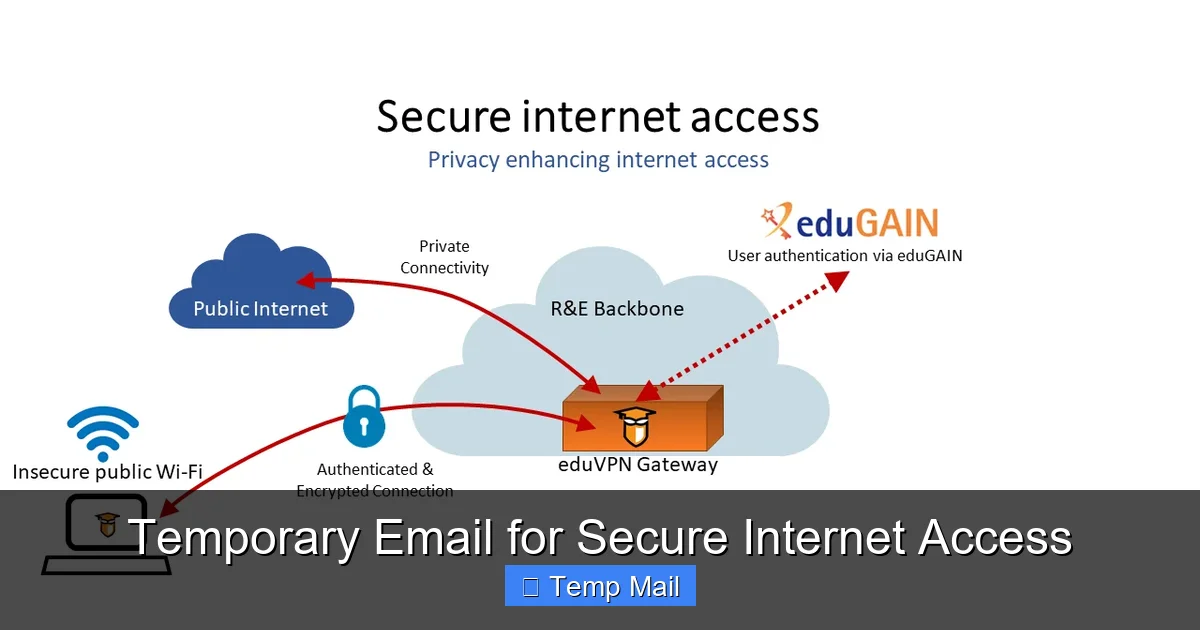
Visual guide about How to Generate a Temp Mail Without Signup
Image source: gkccs.wordpress.com
Traditional email providers (Gmail, Outlook, Yahoo) and even some “disposable” email apps require you to create an account. You provide a username, often a recovery email, and sometimes even a phone number. This creates a data point. The provider knows *you* chose *that* specific temporary address. If they keep logs (and many do), your activity could be traced back to you, defeating the primary purpose of anonymity.
A true generate temp mail without signup service operates on a different principle. You visit their website. They instantly assign you a random inbox like [email protected]. You can read emails sent to that address right there on their webpage. That’s it. There is no “My Account” page. There is no password. There is no profile. The service typically does not—and cannot—store any information linking that specific inbox to your IP address or browser session beyond the immediate, ephemeral visit. Once you close the tab, the connection is severed.
The beauty of a no-signup temp mail lies in its breathtaking simplicity. The entire process is designed to be frictionless and private. Here is the typical, step-by-step workflow that happens in your browser in under 10 seconds.

Visual guide about How to Generate a Temp Mail Without Signup
Image source: s3-alpha.figma.com
You navigate to a provider like Temp-Mail.org, 10MinuteMail.com, or Guerrilla Mail. The moment the page loads, the backend server springs into action.
The service’s system algorithmically generates a unique, random email address and a corresponding, private inbox database entry. This address is yours… for now. It’s displayed prominently on the screen, often with a big “Copy” button next to it. Your browser is now temporarily associated with this specific inbox session. No forms are filled out. No buttons are clicked to “create” it. It simply is.
You copy that address and paste it into whichever website or form is demanding an email. You complete your task—signing up, downloading, verifying.
The website you used sends a verification email or a download link to your temporary address. Because your browser session is still open (or you can return to the same tab), you can simply refresh the temp mail site’s inbox page, and the email will appear there, usually within seconds. You click any links or copy any codes directly from this interface.
This is the core of the system. A countdown timer (e.g., 10 minutes, 1 hour) is running on the service’s backend for your specific inbox. After this time elapses, the database entry for your address and all emails within it are permanently deleted. The address is recycled and will be assigned to a completely different, anonymous user in the future. Your digital footprint is erased.
Knowing how to generate a temp mail without signup is only half the battle. Knowing *when* to use it is what makes it a powerful tool. Here are the most common and effective scenarios.

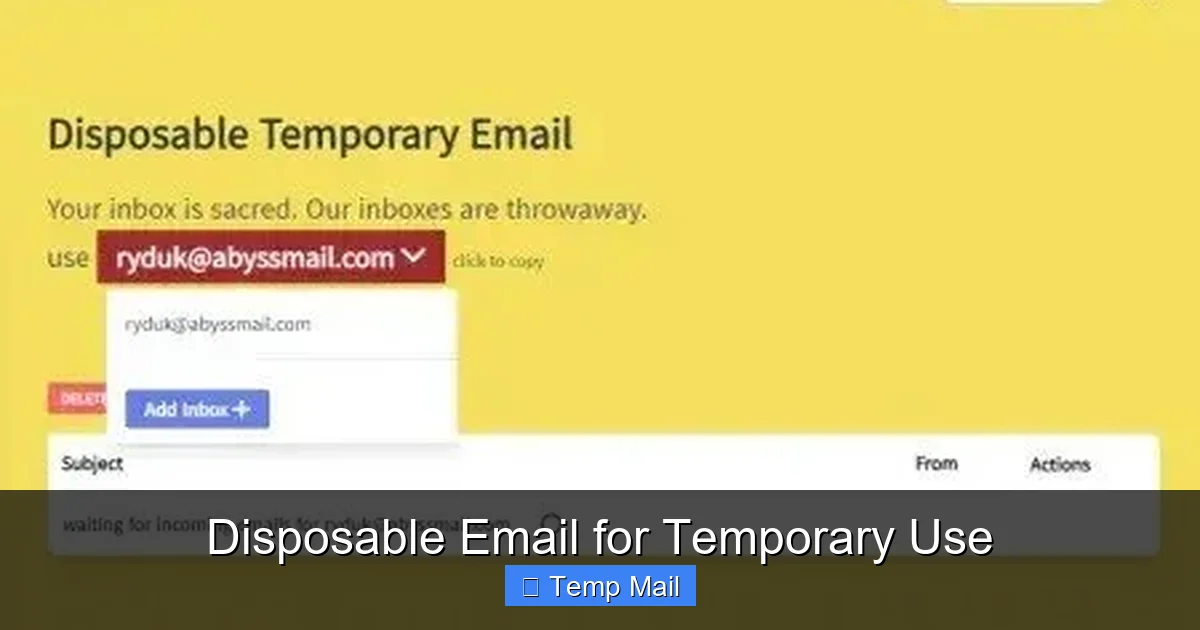
Visual guide about How to Generate a Temp Mail Without Signup
Image source: tmailor.com
How many times have you found a perfect article, whitepaper, or software trial, only to be stopped by a form demanding your email? These leads are valuable to marketers, but they’re a nuisance for you. Use your disposable address. Get the PDF or the download link instantly. The confirmation email goes to your temp inbox, you grab the link, and the content is yours. The marketing company gets a dead-end address that will bounce in an hour. It’s a win-win.
Want to try out a new social media platform, project management tool, or streaming service without committing? Use a temp mail to sign up. Explore the interface, test the features, and decide if it’s for you. No persistent marketing emails will follow you to your primary inbox. No need to remember to delete the account later (though you should for good practice). The account will essentially become inert when the verification email can no longer be accessed.
Many online forums and news sites require email verification to comment, often to reduce trolls. If you want to voice an opinion on a controversial topic without your real email being publicly visible (or harvested by bots), a temporary address is perfect. It satisfies the site’s requirement while insulating your identity.
You’re buying a quirky gift from a small e-commerce site you’ll probably never visit again. They will undoubtedly add your email to their newsletter list. Use the temp mail for the order confirmation and shipping updates. Once the package arrives, the address dies, and so does the potential for a lifetime of “20% off your next order!” emails.
Airports, cafes, and hotels often require you to “register” with an email to access their Wi-Fi. This is a classic data-harvesting tactic. Use a disposable address, get the password or access code via the temporary inbox, browse for an hour, and walk away with no trace.
Enough theory. Let’s get practical. Here is a concrete, foolproof guide to generating and using a temporary email address without any signup, using a popular, reputable service as our example.
For this guide, we’ll use Temp-Mail.org as it’s one of the most straightforward and widely used. Other excellent options include 10MinuteMail.com (for a very short, 10-minute lifespan) and Guerrilla Mail (which offers a bit more control, like choosing a domain). The process is nearly identical across all of them.
1. Navigate to the Website. Open your browser and go to temp-mail.org. Do not search for “temp mail sign up”—go directly to the site.
2. Observe Your New Inbox. The page will load, and within a second, you will see a large, bolded email address at the top of the screen (e.g., [email protected]). Below it, you’ll see a refreshing inbox area that currently says something like “Your temporary email address is ready. Waiting for incoming emails…”
3. Copy the Address. Click the small clipboard icon next to the email address. It will say “Copy.” Your address is now in your clipboard.
4. Use It. Go to the website that requires an email. Paste the copied address into the email field. Proceed with the sign-up, download, or verification. If a verification email is sent, you will likely be redirected to a “check your inbox” page.
5. Check Your Temp Inbox. Do not leave the temp-mail.org tab open. Instead, switch back to the tab with temp-mail.org. You should see the incoming email appear in the inbox list within 10-30 seconds. Click on it to open it.
6. Retrieve What You Need. Inside the email, find the verification link, download button, or access code. Click the link (it will open in a new tab) or copy the code and paste it into the original website. You have now successfully used your disposable address.
7. Done. Walk Away. Close the temp-mail.org tab. You do not need to “delete” anything. The service will automatically purge that address and all its emails after its predetermined lifespan (usually 1 hour for Temp-Mail.org). If you need more time for a slow-arriving email, you can often click a “Refresh” or “Extend” button on the page to add more time to that specific inbox session.
Using a temp mail is simple, but using it safely and effectively requires understanding its boundaries. Treat this section as your user manual.
To integrate generating temp mail without signup seamlessly and safely into your digital routine, follow these pro tips.
You get a receipt at a store, you check it for accuracy, and then you either file it (if it’s important) or toss it. Do the same with your temp mail. Once you’ve clicked the verification link or saved the download file, consider your task complete. Do not bookmark the temp mail page. Do not try to go back to it days later. It will be gone.
For maximum privacy, open a new private/incognito window, go to the temp mail site, do your business, and close that window. This ensures no cookies or session data from your main browsing can be associated with the temporary activity.
If you’re doing several sign-ups in a row, it’s efficient to keep one tab open with your temp mail inbox. Copy the address from that tab and paste it into all your new sign-up forms. Then, just refresh that single tab to see all incoming emails. Just remember to close it when you’re done.
The one exception to “never use for important accounts” is for throwaway accounts on platforms you trust. For example, if you want a separate Pinterest account just for saving recipe ideas you’ll never look at again, using a temp mail for the initial sign-up is fine, as long as you understand you will lose access to that account forever if you ever log out and can’t remember the password. It’s a “use once, abandon” account.
If you’re creating a temporary account with a password you might need later (e.g., for a 30-day trial you want to use fully), immediately save the credentials (username/email and password) to your password manager (like Bitwarden, 1Password, or even your browser’s saved passwords). Label it clearly: “AcmeService – Temp Trial.” This way, you can log in during the trial period using your saved password, even if the recovery email is gone.
The ability to generate a temp mail without signup is more than a cool trick; it’s a fundamental tool for reclaiming your digital privacy and sanity. It puts you back in control, allowing you to say “no” to the constant trade-off of “your email for our content.” By understanding the simple, no-fuss process—visit, copy, use, forget—and respecting the clear security boundaries (receive-only, no recovery), you can effectively neutralize spam, minimize data collection, and navigate the web’s countless email gates with confidence.
Your primary email address is a key to your digital identity. You wouldn’t hand out your house key to every stranger on the street. Don’t do the digital equivalent. Keep your key safe. Use the burner. Close the tab. And enjoy a cleaner, more private inbox.
Yes, for its intended purpose of receiving non-critical emails. Since you never create an account or provide any personal information, the service cannot tie the temporary address to your identity. However, your IP address is logged for the brief session, so it’s not 100% untraceable by a determined adversary with legal power. For everyday spam avoidance, it is perfectly safe and private.
It varies by provider, but most no-signup services automatically delete the inbox and address after 10 minutes to 1 hour from the moment of generation. Some, like 10MinuteMail, are strictly 10 minutes. Others, like Temp-Mail.org, default to 1 hour but often have a “Refresh” button to extend the life of that specific inbox.
No, using a disposable email is not illegal. It’s a legitimate privacy tool. However, using it to fraudulently sign up for services, evade bans, or commit illegal acts is, of course, illegal. The tool itself is neutral; it’s your intent that matters. Always comply with a website’s Terms of Service.
Yes, most modern temp mail services fully support receiving attachments like PDFs, images, and documents. You will typically see a download icon or link next to the attachment file name within the email interface. Always scan downloaded files with antivirus software, as you would with any email attachment.
No. Standard no-signup temporary email services are designed for receiving only. They do not have an outgoing (SMTP) server configured for user access. The “From” address in any email you receive will be the original sender, not your temp address. If you need to send anonymous emails, you must use a different, specialized anonymous email service.
For reliability and simplicity, Temp-Mail.org and Guerrilla Mail are top recommendations. Temp-Mail offers a clean interface and a standard 1-hour lifespan. Guerrilla Mail allows you to choose your inbox domain and offers a slightly longer, manual reset time. For ultra-short needs, 10MinuteMail.com is the classic choice. Always use the provider’s main website directly to avoid phishing copycat sites.
অনলাইন নিউজপেপার থিম। এই থিমটি দিয়ে আপনারা বাংলা এবং ইংরেজি নিউজপেপার সাইট তৈরি করতে পারবেন । বার্তা ও বাণিজ্যিক কার্যালয়: ৭১, মতিঝিল, ঢাকা-১০০০। সম্পাদক : মো আসাদুজ্জামান আমানউল্লাহ । মোবাইল : ০১৭০০-০০০০০০ । ইমেইল : [email protected] ।
All rights reserved © 2019 themesdealer.Com