Image for Quick Temporary Email for Instant Use


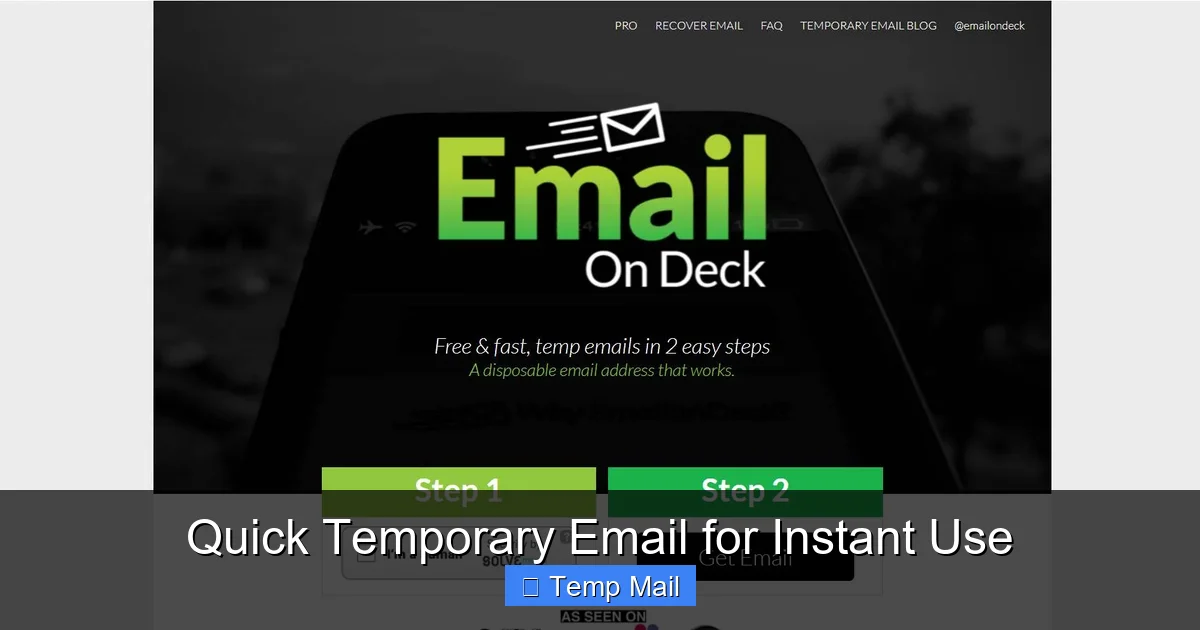
Struggling with email spam and privacy concerns? A quick temporary email is your digital shield. It’s a disposable inbox you can create instantly, without registration, to use for sign-ups, downloads, or any situation where you don’t want to use your primary email. These services provide a real, working email address for a short period, keeping your personal inbox clean and your identity safe from data harvesters and spammers.
Ever felt that sinking feeling? You’re excited to download a free ebook, enter a contest, or sign up for a trial. You click the button, and a form appears. It asks for… your email address. You hesitate. That little box feels like a gateway. A gateway to a flood of promotional newsletters, “special offers,” and who-knows-what-else. You like the freebie, but you don’t want to sell your digital soul for it. What if there was a way to get that instant email, use it, and walk away without a trace? Enter the world of the quick temporary email.
This isn’t some complicated tech hack. It’s a simple, powerful tool for the modern internet. Think of it like a digital burner phone, but for your email. It’s a real, working email address that springs into existence the moment you need it, lives for a short while (often just 10 minutes to a few hours), and then vanishes into the ether. No strings attached. No login. No password to remember. In this guide, we’re diving deep into everything you need to know about using a quick temporary email for instant use. We’ll cover how it works, why it’s a privacy essential, the best ways to use it, and the important rules to follow. By the end, you’ll be equipped to navigate the web with a new layer of confidence and a much cleaner primary inbox.
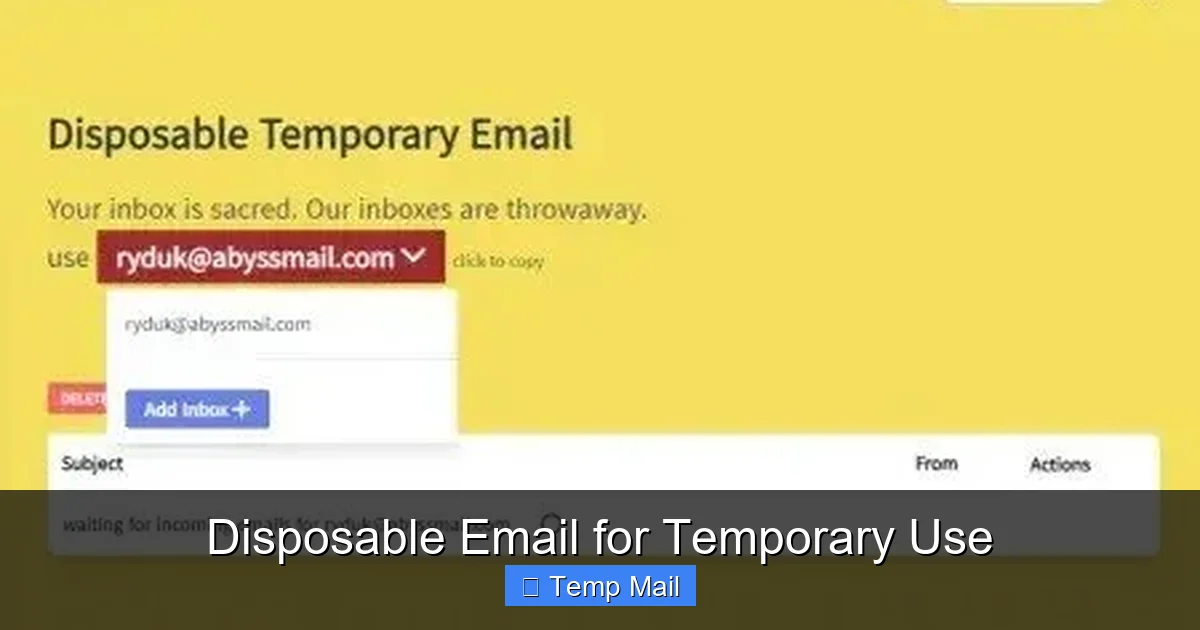
Let’s strip it down to the basics. A quick temporary email service is a website that automatically generates a random email address for you the second you visit. That’s it. No forms to fill out. No “create account” button. You land on the site, and there it is: [email protected]. It’s already active and can receive emails immediately.
These services maintain a pool of pre-generated email addresses. When you visit, the system assigns one to your browser session (often using a cookie or session ID). All emails sent to that address are routed to the service’s servers and displayed in a web-based inbox that only you can see because it’s tied to your current session. There’s no persistent user account. Once you close the browser tab, that association is typically lost. The address may be recycled after a set time or once it’s been used, ensuring it’s temporary by design.
It’s important to understand what these services are not. They provide disposable anonymity, not secure anonymity. The email address itself is random and not linked to your identity when you generate it. However, the service provider can technically see the emails you receive (as they pass through their servers). Therefore, you should never use them for highly sensitive communications. Their power lies in shielding your primary email from the outside world, not in providing end-to-end encryption for secret messages.
Why go through the trouble? The benefits are immediate and impactful for almost anyone who uses the internet. The primary value proposition is control—control over your digital identity and your inbox.

Visual guide about Quick Temporary Email for Instant Use
Image source: video.newsserve.net
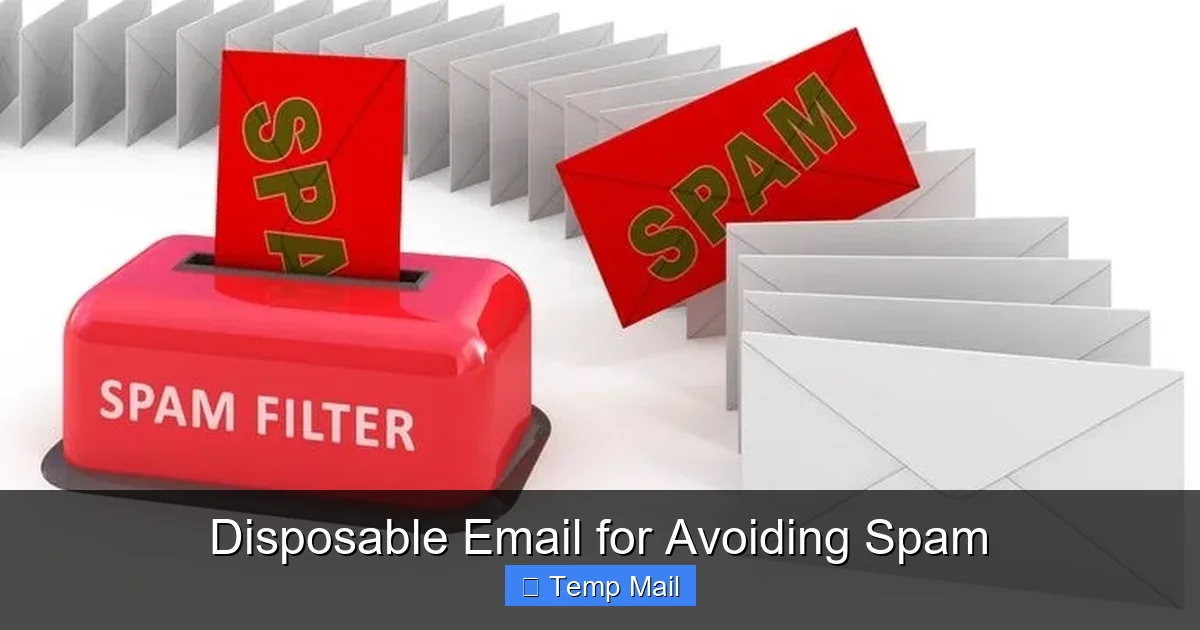
This is the number one reason people seek out a quick temporary email. That free webinar you signed up for? That discount code from a store you’ll never shop at again? That “exclusive” newsletter from a site you visited once? They all start with an email capture. By using a disposable address, you divert that entire marketing pipeline into a black hole that self-destructs. Your primary inbox remains a sanctuary for emails from friends, family, and colleagues—not a promotional wasteland.
Every time you use your real email online, you’re creating a data point. Companies build profiles based on where you use that email. A data broker might associate your primary email with your browsing habits, purchase history, and more. Using a temporary address for low-trust interactions breaks that chain. It prevents data aggregation from those specific activities. In an era of constant data breaches, limiting the places your core email address exists is a fundamental privacy hygiene practice.
“Want to read this article? Enter your email to continue.” “To download this PDF, please verify your email.” These gates are ubiquitous. Instead of grudgingly handing over your main address, a quick temporary email lets you breeze through. You get the content, and the site gets an email that will bounce in a few hours. It’s a fair exchange that reclaims your time and your data.
Signing up for a new app, SaaS tool, or online service? Use a temporary email for the initial trial. This lets you explore the platform without committing your primary contact details. If the service is spammy, you can abandon it without consequence. If you love it, you can always upgrade and provide your real email later. It’s the ultimate try-before-you-buy for your digital identity.
Knowing the theory is good, but seeing it in action is better. Here are the most common and effective scenarios for deploying a quick temporary email.

Visual guide about Quick Temporary Email for Instant Use
Image source: htmlemailtemplates.net
This is the sweet spot. You want the valuable resource, but you have zero interest in the company’s newsletter. Generate a temp address, grab the download link, and close the tab. The follow-up “Welcome!” email lands in a virtual void.
Many online communities require an email to activate an account or post a comment. If it’s a one-time discussion or a forum you’re just curious about, why risk your primary email being added to their list or, worse, compromised in a future breach? Use temp mail, participate, and forget.
See a great deal that requires an email sign-up? It’s almost always to add you to a promotional list. A temporary address lets you snag the coupon code without the lifetime of spammy receipts and offers that follow.
Are you a developer, QA tester, or just a curious power user? Creating multiple test accounts with your real email is messy. Use a series of temporary addresses to create separate, anonymous profiles for testing workflows, features, or account-based limits.
Some airports, hotels, or cafes require an email address to receive the Wi-Fi password or terms of service. A quick temporary email is perfect for this. You get online, and the network operator gets an address that expires before they can send you a single marketing email.
Not all temp mail services are created equal. While the core function is similar, features, privacy policies, and reliability vary. Here’s what to look for.

Visual guide about Quick Temporary Email for Instant Use
Image source: htmlemailtemplates.net
While I cannot endorse specific commercial products, several types of services have established reputations. Look for well-known names in the privacy and security space. Common models include: Ad-Supported Free Services (most common, supported by ads), Freemium Models (free basic use, paid for longer inbox life/custom domains), and Open-Source/Self-Hosted options (for tech-savvy users who want total control). Research current user reviews for the most up-to-date recommendations on reliable providers.
Using a quick temporary email is simple, but it comes with a non-negotiable rule set. Ignoring these can lead to lost accounts, security risks, or simple frustration.
This cannot be stressed enough. Do not use a temporary email for:
If the service is important to your digital life, financial health, or legal standing, use your permanent, secure email. The temporary address is for throwaway interactions.
Almost all temporary email services are receive-only. You cannot compose and send emails from your temporary address. This is by design to prevent abuse (spamming). The address is an inbox, not a full mailbox. If a website requires you to *send* an email to verify something (rare, but it happens), a temp mail address won’t work.
Many popular websites (especially social media giants, major banks, and some email providers) actively maintain blocklists of known temporary email domains. If you try to sign up with @tempmail.com, you might get an error saying the email is invalid. This is a constant battle. Reputable temp mail services frequently rotate their domains to stay ahead of these blocks. If one domain is blocked, try another provider or a different domain from the same service.
While your temporary address is anonymous to the outside world, the service provider itself can see any emails sent to it. A malicious or poorly secured provider could log that activity. This is why choosing a provider with a clear, strong privacy policy is important. They should state they do not log IP addresses (or log them only temporarily for abuse prevention) and that emails are deleted from their servers immediately after the inbox expires. For highly sensitive activities, even a temp mail might not be enough; consider additional privacy tools like a VPN.
Enough theory. Let’s get practical. Here is exactly how to use one of these services in under 60 seconds.
Open your browser and go to the website of a reputable temporary email provider. No installation, no app download needed.
The moment the page loads, you will see a large, bold email address at the top. This is yours for this session. It might look like [email protected]. You can often click a refresh/cycle icon to get a different random address if you don’t like this one.
Click the address or the copy icon next to it. Paste it into the website or form that is asking for your email. Proceed with the sign-up or download.
Return to the temp mail tab. You should see a list of received emails appear automatically. If the email you’re expecting (like a verification code) doesn’t appear within a minute, hit the manual refresh button. Click on the email in the list to open it and view its contents, including any links or codes.
Copy the verification code or click the link. Complete your action on the other website. Once done, you can simply close the browser tab. The email address and all its contents will be deleted automatically by the service after its predefined lifespan (check the site for the countdown timer). No further action is needed on your part.
The quick temporary email is more than a convenience; it’s a fundamental tool for digital self-defense. As data harvesting becomes more sophisticated and spam more pervasive, tools that give users granular control over their personal information will only grow in importance. We may see tighter integration with password managers, browser extensions that auto-fill temp addresses, and even more sophisticated privacy-focused providers offering encrypted temporary mail for a fee.
Ultimately, the power of this tool lies in its simplicity and its philosophy: your email address is a valuable piece of your digital identity. You wouldn’t hand out your house keys to every stranger who asks, so why hand out your primary email? Using a temporary address for low-stakes, high-noise interactions is a smart, proactive habit. It keeps your primary inbox pristine, your privacy tighter, and your online experience less cluttered. The next time you see that email field, pause. Ask yourself: “Is this interaction worth linking to my real identity?” If the answer is no, you now know exactly what to do. Generate a quick temporary email, get what you need, and walk away clean.
It is safe for its intended purpose—protecting your primary email from spam and data collection. However, it is not secure for sensitive communications, as the provider can see the emails you receive. Never use it for banking, password recovery on critical accounts, or sending confidential information.
It varies by provider, but most quick temporary email services offer inboxes that last between 10 minutes and 2 hours. Some premium services offer longer durations, up to 24 hours or several days. Always check the countdown timer on the service’s page.
Almost universally, no. Temporary email services are designed for receiving emails only (like verification codes). They do not support sending outgoing emails to prevent abuse by spammers. The address is a disposable inbox, not a full mailbox.
Yes, creating and using a disposable email address is perfectly legal. It is a standard tool for privacy protection. The legality depends on how you use it. Using it to fraudulently sign up for services, evade bans, or commit cybercrimes is illegal, just as using any other tool for illegal purposes is.
A regular email (from Gmail, Outlook, etc.) is persistent, secure, feature-rich (send/receive, storage, calendars), and tied to your long-term identity. A temporary email is ephemeral, receive-only, has no storage, and is designed for one-time use with complete anonymity from the recipient’s perspective.
If a site rejects the temp mail domain, simply try a different provider. Reputable services often have multiple domains (e.g., @tempmail.com, @tmpmail.org). If all common domains are blocked, the site is likely serious about verifying real users. In that case, you must decide if the service is important enough to use your primary email for.
অনলাইন নিউজপেপার থিম। এই থিমটি দিয়ে আপনারা বাংলা এবং ইংরেজি নিউজপেপার সাইট তৈরি করতে পারবেন । বার্তা ও বাণিজ্যিক কার্যালয়: ৭১, মতিঝিল, ঢাকা-১০০০। সম্পাদক : মো আসাদুজ্জামান আমানউল্লাহ । মোবাইল : ০১৭০০-০০০০০০ । ইমেইল : [email protected] ।
All rights reserved © 2019 themesdealer.Com