Image for Temp Email for Protecting Personal Information


Your primary email address is a golden ticket for spammers and data harvesters. A temporary email service provides a disposable, anonymous address you can use for low-trust sign-ups, downloads, and forms, keeping your real inbox and identity safe. It’s a simple, powerful tool for compartmentalizing your digital life and preventing your personal information from being sold or exploited. By using a temp email for non-essential interactions, you create a vital barrier against spam, phishing, and data breaches.
Let’s have a real talk about your email address. That string of characters—[email protected]—is more than just a digital mailbox. It’s your universal username, your account recovery key, and, increasingly, a primary target for data brokers and cybercriminals. Every time you sign up for a new app, download a PDF, or enter a contest from a sketchy website, you’re handing over a piece of your digital identity. What if you could hand over a fake one instead? Enter the humble, powerful temp email.
Think of a temp email as a digital alias, a disposable identity you can use and discard. It’s the online equivalent of using a prepaid, no-ID phone for a single call. In a world of rampant data harvesting and daily mega-breaches, using a temporary email address is one of the simplest, most effective steps you can take to protect your personal information. It’s not about hiding anything nefarious; it’s about smart data hygiene. This guide will walk you through exactly how temp emails work, why they’re a privacy essential, and how to use them like a pro.
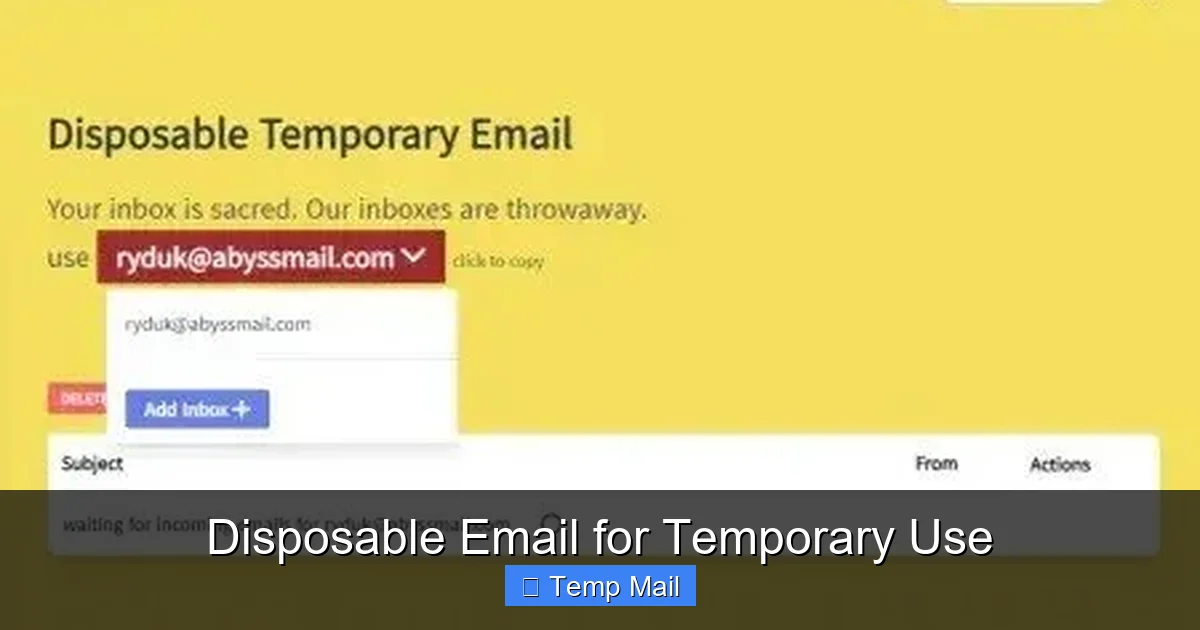
At its core, a temporary email (also called disposable or throwaway email) is a service that generates a random, functional email address for a short, predetermined period. You don’t create an account. You don’t set a password. You simply visit a website like Temp-Mail.org, Guerrilla Mail, or 10MinuteMail, and a unique address is assigned to your browser session instantly.
These addresses look like gibberish for a reason: [email protected]. The randomness ensures two things: uniqueness and complete detachment from your real identity. There’s no “john.doe” here. The “inbox” for this address is displayed right on the website’s interface, often with a live-updating list of received messages. The entire address and its contents vanish after a set time—usually 10 minutes to 24 hours—or when you close the browser tab, whichever comes first.
Your Gmail, Outlook, or iCloud account is a persistent, secure, and feature-rich identity tied to your name, phone number, and recovery options. It’s built for longevity and communication with people you know and trust. A temp email is the opposite: it’s ephemeral, anonymous by design, and built for one-way communication with systems, not people. Its sole purpose is to be a receptacle for verification links and marketing spam, which you will simply ignore and let expire.
The magic is in the simplicity. There’s no complex encryption or anonymity network (like Tor) typically involved. The protection comes from architectural detachment. Here’s the step-by-step flow:
Visual guide about Temp Email for Protecting Personal Information
Image source: brad9884cyberbulling.weebly.com
Reputable temp email services operate on a simple principle: they do not require authentication to access an inbox because the inbox is tied to the session, not a user. This means anyone who knows the random address could, in theory, view the inbox if they accessed the site during the active window. However, the address is so random and short-lived that the risk of targeted hijacking is minimal for typical use. The service’s own logs are typically cleared quickly, aligning with their “no data retention” privacy policies.
Using a disposable address isn’t just a trick; it’s a proactive defense strategy. The benefits cascade from that single act of not giving out your real email.
Visual guide about Temp Email for Protecting Personal Information
Image source: thumbs.dreamstime.com
This is the most immediate and satisfying benefit. That “weekly newsletter” you accidentally signed up for? The “exclusive offer” from a store you bought from once? The “important security alert” from a site you barely remember? They all go to the temp address. Your primary inbox remains a clean, focused space for emails from family, friends, and essential services. You stop being a target for promotional blasts the moment you use a burner.
When a company you’ve given your email to suffers a breach, your address ends up on a dark web list. Hackers and spammers buy these lists by the million. If you used a temp email for that company, the breached data is useless. There’s no link to your real identity, your other accounts, or your financial information. You’ve successfully compartmentalized the breach, containing the damage to a disposable channel that no longer exists.
Phishing emails rely on appearing to come from a legitimate source you trust. But if the phishing email is sent to an address you only used for a random forum, you’re immediately suspicious. You know no legitimate service you care about would email that burner address. This cognitive break gives you a moment to think, “Why is this email here?” and avoid clicking malicious links that could compromise your real accounts.
Want to check out a controversial forum, test a new app’s sign-up flow without commitment, or download a file from a source you don’t fully trust? A temp email lets you do this without leaving a trail back to your name. It’s a tool for informed exploration, allowing you to evaluate services or content without sacrificing your privacy or being added to a spam list.
Knowing the theory is good. Knowing exactly when to use it is better. Here are the perfect scenarios for a disposable address.
Visual guide about Temp Email for Protecting Personal Information
Image source: images.ctfassets.net
You see a great ebook, a whitepaper, a template, or a software trial that requires an email address. This is the #1 use case. You want the file, not the relationship. Use the temp email, get the download link, and move on. The company gets a “lead,” you get your content, and your real inbox is none the wiser.
Many forums require registration to post or view content. If the forum isn’t a core part of your professional or personal life, use a burner. This prevents that forum (and its potentially poor security or data-sharing practices) from having any connection to your identity.
Signing up for a 14-day SaaS trial or a freemium app? Often, these require an email for access. Use a temp email. If you love the service and decide to commit, you can always provide your real email later for a paid plan. This avoids being stuck on endless “upgrade” reminder emails if you forget to cancel.
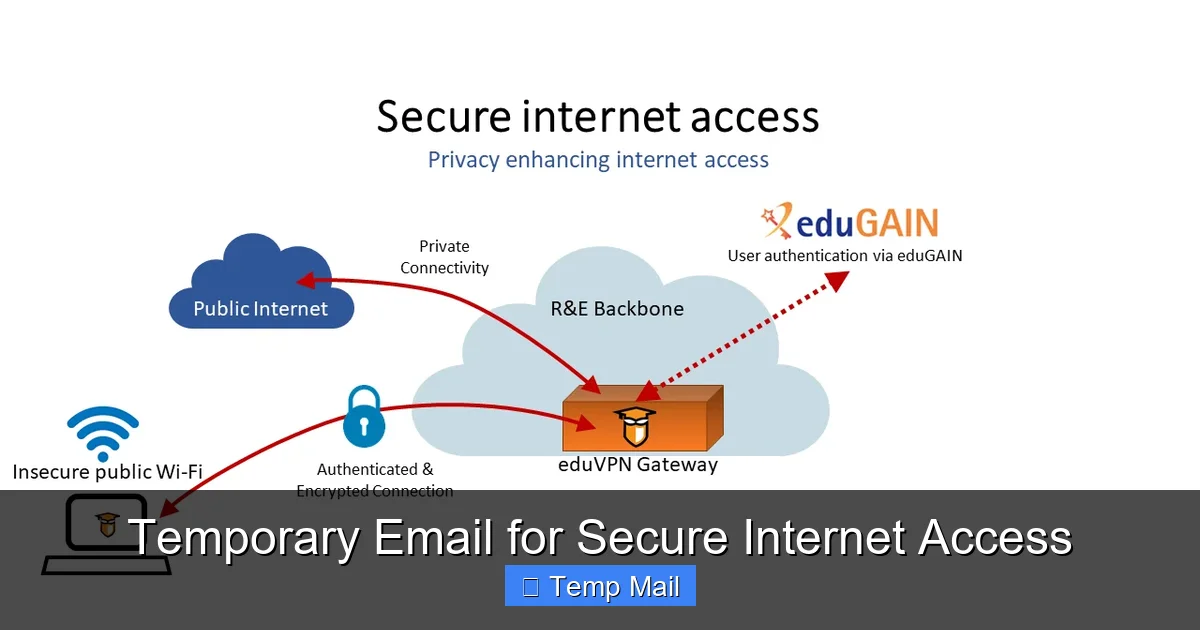
At an airport, hotel, or library, you might need an email to get Wi-Fi access or print a boarding pass. Using your primary email on a public computer is a security risk. A temp email session on the browser is perfect—it gets you the connection code and then disappears without a trace on that machine.
When shopping on a new or lesser-known e-commerce site, use a temp email for the account and order confirmations. If that site gets greedy and sells your data, the spam goes to the burner. You can even create a new temp email for each new store to perfectly track who is leaking your information.
Temp emails are powerful, but they are not a magic privacy shield. Understanding their limits is crucial for using them safely and effectively.
This is the cardinal rule. Never, ever use a temp email for:
If you forget your password to an account tied to a temp email, you are permanently locked out. There is no “forgot password” because the address no longer exists. You will lose access forever.
Your temp inbox is a transient message board. Once it’s gone, it’s gone. You cannot search for an old receipt from three months ago because the address has been recycled. They are for immediate, present-tense use only.
Because they are anonymous, temp email domains are frequently used for malicious sign-ups, spam, and fraud. As a result, many legitimate websites and services actively block entire domains like @mailinator.com or @guerrillamail.com from registration. You might find the service you’re trying to use simply won’t accept a disposable address. This is a deliberate trade-off those services make to protect themselves.
While the address isn’t linked to your name, the temp mail provider can see the IP address of the device accessing the inbox and the content of the emails. Reputable services have clear privacy policies stating they do not log or sell this data, but you are ultimately placing trust in that provider. For highly sensitive activities, a more robust tool like a VPN with a secure email service might be needed.
Not all disposable email services are created equal. When selecting one, consider these factors:
How long does the address last? 10 minutes? 1 hour? 1 day? Choose based on your need. For a quick download link, 10 minutes is fine. For a multi-step verification process that might take an hour, look for a 1-hour or 24-hour service. Some services allow you to extend the time manually.
Some services offer multiple domain options (e.g., you can get @tempmail.demo or @disposabl.email). If one domain is blocked by a website you’re trying to access, you can try another. Services with a large pool of domains are often more resilient against being completely blacklisted.
The best services require zero sign-up. You just show up and get an address. Read their privacy policy. It should explicitly state they do not collect personal data, do not monitor or store your emails beyond the session, and purge all data regularly.
Is the inbox easy to read? Do links work? Do they offer features like a “reply” function (rare, but useful for brief, anonymous replies)? A clean, ad-light interface is preferable, as some free services bombard you with ads that can be misleading or malicious themselves.
Well-established, generally reputable options include:
Always have a backup service in mind if your first choice is blocked.
To integrate temp emails seamlessly and safely into your digital routine, follow these pro tips:
You wouldn’t give your house key to a stranger for a minute. Don’t give your real email to an untrusted website. The temp email is your spare key—use it for the delivery person (the verification email) and then forget about it. Never use it for the front door (your essential accounts).
This cannot be stressed enough. If a service only offers email recovery and you use a temp address, you have permanently forfeited that account. If you must use a service long-term and it requires an email, use your real one from the start, or use a dedicated, secondary “spam” email address that you check occasionally, but not your primary.
For extra tracking, don’t reuse the same temp address for everything. Use one for downloads, another for forum sign-ups, another for shopping. If you start getting spam, you’ll know exactly which “category” of site leaked or sold the address.
Since the session is often tied to your browser, closing the tab and clearing your browser cache/cookies after you’re done with a temp email session adds an extra layer of cleanliness. On a public computer, this is absolutely mandatory.
Your password manager (like Bitwarden, 1Password, or KeePass) is for your real, important accounts. Keep that ecosystem pristine. The temp email is for everything outside that ecosystem. This mental and practical separation is the core of the strategy.
The internet doesn’t have to be a place where you constantly hand over the keys to your digital kingdom. Your email address is a valuable piece of personal data, and treating it like one is the first step toward reclaiming your privacy. A temp email is not a tool for the paranoid; it’s a tool for the pragmatic. It’s the digital equivalent of using a pseudonym at a coffee shop or a PO box for online shopping—a simple, cost-free boundary that keeps your real life separate from the noise, scams, and data-harvesting of the wider web.
Start small. Next time you’re asked for an email just to read an article or get a PDF, reach for a disposable address. Feel the satisfaction of watching the spam land in a virtual trash can instead of your primary inbox. This small habit builds into a powerful practice of data hygiene. In the ongoing battle for our personal information, the temp email is a lightweight, effective, and immediately actionable piece of armor. Use it wisely, and your future, less-spammed self will be grateful.
Yes, using a temporary email is completely legal. It is safe for its intended purpose of receiving verification emails and one-time links. However, it is not safe for important accounts, as you will lose access when the address expires. Also, never use it for illegal activities, as the provider may have logs.
Not directly through the address itself, as it contains no personal information. However, the temp email service can see the IP address used to access the inbox. For typical, non-criminal use, this connection is temporary and purged quickly by reputable services, offering strong practical anonymity.
It varies by service. Common lifespans are 10 minutes (for instant verifications), 1 hour, 24 hours, or until you close the browser session. Some services allow you to manually extend the time. Always check the specific timer on the service you are using.
You cannot. Account recovery relies on accessing the email address on file. Since the address is gone, the account is permanently inaccessible. This is why you must never use a temp email for any service where you might need to reset a password or recover the account in the future.
Websites block disposable email domains to reduce fraud, spam account creation, and abuse. Since temp emails are anonymous and temporary, they are often used to create malicious accounts, post spam, or bypass bans. Blocking them is a defensive measure to maintain platform integrity.
You can use a temp email for the initial account creation and order confirmations with a new, untrusted store. However, for order shipping updates, you will need to provide a real, permanent email address to the retailer. Using a temp email for the account itself can help contain marketing spam from that retailer.
অনলাইন নিউজপেপার থিম। এই থিমটি দিয়ে আপনারা বাংলা এবং ইংরেজি নিউজপেপার সাইট তৈরি করতে পারবেন । বার্তা ও বাণিজ্যিক কার্যালয়: ৭১, মতিঝিল, ঢাকা-১০০০। সম্পাদক : মো আসাদুজ্জামান আমানউল্লাহ । মোবাইল : ০১৭০০-০০০০০০ । ইমেইল : [email protected] ।
All rights reserved © 2019 themesdealer.Com