Image for Temp Mail for Developers and Testers



Temp mail services are a secret weapon for developers and QA testers, providing disposable email addresses that streamline user onboarding flows, automate registration tests, and keep primary inboxes pristine. By integrating these tools into your development lifecycle, you can simulate real user scenarios, validate email-dependent features, and protect your team from spam and potential security threats, all without cluttering personal or corporate accounts.
Let’s be honest. How many times have you, as a developer or quality assurance (QA) engineer, needed to test a “Sign Up” or “Forgot Password” flow? You fill out the form, hit submit, and then… you wait. You switch tabs to your primary inbox, scroll past a dozen newsletters, and finally find the verification email. You click the link, complete the flow, and then? That test email sits in your inbox forever, a tiny monument to a task you’ve already completed. Now multiply that by dozens of features, multiple environments (staging, QA, UAT), and a team of testers. Your inbox becomes a digital hoarder’s paradise.
This is where temporary email, or “temp mail,” enters the picture. It’s not just for avoiding spam on random websites; it’s a fundamental tool for building and testing modern applications. A temp mail service provides you with a random, disposable email address and a corresponding inbox that lasts for a short, defined period—often 10 minutes to a few hours. For a developer or tester, this means you can generate a new, pristine email for every single test case, execute your automated or manual checks, and never think about it again. No clutter, no security risk to your main accounts, and no manual inbox-switching.
In this guide, we’ll move beyond the basics. We’ll explore how to strategically implement temp mail into your development and testing workflows, from simple manual checks to complex, fully automated CI/CD pipelines. We’ll cover the technical integration, evaluate service providers, discuss security implications, and share practical examples you can implement today.
The value of a temporary email address is its disposability and isolation. Every use case benefits from these two core properties. Let’s break down the most common and impactful scenarios.

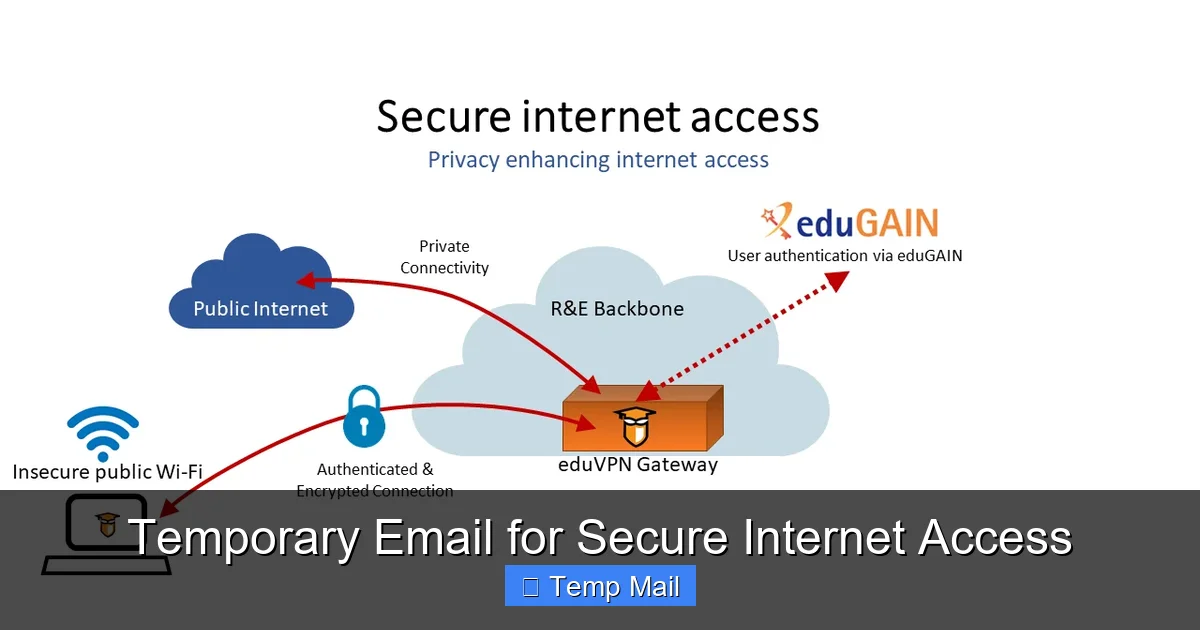
Visual guide about Temp Mail for Developers and Testers
Image source: shakebugs.com
This is the bread and butter of temp mail for testers. Any application that requires email verification during sign-up is a candidate. The test flow typically looks like this:
This entire sequence can be fully automated. Without a disposable inbox, you’d need a script that could log into a real, persistent email account (like Gmail) to find the email—a major security and maintenance headache. Temp mail APIs are built for this exact, stateless interaction.
Similar to registration, features that send sensitive links to a user’s email must be tested. Using a temp mail address allows you to:
This is crucial for security testing. You can ensure tokens are single-use and expire correctly because you control the entire lifecycle of the disposable inbox.
Does your app send transactional emails (order confirmations, alerts) or marketing newsletters? You can use temp mail to test:
This is a more advanced use. If you’re stress-testing your email-sending service (like SendGrid, SES, or your own SMTP server), you need thousands of valid recipient addresses. Using real user emails is unethical and illegal. Temp mail services with generous API limits allow you to generate a large pool of disposable addresses to serve as recipients. You can then verify delivery rates, latency, and handling of high volume without harming real users or violating anti-spam laws.
Many SaaS platforms (like Slack, GitHub, Google Workspace) use email for OAuth consent screens or team invitations. When testing an integration that involves sending an invite to an email, a temp mail address lets you accept the invitation and verify the integration works end-to-end, all within a throwaway account.
Not all temp mail services are created equal. For casual, one-off use, any browser-based service might suffice. For professional development and testing, you need a provider built for programmatic access. Here’s what to evaluate.

Visual guide about Temp Mail for Developers and Testers
Image source: tempmailmaster.io
This is non-negotiable. The service must offer a well-documented REST API or a client library (Node.js, Python, Java, etc.). Key API endpoints you’ll need:
Look for clear examples, authentication methods (API key, bearer token), and rate limit specifications in the docs.
A test that waits 30 seconds for an email that never arrives is a flaky test. Your provider must have high inbox uptime and fast email delivery (usually <5 seconds). Some services poll external MX servers, which can be slow. Providers that run their own mail servers for temp mail domains typically offer better performance. Read community forums and reviews from other developers to gauge real-world reliability.
Some applications block known temp mail domains. Using a service that offers multiple domains (e.g., @mail.tm, @temp-mail.org, @guerrillamail.com) increases your chances of bypassing these blocks. For enterprise testing, some premium services allow you to use your own custom domain (e.g., [email protected]) which can be whitelisted in your application’s test environments, making the test emails appear more legitimate.
The service should use HTTPS for all API calls. Understand their data retention policy. Emails should be deleted from their servers promptly after the inbox expires. A reputable provider will not mine your test data for advertising. For sensitive internal application testing, a self-hosted temp mail solution (like MailHog or MailCatcher) is the most secure option, as it runs entirely within your infrastructure.
Pricing models vary: free tiers with limits, pay-as-you-go per email, or monthly subscriptions. Calculate your needs. A small team doing manual testing might thrive on a free tier. An automated CI pipeline running hundreds of tests daily will need a paid plan with high API call limits. Always check the “emails per day” and “API requests per minute” limits.
Let’s get practical. Here’s how to integrate temp mail into your workflow at different levels of sophistication.

Visual guide about Temp Mail for Developers and Testers
Image source: cms.juhedata.cloud
Even without coding, a tester can benefit. Bookmark a reliable temp mail website (like temp-mail.org or 10minutemail.com). When testing a sign-up flow:
This eliminates logging into a real account and keeps your primary email clean. It’s simple but effective for exploratory testing.
This is where automation begins. We’ll use a pseudo-code example that can be adapted to any language. We’ll assume a service with endpoints at `api.tempmail.com`.
Example Python Script Snippet:
import requests
import time

# 1. Initialize & Get a New Email
api_key = "YOUR_API_KEY"
headers = {"Authorization": f"Bearer {api_key}"}
create_resp = requests.post("https://api.tempmail.com/generate", headers=headers)
email_address = create_resp.json()["email"]
inbox_id = create_resp.json()["inbox_id"]

print(f"Test Email: {email_address}")

# 2. Use this email in your application test (e.g., via Selenium)
# driver.find_element(...).send_keys(email_address)
# driver.find_element(...).click() # Submit form

# 3. Poll for the Verification Email
max_wait = 30  # seconds
start_time = time.time()
email_received = False

while time.time() - start_time < max_wait:
    messages = requests.get(f"https://api.tempmail.com/inbox/{inbox_id}", headers=headers).json()
    for msg in messages:
        if "verification" in msg["subject"].lower():
            # 4. Extract Link & Complete Flow
            verification_link = extract_link_from_html(msg["body"])  # You need a parsing function
            requests.get(verification_link)  # Or use Selenium to navigate
            email_received = True
            break
    if email_received:
        break
    time.sleep(2)

if not email_received:
    raise Exception("Verification email not received within timeout.")
This script shows the core loop: generate, use, poll, act. The key is robust polling with a timeout and a way to parse the email body (using libraries like BeautifulSoup) to find the unique link.
In a CI environment (Jenkins, GitLab CI, GitHub Actions), you need stateless, reliable scripts. The principle is the same as Level 2, but with added considerations:
Example GitHub Actions Workflow Step:
- name: Generate Temp Email
  id: email
  run: |
    RESPONSE=$(curl -s -X POST "https://api.tempmail.com/generate" \
      -H "Authorization: Bearer ${{ secrets.TEMP_MAIL_API_KEY }}")
    echo "email=$(echo $RESPONSE | jq -r .email)" >> $GITHUB_OUTPUT
    echo "inbox_id=$(echo $RESPONSE | jq -r .inbox_id)" >> $GITHUB_OUTPUT
- name: Run E2E Tests
  run: npm run test:e2e -- --test-email ${{ steps.email.outputs.email }}
  env:
    TEST_EMAIL: ${{ steps.email.outputs.email }}
While temp mail is a powerful tool, it’s not a get-out-of-jail-free card for irresponsible behavior. There are clear lines you must not cross.
The golden rule: only use temp mail to test applications and services that you own, manage, or have explicit, written permission to test. Using a temp mail address to sign up for a competitor’s service, a public forum, or any platform where you are not a legitimate user is:
If you’re running a public-facing staging or QA environment, be aware that bots and malicious actors might use public temp mail services to create spam accounts. You can implement countermeasures:
Never use a real person’s email address in automated tests. Always use generated or temp mail addresses. Furthermore, ensure your test data generation scripts create fake names, addresses, and phone numbers that are clearly not real (e.g., “Test User”, “123 Fake St”). This prevents accidental data leakage if test logs are exposed and respects user privacy.
Once you have the basics down, you can encounter more complex scenarios. Here’s how to navigate them.
Some tests involve attachments (e.g., uploading a PDF and receiving it via email) or complex HTML emails. Your temp mail provider’s API must return the full MIME structure or at least the HTML body and a way to access attachments (often as base64 strings or separate download URLs). Test your provider’s ability to handle these. For HTML parsing, use a robust library (like lxml in Python or jsdom in Node.js) to reliably extract links, as they can be obfuscated with JavaScript redirects or tracking pixels.
In some applications, emails are queued for asynchronous processing. Your test might need to account for this. Instead of a fixed 30-second wait, implement a smarter polling strategy: check the inbox every 2 seconds for up to 2 minutes. This makes your tests faster when emails arrive quickly but more resilient when there’s a processing delay.
What happens if your temp mail service has an outage? Your entire test suite fails. Mitigate this by:
When a test fails because the email isn’t in the temp mail inbox, the issue could be:
Systematically eliminate these possibilities. The temp mail provider’s web UI, where you can manually view the inbox for a given address, is an invaluable debugging tool.
The role of temporary email is evolving. As development practices change, so does its application.
In a microservices architecture, one service might handle email sending. Your integration tests for a consumer service need to verify that the correct email event was published. You can use a temp mail address as the final sink in an end-to-end test that triggers the entire chain: API call -> Service A -> Message Queue -> Service B (Email Sender) -> Temp Mail Inbox. This validates the full system behavior.
“Shift-left” means testing earlier in the development cycle. Security teams can use temp mail to automate tests for:
Modern test data management platforms are beginning to incorporate temp mail APIs as a built-in service. Instead of your test suite managing the temp mail lifecycle, you can declare in your test data factory: “I need a valid, disposable email address for user ‘test_user_123’.” The platform handles generation, tracking, and cleanup. Watch for this feature in tools like Mockaroo, Testim, or your proprietary data fabric.
Temporary email is far more than a privacy tool for browsing the web. It is a fundamental utility for professional software development and quality assurance. By adopting a strategic approach—choosing the right API-based service, integrating it cleanly into your automation frameworks, and respecting ethical boundaries—you can dramatically improve the speed, reliability, and cleanliness of your testing processes.
The time saved from not managing real inboxes, the reduction in flaky tests due to email delivery issues, and the enhanced security posture for your team are tangible benefits. Start small: pick one critical user flow in your application, script it with a temp mail API, and experience the difference. Then, scale it across your suite. In the relentless pursuit of quality and efficiency, a disposable inbox is an unexpectedly powerful ally. Build it into your toolkit, and never let email verification be a manual bottleneck again.
Yes, when using a reputable API-based service, it is both safe and reliable. Your test scripts communicate via secure API keys, and the disposable nature ensures no long-term data is stored. Reliability depends on the provider’s inbox uptime and email delivery speed, so choose a service known for stability in the developer community.
No. You should only use temp mail addresses in your test and staging environments. Your production user base must always receive emails at their real, permanent email addresses. Using temp mail in production would prevent users from receiving critical communications like receipts or password resets.
First, check your application’s logs to confirm it attempted to send the email. Then, verify the temp mail address was correctly generated and used in the test. The issue could be a delay in the temp mail service’s delivery (increase your poll timeout) or, in rare cases, a provider outage. Always log the generated temp mail address on test failure for manual debugging.
It depends. Many providers offer free tiers with limited API calls or inbox lifetimes, suitable for small-scale or manual testing. For robust CI/CD integration with high volume, a paid subscription or pay-as-you-go plan is typically required. Self-hosted solutions like MailHog are free but require server maintenance.
Your script must poll the temp mail API until the email arrives. Once retrieved, parse the email body (HTML or plain text) to extract the full verification URL. Use a robust link extraction method, as tokens can be in anchor tags, JavaScript redirects, or even plain text. Then, have your test script navigate directly to that URL to complete the flow.
The biggest mistake is hardcoding a single, persistent temp mail address across many test runs. This leads to inbox clutter, test interference (one test deleting another’s email), and unreliable results. Each test execution or test case should generate a brand new, isolated email address to ensure test independence and reliability.
অনলাইন নিউজপেপার থিম। এই থিমটি দিয়ে আপনারা বাংলা এবং ইংরেজি নিউজপেপার সাইট তৈরি করতে পারবেন । বার্তা ও বাণিজ্যিক কার্যালয়: ৭১, মতিঝিল, ঢাকা-১০০০। সম্পাদক : মো আসাদুজ্জামান আমানউল্লাহ । মোবাইল : ০১৭০০-০০০০০০ । ইমেইল : [email protected] ।
All rights reserved © 2019 themesdealer.Com