Image for Temp Mail for Online Account Protection



Using a temporary email address is a simple yet powerful strategy to shield your personal inbox from spam, data breaches, and unwanted tracking when signing up for non-essential online services. It acts as a disposable barrier, keeping your real identity and primary email safe. By adopting this practice, you take control of your digital footprint and significantly reduce the risk of your personal information being sold or misused. It’s a free, easy tool for smarter, more private browsing.
Let’s be real. Your email address is more than just a digital mailbox; it’s a key to your online identity. Every time you use it to sign up for a new app, download a PDF, or comment on a forum, you’re handing over a piece of yourself. Companies collect it, data brokers sell it, and spammers abuse it. The result? A primary inbox flooded with promotions, phishing attempts, and newsletters you never wanted. This isn’t just annoying—it’s a security risk. A single data breach at a minor site can expose your email, making you a target for credential-stuffing attacks on your more important accounts. But what if you could sign up for that random game, blog, or survey without ever revealing your real email? Enter the world of temporary email, or “temp mail.” It’s a simple, free tool that gives you a throwaway email address for exactly these moments. Think of it as a disposable glove for your online interactions. You use it for the messy, uncertain task and then toss it away, keeping your hands—your real email and identity—perfectly clean. This article is your complete guide to using temp mail not just for avoiding spam, but as a proactive layer of account protection in our data-driven world.
A temporary email address is a fully functional, randomly generated email account that exists for a very short time—typically 1 hour to 1 day. Services like Temp-Mail, 10MinuteMail, or Guerrilla Mail provide these addresses instantly, without you needing to create an account or provide any personal information. You visit their website, they give you an address like [email protected], and you use that to receive a single verification email or download link. Once the time expires or you manually delete it, the address and all its emails vanish into the digital ether. It’s the ultimate “use and lose” tool for the internet.

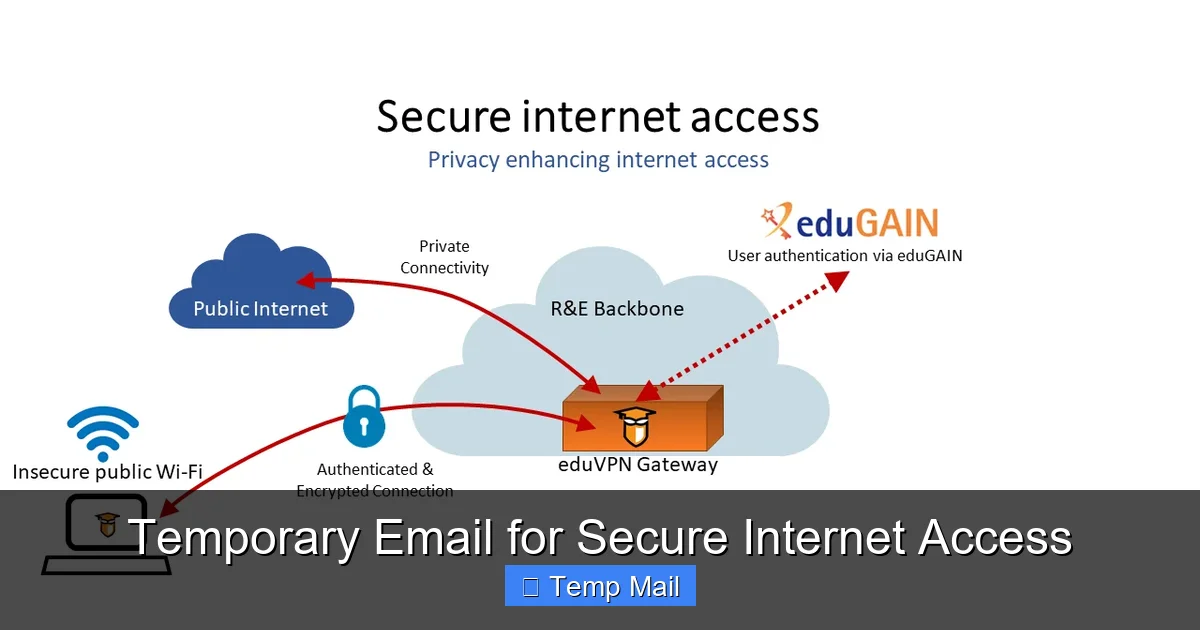
Visual guide about Temp Mail for Online Account Protection
Image source: capitaloversight.com
These services run their own mail servers. When they generate an address for you, they create a mailbox on their server linked to that random string. Any email sent to that address lands in that specific, isolated mailbox, which only you can access via the service’s webpage (often without a password). There’s no connection to your ISP or your permanent email provider. The system is designed for anonymity and transience. Because the address is random and not tied to a user account, there’s no database of “who owns [email protected].” You are simply the temporary holder of that inbox for its brief lifespan.
The most obvious benefit is spam elimination. When you use your primary Gmail or Outlook address to sign up for a “free ebook” from a questionable marketing site, you’re essentially signing a contract to receive their emails, often forever. Unsubscribing can be tricky, and sometimes it just doesn’t work. With a temp mail, that contract is null and void after a few hours. The promotional emails go to an inbox that self-destructs. Your primary address never gets cluttered, and your attention isn’t hijacked by unwanted solicitations. This is your first line of defense.

Visual guide about Temp Mail for Online Account Protection
Image source: thumbs.dreamstime.com
This is the critical security advantage many overlook. In 2023, it’s not a matter of if a small website you use will be breached, but when. Hackers target smaller databases because they’re often less secure. If you used your personal email for that small pet supplies forum, and that forum gets hacked, your email address is now in a breach database. Cybercriminals use these lists for “credential stuffing” attacks—trying that email and common passwords on major sites like Amazon, PayPal, or your bank. If you had used a temp mail for the forum, the breached database contains a useless, expired address. Your real email, and by extension your critical accounts, are completely insulated from that specific breach. You’ve contained the damage to a disposable account that no longer exists.
Every online account you create is a data point in your digital profile. Ad networks and data brokers stitch together these accounts to build a hyper-personalized—and often creepy—profile of your interests, location, and behavior. By using a different temp mail for each low-stakes sign-up, you fragment your digital identity. It becomes much harder for any single entity to connect the dots and say, “This person who visited a hiking site also signed up for a crypto newsletter and a parenting blog.” You reclaim a sliver of anonymity in an ecosystem designed to track you.
Not all sign-ups are equal. Temp mail is ideal for low-value, high-risk interactions. Think: downloading a whitepaper or template from a marketing site, signing up for a one-time webinar, creating an account on a forum you might visit once, accessing a “free trial” that requires an email but you’re sure you’ll cancel, registering for a contest, or installing a free mobile game that demands an email. The rule of thumb: if the service is not something you plan to use long-term, or if it’s from a brand you don’t fully trust, use a temp mail. It’s also perfect for testing if an email service is legitimate—if they send you spam within an hour, you know to block their domain permanently.

Visual guide about Temp Mail for Online Account Protection
Image source: imag.malavida.com
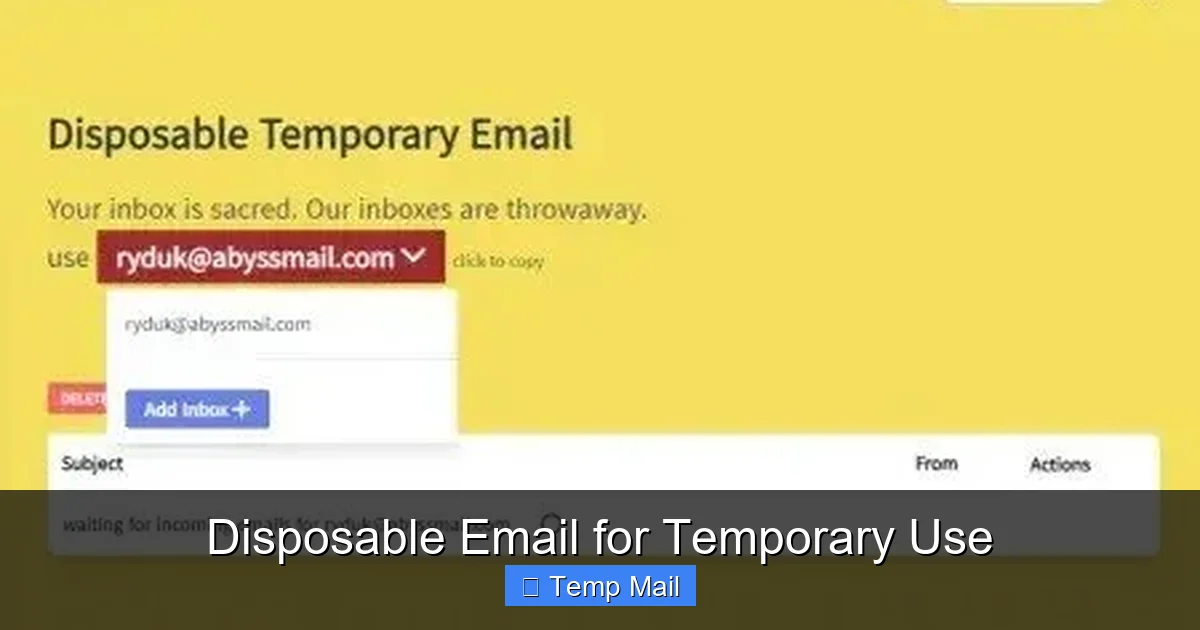
Using one is incredibly simple. First, open a new browser tab and go to a reputable temp mail site (more on choosing one later). The homepage will immediately display a random email address and an inbox view. Copy that address. Go to the website where you need to sign up, paste it into the email field, and complete registration. When the site sends a verification email, switch back to the temp mail tab. You’ll see the email appear in the inbox. Click it to read the content and find the verification link. Click that link to complete your sign-up on the original site. That’s it. You never left the temp mail site, never set a password, and your real email was never involved. Once you’re done, you can simply close the tab. The address will expire on its own.
Not all temp mail providers are created equal. The best ones offer a clean, ad-light interface, a reasonably long expiration time (at least 1 hour), and multiple domain options (so you can get a fresh address if one domain is blocked). They should not require any personal details to generate an address. Look for services that allow you to manually refresh to get a new address if you don’t like the first one. A good service will also have a clear, simple inbox view that loads quickly and displays both the sender and subject line clearly.
Steer clear of services that bombard you with aggressive pop-up ads, misleading “download” buttons, or require you to solve endless CAPTCHAs before showing your inbox. These are often low-quality and may compromise your browsing experience. Also, be wary of any service that asks for a “password” to access your temp inbox—the whole point is no setup. Finally, avoid using obscure, single-use temp mail sites you’ve never heard of for anything sensitive; stick to well-known, established providers in this niche that have a reputation for reliability and privacy.
While the landscape changes, several have proven reliable. Temp-Mail.org is a popular, long-standing option with a simple interface and multiple domain choices. 10MinuteMail.com is another classic, famous for its very short (but extendable) timer, perfect for quick verifications. Guerrilla Mail offers a bit more control, allowing you to choose from several domains and even set a custom mailbox name before generating the address. For a more modern, ad-minimal experience, DropMail.me is an excellent choice. Start with these, and you’ll have a solid foundation for your disposable email needs.
Many reputable websites—especially social media platforms like Facebook or Twitter, financial services, and major e-commerce sites like Amazon—actively block known disposable email domains. They do this to prevent spam, fraud, and fake account creation. If you try to sign up with a temp mail on these sites, you’ll likely get an error message saying the email is invalid. This is a fundamental limitation. Temp mail is for the long tail of the internet, not the major platforms where you’d want to use your real, secure email anyway. Always have your primary email ready for these important sign-ups.
With very few exceptions, temp mail services are receive-only. You can get the verification email, but you cannot compose and send emails from that address. This is by design—it prevents abuse for spamming. If a site requires you to send an email to verify something (rare), a temp mail won’t work. Its sole purpose is to receive the one-time communication from the service you’re signing up for.
This is the most important risk to understand. Once the temp mail address expires, it is gone forever. All emails in it are deleted. If you use a temp mail to sign up for an account and then later need to recover your password for that account, the recovery email will be sent to the expired, non-existent inbox. You will be permanently locked out of that account. This is why the golden rule is absolute: never use temp mail for any account where you might need to log in again, recover a password, or receive important notifications. This includes: banking, primary email, cloud storage, main social media, work/school portals, and any subscription service you pay for. For these, your secure, permanent email is the only choice.
The old internet model was “give us your email for everything.” The new, privacy-conscious model is “only give your real email when absolutely necessary.” Temp mail is a perfect tool for this shift. It forces a conscious decision: “Is this service worth my real email, or can I use a disposable one?” This mindset is the foundation of digital hygiene. As data privacy regulations like GDPR and CCPA give users more rights, tools that empower minimal data disclosure become essential. Temp mail isn’t hiding anything illegal; it’s practicing data minimization—a core privacy principle.
Temp mail works best as part of a suite. Use it alongside a reputable password manager (to create unique passwords for every real account), a VPN (to mask your IP address), and private search engines like DuckDuckGo. Together, these tools create layers of protection. The temp mail handles the email layer, the password manager handles authentication, and the VPN handles your network identity. It’s a holistic approach to not just protecting your accounts from hackers, but also protecting your personal information from the pervasive data economy.
As more people adopt disposable emails, websites may become stricter, creating a cat-and-mouse game. The responsible use of temp mail is key. Use it for its intended purpose: protecting yourself from spam and data harvesting on sites of dubious value. Do not use it to create fake accounts for harassment, fraud, or to bypass bans. That abuse is what leads to the widespread blocking we see today. By using temp mail wisely and ethically, we help maintain its availability as a legitimate privacy tool for everyone.
Your email address is the front door to your digital life. You wouldn’t give your house key to every random person who asks for it. Yet, online, we routinely hand over our email keys without a second thought. A temporary email address is like a smart, self-locking, temporary key. It lets you access what you need—that free resource, that one-off forum—and then vanishes, ensuring no one can make a copy and come back later. The power of temp mail for online account protection lies in this beautiful simplicity. It’s a low-effort, high-reward habit that slashes spam, contains breach damage, and fragments your digital profile. Start today. The next time a website asks for your email and you feel a pang of hesitation, open a temp mail tab instead. Get the verification code, complete your task, and close the tab. Your future, less-spammed self will thank you. In the battle for digital privacy, the most effective weapons are often the simplest. Use this one.
Yes, using a temporary or disposable email service is completely legal. It is a legitimate tool for privacy protection and spam avoidance. The legality only becomes an issue if the service is used for fraudulent activities, harassment, or to circumvent terms of service on a platform, which is true of any communication tool.
Reputable temp mail services are safe for their intended purpose: receiving a single verification email. They do not require personal details and do not connect the address to your identity. However, the emails you receive are technically accessible to the service provider, so you should never use them for sensitive information like passwords, financial data, or private documents. Their privacy is for anonymity from the sender, not from the service itself.
The lifespan varies by service. Common expiration times are 10 minutes, 1 hour, or 24 hours. Some services allow you to manually extend the time by clicking a “keep” or “refresh” button. Always check the timer on the service’s page so you know how long you have to access any important emails before the address and its inbox are permanently deleted.
Almost universally, no. Temp mail services are designed as receive-only inboxes to prevent abuse for sending spam. Their primary function is to allow you to receive a single verification or download link. If you need to send an email as part of a sign-up process, a disposable email will not work, and you’ll need to use your permanent address.
Websites block known temp mail domains to reduce fraudulent account creation, spam, and abuse. Disposable emails make it easy for bad actors to create numerous fake accounts for scams, posting spam, or evading bans. To maintain platform integrity and ensure users are real, major services like social media platforms, banks, and e-commerce sites maintain and update blocklists of these domains.
The biggest mistake is using a temp mail for an account they later need to access or recover. If you sign up for a service with a temp mail and then forget your password, the recovery email will be sent to an inbox that no longer exists. You will be permanently locked out. The golden rule: never use temp mail for any account where login, password recovery, or ongoing official communication is important. Reserve it solely for one-time, non-essential interactions.
অনলাইন নিউজপেপার থিম। এই থিমটি দিয়ে আপনারা বাংলা এবং ইংরেজি নিউজপেপার সাইট তৈরি করতে পারবেন । বার্তা ও বাণিজ্যিক কার্যালয়: ৭১, মতিঝিল, ঢাকা-১০০০। সম্পাদক : মো আসাদুজ্জামান আমানউল্লাহ । মোবাইল : ০১৭০০-০০০০০০ । ইমেইল : [email protected] ।
All rights reserved © 2019 themesdealer.Com