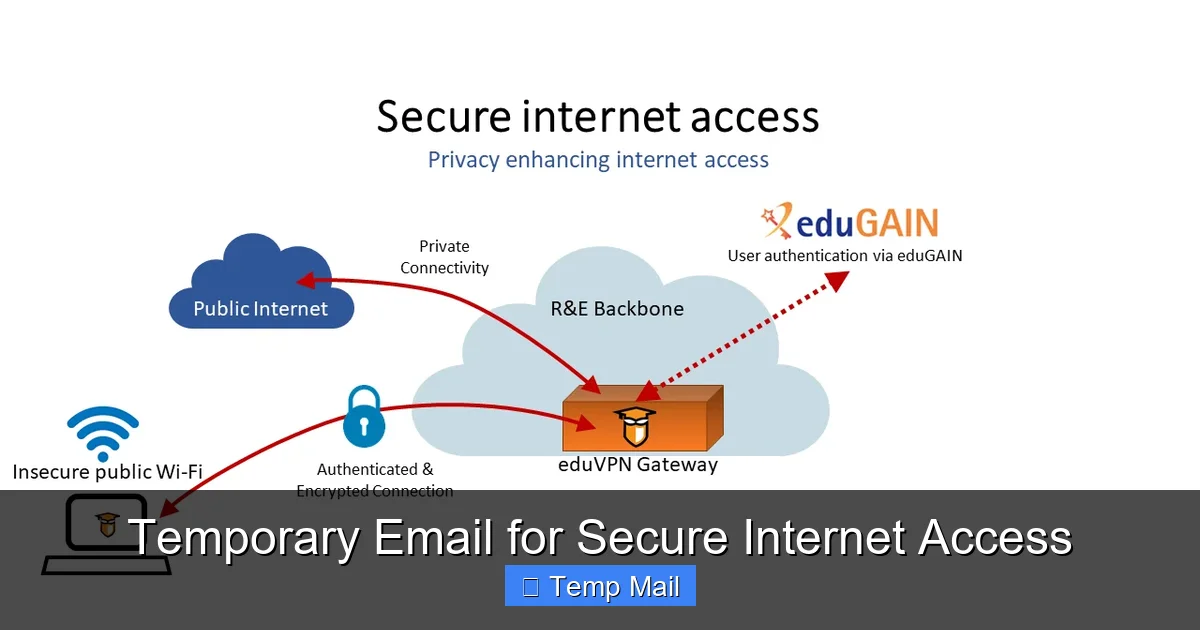
Image for Temp Mail for Online Privacy Protection



Temp mail, or disposable email, is a powerful, free tool for protecting your online privacy. It works by providing a temporary, anonymous inbox that you use for sign-ups, downloads, and one-time interactions, preventing companies and spammers from ever accessing your primary email address. By acting as a vital buffer, it drastically reduces spam, minimizes data profiling, and limits your exposure in the event of a data breach. While not for critical accounts, incorporating temp mail into your daily web browsing is a simple, highly effective habit for regaining control over your personal information.
Think about your primary email address. It’s not just an inbox; it’s the master key to your digital life. It’s linked to your social media, your bank, your cloud photos, your work communications, and countless online accounts from a decade ago you’ve long forgotten. Every time you type it into a website for a free e-book, a discount coupon, or to comment on a news article, you are handing out a copy of that master key. That website, and the myriad of third-party advertisers and data brokers they often share with, now have a direct line to you. They can track your behavior, sell your data, and, most obviously, flood that inbox with promotional spam you never asked for. This constant, low-grade erosion of privacy is the norm. But what if you could hand out a disposable, single-use key instead? That’s the core promise of temp mail—a simple yet revolutionary concept for online privacy protection.
Using a temporary email service is one of the easiest, fastest, and most effective steps you can take to compartmentalize your online identity. It’s not about hiding illicit activity; it’s about practicing basic digital hygiene. Just as you wouldn’t give your home address to every stranger on the street, you shouldn’t give your permanent email to every website that asks. In this guide, we’ll break down exactly how temp mail works, why it’s a critical tool for privacy, where and how to use it correctly, and what its limitations are. By the end, you’ll have a clear, actionable plan to start protecting your primary inbox and, by extension, a significant part of your personal data footprint.
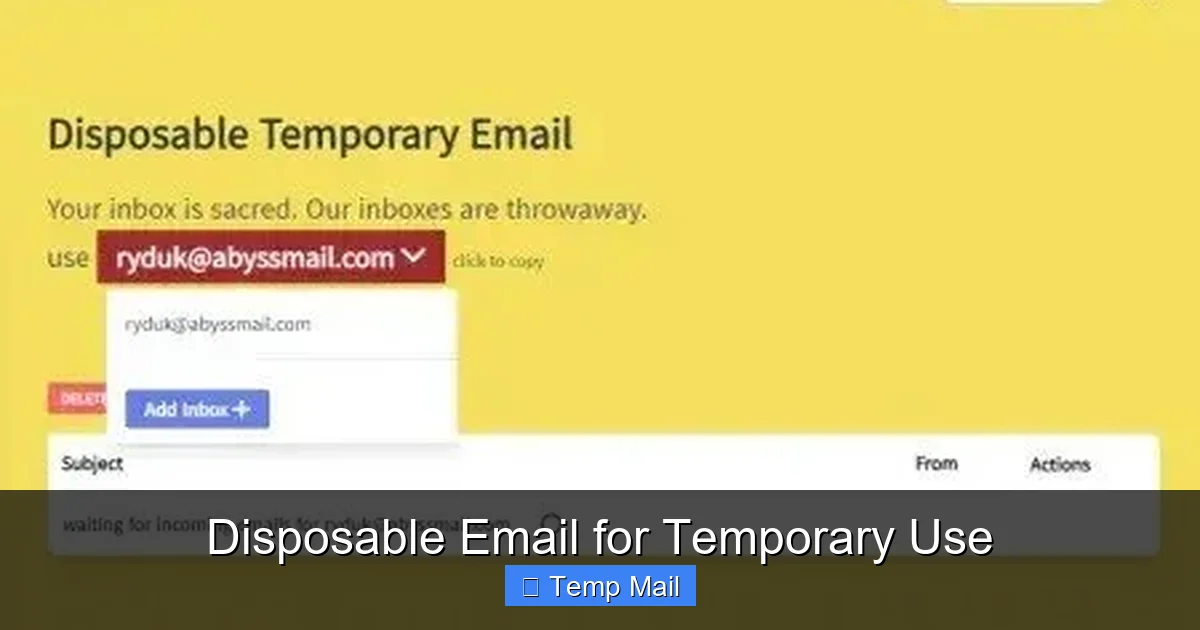
Temp mail, also commonly called disposable email, throwaway email, or fake email, is a service that provides you with a randomly generated, fully functional email address for a short period of time. These addresses are not tied to your identity. You don’t create a username and password; you simply visit a website like Temp-Mail.org, Guerrilla Mail, or 10MinuteMail, and it instantly generates an inbox for you, like [email protected]. You can use that address to receive a single verification email or download a file, and then you abandon it. After a set time—often 10 minutes to 1 hour—the inbox and its contents are permanently deleted from the server. Some services offer slightly longer lifespans or the ability to extend the time.

Visual guide about Temp Mail for Online Privacy Protection
Image source: gen.boomlify.com
The key distinction is that this email address exists in a silo. It has no connection back to you, your real name, your IP address (if the service is reputable), or your other accounts. It’s a pure, anonymous communication channel designed for a single, short-lived transaction. This makes it fundamentally different from creating a secondary “junk” email account with Gmail or Outlook. That secondary account still requires personal information to set up, is still tied to your identity through recovery options, and still accumulates data over time that can be linked back to you. True temp mail leaves no such trail.
When you visit a temp mail provider, the website’s server dynamically generates a new, unique email address within its domain (e.g., @tmpmail.org). This address is mapped to a temporary inbox database entry. When an external sender (like a forum you just signed up for) sends an email to that address, the temp mail server receives it, stores it in the associated inbox, and makes it visible to you on their website. You simply refresh the page to see new mail. No password is ever set or required. Once the timer expires, the database entry is purged, and that email address is retired forever, never to be reused. The entire process is designed for maximum ephemerality and zero user accountability.
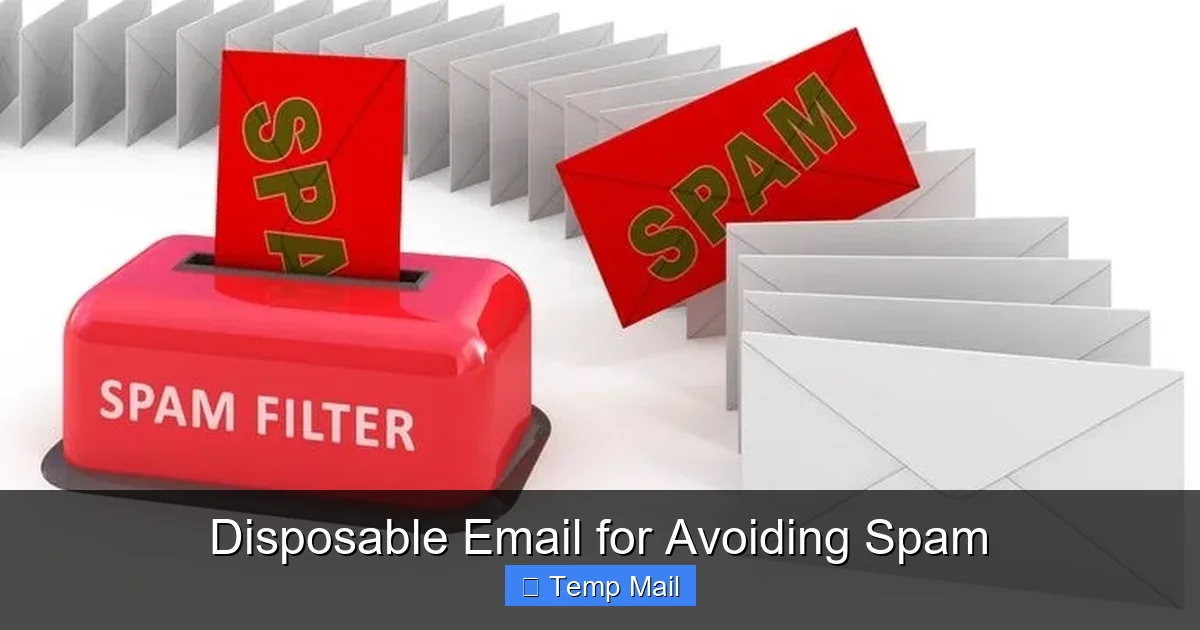
The most immediate and gratifying benefit of using temp mail is the dramatic reduction in spam to your primary inbox. Here’s the direct line: you use temp mail for a sketchy “free iPhone” survey site. That site immediately sells your “opted-in” email address to 10 other marketing lists. Those lists send you promotional emails. Since you used a temp address, all that spam goes to the disposable inbox, which self-destructs in an hour. Your permanent Gmail or Outlook account remains blissfully clean. You’ve not just filtered spam; you’ve prevented your primary address from ever being added to those spam lists in the first place. This is proactive privacy, not reactive filtering.

Visual guide about Temp Mail for Online Privacy Protection
Image source: shieldbyteinfosec.com
Modern websites and advertisers are obsessed with building “user profiles.” They link your email address to your browsing history on their site, your location (often inferred from your IP at sign-up), your interests, and your purchase behavior. This profile is then used to serve you hyper-targeted ads and is frequently packaged and sold to data brokers. By using a different, anonymous temp mail for every new site, you ensure there is no single identifier that can tie all those disparate activities back to a central point: your real identity. Each site gets a unique, unconnected identifier. The data broker’s attempt to build a profile on “you” results in a fragmented, nonsensical collection of unrelated email addresses and activities. You essentially become invisible to their aggregation algorithms.
Data breaches are not a matter of if but when. Every few weeks, we hear about another company being hacked, with user databases—including email addresses, passwords, and sometimes more—being stolen and sold on the dark web. If you used your primary email to sign up for a compromised service, that email is now in the hands of cybercriminals. This exposes you to targeted phishing attacks (where hackers use details from the breach to craft convincing fake emails), credential stuffing (using your breached password on other sites where you might have reused it), and identity theft. If, however, you had used a temp mail for that service, the breached database contains a useless, dead-end email address. The hackers gain nothing of value that can be traced back to your real accounts or identity. The breach is contained to a disposable channel.
Before we dive into use cases, the most important rule must be stated: NEVER use a temporary email for any account you need to recover, access permanently, or that involves financial or legal responsibility. This includes: your primary email recovery (obviously), banking, investment accounts, government services (IRS, DMV), primary cloud storage (Google Drive, iCloud), medical portals, main social media accounts, and work/school logins. If the inbox vanishes in an hour, so does your access and any recovery options. You would be locked out forever. Temp mail is for transient interactions, not persistent identities.

Visual guide about Temp Mail for Online Privacy Protection
Image source: neumetric.com
Now for the good stuff. Here is a non-exhaustive list of ideal scenarios for temp mail:
Let’s make it concrete. You find a great marketing whitepaper on “2024 SEO Trends.” To download, you enter your name and email on a form. Here’s your temp mail workflow:
It’s that simple. The entire process takes 30 seconds and provides a permanent record of privacy protection.
We’ve stressed this, but it bears repeating. The temporary nature is a double-edged sword. Lose access to that inbox, and you lose access to the associated account forever. There is no “forgot password” because there is no password. There is no account recovery because there is no account. This makes temp mail a tool for consuming services, not for owning them.
Not all temp mail services are created equal. Some free providers may:
Using a temp mail is perfectly legal. You are not forging an email address; you are using a publicly provided, functional service. However, using it to fraudulently sign up for services with the intent to abuse them (e.g., spamming, creating fake accounts to manipulate platforms) violates Terms of Service and can be illegal. The ethical use is for privacy protection during legitimate, low-stakes interactions. Always read a website’s Terms of Service; some explicitly prohibit the use of disposable emails for account creation. In those cases, you must decide if engaging with that service is worth violating their policy.
With dozens of options, how do you pick one? Here are the key criteria:
My personal recommendation for a balance of simplicity and reliability is to bookmark 2-3 reputable services and rotate between them. This further fragments your activity and provides a backup if one is down.
The rise in popularity of temp mail is a direct symptom of a broken internet economy—one built on surveillance and data extraction. As privacy regulations like GDPR and CCPA evolve, and as users become more savvy, the pressure on companies to respect data will increase. In the meantime, tools like temp mail, alongside privacy-focused browsers (Brave), search engines (DuckDuckGo), password managers (Bitwarden), and VPNs, form a powerful, personal defense stack.
Your email address is the most common personal identifier online. Protecting it is the first and most crucial step in protecting your broader digital identity. Making temp mail a default habit for any non-essential sign-up is a low-effort, high-reward behavior. It’s like installing a deadbolt on a door you only open for a delivery person—you wouldn’t leave your front door wide open for every passerby, so why leave your digital front door—your primary email—open for every website? Start compartmentalizing today. Use that next free e-book download as your first drill. Experience the quiet satisfaction of an inbox that isn’t drowning in spam, and take one more tangible step toward digital privacy.
Yes, using a temporary or disposable email service is completely legal. You are utilizing a service that provides functional email addresses. It becomes illegal only if used for fraudulent purposes like identity theft or to violate a website’s Terms of Service with malicious intent. For privacy protection during legitimate, low-stakes interactions, it is a lawful and ethical tool.
Reputable temp mail services enhance safety by not linking the address to your identity and by not logging your IP address. This makes it very difficult for hackers to trace the temp address back to you. However, the email content itself is not encrypted between you and the temp mail server, so you should never send sensitive personal data (like passwords or credit card numbers) through a disposable address. Its safety lies in anonymity and ephemerality, not in secure messaging.
A secondary Gmail account still requires your phone number and personal information to create, is tied to your Google identity, and accumulates data over time that can be linked back to you. It’s a persistent identity. Temp mail requires zero personal information, is created instantly without an account, and self-destructs. It leaves no persistent data trail and cannot be linked to your other identities, offering true anonymity for that single interaction.
No. Recovery is impossible by design. There is no password, no security question, and no linked phone number. If you close the browser tab or the timer expires, the inbox is gone forever. This is why it is critical to only use temp mail for transactions where you do not need long-term access, such as receiving a one-time download link or verification code.
Many popular websites and services actively block known disposable email domains to prevent spam and abuse. If this happens, you will receive an error message saying the email is invalid. The solution is to try a different temp mail provider with a different domain (e.g., switching from @tmpmail.org to @guerrillamail.com). Some sites may also require a more reputable email domain for critical sign-ups.
They are permanently and irreversibly deleted from the service provider’s servers. The email address itself is retired and will never be issued to another user again. This automatic purge is the core privacy feature, ensuring no lingering data exists that could be discovered later through a data breach or legal request.
অনলাইন নিউজপেপার থিম। এই থিমটি দিয়ে আপনারা বাংলা এবং ইংরেজি নিউজপেপার সাইট তৈরি করতে পারবেন । বার্তা ও বাণিজ্যিক কার্যালয়: ৭১, মতিঝিল, ঢাকা-১০০০। সম্পাদক : মো আসাদুজ্জামান আমানউল্লাহ । মোবাইল : ০১৭০০-০০০০০০ । ইমেইল : [email protected] ।
All rights reserved © 2019 themesdealer.Com