Image for Temp Mail for Protecting Your Primary Inbox



Your primary email address is a magnet for spam, data breaches, and unwanted marketing. Temp mail—also called disposable or temporary email—provides a sacrificial, auto-deleting inbox to use for sign-ups, downloads, and any online interaction where you don’t want to share your real contact info. It’s a simple, powerful tool for regaining control over your digital privacy and decluttering your main inbox for what truly matters.
Think about your primary email address—the one tied to your bank, your family, your identity. It’s a digital home base. Now, think about every time you’ve signed up for a free ebook, a one-time discount, a forum comment, or a random app. You handed that precious address over, often without a second thought. What happened next? The welcome email arrived, followed by a weekly newsletter you never read. Then, a “special offer” from a partner. Eventually, it might have been caught in a data breach, sold to marketers, or used to target you with sophisticated phishing attacks. Your primary inbox becomes a battlefield, and you’re on the defensive, constantly deleting, unsubscribing, and worrying.
This is where the brilliant concept of temp mail enters the picture. It’s not a hack or a shady workaround; it’s a straightforward privacy tool. Imagine having a dedicated, disposable phone number for giving out at stores instead of your real mobile. Temp mail does the exact same thing for your email. It provides a temporary, throwaway address that acts as a buffer, absorbing the spam and data collection so your real inbox remains pristine and secure. In this guide, we’ll explore exactly how this simple tool can revolutionize your online experience, from the mechanics of how it works to the smart, practical ways you should be using it every single day.
Before we dive into the “how-to,” let’s get crystal clear on what temp mail actually is. At its core, a temporary email service provides you with a random, working email address for a limited time—typically 10 minutes to 48 hours. You don’t create an account. You don’t set a password. You simply visit a website, a new address is generated for you, and you can start receiving emails in a public inbox linked to that address.

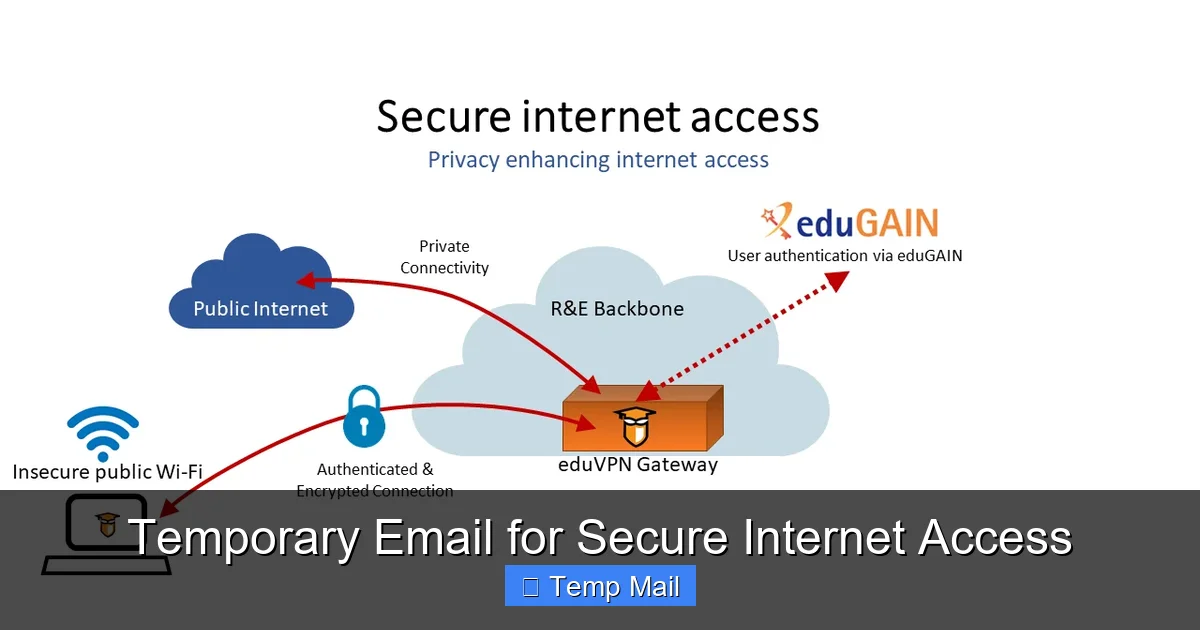
Visual guide about Temp Mail for Protecting Your Primary Inbox
Image source: interestingfacts.org
The defining feature is impermanence. The inbox exists solely for that specific address. Once the time limit expires, or the inbox is cleared by the service, everything is gone forever. The address is retired and will never be reused. This is the key difference from your Gmail or Outlook account, which is a permanent, password-protected vault of your communication history. Temp mail is a public locker: anyone with the address can open it, it holds items temporarily, and it’s wiped clean on a schedule.
It’s important not to confuse temp mail with email alias services like SimpleLogin or AnonAddy. Those services create forwarders that send mail to your real inbox, giving you a layer of privacy but still requiring you to manage the emails. Temp mail is a dead end. Mail goes in, stays for a bit, and vanishes. There is no forwarding, no long-term storage, and no connection back to you. It is the ultimate in disposable digital communication.
The magic of temp mail is its stunning simplicity. There’s no complex setup, no software to install. Here’s the step-by-step reality of using it:

Visual guide about Temp Mail for Protecting Your Primary Inbox
Image source: i.ytimg.com
There is no “you” in this system. The provider doesn’t ask for your name, your real email, or a password. The inbox is identified solely by that random string of characters. This architecture is why it’s both incredibly useful and comes with specific limitations we’ll discuss later.
Using a temp mail address isn’t just a neat trick; it’s a fundamental hygiene practice for the modern internet. The benefits cascade into better security, less stress, and a more organized digital life.

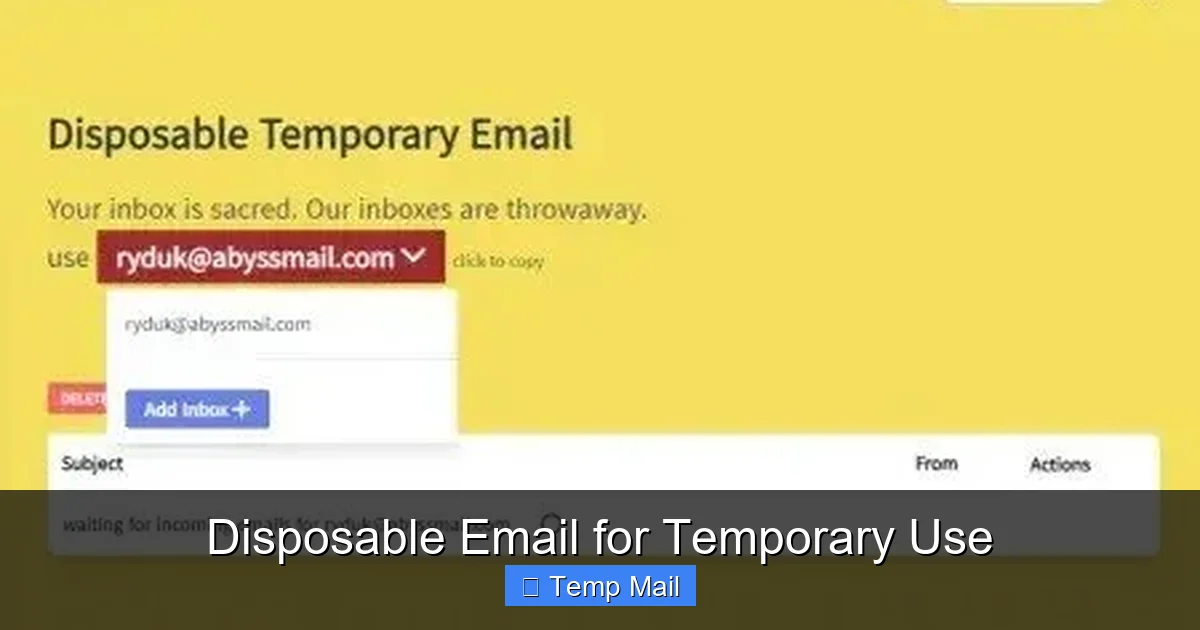
Visual guide about Temp Mail for Protecting Your Primary Inbox
Image source: tmailor.com
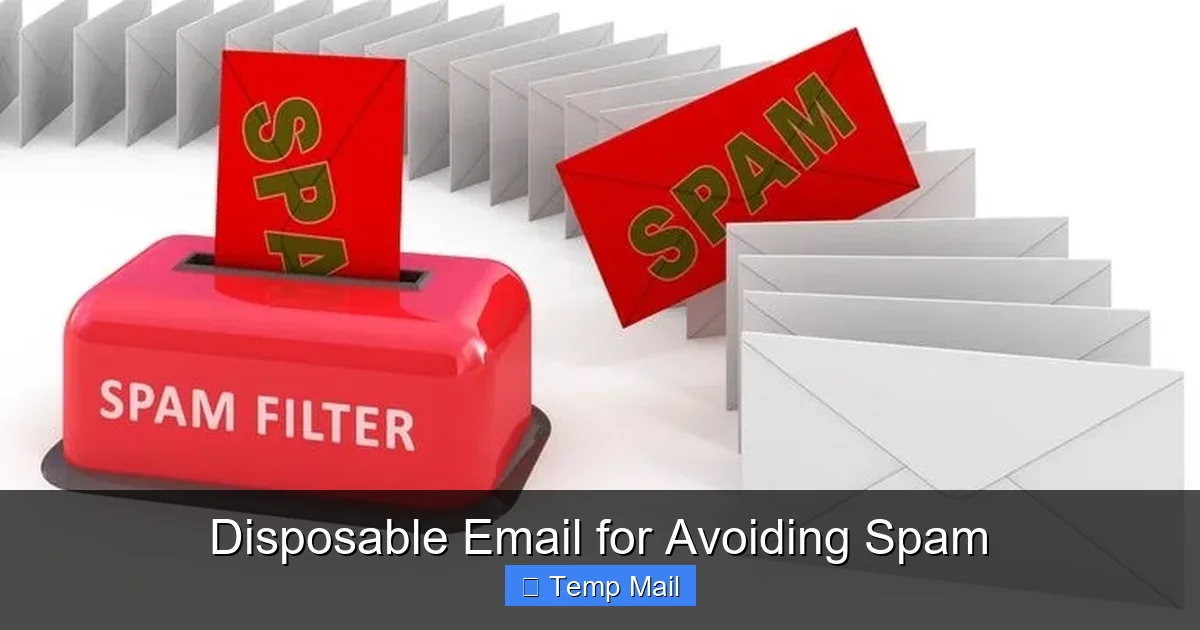
This is the most obvious win. That “free guide” you downloaded? The company will likely add your email to their promotional list. Without a temp address, that spam lands in your primary inbox forever, or until you struggle to unsubscribe. With temp mail, the spammy newsletter is sent to an address that ceases to exist in an hour. It never touches your real inbox. You’ve effectively neutered spam at its source.
Every website you sign up for becomes a potential data point in your digital profile. Data brokers collect these email associations to build a picture of your interests, location, and behavior. By using a unique, disposable address for each low-stakes site, you shatter that profile. There is no single email that ties all your random sign-ups together. Your primary email remains a secret, known only to your trusted circle of family, friends, and essential services.
Phishing emails are designed to look like they’re from legitimate companies you trust. If your primary email is flooded with these malicious attempts, it’s easier to accidentally click a bad link. By segregating your online presence, you create a mental firewall. If an email arrives in your temp mail inbox claiming to be from your bank, you instantly know it’s a fake—your bank would never have that disposable address. This context makes you more vigilant.
Your primary inbox should be for communication with humans and critical services. Let it be a calm, organized space. By ruthlessly routing all transactional emails, marketing newsletters (even the ones you accidentally opted into), and app notifications to a temp address that auto-deletes, you reclaim your primary inbox. Finding that important email from your boss or your kid’s school becomes effortless again.
Knowing *how* to use temp mail is one thing. Knowing *when* to use it is the real skill. Adopt this rule of thumb: If the website or service is not critical to your long-term identity, finances, or primary communication, use a temp mail address.
You want a whitepaper, a template, or a software trial. The site demands an email. Use temp mail. Get the download link, grab the file, and abandon the address. You’ve got the resource without joining their marketing list.
Want to post a comment on a news article or join a hobby forum for a single discussion? Use temp mail. This prevents that forum from selling your email or bombarding you with digests. It also protects you if the forum suffers a data breach; your primary email is safe.
That pop-up offering 20% off if you sign up for their newsletter? Perfect temp mail scenario. Get the code, use it on your purchase, and forget the email. The subsequent “exclusive offers” will vanish into the digital void.
Exploring a new app or online tool? Create an account with a temp address first. This lets you test the service, see if it’s spammy, and assess its value without committing your primary contact. If you love it and decide to keep it long-term, you can often change the email in settings later (or just start over with a new primary account).
This is an advanced tactic. Use different temp mail providers for different activities. One for “shopping and deals,” another for “tech forums and downloads,” another for “newsletters.” Even though the addresses are disposable, this practice creates additional layers of separation in your digital footprint, making it harder for any single entity to track your full activity.
Not all temp mail providers are created equal. While the core function is the same, features and reliability vary. Here’s your checklist:
Popular, reputable options to start with include Temp-Mail.org, 10MinuteMail.com, and Guerrilla Mail. Test a couple to see which interface and feature set you prefer.
Temp mail is a powerful tool, but it’s not a magic shield for everything. Misusing it can lead to real problems. Understanding its limitations is non-negotiable for safe usage.
This is the biggest. The inbox for your temp address is not private. Anyone who knows that address can view the emails. Never, ever use a temp mail address for:
Many platforms, especially financial services (PayPal, banks), social media giants (Facebook, Twitter), and cloud storage providers, maintain lists of known temp mail domains and block them outright during sign-up. This is a security measure for them. If your temp address is blocked, you’ll need to use your real email. Don’t try to fight it; it’s a signal that the service is high-security and requires your real identity.
You forget the password to that forum account you made with a temp email? You’re locked out forever. There is no “forgot password” flow because the email no longer exists. Temp mail is for access, not for ownership. Any account you intend to keep long-term must be backed by a permanent, secure email address you control.
Because they are anonymous, temp mail addresses are sometimes used for malicious sign-ups, spam, or to bypass bans. This is why some sites are so aggressive in blocking them. As a legitimate user, you might occasionally face extra CAPTCHAs or verification steps when using a temp address.
Think of temp mail not as a one-off trick, but as a core component of your digital hygiene routine. Pair it with a password manager and two-factor authentication for a formidable privacy stack. Make it your automatic reflex: before you type an email into any non-essential form, pause. Ask: “Is this worth linking to my real identity?” If the answer is no, reach for your temp mail tab. Over time, this single habit dramatically reduces your exposure to spam, data mining, and phishing lures. It’s a low-effort, high-reward strategy for taking back control in an internet that constantly demands your contact information.
The internet’s business model is often built on collecting your email address. It’s the key to reaching you, profiling you, and marketing to you. By adopting temp mail, you break that chain at the point of entry. You stop the flow of unwanted communication at the source, protect your primary email from being sold and resold, and create a cleaner, safer, and more focused digital environment. It’s a free, simple tool that delivers profound peace of mind. Start using it today for every download, every newsletter sign-up, and every forum registration. Let your primary inbox be what it was always meant to be: a sanctuary for what matters most, not a dumping ground for the web’s noise.
Yes, using temp mail is perfectly legal and safe for its intended purpose of receiving non-sensitive communications. The safety risk comes from misuse, like using it for banking or sharing private data, because the inboxes are public and temporary.
No, temp mail services are designed almost exclusively for receiving emails. They do not allow you to send emails from the disposable address, as this functionality is typically reserved for permanent email accounts to prevent abuse and spam.
It varies by provider, but common durations are 10 minutes, 1 hour, or up to 48 hours. The countdown is usually displayed on the page. After the time expires, the address and all its emails are permanently deleted.
Almost certainly not. Major platforms like social media sites, banks, and email providers actively block known temp mail domains during sign-up to enforce real identities and enhance security. You must use a permanent, verifiable email address for these services.
You will not be able to. Since the email address no longer exists after its short lifespan, password reset links will be undeliverable. This is why you should only use temp mail for accounts you don’t intend to keep long-term or that have alternative login methods.
Yes, most reputable temp mail services support receiving emails with attachments like PDFs, images, or ZIP files. However, there are often size limits (e.g., 10-25MB). Always check the provider’s specifications if you need to download a large file.
অনলাইন নিউজপেপার থিম। এই থিমটি দিয়ে আপনারা বাংলা এবং ইংরেজি নিউজপেপার সাইট তৈরি করতে পারবেন । বার্তা ও বাণিজ্যিক কার্যালয়: ৭১, মতিঝিল, ঢাকা-১০০০। সম্পাদক : মো আসাদুজ্জামান আমানউল্লাহ । মোবাইল : ০১৭০০-০০০০০০ । ইমেইল : [email protected] ।
All rights reserved © 2019 themesdealer.Com