Image for Temp Mail Tricks Everyone Should Know



Tired of spam clogging your main inbox? Disposable email addresses are your secret weapon. This guide reveals powerful, practical tricks to leverage temp mail for privacy, testing, and bypassing unwanted sign-ups. We’ll cover advanced techniques beyond just getting a random address, ensuring you use these tools safely and ethically. Master these strategies to take control of your online interactions.
Let’s be honest: your email address is a golden ticket to your digital life. It’s the key to your social networks, your bank accounts, your shopping histories, and the primary channel for a relentless barrage of marketing and spam. What if you could hand out a different, completely disposable key every time a website asks for it? That’s the power of temporary email—often called “temp mail” or “disposable email.” But most people only scratch the surface. They get a random address, use it once, and forget it. There’s a whole world of clever tricks and strategic applications that transform this simple tool from a convenience into a powerhouse of privacy and efficiency. This isn’t just about avoiding spam; it’s about smart digital compartmentalization. Ready to become a temp mail power user? Let’s dive into the tricks everyone should know.
Before we get to tricks, we must internalize the core philosophy. Temp mail isn’t a replacement for your primary email; it’s a shield for it. The goal is to create isolated compartments for different types of online activity. Your primary email is for your identity—friends, family, critical services, and subscriptions you genuinely want. Everything else gets a temp mail address. This trick alone will revolutionize your online privacy.
Every time you use your main email to sign up for a random forum, download a free ebook, or access a one-time discount, you are creating a data point. That service now has a direct link to your real identity. They can (and often do) sell that data to data brokers, add you to relentless email lists, or, worse, suffer a data breach that exposes your email and password. By using a unique temp address for each low-value interaction, you break this chain. If that address starts getting spam, you simply delete it. The spammer has no way to trace it back to you.
This is the golden rule of advanced temp mail usage. Don’t use the same temp address for two different websites or services. If you use [email protected] for both a sketchy game site and a coupon aggregator, and then start getting spam, you won’t know which one leaked your address. Using a unique address for each creates a perfect audit trail. The spam arrives at [email protected]? You know exactly who to blame and can blacklist that specific service in your mind (and your temp mail provider’s block list).
How many times have you been blocked from reading an article, viewing a research paper, or downloading a template because a website demanded your email? These “gated” contents are frustrating. Temp mail is the master key. But there’s a trick to doing it successfully.
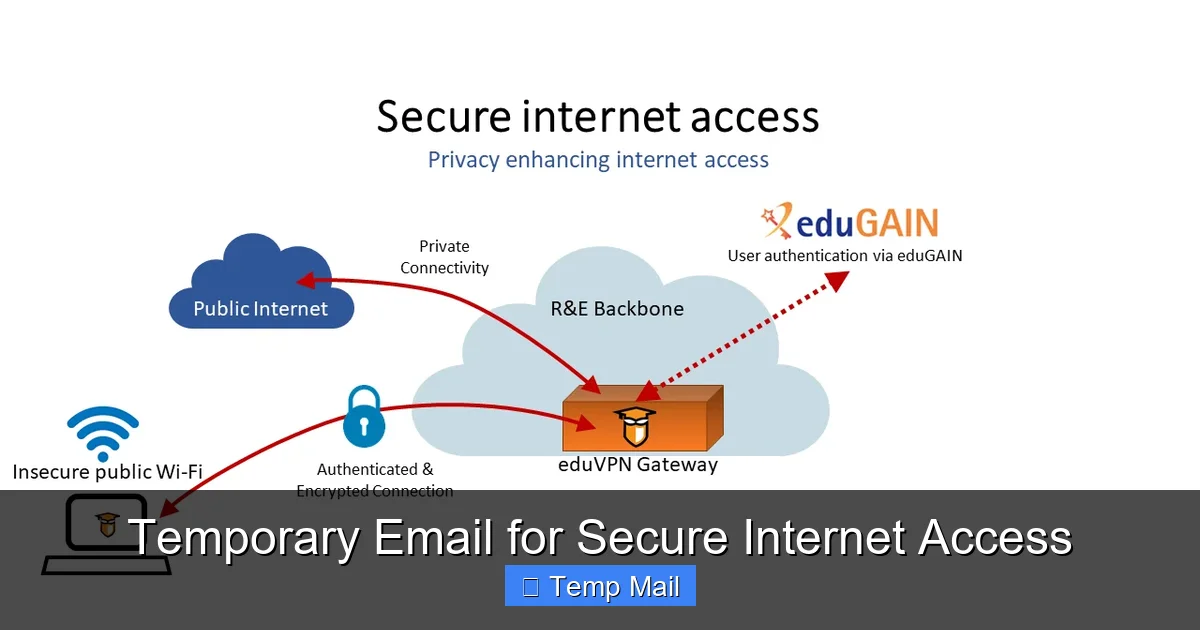
Visual guide about Temp Mail Tricks Everyone Should Know
Image source: techwalls.com
The trick here is timing and expectation. You generate your temp address, paste it into the sign-up form, and immediately switch to the temp mail provider’s inbox tab. Do not navigate away. Most verification emails arrive within 10-30 seconds. You must be waiting. The moment the email appears, click the verification link or copy the code. If you wait five minutes, the email may have already expired, or the session on the gated site might have timed out. Stay on the inbox page and refresh manually every 5-10 seconds.
Some sophisticated sites keep a public blacklist of known disposable email domains. If you get an error saying “this email domain is not allowed,” you need a different provider. This is where knowing multiple reputable temp mail services is a crucial trick. Have a arsenal of 2-3 go-to sites (like Temp-Mail.org, 10MinuteMail.com, or GuerillaMail.com). If Domain A is blocked, switch to Domain B. The trick is to use less common, frequently rotating providers that aren’t on the site’s blacklist yet.
This is a professional-grade trick that few casual users consider. If you’re building an app or website that requires email verification, testing that flow with your real email is a nightmare. You create test accounts, your inbox gets cluttered, and you can’t automate tests. Temp mail APIs and services designed for developers solve this.

Visual guide about Temp Mail Tricks Everyone Should Know
Image source: buydig.com
Services like MailSlurp, Temp-Mail API, or Kopeechka offer APIs where your test script can programmatically request a new temporary inbox, use the provided address in your app’s sign-up flow, then poll that inbox via API to retrieve the verification email and extract the link/code—all automatically. This allows for fully automated end-to-end testing of registration, password reset, and notification features without ever touching a human inbox. The trick is integrating these API calls into your CI/CD pipeline like Jenkins or GitHub Actions.
Before blasting a marketing email to your entire list, you want to test how it renders in different clients. Use a suite of temp mail addresses across different providers (some use plain text, some have webmail interfaces). Send your test email to these addresses. Then, check how it looks in each temp mail provider’s web interface, which often mimics common email clients. This is a cheap, fast way to catch rendering issues before your real customers see them.
We all know temp mail stops spam to our main inbox. But you can use it for a more aggressive, proactive trick: data poisoning.

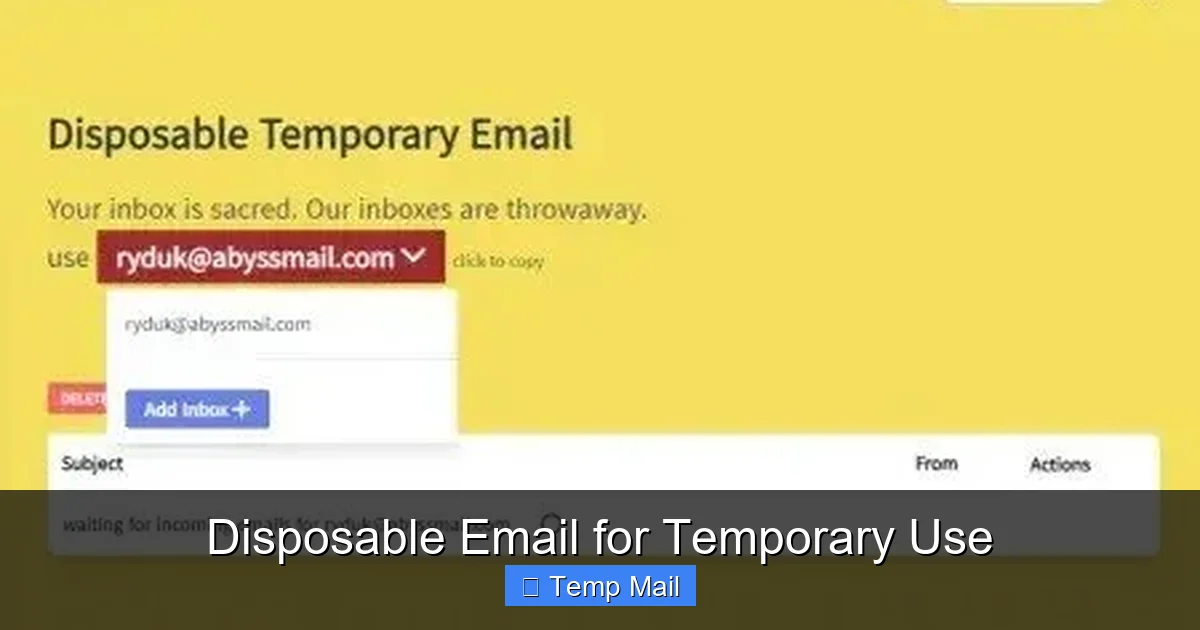
Visual guide about Temp Mail Tricks Everyone Should Know
Image source: noobpreneur.com
When a service you distrust but feel compelled to use (e.g., a one-time discount requiring sign-up) asks for an email, give them a temp address. But here’s the trick: immediately after, go to a separate, permanent “junk” email account (like a dedicated Gmail just for this purpose) and set up a filter to forward *all* emails from that specific temp address domain to your main inbox’s spam folder. Then, delete the temp address. What happens? Any future emails the malicious service tries to send to that now-dead temp address will bounce. But the forwarding rule you set up on your junk account will capture the bounce messages and any subsequent attempts, funneling proof of their spammy behavior into your spam folder. You’ve created a trap that documents their bad faith.
This is the ultimate audit trick. When using a temp address for a service, modify the local part (the part before the @) to include a unique identifier. For example, if signing up at “ExampleShop.com,” use: [email protected]. If you later start receiving emails addressed to “exampleshop-2024” from unknown sources, you have irrefutable evidence that ExampleShop either suffered a breach or sold your email. This turns your temp inbox into a leak detection system.
Temp mail is powerful, but it has hard limits. Knowing these limitations is a trick in itself—it saves you from frustration and security risks.
Major platforms like Google (Gmail), Microsoft (Outlook/Hotmail), Apple (iCloud), Facebook, and Twitter almost universally block known disposable email domains. They do this to prevent fake accounts and abuse. The trick? Don’t even try. If you need an account on these platforms for anything meaningful, use your primary or a dedicated long-term alias email. Trying to circumvent this is usually impossible and a waste of time. Reserve temp mail for the thousands of other websites that don’t have such stringent checks.
This is the most critical safety trick: you cannot recover a temp email address. If you forget your password for an account created with a temp email, you are permanently locked out. There is no “forgot password” link that will work because the reset email goes to an address that no longer exists. Therefore, the rule is absolute: never use temp mail for any account where you might need to log in again, recover a password, or receive a critical notification (like a flight change or medical result). Use it for one-time access only.
Many temp mail services strip attachments or disable HTML rendering for security. Don’t expect to download a PDF or view a beautifully formatted newsletter. The trick is to assume any email you receive via temp mail will be plain text only. If you need an attachment, the service will usually have a clear “download” button, but be cautious—some providers may scan attachments for malware. For absolute safety, avoid opening unexpected attachments from temp mail altogether.
With great power comes great responsibility. Using temp mail to circumvent paywalls, create fraudulent accounts, or evade permanent bans is not just a trick—it’s often a violation of Terms of Service and can be illegal.
Using temp mail to read a free article behind a sign-up wall? Generally harmless. Using it to create 100 fake accounts to rig a contest or spam a forum? That’s fraud and abuse. Using it to sign up for a free trial of a paid software with no intention of paying, using a new identity each time, is “freeloading” and violates most terms of service. The ethical trick is self-regulation: if your action would cause a real financial loss to a business or harm another user, don’t do it.
Temp mail provides pseudonymity, not true anonymity. While it hides your primary email, your IP address, device fingerprint, and behavioral patterns are still visible to the website you visit. Law enforcement, with a warrant, can often trace activity back through the temp mail provider’s logs (which they are legally required to keep for short periods). Do not use temp mail for illegal activities—drug transactions, hacking, threats, etc. The trick is to understand it’s a privacy tool for everyday marketing spam, not a cloak for criminal enterprise.
Temp mail is more than a spam filter; it’s a fundamental tool for conscious digital living. The tricks we’ve covered—from strategic compartmentalization and developer automation to data poisoning and ethical boundary-setting—empower you to reclaim control. Start by adopting the “one service, one address” habit. Then, explore using it as a developer tool or a leak detector. Always remember the hard limits: no recovery, no major platform access, and no attachment reliance. By using disposable email addresses thoughtfully and strategically, you don’t just clean up your inbox—you build a smarter, more private, and more secure relationship with the entire web. Your primary email is your digital home. Use temp mail as the secure, disposable mailbox you use for every package delivery to that home. Guard the address to your home fiercely, and you’ll find the internet becomes a far less cluttered and intrusive place.
No, using disposable email addresses is perfectly legal. It’s a standard privacy tool. However, using it to commit fraud, violate terms of service, or facilitate illegal activities is illegal. The tool itself is neutral; it’s the application that matters.
It varies by provider, but most temporary inboxes expire between 10 minutes and 1 hour after creation. Some offer a 24-hour option. The email address and all its contents are permanently deleted upon expiration. Always check the provider’s specific timer.
Many temp mail services block attachments entirely for security reasons. Some allow them but may scan for viruses. Never assume you can safely download an attachment from a disposable inbox. For critical files, use a secure, permanent file-sharing service instead.
Almost certainly not. Major platforms like Google, Microsoft, Apple, and Facebook actively block known disposable email domains during sign-up to prevent spam and fake accounts. You must use a permanent, reputable email address for these services.
You will be permanently locked out. Since the email address no longer exists, you cannot receive password reset links or account verification emails. This is why the “no recovery” rule is critical: only use temp mail for accounts you don’t mind losing access to after a single session.
Safety varies. Reputable providers do not log your IP address or the emails you receive, and they use HTTPS encryption. However, you are trusting a third party with any content you view. Never access sensitive personal or financial information via a temp mail inbox. For maximum privacy, use providers based in privacy-friendly jurisdictions with clear no-logs policies.
অনলাইন নিউজপেপার থিম। এই থিমটি দিয়ে আপনারা বাংলা এবং ইংরেজি নিউজপেপার সাইট তৈরি করতে পারবেন । বার্তা ও বাণিজ্যিক কার্যালয়: ৭১, মতিঝিল, ঢাকা-১০০০। সম্পাদক : মো আসাদুজ্জামান আমানউল্লাহ । মোবাইল : ০১৭০০-০০০০০০ । ইমেইল : [email protected] ।
All rights reserved © 2019 themesdealer.Com