Image for Why You Should Use a Temporary Email Address



Your primary email address is a golden ticket to your digital life, making it a prime target for spam, data harvesting, and security breaches. A temporary email address acts as a disposable shield, allowing you to interact with untrusted websites, claim one-time offers, and test services without ever revealing your real contact information. It’s a simple, free tool for dramatically reducing inbox clutter and protecting your long-term privacy and security online.
Think about your primary email address. It’s probably the key to your social media, your online banking, your Amazon account, your cloud storage, and countless other services. It’s a direct line to you. Now, think about the last time you wanted to download a free ebook, sign up for a forum to read one article, or access a “free trial” that required an email. Did you hesitate, knowing it would likely lead to a torrent of promotional spam? This is the exact moment a temporary email address becomes your best friend. It’s not about being paranoid; it’s about being smart and proactive in an online world that constantly asks for your contact details.
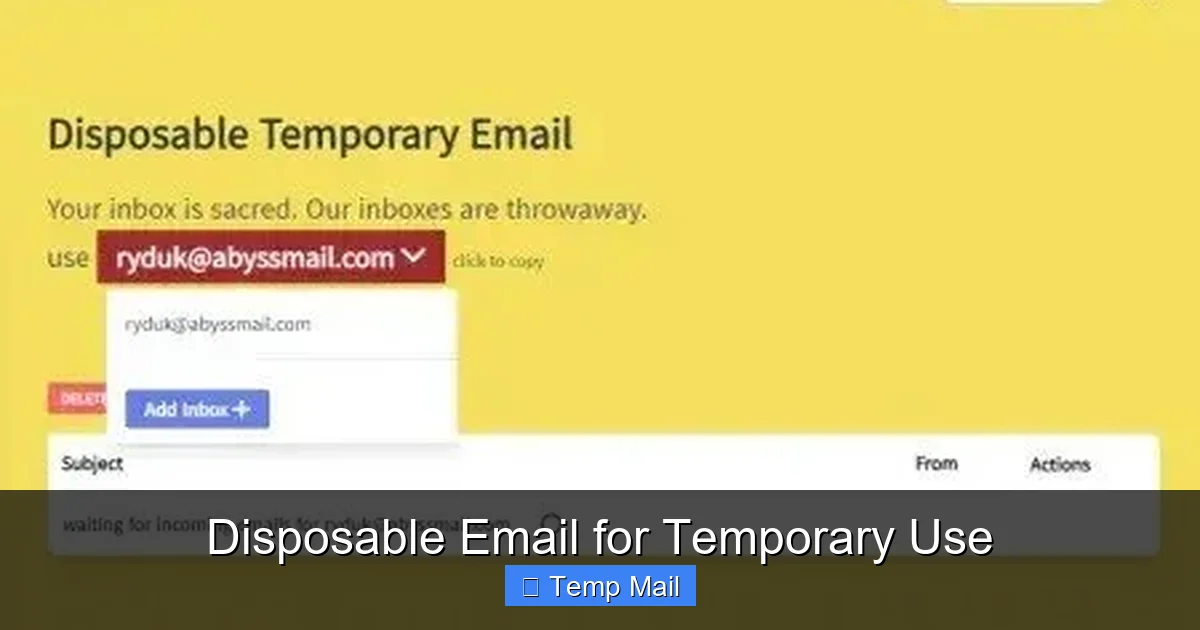
A temporary email address, often called “temp mail” or a “disposable email,” is a service that provides you with a random, functional email inbox for a short duration—usually anywhere from 10 minutes to 48 hours. You don’t need to create an account or set a password. You simply visit a website, get a random address like [email protected], use it wherever you need, and then forget about it. The inbox self-destructs, taking all the associated spam and potential security risks with it. Let’s dive into the compelling reasons why incorporating this simple tool into your digital routine is a non-negotiable step for better online hygiene.
Let’s start with the most obvious and immediate benefit: a pristine primary inbox. Every time you use your real email to sign up for a newsletter, a discount club, or a free software trial, you’re giving that company permission to email you. Often, that permission is bundled with fine print that allows them to share your address with “partners.” Before you know it, your carefully curated inbox is flooded with unsolicited offers for miracle weight loss pills, dubious crypto schemes, and “urgent” security alerts that are just marketing ploys.
One careless sign-up can trigger a domino effect. That one company you trusted might get hacked, and your email, along with millions of others, gets sold on the dark web to spammers. Or they might be acquired by a larger conglomerate that immediately adds your address to all its marketing lists. Unsubscribing from each individual spam email is a tedious, never-ending game of whack-a-mole. Many spam emails don’t even include a legitimate unsubscribe link, violating laws like CAN-SPAM, but what can you do? Using a temporary email for these low-stakes interactions cuts this entire chain off at the source. The spam goes to the disposable inbox, which vanishes in 24 hours. Your primary email remains untouched, a calm sanctuary for emails from your boss, your family, and services you genuinely care about.
You find a great-looking ebook on “Productivity Hacks” from a blog you’ve never heard of. To get the PDF, they demand your email. You suspect it’s just a lead magnet to build their marketing list. Using your real email feels like a bad trade—one free PDF for a year of spam. Instead, you open a temp mail tab, copy the disposable address, get your ebook instantly, and then close the tab. The next day, that disposable inbox is gone, and so is the promise of a weekly newsletter you never wanted. You kept the valuable content and avoided the marketing baggage.
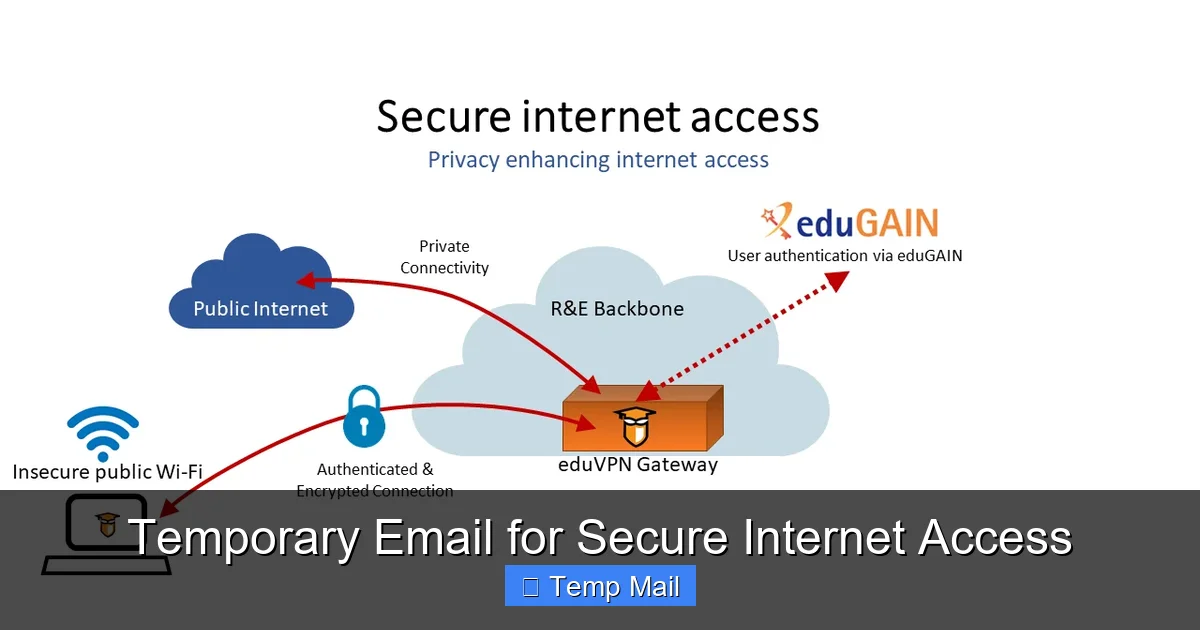
Privacy and security are two sides of the same coin. Your email address is a unique identifier. It’s often the username for dozens of your accounts. If a website you used is poorly secured and suffers a data breach, hackers will steal user emails. This is the first step in “credential stuffing” attacks, where they try that email (and common passwords) on other popular sites like banks, social media, and email providers themselves.

Visual guide about Why You Should Use a Temporary Email Address
Image source: tempmailmaster.io
Every website where you use your primary email becomes a potential point of failure in your personal security chain. By using a temporary address for any site that isn’t critical (forums, random tools, one-off downloads), you are effectively sandboxing your identity. Even if that site is breached, the leaked email address is useless to attackers because it leads to an inbox that no longer exists and isn’t tied to any of your important accounts. You’ve contained the damage. This practice, known as “email aliasing” (with disposable addresses being the ultimate alias), is a core principle of operational security (opsec) for everyday internet users.
Furthermore, it prevents data brokers and advertisers from easily building a profile on you. When you use the same email everywhere, those companies can cross-reference your activity. They see you visited Site A (gardening), Site B (car repair), and Site C (investment news), and they can build a surprisingly accurate picture of your interests, income bracket, and life stage. With a rotating disposable email, your activity remains fragmented and anonymous, making you a much less valuable target for targeted advertising and data profiling.
How many times have you wanted to quickly test a new app, software, or online service but balked at the sign-up screen? That “free trial” that asks for an email and a credit card “for verification” can feel like a trap. What if it’s hard to cancel? What if you get charged accidentally? A temporary email removes that friction.

Visual guide about Why You Should Use a Temporary Email Address
Image source: i.ytimg.com
You can use a disposable address to sign up for that 7-day trial, explore the features, and decide if it’s worth your money—all without giving the company a permanent way to contact you or, worse, your payment details linked to your real identity. If you decide not to subscribe, you simply abandon the disposable account. The company has no way to follow up, charge you, or hassle you. It gives you the power to evaluate services on their merit alone, free from the psychological pressure of an established relationship with your primary email.
This is also invaluable for developers and testers. If you’re building an app and need to test user registration, password reset flows, or email notifications, you don’t want to use your personal email or create dozens of fake accounts on Gmail. A temp mail service allows you to generate countless unique inboxes on the fly to thoroughly test every email-based workflow in your application.
The internet is full of useful resources—research papers, whitepapers, templates, stock photos—locked behind an “email wall.” The site owner’s goal is to grow their email list, not necessarily to share their content with genuinely interested parties. Often, the content is readily available elsewhere or is of questionable value. Do you really want to sacrifice your email’s health for it?

Visual guide about Why You Should Use a Temporary Email Address
Image source: pakgreeneagles.com
A temporary email is the perfect key for these locks. You get the download link instantly, retrieve the file, and the disposable address vanishes. There’s no follow-up “We miss you!” campaign. No risk of your email being sold to other companies in that niche. You’ve accessed the resource you needed with zero long-term obligation. This is especially useful for students, researchers, or freelancers who need to access multiple reports or tools for a single project. It turns a spammy, high-friction process into a clean, one-time transaction.
Think about the alternative. You use your real email for a one-off sign-up. You get the content or service you wanted. Then the emails start. You have to manually open each one, scroll to the bottom, and click “Unsubscribe.” Some make the unsubscribe link tiny or hidden. Others confirm your unsubscribe but then start sending from a different department a week later. It’s a chore.
With a temporary email, the cleanup is automatic and total. The service provider’s entire business model is based on providing short-lived inboxes. After the timer expires (often 10 minutes, 1 hour, or 1 day), the address and all its received emails are purged from their servers. There is no “unsubscribe” because there is no future. There is no “mark as spam” because the spam never reaches your permanent record. It’s the ultimate “set it and forget it” tool for digital hygiene. You don’t have to remember to clean anything up; the system handles it for you, leaving no digital breadcrumbs behind.
Knowing the theory is good, but seeing the practical applications makes it stick. Here’s a non-exhaustive list of everyday scenarios where a temporary email is the smart choice:
It’s crucial to understand the limitations of a temporary email to use it safely and effectively. This tool is for anonymity and low-stakes interaction, not for establishing trusted, long-term digital relationships.
Do not use a temporary email address for:
The rule of thumb is: if the account holds valuable data, money, or is essential for your daily life or identity, it must be tied to a permanent, secure email address that you control and monitor regularly. Temporary mail is for the expendable, the experimental, and the anonymous.
Not all temp mail services are created equal. While many are free and straightforward, you should be aware of a few factors:
Popular and generally reliable options include Temp-Mail, 10MinuteMail, and Guerrilla Mail. Always have a backup service in mind, as specific domains occasionally get blacklisted by certain websites.
Using a temporary email address is not a hack; it’s a fundamental piece of modern digital literacy. It’s the equivalent of using a burner phone for a shady Craigslist deal or wearing gloves to handle a dirty public door handle. It’s a small, proactive action that insulates you from the spam, data harvesting, and security noise that is an inevitable byproduct of being online. The barrier to entry is zero—it takes 5 seconds to generate one. The benefits, however, are enormous: a clean primary inbox, a fragmented and more private digital footprint, and the peace of mind that comes from knowing your most important communication channel is reserved for what truly matters. Start using one today for your next free download or forum sign-up. Your future self, staring at an empty and peaceful inbox, will thank you.
Yes, using temporary email services is completely legal. They are legitimate tools provided by companies for privacy and testing purposes. However, using them to commit fraud, evade bans, or engage in illegal activities is, of course, illegal regardless of the email type used.
They are safe in a specific way: because the inbox is temporary and self-destructs, any data sent to it (like password reset links you shouldn’t have used) is quickly gone. However, the connection to the temp mail website itself should be HTTPS (look for the padlock). You should never use them for sensitive transactions, as the provider could theoretically log activity, though reputable ones claim not to.
Most reputable temporary email services do allow you to receive attachments. However, there are often size limits (e.g., 10-25MB). Also, be cautious with attachments from unknown sources, as with any email. The attachment will vanish along with the inbox when the time expires.
Some websites, especially those dealing with financial products or high-value accounts, maintain blacklists of known temporary email domains and will prevent sign-up. In this case, you’ll need to use your permanent email or try a different temp mail provider that uses a less common domain not on their list.
This varies by provider’s privacy policy. Most claim not to store logs or link activity to IP addresses to maintain user anonymity, as that’s their value proposition. However, for absolute certainty, you would need to review the specific service’s policy. For casual, low-risk use, standard providers are generally considered private enough.
Typically, no. Temporary email services are almost universally designed for *receiving* emails only (like a one-way pager). They do not have SMTP servers set up for outgoing mail. Their sole purpose is to be a recipient address for sign-ups, verifications, and downloads.
অনলাইন নিউজপেপার থিম। এই থিমটি দিয়ে আপনারা বাংলা এবং ইংরেজি নিউজপেপার সাইট তৈরি করতে পারবেন । বার্তা ও বাণিজ্যিক কার্যালয়: ৭১, মতিঝিল, ঢাকা-১০০০। সম্পাদক : মো আসাদুজ্জামান আমানউল্লাহ । মোবাইল : ০১৭০০-০০০০০০ । ইমেইল : [email protected] ।
All rights reserved © 2019 themesdealer.Com